The kingdom economy runs on faith, not on sweat alone. In this message, Dr. William P. Hohman teaches that born-again believers are the only people on earth who live under two governments and two economies at once, and that heaven’s laws come first whenever the two collide. He shows that God wants His people to be fruitful, to bless the places where they live, and to receive the great transference of wealth that Scripture promises to the righteous.
This is the tenth teaching in the Kingdom Economy series and a companion to the earlier post Kingdom Economy Part#10. Below you will find the video, a structured summary, the Scriptures he uses (NKJV), a timestamped outline and practical steps.
Sermon at a Glance
This message was preached at NTC Ministries and posted on June 1, 2022. It runs about 74 minutes and closes with an invitation to receive Jesus Christ. Pastor Hohman opens by reminding the church that an economy runs on far more than money, then recaps what it means to live as a citizen of heaven on earth.
From there he moves through Jeremiah’s letter to the exiles, the transference of wealth promised to the righteous, what money really represents, and the place of tithes and offerings in the kingdom economy.
| Detail | Information |
|---|---|
| Speaker | Dr. William P. Hohman |
| Series | Kingdom Economy (part 10) |
| Main text | Jeremiah 29:4–7 |
| Key theme | Living under two economies and preparing for the transference of wealth |
| Length | About 74 minutes, ending with a prayer of salvation |
Two Governments and the Kingdom Economy
Pastor Hohman starts with a simple claim: as children of God we are the only ones on this planet who function under two governments and two separate economies. We submit to both, but the government of heaven is first and foremost. He points to Moses’ mother, who hid her baby and was not afraid of the king’s command (Hebrews 11:23). When a law contradicts what the Word of God says, believers listen to God.
Jesus taught the same balance when He said to render to Caesar the things that are Caesar’s and to God the things that are God’s (Mark 12:17). Yet when Pilate questioned Him, Jesus answered, “My kingdom is not of this world” (John 18:36). Jesus lived first from the kingdom of heaven, Pastor Hohman teaches, under a greater authority than the earth.
He contrasts the two systems. Because Adam sinned, the earth came under a cursed system that drifts toward total corruption. The kingdom of heaven is incorruptible and abides forever, because God does not change (Malachi 3:6). When we stand on His Word, His power comes. Many are the afflictions of the righteous, but the Lord delivers them out of them all (Psalm 34:19).
The earthly economy says, in effect, work hard and try to make the ground produce by the sweat of your brow. The kingdom economy says give, and it will be given to you. Pastor Hohman puts it plainly: “the currency of our kingdom of heaven is actually faith,” because without faith it is impossible to please God (Hebrews 11:6). That is why Isaiah 55:1 can invite those who have no money to come and buy without price. The table below follows his comparison.
| Earthly economy | Kingdom economy |
|---|---|
| Under the curse that followed Adam’s sin | Under the rule of God, who does not change |
| Corruptible and getting worse | Incorruptible, abiding forever |
| Produce by the sweat of your brow | Give, and it will be given to you |
| Currency is money | Currency is faith |
| Claims shortage to charge more | Promises abundance for every good work |
Citizens of Heaven, Ambassadors in Exile
Like Jesus, believers do not belong first to this world. Pastor Hohman describes the flags on the church campus: the Christian flag flies in the middle, with the national and state flags on either side, because, as he puts it, “this is the embassy of the kingdom of heaven.” Like an embassy abroad, the church stands on heaven’s property, and everyone in it is an ambassador.
Scripture backs this up. Our citizenship is in heaven, from which we eagerly wait for the Savior (Philippians 3:20). Peter calls believers aliens, strangers and exiles in this world and urges them to abstain from the fleshly desires that war against the soul (1 Peter 2:11). When you were born again, God did not take you to heaven right away. He left you here, Pastor Hohman says, because the only way heaven can be revealed on earth is through you and me.
That revelation includes how we handle money. If money and material things make you feel better than others, he warns, you are literally the poorest person on earth. That is why Jesus dealt so hard with the spirit of mammon. “We don’t live for the currency, we live for God,” and then we partake of currency. It does not have us; we have it.
As the wisest people know, “you don’t work for money, money works for you.” Money is an employee to be put to work so that it multiplies. An apple tree that grew a couple of feet and never produced fruit would be a terrible apple tree. The religious idea that Christians must take a vow of poverty, he says, is a lie, because God told His people to be fruitful and multiply (Genesis 1:28).
Seek the Welfare of the City
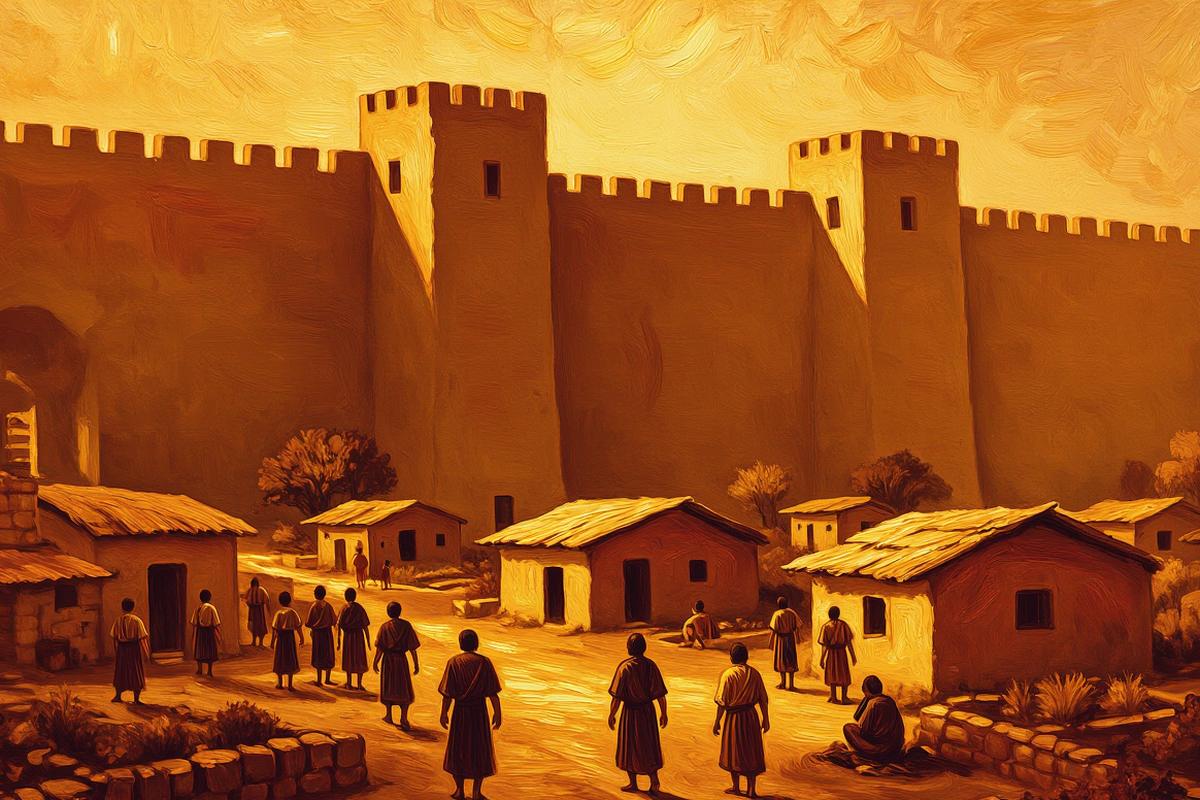
Prosperity is much more than money, and a strong economy is built by much more than money. To show this, Pastor Hohman turns to the letter Jeremiah wrote to the exiles in Babylon. False prophets were telling the captives to rebel and do nothing for the nation that held them. Before reading the letter, he reminds the church of God’s heart in Jeremiah 29:11: thoughts of peace and not of evil, to give a future and a hope.
Then comes the instruction in Jeremiah 29:4–7: build houses and live in them, plant gardens and eat their fruit, marry and have sons and daughters, and increase there and do not decrease. Finally, “seek the peace of the city” and pray to the Lord for it, “for in its peace you will have peace.” In other words, pray for and work hard for your boss, your neighbors and the people around you.
He remembers childhood barn raisings, when his family spent weekends helping neighbors build, straightening bent nails from coffee cans. That is the kingdom economy: building a strong economy on earth and in heaven. God does not drop money out of the sky in bags, and no money tree grows in your yard. “It has to come through people,” so the way you treat people matters.
So do not complain about the company you work for; pray for it, because in its welfare you will have welfare. You cannot be lazy, back-talk the boss and expect a raise. Say to the righteous that it shall be well with them, “for they shall eat the fruit of their doings” (Isaiah 3:10). You will eat the fruit of how you apply yourself.
Peter says the same to believers scattered among hostile neighbors. He tells them to conduct themselves honorably among the Gentiles so that those who slander them may see their good works and glorify God in the day of visitation (1 Peter 2:12). They are not to return evil for evil or insult for insult, but to bless, knowing they were called to inherit a blessing (1 Peter 3:9). We withdraw from sin, Pastor Hohman says, but not from society.
It is easier to teach than to live, he admits. But we are God’s fellow workers (1 Corinthians 3:9), and a great reward of inheritance is coming to those who obey.
The Great Transference of Wealth
Is God against His people having money? No. Proverbs 13:22 says, “A good man leaves an inheritance to his children’s children, but the wealth of the sinner is stored up for the righteous.” Pastor Hohman reads it as one thought: God wants the righteous to have enough to bless their children and grandchildren, while those who oppose Him are heaping up wealth that will be handed over. “We’re in the time of this great transference of money, transference of wealth,” he says.
He believes the transference of wealth must happen before the Lord returns, because people will see God’s goodness toward His children, start asking why, and hear about Jesus. A second witness is Proverbs 28:8: wealth gained by usury and extortion is gathered for him who will pity the poor. His advice about high-interest lenders is simple: do not use them, since the borrower is servant to the lender.
A third witness is Ecclesiastes 2:26: to the sinner God gives the work of gathering and collecting, that he may give to him who is good before God. He also points to Job 27:16–17. Out of the mouth of two or three witnesses, every word is established, and the transference of wealth has three.
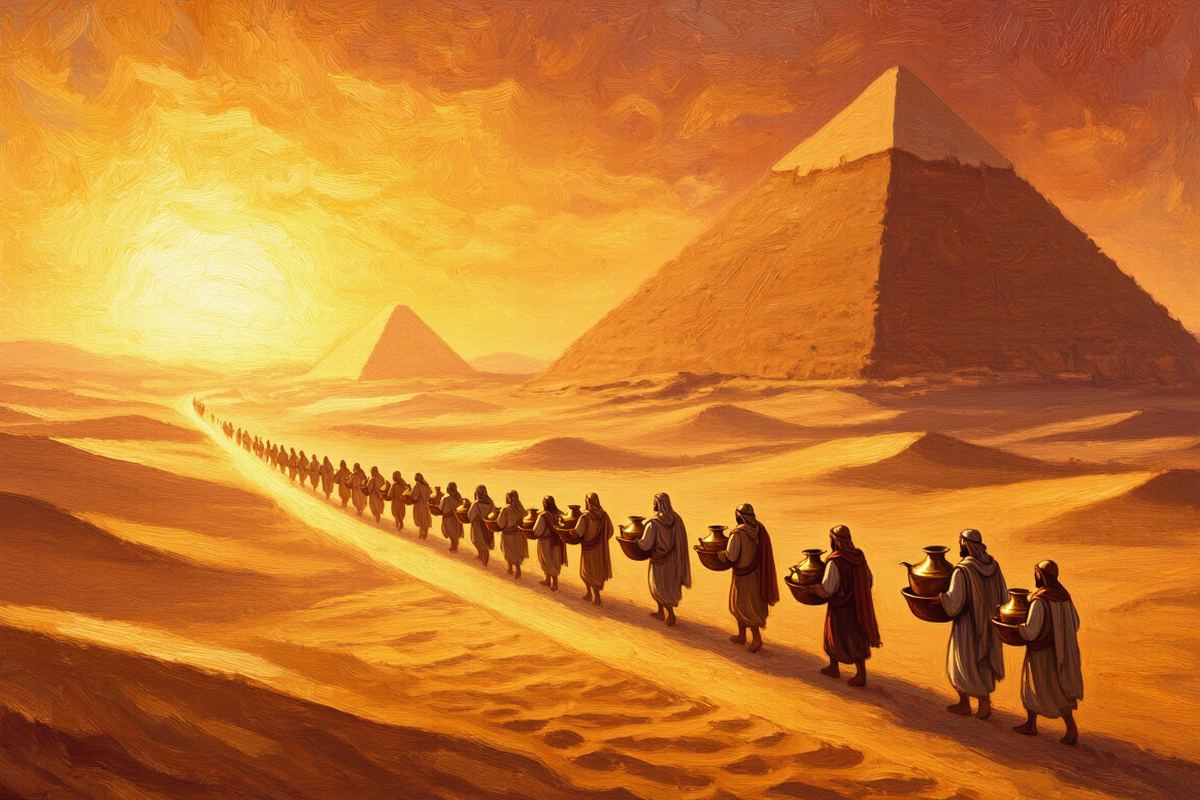
There is also a clear precedent. Israel worked as slaves for 400 years to make Egypt wealthy. Then the Lord told the people to ask their neighbors for articles of silver and gold, and He gave them favor in the sight of the Egyptians (Exodus 11:2–3). In Exodus 12:35–36 they asked for silver, gold and clothing and plundered Egypt. “Are you getting ready to plunder some folks in this world?” he asks. It is a promise of God, and believers prepare by building both economies: working diligently in this one and living by faith for heaven’s favor in the other.
What Money Really Is
Pastor Hohman then asks a basic question: what is money? He quotes a dictionary definition of money as a medium of exchange, a measure of value and a means of payment. Paper bills, a plastic card, numbers on a bank statement and stock certificates all count.
His central line is worth writing down: “there’s more to life than money but there’s nothing more to your money but your life.” He quotes the philosopher William James, who said a man’s self is the sum total of all he can call his. What we own represents our life, what we have done and how we have done it.
Two children from the same family can turn out very differently because one understands the value of what he has and the other squanders it. Business owners understand that time is money, that a finished product is money, and that every part used to build it is money. A ten-dollar tool left to rust, three or four times a year, adds up. Good stewardship means taking care of the parts.
He warns that a corrupt economy cries shortage to raise prices, then shrinks the product while charging more. He also learned that cheap is not always wise: a quality scooter bought for a pastor in the Philippines cost more up front but would last twenty years instead of two or three.
Finally, he teaches that the Hebrew word for money, kesef, contains a word that refers to the sole of the foot or the palm of the hand, the two ways value is added: by working on something or by carrying it somewhere. Ecclesiastes 9:10 says whatever your hand finds to do, do it with your might. God sees our money as our good deeds, the life we have invested.
Giving in the Kingdom Economy
Giving in the offering, Pastor Hohman says, is more than throwing money in. You are entering an economic system where God can intervene on your behalf. James says you have not because you ask not, and when you ask, you ask amiss to spend it on your own pleasures (James 4:2–3). He wants a share in the wealth transfer “to build an economy not build a bank account.”
Whatever you do, do it heartily as to the Lord, knowing that from the Lord you will receive the reward of the inheritance (Colossians 3:23–24). In 2 Corinthians 9:6–11, Paul says he who sows sparingly reaps sparingly, God loves a cheerful giver, and God is able to make all grace abound so that you have an abundance for every good work. God wants you rich, Pastor Hohman says, so you can be generous on every occasion.
If you give a thousand dollars without faith, he adds, you simply lost a thousand dollars, because “the only currency we have in the kingdom of heaven is faith.” Giving in faith is a deposit in a heavenly account you can draw on. And “no one has ever become poor by giving.” Proverbs 11:24 says there is one who scatters yet increases more. He tells of J.C. Penney, who began tithing despite ridicule, multiplied his stores, and eventually gave away 90 percent of his increase.
A wrong attitude can disqualify a giver. To the pure all things are pure, but to the defiled and unbelieving their mind and conscience are defiled, and they are disqualified for every good work (Titus 1:15–16). In Malachi 1:6–8, God asks where His honor is when priests offer blind and lame animals, and in Malachi 1:13–14 He rebukes those who sniff at the offering as a burden. Dropping junk furniture at the church, he says, takes from the ministry rather than giving to it.
Then he reads Malachi 3:8–12, where God says His people robbed Him in tithes and offerings and invites them to bring all the tithes into the storehouse and try Him. It is the only place, he notes, where God says to test Him. With faithful giving, your barns are filled with plenty (Proverbs 3:9–10). He distinguishes the tithe, a tenth of all increase, from offerings: alms for the poor, thanksgiving, firstfruits and pledges.
He closes with two testimonies. One couple began giving as he taught and, within a month, received hundreds of acres of land and fifteen thousand dollars. Another couple faced a low appraisal on lakefront property; they prayed, and the next day the bank recognized the error and released their loan. That, he says, is the kingdom economy at work.
Living the Kingdom Economy This Week
Pastor Hohman ends with the benediction of Hebrews 13:20–21, praying that the God of peace would make the church complete in every good work. These practical steps come straight from this kingdom economy message:
- Put heaven’s government first. When a choice sets God’s Word against the pressure of the world, side with the Word and trust Him for the strength to stand.
- Pray for your workplace. Replace complaining about your company or boss with prayer for its welfare, and then work hard for its success.
- Make your money an employee. Ask where what you have can be put to work so that it multiplies, rather than letting it burn a hole in your pocket.
- Take care of the parts. Treat tools, time and materials as money, whether they belong to you, your employer or your church.
- Bless instead of retaliating. When you are insulted, keep your mouth shut, return a blessing, and expect to inherit one.
- Give in faith and with joy. Bring the tithe and your offerings cheerfully, believing God for the return rather than sniffing at the burden.
Timestamped Outline
- 0:00 Two governments and two economies
- 3:23 Render to Caesar; “My kingdom is not of this world”
- 5:25 The cursed system and the incorruptible kingdom
- 6:30 Faith is the currency of heaven
- 8:36 The church as heaven’s embassy
- 9:47 Aliens, strangers and exiles: 1 Peter 2:11
- 10:53 Money works for you
- 12:16 Jeremiah’s letter to the exiles
- 14:38 Barn raisings and building a strong economy
- 16:54 Proverbs 13:22 and the inheritance
- 19:12 Proverbs 28:8 and interest
- 22:46 Israel plunders Egypt
- 25:09 Eat the fruit of your doings
- 26:27 Peter on blessing a hostile world
- 33:36 What is money?
- 36:23 William James and the sum of a man
- 40:17 Time is money
- 47:06 Kesef: money by hand and foot
- 52:52 Giving to build an economy
- 55:23 2 Corinthians 9: rich for every good work
- 57:47 J.C. Penney and Titus 1
- 59:58 Malachi 1: offerings with contempt
- 1:03:28 Malachi 3: tithes and offerings
- 1:08:37 Testimonies of land and an appraisal
Kingdom Economy Series
This message closes a ten-part teaching series at NTC Ministries. Start from the beginning or revisit the earlier post:
- First message: Kingdom Economy #1: The Two Economies — Learning How Heaven Works
- Previous: Kingdom Economy Part#10
- You are here: Kingdom Economy Part 10: Two Economies, Faith as Currency and the Transference of Wealth
Frequently Asked Questions
Should Christians give away everything they own?
Pastor Hohman does not teach that. He says God wants believers to have enough to leave an inheritance to their children and grandchildren, which they cannot do if they have given everything away. He shares that he and his wife Pam have given away everything they owned twice and lacked nothing, but he is clear that he would not tell anyone else to do it. That decision, he says, is between you and God.
Can I divide my tithe between several ministries?
According to this message, no. Pastor Hohman compares the tithe to bringing your finances to your bank: the tenth of your increase belongs to the storehouse, which he identifies as the church you attend. Splitting it among television ministries and visiting speakers, he says, is robbing God. Offerings are different. They can go wherever you choose, and you may even designate how they are used, which the church then has to honor.
Why does it matter who attacks me?
Pastor Hohman previews a Bible college course on the fellowship of Christ’s sufferings. He teaches that when you are attacked from outside your family and church, you tend to grow in substance, such as land, property and businesses. When the attack comes from fellow believers or family, you grow in anointing and promotion. In both cases, he says, the key is to keep quiet rather than seek sympathy, because sympathy becomes the only reward you receive.
Scripture References
All passages open in the New King James Version on Bible Gateway:
- Jeremiah 29:4–7 — seek the peace of the city
- John 18:36 — My kingdom is not of this world
- Philippians 3:20 and 1 Peter 2:11 — citizens of heaven, strangers on earth
- Proverbs 13:22 — the wealth of the sinner is stored up for the righteous
- Ecclesiastes 2:26 — the sinner gathers for the one who pleases God
- Exodus 12:35–36 — Israel plunders Egypt
- 1 Peter 3:9 — called to inherit a blessing
- 2 Corinthians 9:6–11 — God loves a cheerful giver
- Malachi 3:8–12 — bring all the tithes into the storehouse
How this summary was made: written with AI assistance from the sermon’s own transcript and checked against the Scriptures listed above.
Watch More Messages
If this teaching on the kingdom economy helped you, there are hundreds more messages from NTC Ministries waiting for you. Browse the full sermon archive and keep building your life on the Word of God.