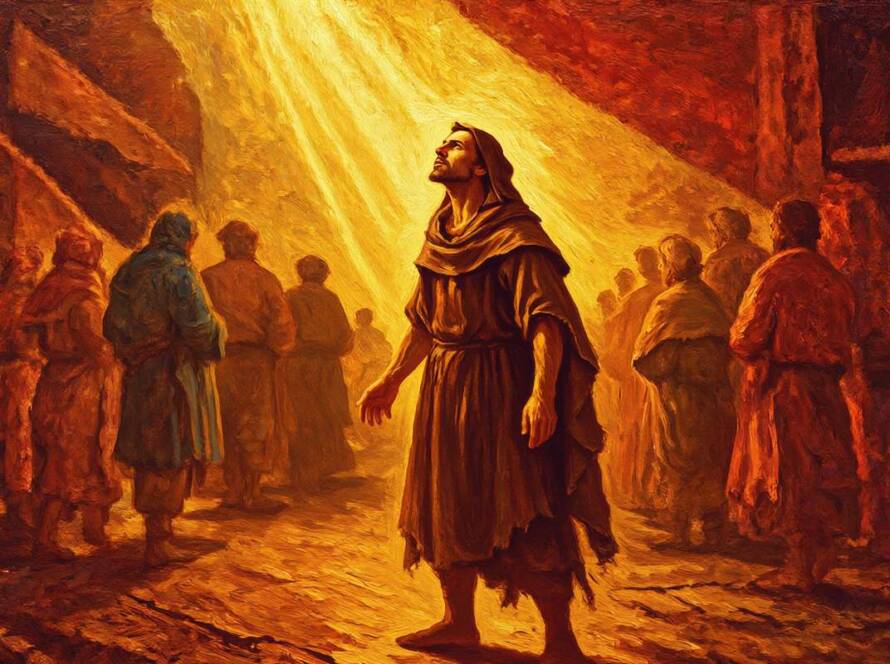
A thankful heart keeps you moving toward everything God has promised, while an unthankful heart opens the door to bitterness. In this message, the speaker teaches from 1 Thessalonians 5 that the God who calls you by name is faithful to complete His work in you. He also shows from Israel’s forty years in the wilderness, Joshua’s call to courage and Romans 1 why giving thanks in every circumstance is essential for every believer.
Below you will find the full video, a structured summary of the sermon, the Scripture behind each point (linked to the New King James Version on Bible Gateway), a timestamped outline, and practical steps you can take this week.
Sermon at a Glance
This message was posted on November 14, 2022, in the weeks leading up to Thanksgiving, and runs about 46 minutes before closing in communion. The speaker also serves on the church’s worship team, and he follows up an earlier series he taught on entering the promised land. His burden is that the church needs to rise up and be more thankful than ever, not only at the holiday but week by week and year by year.
He is careful to say what thankfulness is not. Believers do not thank God for sickness, weariness or trouble. They thank Him in the middle of those things for who He is and what He has promised, and that choice changes the direction of their lives.
| Detail | Information |
|---|---|
| Speaker | A minister at NTC Ministries (not named in the recording) |
| Series | Stand-alone message |
| Main text | 1 Thessalonians 5:16–24 and Joshua 1:5–10 |
| Key theme | Giving thanks in every circumstance keeps bitterness out and moves you forward |
| Length | About 46 minutes, ending in communion |
Called by Name for Such a Time as This
The message opens in 1 Thessalonians 5:16–24. Do not quench the Spirit, do not despise prophecies, test all things and hold fast what is good. Then comes the promise the speaker returns to again and again: “the one who calls you by name is trustworthy and will thoroughly complete his work in you.”
No one is here by accident, he says. You have been appointed by the living God to be here for such a time as this. So each day can be met with a prayer: Lord, if this is what You have called me to do, what do You have in store for me today? Open my eyes to see Your goodness and my ears to hear Your promises.
Because the one who calls you is trustworthy, you can trust that He will finish the work He started. Whatever excuse you have, too old, too young or the wrong background, God answers it the same way. He has a work for you today, tomorrow and the day after, and He will thoroughly complete it.
He then steps back to verse 16. Rejoice always, pray without ceasing, and in everything give thanks, for this is the will of God in Christ Jesus for you. Prayer, he says, is not only begging God for things. Make your whole life a prayer. People around the world are praying, and you could be the answer to someone’s prayer.
Why a Thankful Heart Matters
The speaker is honest about his own morning. As he prepared to preach, his back flared up, the radio would not work, the computer had problems, he was late for worship practice and his guitars needed tuning. It felt like one thing after another, the kind of bombardment Satan uses to pull our minds off God.
His answer was to turn it around in prayer: God, I may feel overwhelmed, but I am overwhelmed by how much You love me. Thank You for this opportunity. I will not just limp through; I will thrive, because what You have is greater than I can think. A thankful heart, he says, works like wind in the sails. You may be doing all the right steps and going nowhere, and then God breathes His life into you and carries you where He needs you to be.
He shares a saying he heard from Dr. Joanne Ramsey on the church’s radio station: “Your prayer life needs to be 98 Thanksgiving and two percent request.” Instead of coming to God only because you need something, you thank Him that He is your provider, your joy even when you do not feel joyful, your peace, and the one who gives you the mind of Christ when you are stumped.
This is not thanking God for the garbage, he stresses. He does not thank God for sickness or mental strain. He thanks God that in spite of it all He was wounded for our transgressions and by His stripes we are healed (Isaiah 53:5), and that He supplies all our need according to His riches in glory by Christ Jesus (Philippians 4:19). His mind stays on God’s promises, not on how things will work out.
We teach our children to say please and thank you, the speaker notes, yet as adults we often stop. That is the difference between knowledge and wisdom. Knowledge is knowing what to do. Wisdom is the practical application of that knowledge. Knowing you should be thankful without practicing it is, in his words, unwise.

Bitterness Is Poison
When we stop saying thank you, stop showing respect and stop giving thanks for what we have, the speaker warns, it opens the doorway to bitterness. And bitterness is dangerous ground. It is poison spiritually and emotionally, and it can even affect you physically. It eats away at you from the inside, drains your health, and leaves you deflated and defeated, always fighting a battle because you are always complaining.
He quotes a line he has kept for years: “bitterness is like drinking poison and then waiting for the other person to die.” The answer is to forgive, let go and give thanks to God despite what happened to you, and to let God deal with the situation. What he can guarantee is that applying God’s Word will change your life for the better, because let God be true and every man a liar (Romans 3:4).
Once thankfulness stops, the questions start: God, why is this happening? What am I supposed to be doing?
Christians are always changing, being shaped into His image to be more like Him. You can love more, be more kind and be more generous. So we fight bitterness with a thankful heart. Being thankful makes us more aware of God’s ability and willingness to bless us. The table below gathers the contrasts the speaker draws through the message.
| A thankful heart | An unthankful, bitter heart |
|---|---|
| Is aware of God’s ability and willingness to bless | Focuses on its own inabilities and complaints |
| Keeps peace and joy that Satan cannot steal | Opens the door to losing peace and joy |
| Draws near to God’s presence | Feels further and further from God |
| Builds strong spiritual habits | Becomes stagnant and stops bearing fruit |
| Forgives and lets go | Drinks poison and waits for the other person to die |
| Applies what it knows | Knows the truth but suppresses it by not doing it |
He also notes the rise of ungratefulness, disrespect and even rage in society, enough to make the news. People who carry that bitterness, he says, will always have restlessness until they find Jesus Christ. That is exactly why the church must set a different example.
From Complaining to Courage
The speaker returns to the theme of his earlier series on entering the promised land. God brought Israel out of slavery in Egypt, and you would think they would be skipping down the road celebrating. Instead they kept complaining: where are we going now, what will we eat, what will we do? Even after God gave them manna from heaven and quail, and their clothes did not wear out for forty years, they kept questioning.
He pictures Moses hearing forty years of “When are we going to get there?” and smiles at why Moses might have needed so much quiet time with God. After Moses died, Joshua, who had heard the same complaints as a commander among the people, rose up. And with perfect timing, God gave him a pep talk.
That pep talk is Joshua 1:5–10, and the speaker invites the church to receive it as God’s pep talk to them. No man will be able to stand before you. As I was with Moses, so I will be with you; I will not leave you nor forsake you. Be strong and of good courage. Observe to do all that is written, and you will prosper wherever you go.
Verse 8 says the Book of the Law shall not depart from your mouth; meditate in it day and night, “For then you will make your way prosperous, and then you will have good success.” The speaker notes that God tells Joshua twice to observe to do it. You may have the knowledge, but unless you put it into action, nothing happens.
Every one of us has been called by God to do something, he says, and he is not there to throw stones but to encourage. God is not done with you. Do not grow weary in doing good (Galatians 6:9); keep taking steps of faith and keep serving.
Then look at verse 10. Joshua immediately commanded the officers to tell the people to prepare provisions, because within three days they would cross the Jordan and take the land. After forty years of wandering, one pep talk from God gave him that confidence. Later, at Jericho, Joshua told the people to keep their mouths shut until he gave the command to shout (Joshua 6:10). He understood how an unthankful mouth holds people back from God’s blessing.
Standing outside God’s promises and waiting is like holding the key to a brand-new car and staring at it, he says. You have to step in. God chose us and sought us out to be His hands and feet, showing love, kindness and consideration, and saying please and thank you in a world that has gone far off course. In Him we live and move and have our being (Acts 17:28), so we can rise above, let things go and forgive.
When We Stop Giving Thanks
“I can do all things through Christ who strengthens me” (Philippians 4:13). The God who called you is faithful to help you climb every mountain and enter the promised land He has for you. What does that have to do with thanksgiving? The speaker’s answer: “Thanksgiving is the train we ride to get there.”
He borrows a simple practice he credits to the church’s senior pastor: thank you, Jesus. Thank You for this day. Thank You for this life. When it gets hard, thank You, Jesus, anyway. As much stress and anxiety as rise up inside, keep saying it. When you get to the top, you look back and say, that wasn’t so bad. But as soon as the train stops, the door opens to bitterness, and your progress stops too.
To show what happens when people stop giving thanks, he reads Romans 1:16–32. The gospel is the power of God to salvation, and the just shall live by faith. But God’s wrath is revealed against those “who suppress the truth in unrighteousness.” Suppressing the truth, he explains, is knowledge without wisdom: knowing what to do and not doing it. We are to be doers of the Word, not only hearers (James 1:22).
Verse 21 is the turning point: “although they knew God, they did not glorify Him as God, nor were thankful, but became futile in their thoughts, and their foolish hearts were darkened.” The speaker says futile thinking is self-centered thinking: what is in it for me? But as Christians, everything we do is for the glory of God.
So God gave them up, three times in the passage, to uncleanness, to vile passions and to a debased mind, followed by a long list of sins that he says sounds like the nightly news. He explains it with a phrase from the senior pastor: “God’s in charge, I’m in control.” God’s hand of blessing, protection and provision is on our lives, but He cannot make us do anything. When we insist on our own strength, He lets us choose that path.
The speaker’s response is to refuse the lies and keep thanking God that He is on the throne, his Lord, Savior and Redeemer. Even walking through the valley of the shadow of death, he will fear no evil, for God is with him (Psalm 23:4). The more we avoid being thankful, the further from God we feel. But it is not God who leaves; He has promised never to leave nor forsake us.

Entering His Presence With Thanksgiving
Before communion, the speaker shares several passages and encourages everyone to do their own word study on thanksgiving. Colossians 2:6–7 says that as you received Christ Jesus the Lord, so walk in Him, rooted and built up in Him and established in the faith, “abounding in it with thanksgiving.” That, he says, is how we get where we need to go.
Psalm 100 says, “Enter into His gates with thanksgiving, And into His courts with praise.” Thanksgiving is how we come into His presence, and in His presence is fullness of joy, with pleasures forevermore at His right hand (Psalm 16:11). He says that a believer who lives aware of that presence becomes less agitated and irritable, finds old thoughts no longer coming, and may even see health improve.
Out of the believer’s heart flow rivers of living water (John 7:38), and that overflow reaches everyone we meet. We get to show family and friends, even those who believe differently, that they are loved, because God so loved the world that He gave His Son (John 3:16). This is the day the Lord has made; we will rejoice and be glad in it (Psalm 118:24).
Psalm 136:1–3 repeats that His mercy endures forever. If you do not feel His love, the speaker says, ask Him to show you again, until His love soaks into you like a sponge and splashes onto others. Psalm 50:23 says whoever offers praise glorifies God.
He closes with two more. “But thanks be to God, who gives us the victory through our Lord Jesus Christ,” so be steadfast, knowing your labor is not in vain in the Lord (1 Corinthians 15:57–58). And through Him we continually offer the sacrifice of praise, the fruit of our lips, giving thanks to His name (Hebrews 13:15). You may feel defeated, he says, but thank God that you have the victory.
Building a Thankful Heart This Week
The message ends with communion and a prayer asking God to remove any bitterness, help the church forgive those who have wronged them, and walk with a heart of thanksgiving. Here are practical steps from the sermon on a thankful heart:
- Rebalance your prayers. Aim for a prayer life that is mostly thanksgiving and only a small part requests.
- Thank God in, not for. When trouble hits, thank Him for His promises of healing and provision in the middle of it.
- Keep the train moving. Start each day with “thank you, Jesus” and keep saying it, especially when it gets hard.
- Uproot bitterness. Forgive, let go of what was done to you, and hand the situation over to God.
- Act on what you know. Move from knowledge to wisdom by putting God’s Word into practice today.
- Be His hands and feet. Show kindness and say please and thank you as an example to those around you.
Timestamped Outline
- 0:00 1 Thessalonians 5: called by God
- 0:57 Appointed for such a time as this
- 1:48 No excuses; make your life a prayer
- 2:43 A morning of one thing after another
- 4:19 Wind in the sails; 98% thanksgiving
- 5:11 Thanking God in spite of trouble
- 6:54 Knowledge versus wisdom
- 10:05 Bitterness is like drinking poison
- 12:18 Israel complains in the wilderness
- 14:59 Joshua 1: God’s pep talk
- 17:47 Three days to cross the Jordan
- 19:56 The key to a new car
- 22:12 Thanksgiving is the train
- 25:48 Romans 1: suppressing the truth
- 27:41 They knew God but were not thankful
- 29:38 God’s in charge, we’re in control
- 33:51 Waking up thankful every day
- 35:49 God never leaves us
- 36:45 Colossians 2 and Psalm 100
- 40:18 Psalm 136: His love endures forever
- 41:27 Communion and 1 Corinthians 15
- 42:37 Hebrews 13:15: the fruit of our lips
- 45:57 Closing prayer against bitterness
Frequently Asked Questions
Am I supposed to thank God for bad things that happen?
No. The speaker is clear that he does not thank God for sickness, weariness or mental strain. He thanks God in the middle of those things for His promises: that by Jesus’ stripes we are healed and that God supplies all our needs. Thanksgiving fixes your mind on what God has said rather than on how things will work out, which keeps the door closed to bitterness.
Why do I feel far from God when I stop being thankful?
The speaker says the more we avoid being thankful, the further away from God we feel, but it is never God who leaves. He promised Joshua, and us, that He will never leave nor forsake us. It is we who turn our backs. Returning to thanksgiving is how we come back into His presence, as Psalm 100 says: enter His gates with thanksgiving.
How does communion connect to a thankful heart?
The speaker describes communion as a time to remember what Jesus has done and to be washed clean of the bitterness and lies the enemy tries to bring in. Being covered by the blood of Jesus, believers thank Him for His goodness, faithfulness and strength. His closing prayer asks God to remove any bitterness and help the church forgive those who have wronged them.
Scripture References
All passages open in the New King James Version on Bible Gateway:
- 1 Thessalonians 5:16–24 — in everything give thanks; He who calls you is faithful
- Joshua 1:5–10 — be strong and of good courage
- Romans 1:16–32 — they knew God but were not thankful
- Philippians 4:13 — I can do all things through Christ
- Colossians 2:6–7 — abounding with thanksgiving
- Psalm 100 — enter His gates with thanksgiving
- Psalm 136:1–3 — His mercy endures forever
- 1 Corinthians 15:57–58 — thanks be to God who gives us the victory
- Hebrews 13:15 — the sacrifice of praise
How this summary was made: written with AI assistance from the sermon’s own transcript and checked against the Scriptures listed above.
Watch More Messages
If this message encouraged you to give thanks, there are hundreds more teachings from NTC Ministries waiting for you. Browse the full sermon archive and keep growing in a life of gratitude toward God.