Learning how to be led by the Spirit of God includes learning when not to act. In this sixth message of the series, the pastor teaches that sometimes doing nothing is the right thing to do. That is not procrastination. It is the Holy Spirit steering you away from something that looks like a great opportunity so that He can lead you to something better. He builds the message on Proverbs 3:5–6, the series’ foundation verse, and illustrates it with Paul in Acts 16, Jesus and two blind men, and a church in the Philippines he was told to choose over a much larger one.
Below you will find the full video, a summary of the sermon, the Scripture behind each point (linked to the NKJV on Bible Gateway), a timestamped outline, and practical steps for following the Holy Spirit this week.
Sermon at a Glance
This message was preached at NTC Ministries and posted on June 30, 2020. The service opens with worship, announcements and the offering, and the teaching begins at about the 28-minute mark. The pastor explains that he started this series on how to be led by the Holy Spirit, and that this week’s lesson is a surprising one: there are times when the Lord does not want us to do something, even when it looks like the best opportunity available.
Peace, he adds, is not the absence of war; it is the presence of God, and the Holy Spirit is the one who leads us into it.
| Detail | Information |
|---|---|
| Speaker | The pastor (not named in the recording) |
| Series | How to Be Led by the Spirit of God, #6 |
| Main text | Proverbs 3:5–6 and Acts 16:6–34 |
| Key theme | Sometimes the Holy Spirit leads by telling you not to act |
| Length | About 96 minutes including worship; the teaching runs about 67 minutes |
How to Be Led by the Spirit of God When He Says No
The pastor is careful to separate this lesson from laziness. Procrastination is not the Spirit of God, he says. But there are moments when we have our own desires, or we see what looks like a great opportunity, and the Holy Spirit steers us a slightly different way. Believers need to stay open to that, especially in the days we are living in.
He warns that what the world has seen so far is only the tip of the iceberg. Jesus said that because lawlessness will abound, the love of many will grow cold (Matthew 24:12). The answer is not fear but the Holy Spirit’s leading, which keeps believers whole, strong, peaceful and joyful in the middle of the problems.
Everything in the series returns to one foundation passage, which he asks the church and everyone listening online and by radio to read aloud: “Trust in the Lord with all your heart, and lean not on your own understanding; in all your ways acknowledge Him, and He shall direct your paths” (Proverbs 3:5–6).
We can trust God, he says, but the problem is our own understanding. The problem is our own souls. That is where the rest of the message begins, because knowing how to be led by the Spirit of God depends on understanding the difference between your spirit and your soul.
Spirit, Soul and Body: Why the Soul Must Be Renewed
Drawing on 1 Thessalonians 5:23, the pastor teaches that we are a spirit, we have a soul and we live in a body. When we are born again, our spirit is saved. We become one with God and are clothed in His righteousness. But we still live in what he calls this suitcase, the body, and we still have a soul: our mind, will and emotions. That part has to be brought into line.
This is why James tells believers to lay aside all filthiness and overflow of wickedness, and to receive with meekness the implanted word, which is able to save your souls (James 1:21). The pastor pictures the clutter of daily life as a whirlpool of junk that has to be put aside. The verse says souls, he points out, not spirits.
Paul says the same in Romans 12:1–2. We present our bodies a living sacrifice, and the pastor explains that the Greek word there, soma, means everything that makes you you, not only the physical frame but the mind and emotions too. Then we are transformed by the renewing of our minds.
Growing up in a traditional church, he was taught that soul and spirit were the same thing, but they are not. We have a responsibility over the soul. He connects this to the call to keep your heart with all diligence, because out of it spring the issues of life (Proverbs 4:23), and to Paul telling the church at Philippi to work out their own salvation with fear and trembling (Philippians 2:12).
That is not working for something God has not provided. It is applying yourself so that what is already provided is established in your soul. A million dollars left in a bank account nobody told you about, he says, does you no good until you know how to get to it. Salvation is like that. Every believer was led by the Holy Spirit to be born again; now the pastor wants that same leading in every area of life, which is why surrender is daily.
The Word and the Inner Witness
The pastor reviews two ways the series has shown that the Holy Spirit leads. The first is by the Scriptures. Peter was on the Mount of Transfiguration with Jesus (Matthew 17:1–5). He saw the glory and heard the voice from heaven say, “This is My beloved Son, in whom I am well pleased.” Yet Peter wrote that we have a more sure word of prophecy, and we do well to heed it (2 Peter 1:16–19).
So being led by the Holy Spirit is more than visions, dreams and signs in nature. The pastor warns that people get goofy about it. If someone says God told them to leave because their feelings were hurt, he asks why God would contradict His own instruction to turn the other cheek. God will never contradict Himself. If a leading contradicts the Word, it is an unrenewed soul talking, and every one of us has been there.
The second way is the inner witness. “The spirit of a man is the lamp of the Lord, searching all the inner depths of his heart” (Proverbs 20:27). God guides us mainly through our own spirit, and when it is our spirit, the leading is gentle. When the Spirit of God speaks directly, the pastor says, it can be very authoritative and strong, like a prophetic word that comes out with unusual force.
Why does God speak through the human spirit? Because the born-again spirit carries His righteousness. If you receive the abundance of grace and the gift of righteousness, you will reign in life (Romans 5:17). “My actions may not be as good as God,” the pastor says, but his spirit is as right as God because it was a gift. The soul still falls short and needs work, and he ties this to the prayer that we prosper and be in health just as our soul prospers (3 John 2).
A Jealous Lover and Friendship With the World
From here the pastor turns to the heart of the lesson. Reading James 4:4–6 in The Passion Translation, he describes believers who become spiritual adulterers, flirting with the world’s values. God resists the proud but keeps pouring out grace on the humble.
Friendship with the world, he explains, does not mean you have no job or no friends who are not Christians. It means relying on the world system for your blessing instead of on God and the leading of the Holy Spirit. The blessings God purchased are already there, but if we are not on the path where they are, we will not have them, and we will wonder why nothing works.
James says the Spirit who dwells in us yearns jealously. The pastor explains that “dwell” means main residence: the Holy Spirit lives in your spirit. And the word for that yearning, he says, is like an addiction in reverse: the more you get, the more you want. The more we obey, the more intensely we feel His pull. The less we obey, the more we harden and the less we feel. The Holy Spirit is relentless in pursuing us.
Some Christians hear the Lord telling them to start or stop something for years and keep ignoring Him, then wonder why they cannot shake their guilt. That, he says, is an unsaved soul resisting the Spirit of truth. The Holy Spirit is not just an influence; He is a person, the governor of the kingdom on earth while Jesus is seated at the Father’s right hand.
His promise is in Psalm 31:19: God has stored up great goodness for those who fear Him, displayed before the watching world. To fear Him, the pastor says, means to worship, follow, trust and reverence Him. When we fail to listen, we get up and say, “Lord, I’m gonna do it.” Even if it takes 20 or 30 years, you keep applying yourself. You do not need to beg for joy either, because it is already in your spirit; you dig down and rejoice in the Lord always (Philippians 4:4).
The Little Church in the Philippines: When the Holy Spirit Put on the Brakes
The pastor speaks especially to ministers, who can treat life as a hunt for the next platform. What happens when God says no? He asks whether the church has ever felt sure they should act, only for the Holy Spirit to put on the brakes.
Then he tells his own story. He was invited to minister on the island of Luzon in the Philippines and did not want to go, wrestling with the Lord for a month or two before agreeing. While there, a large church with hundreds of people asked him to preach on Sunday. A small group of 15 or 20 people on the outskirts of town asked as well. His reasoning was simple: the large church asked first, and he could reach far more people there.
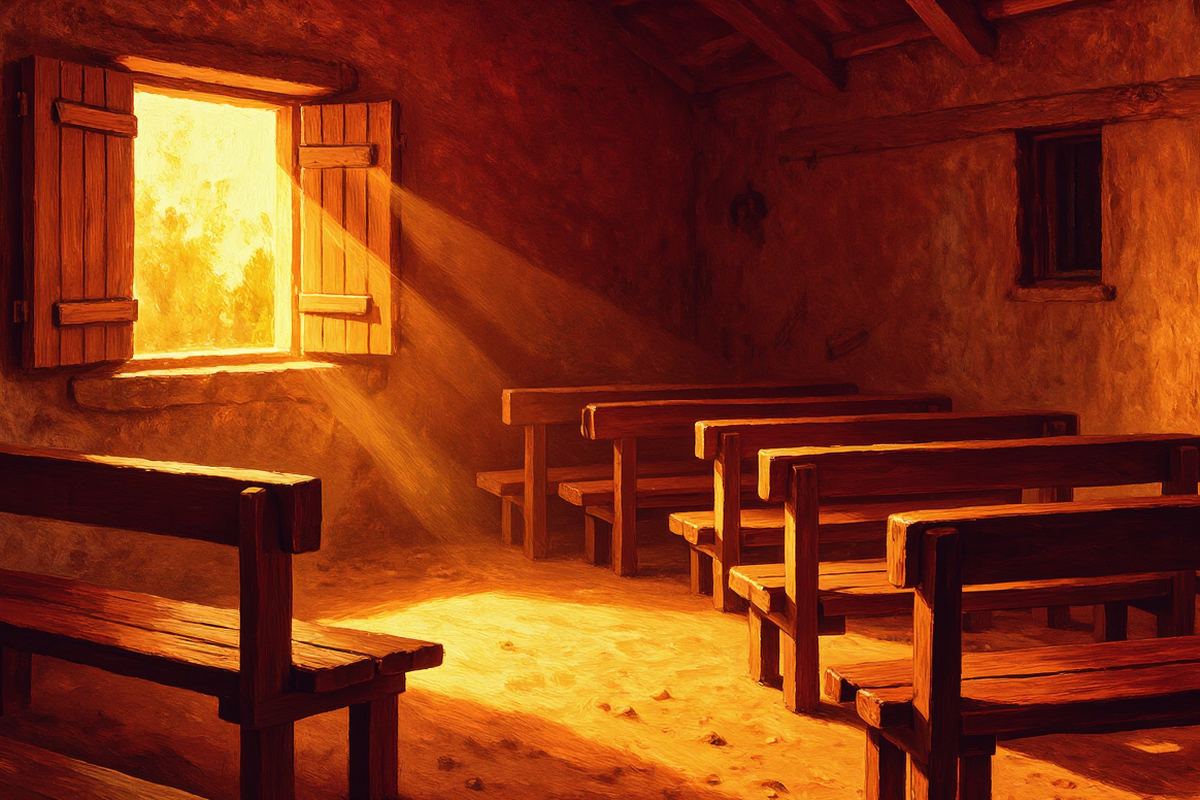
The next morning, in his quiet time, the Lord said, “I don’t want you to go” to the large church, but to the little one, because it was time for His glory to pour out there. When he arrived, the meeting place was a rented building past a village of shacks. Chickens and pigs were chased out, benches carried in, and about 25 people gathered on a dirt floor. A drunk man sat in the front row.
The Lord told him something more: the building and property would be given to that pastor. He learned the congregation could rent it only on Sunday mornings at an exorbitant price. After about five minutes of teaching on the glory of God, the glory fell. People shouted the name of Jesus, crowds gathered at the windows, and the drunk man grabbed the speaker’s legs, crying for God to forgive him.
When the man was sober, he spoke. He owned the property. He had come to disrupt the service because he hated Christians, and that was why he charged so much. Now he was giving them the building and the land. About 20 more people outside received Christ. A year later the pastor returned to dedicate a new building with about 200 people, many of them youth and children, drawn from a high school built nearby, just as the Lord had said.
Paul, Jesus and the Blind Men: Why God Sometimes Says No
Jesus lived this way. The pastor points to His words that the Son can only do what He sees the Father do (John 5:19). Paul did too. In Acts 16:6–34, Paul and his companions “were forbidden by the Holy Spirit to preach the word in Asia,” and then the Spirit did not permit them to go into Bithynia, a region Paul knew. Imagine, the pastor says, a minister told not to preach. Instead a vision called them to Macedonia.
They went to Philippi, which the pastor explains was known as little Rome. The more a city became like Rome, the more benefits it received, and the church, he says, should live the same way: when in heaven, do as heaven does.
In Philippi, Lydia, a seller of purple, was born again. A slave girl with a spirit of divination was set free. Paul and Silas were beaten and jailed, praised at midnight, and an earthquake opened the doors. The jailer asked what he must do to be saved. Business, government and common people were all reached in the most Roman city outside Rome. When Paul later reached Rome, a church was already there.
| Who | What looked right | What the Spirit said | What followed |
|---|---|---|---|
| Paul (Acts 16) | Preach in Asia and Bithynia, among friends | Not there; go to Macedonia | Lydia, a slave girl delivered from a spirit of divination, and a jailer’s household saved in “little Rome” |
| The pastor (Philippines) | Preach at the large church to reach hundreds | Go to the little church | Glory fell, the owner was saved and gave the building, a youth-filled church grew |
| Jesus (Matthew 9) | Heal two blind men on the road at once | Keep walking | Their faith rose, and their eyes were opened according to their faith |
Jesus also submitted to John’s baptism “to fulfill all righteousness” (Matthew 3:13–17). Then the Spirit drove Him into the uncomfortable wilderness. He went in full of the Holy Spirit and came back in the power of the Spirit (Luke 4:1–14).
The most striking example is Matthew 9:27–30. Two blind men cried out, and Jesus, who was moved with compassion and healed them all, walked right past. They followed Him into the house. He asked whether they believed He could do it, they said yes, and He healed them according to their faith. The pastor teaches that the delay was on purpose, so their faith would rise and mature. When God says no, he says, it is for your benefit.
Living It Out: Following the Holy Spirit This Week
The pastor says the Lord sometimes restricts what we can do so that faith will mature in us and take hold of His promises. In uncertain days, when no one knows how long currency or jobs will last, the church is still called to arise and shine (Isaiah 60:1–2). He recalls a minister in the Second World War whose congregation prayed each week to learn from the Holy Spirit where to meet in secret. Here are practical steps from this message:
- Test every leading by the Word. If an impression contradicts Scripture, treat it as your soul talking, not the Holy Spirit.
- Ask before you accept the opportunity. Like the pastor in the Philippines, bring even good invitations to the Lord in your quiet time before you say yes.
- Do not borrow someone else’s leading. When his church started a school, he told families not to feel pressure. Obey what God tells you, without needing a crutch beside you.
- Accept no without an explanation. Good parents sometimes say no without giving reasons; in Acts 16 the Spirit did not explain either. Keep acknowledging Him.
- Do not confuse delay with leading. He admits putting off paperwork he dislikes. Procrastination is not the Spirit of God; when He says do it, do it.
- Pray for sensitivity. His closing prayer asks the Lord to help you notice not only when to act, but when not to act.
Timestamped Outline
- 28:25 Sometimes doing nothing is the right thing
- 30:45 Foundation verse: Proverbs 3:5–6
- 31:51 Lay aside the clutter: James 1:21
- 32:56 Romans 12 and the renewed mind
- 37:17 Daily surrender and the hidden inheritance
- 39:27 Led by the Word: a more sure word
- 41:32 The inner witness: Proverbs 20:27
- 44:52 James 4: friendship with the world
- 52:09 Goodness stored up: Psalm 31:19
- 56:03 When God tells us not to do something
- 57:21 The invitation to the Philippines
- 1:00:38 The little church past the village
- 1:03:53 The glory falls
- 1:05:45 The owner gives the building
- 1:08:55 Acts 16: forbidden to preach in Asia
- 1:14:39 The slave girl, the prison and the jailer
- 1:29:20 The two blind men
- 1:32:37 Invitation to salvation and closing prayer
Frequently Asked Questions
Is waiting on God just an excuse for putting things off?
No. The pastor is direct that procrastination is not the Spirit of God. When the Lord tells him to do something, he has learned to just do it. Holding back is only right when it comes from the Holy Spirit’s leading, not from your own reluctance or comfort. The test is whether you are acknowledging Him or simply avoiding something.
Why does the pastor say our spirit is as righteous as God?
He bases it on Romans 5:17, where righteousness is called a gift. He is clear that his actions are not as good as God’s. But the born-again spirit received God’s righteousness as a gift, so it is right with Him, and that is why God can lead through it. The soul, meaning the mind, will and emotions, still falls short and must be renewed. Many religious people, he says, struggle to separate the two.
How do I respond if I have ignored the Holy Spirit for years?
The pastor says everyone goes through seasons of not listening, and the problems that follow are a signal, not a verdict. His advice is simple: get up and say, “Lord, I’m gonna do it.” Each time you return and obey, His voice becomes clearer and you become more trusting. Even if it takes 20 or 30 years, he says, keep applying yourself and keep walking forward.
Scripture References
All passages open in the New King James Version on Bible Gateway:
- Proverbs 3:5–6 — trust in the Lord and lean not on your own understanding
- Acts 16:6–34 — forbidden in Asia, called to Macedonia
- Matthew 9:27–30 — two blind men healed according to their faith
- James 4:4–6 — friendship with the world and grace to the humble
- James 1:21 — the implanted word saves the soul
- Romans 12:1–2 — a living sacrifice and a renewed mind
- Proverbs 20:27 — the spirit of man is the lamp of the Lord
- 2 Peter 1:16–19 — the more sure word of prophecy
- Psalm 31:19 — goodness stored up for those who fear Him
How this summary was made: written with AI assistance from the sermon’s own transcript and checked against the Scriptures listed above.
Watch More Messages
If this message helped you listen to the Holy Spirit, there are hundreds more teachings from NTC Ministries. Browse the full sermon archive and keep learning to follow where He leads.