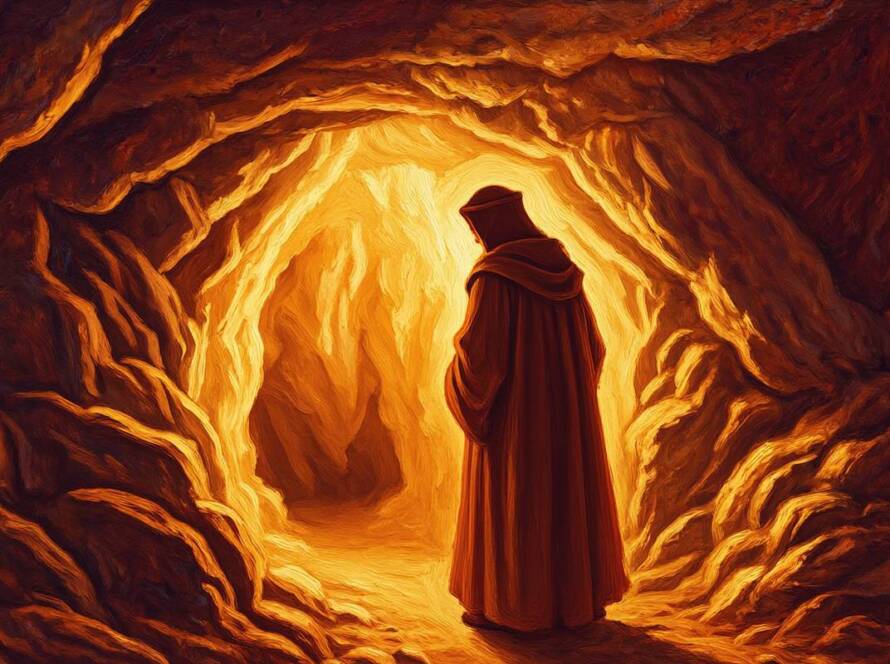
Drawing near to God means more than learning facts about Him. It means letting His Word reach your heart until you know His glory by experience. In this message from the Drawing Near to God series at NTC Ministries, the speaker teaches that the earth will be filled with the knowledge of the glory of the Lord, and that the obstacles in our hearts are what keep that glory from filling our own lives.
This message continues from Drawing Near to God #8: Knowing His Voice Above Every Other Voice. Below you will find the full video, a structured summary, the Scripture behind each point (linked to the New King James Version on Bible Gateway), a comparison of head knowledge and heart knowledge, a timestamped outline, and practical steps for this week.
Sermon at a Glance
This message was posted on March 4, 2026, and runs about 64 minutes, closing with a prayer of repentance and renewed intimacy with God. The speaker returns to the foundational text of the whole series, James 4:6–10: God resists the proud but gives grace to the humble. Submit to God, resist the devil, draw near to God and He will draw near to you.
The theme for this session is filling the earth with God’s glory. The thread running through it is a contrast between knowing God with the intellect and the five senses, and knowing Him with the heart, where His Word makes a lasting impression.
| Detail | Information |
|---|---|
| Speaker | The speaker is not named in the video |
| Series | Drawing Near to God (#10) |
| Main text | James 4:6–10 and Habakkuk 2:14 |
| Key theme | Knowing God’s glory by heart experience, not intellect alone |
| Length | About 64 minutes, ending in prayer |
Drawing Near to God With the Heart, Not the Head
James goes on to say, “Cleanse your hands, you sinners; and purify your hearts, you double-minded.” The speaker says sinner is not a terrible word. It simply means missing the mark, not yet fully matured. Being double-minded means trying to hold the mind of Christ alongside our own emotional and intellectual thinking, which only creates conflict, because the carnal mind is enmity against God (Romans 8:7).
James also tells us to lament, mourn and weep. Many people conclude that repentance requires crying at an altar. Someone may weep, the speaker says, but you do not have to. To repent is to bring yourself into harmony with God, and that does not depend on an emotional display. Many people judge what God is doing inside a person by outward emotion, and that is a mistake.
The reason our hearts carry obstacles is that God’s Word is not yet clear there. God speaks to our hearts, not our heads; following Him is not an intellectual exercise. When Adam and Eve sinned, they became bound to their emotions and senses, so everything had to be processed through touch, taste, smell, hearing and sight. Before the fall, God communicated with Adam spirit to spirit.
The speaker illustrates the difference with lightning. As a high school student he was working in the woods with his father when a storm rolled in, and a bolt struck a tree no more than ten feet away and knocked them both over. You could feel it inside you, he says. Thunder twenty miles off reaches your head; a strike next to you reaches your heart. God’s voice is like thunder over many waters (Psalm 29:3).
Anything we believe that is less than what God says limits Him. God’s thoughts toward us are good, and He wants blessing and greatness for every person. But if we see Him as a hard God who is waiting to judge and destroy, His goodness cannot come to pass in our lives.
A Twisted Heart Limits God
Some Christians, because of a religious ideology, literally refuse to pursue what God wants for them. They argue for sickness, poverty and a hard life, and in doing so they limit God. The speaker says God is obligated to keep every one of His promises, and not one will fail. But He is not obligated to make your potential come to pass. That requires you to work with Him and open your heart to His voice.
Proverbs 17:20 says he who has a deceitful heart finds no good. Other translations say he will not succeed, will not prosper, will not do well in life. The King James word is froward, which the speaker explains means twisted or crooked: a heart that cannot find a good life because its view of God is distorted.
He tells of a family friend who was in a coma after a serious car accident. They prayed and placed a prayer cloth under his pillow, and the next day he was awake and doing fine. Physically and mentally he recovered, yet fear stayed in his thinking. He became afraid to give anything his all in case he got hurt again. Asked how he was doing, he would answer, “Living the dream,” with a little sarcasm.
That, the speaker says, is bondage. It is not a devil to be cast out but a thought holding a person captive. That is why Scripture tells us to cast down imaginations and bring every thought into captivity to the obedience of Christ. The weapons of our warfare are not carnal but mighty through God for pulling down strongholds (2 Corinthians 10:4–5).
Everything in the kingdom has a light side and a dark side. Jesus warned that the light in us could actually be darkness (Luke 11:35), meaning what we believe about God could be wrong. So our belief has to stay in harmony with Him. We repent, cast down imaginations and keep letting God speak truth into our hearts, which gives a very different result than hearing with the mind.
A true encounter with God, such as being born again or healed, stays with you and changes who you are, and every word of God can do that. Hearing only with the head leads to offense, and we end up resisting God instead of the devil.

The Knowledge of His Glory
Habakkuk 2:14 says, “For the earth will be filled with the knowledge of the glory of the Lord, as the waters cover the sea.” The speaker points out that most people read it as the earth being filled with the glory of the Lord. But the earth is always full of His glory. The promise is about the knowledge of that glory, and reading it wrong for years shows how the head can override what the text says.
He does not dismiss study. We must renew our minds to the Word, and people without right knowledge of God are easily deceived. But informational knowledge is not a replacement for experience. After the fall, God had to lead Israel through the senses, with a pillar of cloud and a pillar of fire. That motivated them for a time, but because it was only intellectual, it did not hold them to God.
From his military service, the speaker recalls feeling lightning twenty miles away on deck, with nothing in between. That is the voice we must press in to hear. Going to seminary is not enough; he repeats the old joke that many seminaries are cemeteries, where people receive a dead letter and come out dead ministers. The living word, rhema, is tailor-made for each person.
Psalm 72:18–19 blesses the Lord God, who only does wondrous things, and prays, “Let the whole earth be filled with His glory.” Nothing God does is common, the speaker says. What enters the heart stays to the grave. Nobody can convince him that God is not good, does not heal or does not bless, because he has an impression of truth from the living God.
He describes the day that impression came. In the ministry’s administrative building, the presence of God came on him like a lightning bolt and drove him to the carpet. He could not get up all day and wept until the skin on his cheeks was rubbed raw. Others sensed the presence and would not enter the room, but he was experiencing it.
The table below follows his explanation of the difference between the two kinds of knowing.
| Head knowledge | Heart knowledge |
|---|---|
| Thunder heard twenty miles away | Lightning felt inside you |
| Comes through the five senses | Comes as God speaks to the heart |
| Produces spurts of church, giving and Bible reading | Produces a stable, consistent and growing life |
| Fades a week after a great service | Stays with you to the grave |
| Takes offense when the Word disagrees | Submits to God and resists the devil |
| Fears God as a hard master | Knows Him as a good and generous Father |
Seeing God as He Really Is
The Hebrew word for glory is kabod, which the speaker explains as weight in a good sense, the heaviness of God’s presence that held him on the floor. It also means splendor and copiousness: abundance, wealth, treasure, honor, dignity, the infinite perfection of God. The Greek word, doxa, means having the same view and opinion of God that He has, knowing the reality of who He is.
God does not want us to be the neighbor kid who knows about the family; He wants us inside the family, experiencing life together. Perfect love casts out fear (1 John 4:18), and as we draw near, things we could not overcome in our own strength begin to leave. Experiential knowledge stabilizes us, moving us from faith to faith and glory to glory (2 Corinthians 3:18).
The little foxes spoil the vines (Song of Solomon 2:15). Small things in us keep His voice from being powerful in our hearts. We confess them as sin, and He cleanses us from all unrighteousness and gives us His righteousness (1 John 1:9), a great exchange.
In Exodus 40:34–35 the cloud covered the tabernacle, the glory of the Lord filled it, and Moses could not enter. Israel physically saw the cloud and the fire, yet it did not keep them strong. Psalm 78 says they limited the Holy One of Israel in the wilderness (Psalm 78:40–41). Our intellect, he says, is not all that; our heart is. Keep your heart, for out of it spring the issues of life (Proverbs 4:23).
That is why, when he prays for people, he tells them to stop praying and simply open their hearts to receive. The series began with Brother Lawrence’s The Practice of the Presence of God, the French friar who understood that such intimacy could be constant.
Jesus said you must be born again to see the kingdom (John 3:3), not with physical eyes but with the eyes, ears and feelings of the heart. Moses received tablets written by God’s finger, but broke them when he saw the golden calf.
When Moses asked to see God’s glory, God hid him in a cleft of the rock and let him see His back (Exodus 33:18–23). That personal experience changed his face so much that he had to wear a veil. In Christ that veil is taken away (2 Corinthians 3:14–16), and God now writes His laws on our hearts (Hebrews 8:10).
All have sinned and fall short of the glory of God (Romans 3:23). The speaker says we miss the glory whenever there is an obstacle in the heart. Even animosity toward someone who hurt you is enough. At Jacob’s well Jesus told the Samaritan woman that the Father seeks those who worship in spirit and in truth (John 4:19–24), not in intellect.

A Heart Built to Hold His Glory
God can only be to us who we perceive Him to be. The speaker reads the parable of the talents in Matthew 25:14–30. The servants with five and two talents doubled them and heard the same words: well done, good and faithful servant, I will make you ruler over many things. God has always wanted increase, from the first command in Eden to be fruitful and multiply (Genesis 1:28), in finances, health and relationships.
He adds that the word helper in Genesis does not mean secondary, linking it to the Helper Jesus promised (John 16:7–13). Men and women share the same calling to multiply, with different functions.
The third servant said, “I knew you to be a hard man,” and hid his talent. The others knew their master to be generous, and each received what he believed. Seeing God as a harsh judge who sends sickness or wrecks your car comes from a warped heart. Take heed what you hear, Jesus said, because with the same measure it will be measured to you (Mark 4:24–25). If your life is going badly, start declaring that God is good.
Hebrews 1:1–4 says God once spoke through the prophets in various ways but has now spoken by His Son, the radiance of His glory and the express image of His being. Jesus went about doing good and healing all who were oppressed by the devil (Acts 10:38).
In Joshua 7:19, after Achan took forbidden gold and clothing from Jericho, Joshua told him to give glory to God and make confession. The speaker explains that giving glory here means confessing sin. We give Him our dull glory and receive His. A heart is built to hold God’s glory the way a gas tank is built to hold gas. A tablespoon of water or a little sand keeps the engine from its full power.
Pharaoh hardened his heart (Exodus 8:32), and God also says He would harden it (Exodus 7:1–5). The speaker explains that God gave a command He knew Pharaoh would refuse, and in refusing, Pharaoh hardened his own heart. Christ is a precious cornerstone to those who believe, but a stone of stumbling to the disobedient (1 Peter 2:6–8).
Every excuse is like another tree planted between you and God, until His voice no longer rattles your cage. That was Ephesus: impressive works, but they had left their first love (Revelation 2:4–5). The answer is to repent, ask forgiveness and return to intimacy.
Living It Out This Week
The speaker closes by declaring that now is the accepted time, the day of salvation (2 Corinthians 6:2), and leads everyone in asking God to cleanse them and fill them with His glory. Here are practical steps for drawing near to God, drawn from the message:
- Name the obstacle. Ask God what in your heart is limiting Him, whether resentment, fear or an old disappointment, and confess it simply.
- Cast down one imagination. Identify a recurring thought that holds you back and answer it with what God says.
- Stop praying and receive. In your next prayer time, after you ask, be quiet and open your heart to the Holy Spirit.
- Check your picture of God. If you see Him as a hard master, replace that view by declaring that He is good and generous.
- Obey the command you have been avoiding. Every excuse plants another tree; one step of obedience clears the way.
- Practice His presence. Like Brother Lawrence, turn your attention to God during ordinary tasks throughout the day.
Timestamped Outline
- 0:00 James 4: draw near to God
- 1:00 Repentance means harmony, not emotion
- 2:05 God speaks to the heart, not the head
- 3:17 The lightning strike in the woods
- 5:27 Christians who fight against God’s best
- 6:39 Proverbs 17:20: a deceitful heart
- 8:50 Casting down imaginations
- 12:19 Habakkuk 2:14: the knowledge of His glory
- 17:16 Psalm 72 and an encounter with God
- 19:33 Kabod and doxa: what glory means
- 23:11 Exodus 40: the glory fills the tabernacle
- 25:53 Guard your heart
- 28:16 Psalm 78: they limited God
- 30:52 Moses, the tablets and the cleft of the rock
- 35:43 Romans 3:23 and the woman at the well
- 39:12 Matthew 25: the parable of the talents
- 43:08 “I knew you to be a hard man”
- 48:11 Hebrews 1: the radiance of His glory
- 50:46 Joshua 7: give glory to God
- 53:18 A heart built to hold glory
- 55:49 Pharaoh’s hardened heart
- 1:01:10 Ephesus and the first love
- 1:02:26 Prayer of repentance and intimacy
Drawing Near to God Series
This message is part of an ongoing teaching series at NTC Ministries on intimacy with God. Start from the beginning or go back one message:
- First message: Drawing Near to God #1 — A Vision of Rising Mountains
- Previous: Drawing Near to God #8: Knowing His Voice Above Every Other Voice
- You are here: Drawing Near to God #10 — Filled With the Knowledge of His Glory
Frequently Asked Questions
Does a loving God take care of people the way a gang does?
The speaker uses this contrast to show how a twisted heart misreads God. In an old gangster movie, “we’ve got to take care of that guy” means getting rid of someone. When a loving father says the same words to his family, it means protecting and providing for that person. The words are identical, but the heart behind them changes the meaning. A heart full of obstacles hears God’s care as a threat and blames Him for harm He never did.
Why did Moses have to carve the second set of tablets himself?
The speaker says Moses’ first encounter on the mountain was received through his intellect, so when opposition came in the form of the golden calf, he could not hold on to it and broke the stones God had written. God then told him to chisel the next set himself. He compares it to reading a warning label and only truly learning after touching the outlet. Experience writes the lesson deeper than information.
Is it wrong to fear God?
The speaker agrees that we should reverence and respect God because of His greatness. What he rejects is a fear that comes only through the intellect, which reasons that if you fail to do something God will send you to hell, make you sick or destroy your car. That, he says, is not God, and believers should not listen to people who present Him that way. True reverence grows from knowing His goodness in the heart.
Scripture References
All passages open in the New King James Version on Bible Gateway:
- James 4:6–10 — draw near to God
- Habakkuk 2:14 — the knowledge of the glory of the Lord
- Psalm 72:18–19 — let the whole earth be filled with His glory
- Proverbs 17:20 — a deceitful heart finds no good
- Exodus 40:34–35 — the glory fills the tabernacle
- John 4:19–24 — worship in spirit and truth
- Matthew 25:14–30 — the parable of the talents
- Hebrews 1:1–4 — the radiance of God’s glory
- Joshua 7:19 — give glory to God
- 1 Peter 2:6–8 — the chief cornerstone
How this summary was made: written with AI assistance from the sermon’s own transcript and checked against the Scriptures listed above.
Watch More Messages
If this message drew you closer to God, there are hundreds more teachings from NTC Ministries waiting for you. Browse the full sermon archive and keep pressing into the knowledge of His glory.