Healing the sick is not something God does reluctantly for a favored few. In this fourth message of the series, the speaker shows that God has given His people many different ways to receive healing, and he focuses on two of them: anointing with oil, from James 5, and the prayer cloth, from Acts 19. Before that, he reviews the earlier lessons on praying in the name of Jesus and the prayer of agreement. This message continues from God’s Heart for Healing the Sick #3: The Prayer of Agreement and the Name of Jesus.
Below you will find the full video, a structured summary of the teaching, the Scripture behind each point (linked to the New King James Version on Bible Gateway), a timestamped outline, and practical steps for putting these truths to work this week.
Sermon at a Glance
This message was posted by NTC Ministries in July 2024 as part four of a five-part series on God’s heart for healing the sick. The speaker opens by saying that no one can doubt God’s desire to see His people healed once they see all the different ways He has provided for healing to come.
He spends the first part of the message reviewing the name of Jesus and the prayer of agreement, then teaches on anointing with oil, answers common objections to the prayer of faith, and closes with stories about the prayer cloth. He ends by sending the church out as a mission field where people will be healed and set free.
| Detail | Information |
|---|---|
| Speaker | Not named in the recording (a minister of NTC Ministries) |
| Series | God’s Heart for Healing the Sick, part 4 |
| Main text | James 5:13–15 and Acts 19:11–12 |
| Key theme | God gives many methods of healing, including anointing with oil and the prayer cloth |
| Length | About 70 minutes |
Holding the Name of Jesus Holy
The speaker begins where the series started, with John 14:12–14. Jesus promised that whoever believes in Him will do the works He did, and greater works, and that whatever we ask in His name He will do. The greater work, the speaker explains, is giving people eternal life, something Jesus did not do while He walked the earth because He had not yet destroyed death, hell and the grave.
In John 16:23–24, Jesus told His disciples that after His resurrection they would ask the Father in His name: “Ask, and you will receive, that your joy may be full.” Jesus wants to work with us, the speaker says. He is eager to see people blessed.
But the name only works when we believe in it. People use God’s name in derogatory ways and then expect it to work when they need help. The speaker warns that using the name of Jesus flippantly destroys your own confidence in the authority of that name, and he believes Satan encourages it for that reason.
1 John 3:23 says God’s command is that we believe on the name of His Son Jesus Christ and love one another. If you believe in that name, the speaker says, you will hold it holy and dear, and then you will use it to break yokes of bondage and to release everything that was purchased for us. Healing the sick starts with honoring that name. He sometimes prays simply by speaking it: Jesus my Redeemer, my Savior, my supplier, the name above every name.
The Prayer of Agreement
Doubt is a destroyer, the speaker says. If you are going to doubt anything, doubt your doubts. Most people live by what he calls sense faith, believing only what they can see, hear, smell, touch and taste. The disciples were like that while Jesus walked with them. When Peter confessed that Jesus was the Christ, Jesus said flesh and blood had not revealed it to him, but His Father in heaven (Matthew 16:16–17).
Peter saw every miracle and stood on the Mount of Transfiguration, yet he still denied Jesus. The Father’s word there was simple: “This is My beloved Son… Hear Him!” (Matthew 17:1–5). Only after the Holy Spirit came did Peter have spiritual faith, and the speaker says it turned that coward into a brave man.
Matthew 18:18–20 says that if two agree on earth about anything they ask, it will be done by the Father. When we agree with heaven, it is loosed from heaven. He adds that Peter says unresolved conflict between husband and wife hinders their prayers (1 Peter 3:7), so couples must learn to talk and reason together.
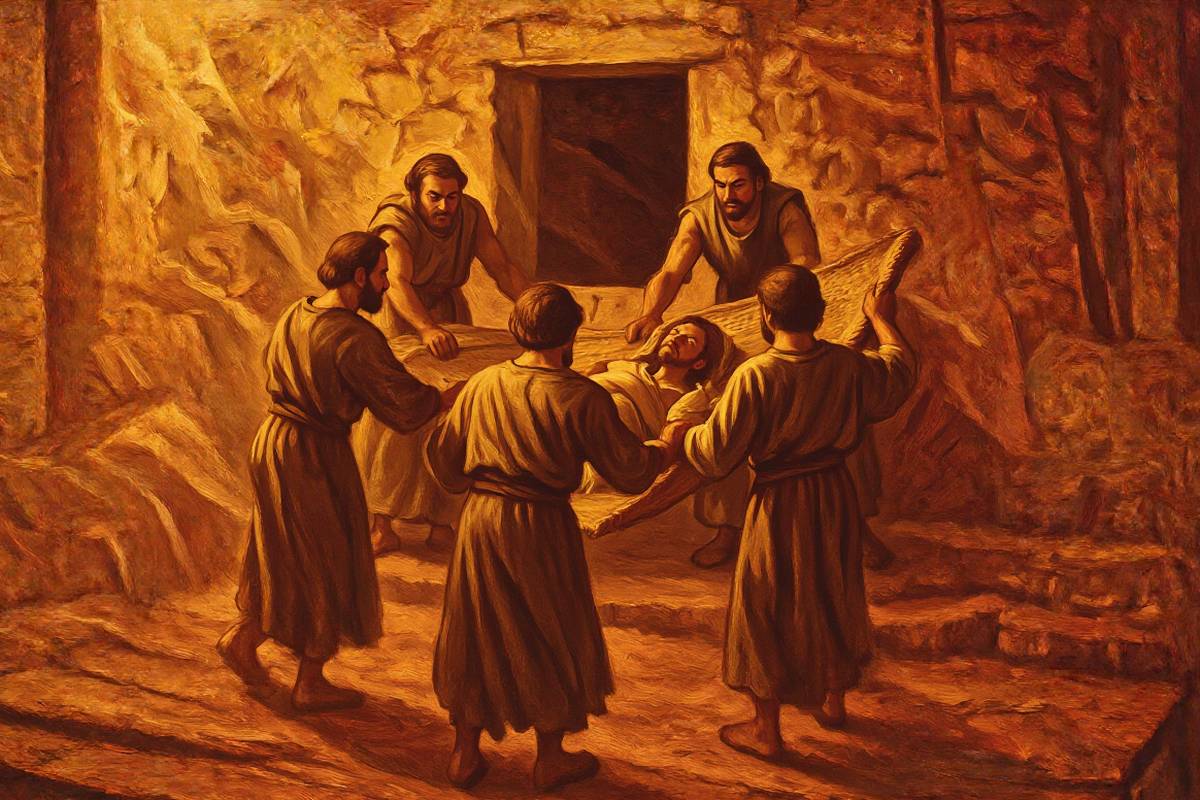
His picture of agreement is the four men who carried a paralyzed friend to Jesus, climbed onto the roof and tore it open to lower him down (Mark 2:1–12). The prayer of agreement, he says, tears away whatever stands between a person and God. He reports that after the church prayed in agreement the week before, a member named David, whose foot had been swollen and painful for weeks, was healed and is dancing again.
He also uses Psalm 133. The oil running down Aaron’s beard is the anointing in the church, and the dew of Hermon is God’s power in the world. Dew does not fall under an umbrella, he notes. The prayer of agreement removes that covering so the refreshing of God can reach people who do not yet know Him.
Anointing With Oil for Healing the Sick
The main text is James 5:13–15: “Is anyone among you suffering? Let him pray. Is anyone cheerful? Let him sing psalms. Is anyone among you sick? Let him call for the elders of the church, and let them pray over him, anointing him with oil in the name of the Lord.”
The speaker separates the two situations. The word for suffering, which the King James renders as afflicted, means to undergo hardship. It is not about physical sickness. It describes a hard season when things are not going well. For that, James does not say to call the elders. He says to pray, and to let the hardship draw you closer to God so He can change you inside.
He compares this to crushing grapes for wine and olives for oil: pressure is what brings the good out. Oil and wine in Scripture speak of healing, as when the Good Samaritan poured them into the wounds of the man beaten on the road to Jericho (Luke 10:30–34). If you are cheerful, sing and say so, instead of telling everyone what went wrong.
Many people at his crusades and conferences ask him to make their hardship go away. He tells them they will have to walk through it, knowing the Lord is with them in the waters and the fire (Isaiah 43:2). An army that ran at the first problem would not be an army, he says, and we are in the Lord’s army.
Sickness is different. Then you call for the elders, and anointing with oil follows with prayer. He adds that the elders are not mind readers, so tell them. Healing is not only for a favored few. In Mark 6:12–13, the disciples went out, “anointed with oil many who were sick, and healed them.”
He encourages believers to carry a small bottle of anointing oil, which can be bought online. Oil has been used in Scripture since the beginning, as when Samuel poured it on young David’s head (1 Samuel 16:13). He describes ordaining ministers from the ministry’s Bible colleges in Africa, where oil is poured from a bucket until it runs down their suits. Every sick person, he says, has a kingdom right to call for the elders, and to be healed and forgiven at the same time.
The Prayer of Faith and Three Common Doubts
James says the prayer of faith will save the sick and the Lord will raise him up. The speaker calls this the key. Using the name of Jesus without faith is not enough. We do not fight sickness; we fight the fight of faith until we are confident we are healed. He adds 3 John 2, God’s desire that we prosper and be in health as our soul prospers.
He then answers three thoughts that keep people from praying in faith. The table follows his responses.
| The doubt | How the speaker answers it |
|---|---|
| They don’t deserve it; look at their character | God heals and forgives at the same time. Healing and salvation are the same thing, and God will change their character. |
| Maybe God is teaching them a lesson | Nowhere does Scripture say God teaches through sickness. The Holy Spirit teaches us all things (John 14:26). A hardship may get our attention, but it is not the teacher. |
| Maybe God wants to take them home | God does not need sickness to call someone home. “You take away their breath, they die and return to their dust” (Psalm 104:29). He is sovereign. |
The speaker is blunt about the second doubt. He says the idea that God makes people sick to teach them is not of God, no matter how well known the minister who teaches it. When he goes through something hard, he learns because his attention turns to the Lord, not because the problem is instructing him.
On the third, he explains that sovereign means God exists and acts without any external aid. Still, God chooses to partner with His children. Jesus called Himself the light of the world, then told His followers that they are the salt of the earth and the light of the world (Matthew 5:13–14), because He wants to work through His family.
Your Body Belongs to the Lord
Ephesians 5:23 calls Christ the Savior of the body. If He is the Savior of the body, the speaker asks, why would He want you sick? That would be counterproductive. 1 Corinthians 6:13–15 says “the body is… for the Lord, and the Lord for the body,” and that our bodies are members of Christ.
Your body is not an afterthought or a suitcase you carry around this earth, he says. It is useful to God. 1 Corinthians 6:19–20 adds that your body is the temple of the Holy Spirit, that you are not your own, and that you were bought at a price, so glorify God in your body and in your spirit, which are God’s.
Many Christians, he says, relate to God only in the spirit, but we need to relate our bodies to Him too. If your body belongs to the Lord, it is certainly not for Satan, the thief who comes to steal, kill and destroy (John 10:10). So do not tolerate sickness. Rebuke it right away in the name of Jesus, whether it is a headache, a sniffle or a red spot, as an intruder in the temple of God.
“Stand fast therefore in the liberty by which Christ has made us free” (Galatians 5:1). Consecrating yourself through fasting and prayer refocuses you on God, and Isaiah 58:8 promises that your healing shall spring forth speedily. Ask in faith without doubting (James 1:6–8). An oak tree, he says, does not settle for three feet when it was made to grow sixty or seventy.

The Prayer Cloth: Acts 19
The next method is the prayer cloth. “Now God worked unusual miracles by the hands of Paul, so that even handkerchiefs or aprons were brought from his body to the sick, and the diseases left them and the evil spirits went out of them” (Acts 19:11–12). The anointing on Paul’s life was on the cloth, the speaker says, and not only were the sick healed but demons left.
He tells a prayer cloth story from a Muslim area of Uganda, where he was planting a church under a tent crowded three deep. A woman who had just given her life to Jesus asked for prayer for her husband, a Muslim who had started drinking heavily and taking drugs and was now taking their 14-year-old son out all night. The speaker gave her his handkerchief and told her to put it under her husband’s pillow.
The next night she testified that her husband had come home about four in the morning, lay down, then jumped up crying out to God that he needed Him. He was instantly sober and in his right mind. She shared Jesus with him and they prayed together. She pulled him into the tent, and when the speaker asked whether he had given his life to Jesus, he smiled and said that Jesus is his Lord.
The speaker explains that Paul sent cloths when he could not reach the sick and they could not reach him. The anointing is transferable, which is why hands are laid on people. He also tells of a Merrill couple on the edge of divorce. He gave the wife his handkerchief to place under her husband’s pillow, and about a month later they came back together and in love.
God is no respecter of persons (Acts 10:34). You do not need to be a pastor or an apostle for these miracles to happen. He recalls T.L. Osborn’s saying that miracles are a dinner bell for the world, and he urges people to testify, because we overcome by the blood of the Lamb and the word of our testimony (Revelation 12:11). The church had a thousand prayer cloths printed with Acts 19:11–12, kept them in the pulpit through the series, prayed over them, and offered them to the congregation.
Putting Healing Into Practice
Healing the sick is meant to be ordinary Christian work. The speaker asks why believers would sit and do nothing when God has given so many methods: the name of Jesus, the prayer of agreement, anointing with oil, prayer cloths and consecration. We are to labor together with Him, go out into the highways and byways and compel people to come in (Luke 14:23). Next week, he says, he will teach on laying hands on the sick so they recover (Mark 16:15–18).
- Carry anointing oil. Keep a small bottle with you and be ready to anoint and pray for the sick in the name of the Lord.
- Call for the elders. When you are sick, do not wait for someone to guess. Ask the elders of the church to pray over you.
- Pray through hardship. When the trouble is not sickness, pray and let it draw you closer to God instead of asking someone to make it vanish.
- Use a prayer cloth in faith. Give an anointed cloth to someone who is sick or bound, or lay one on your own body believing God.
- Rebuke sickness quickly. Treat every symptom as an intruder in God’s temple and command it to leave in Jesus’ name.
- Testify. Tell people what God has done for you so faith spreads and others are drawn to Jesus.
Timestamped Outline
- 0:00 Review: praying in the name of Jesus
- 2:20 Greater works and John 16:23–24
- 4:38 Believe in the name: 1 John 3:23
- 7:01 Sense faith versus spiritual faith
- 9:26 The prayer of agreement: Matthew 18
- 11:33 Four men tear open the roof
- 12:33 David’s healed foot
- 14:55 Psalm 133 and the dew of Hermon
- 17:04 Anointing with oil: James 5
- 19:32 Suffering means hardship, not sickness
- 24:27 Walking through the fire and the flood
- 26:46 Mark 6 and carrying anointing oil
- 29:02 Ordaining ministers in Africa
- 32:13 The prayer of faith
- 34:32 Does God teach through sickness?
- 35:45 Does God take people home through sickness?
- 39:19 The body is for the Lord
- 45:24 Stand fast in liberty
- 50:06 The prayer cloth: Acts 19
- 51:23 A husband transformed in Uganda
- 56:22 A marriage restored in Merrill
- 59:26 The power of testimony
- 1:04:53 A thousand prayer cloths
- 1:08:15 Closing prayer and sending out
God’s Heart for Healing the Sick Series
This message is part of a five-part series at NTC Ministries. Start from the beginning or continue where this one leaves off:
- First message: God’s Heart for Healing the Sick #1: Wake Up and Labor Together With God
- Previous: God’s Heart for Healing the Sick #3: The Prayer of Agreement and the Name of Jesus
- You are here: God’s Heart for Healing the Sick #4: Anointing With Oil and the Prayer Cloth
- Next: God’s Heart for Healing the Sick #5 — The Laying On of Hands
Frequently Asked Questions
Do I need special oil to anoint the sick?
The speaker does not require any particular kind. He mentions that the oil he carries is, he thinks, scented with frankincense and myrrh, and that a small bottle can be bought online. The oil poured on ministers in Africa was simply olive oil. He notes that oil can help people from a religious background who need a visible aid, but the power is in the prayer of faith offered in the name of the Lord.
Can someone who is not a pastor use a prayer cloth or pray for healing?
Yes. The speaker teaches that God shows no partiality, so you do not have to be a pastor, prophet, evangelist, teacher or apostle to see miracles. He tells the congregation that even those who have not been healed themselves carry the anointing for healing. He urges anyone who has received a healing, like David with his foot, to start praying for others.
Why do some people seem to lose a healing?
The speaker connects it with failing to testify and to stay active. Believers overcome by the blood of the Lamb and the word of their testimony, he says, so a healing kept silent can be lost. He compares it to people who sit at home and become weak physically. The Word of God is living and powerful (Hebrews 4:12), and believers should be just as alive, declaring what God has done.
Scripture References
All passages open in the New King James Version on Bible Gateway:
- James 5:13–15 — anointing with oil and the prayer of faith
- Acts 19:11–12 — handkerchiefs and aprons from Paul
- Mark 6:12–13 — the disciples anoint the sick
- John 14:12–14 — asking in the name of Jesus
- Matthew 18:18–20 — the prayer of agreement
- 1 Corinthians 6:19–20 — your body is the temple of the Holy Spirit
- 3 John 2 — prosper and be in health
- Isaiah 58:8 — your healing shall spring forth
- Acts 10:34 — God shows no partiality
How this summary was made: written with AI assistance from the sermon’s own transcript and checked against the Scriptures listed above.
Watch More Messages
If this message built your faith for healing, there are hundreds more teachings from NTC Ministries waiting for you. Browse the full sermon archive and keep growing in the Word.