The law of the spirit of life in Jesus Christ is, at its heart, the law of love. In part five of this series, Dr. William P. Hohman teaches that God did not create you because He was lonely, but because love needs someone to receive it. You were made to be loved. Everything in God’s kingdom runs on that one law, and it frees believers from striving, condemnation and the pressure to make themselves perfect.
He walks through Romans 8, the disciples’ unbelief after the resurrection, Jacob’s wrestling match and the story of Mephibosheth at King David’s table before closing with communion. Below you will find the full video, a structured summary, the Scriptures he uses (linked to the New King James Version on Bible Gateway), a timestamped outline and practical steps for living this teaching.
Sermon at a Glance
This message was posted on December 10, 2024, as part five of Dr. Hohman’s series on Romans 8:2. He opens with a short review, because, as he says, review is good for you, and then prays that God would shower the church with His goodness, heal bodies, restore souls and lift burdens.
His starting point is that every person is uniquely designed by God. We often feel less gifted than someone else, while that person may envy us. God is not looking for the perfect person; He already has one, Jesus Christ. He simply wants us available and open so He can perfect what concerns us.
| Detail | Information |
|---|---|
| Speaker | Dr. William P. Hohman |
| Series | The Law of the Spirit of Life in Jesus Christ (part 5) |
| Main text | Romans 8:1–4 and 2 Samuel 9:1–11 |
| Key theme | Everything in God’s kingdom is done by love |
| Length | About 66 minutes, ending in communion |
Created to Be Loved, Not to Fill a Void
Dr. Hohman tells how this revelation came to him about 44 years ago at a Bible college in Dallas, Texas. A teacher said God created man because He was lonely and wanted a family. As soon as he heard it, he says, the Lord spoke to him: if He had been lonely, He would still be lonely, no matter what or whom He created. Then the Lord gave him Malachi 3:6, where the Lord says He does not change.
God is love, and love needs an object to be expressed to. That, Dr. Hohman teaches, is why you were created: so God could show you His love. He illustrates it from his own life: when he first saw his future wife, a love rose up in him that he had never known. She was 11 and he was 12, and they knew that day they would marry; they have now been together 51 years. He could never have known that love without someone to express it to.
The whole story of Scripture follows this pattern. God created mankind in love. When Adam sinned and everything fell under corruption, Jesus came in love, because God so loved the world that He gave His only begotten Son (John 3:16). After the resurrection, He poured out His love, as Romans 5:5 says: the love of God has been poured out in our hearts by the Holy Spirit.
However a person came into this world, Dr. Hohman says, when you are born again you are born in pure love. Music, he notes, was created for love and to worship God. He recalls the charismatic renewal, when tens of thousands were born again.
When we refuse His love, we cannot see who God is or the future He has for us. Dr. Hohman says God’s plans for us are more than the sand of the earth: more than the beach down at the lake, more than the Sahara or the Mojave. Embrace His love, he says, and He will show you more than you probably want to know.
One Law in the Kingdom
Under the old covenant, Dr. Hohman notes, God never really wanted to give the law. David says God did not desire sacrifice and offering, but a broken spirit and a contrite heart He will not despise (Psalm 51:16–17). Yet the law contained 613 commands, not 10.
In the kingdom of heaven, he says, there is one law and one command, and that one law supersedes every other. To show it, he points to the people Jesus chose. None of the twelve were the nicest people. Jesus did not want perfect people; He wanted people who knew they needed Him.
1 Corinthians 1:26–31 says not many wise, mighty or noble are called. God has chosen the foolish things of the world to put to shame the wise, and the weak things to put to shame the mighty, so that whoever glories should glory in the Lord. Even the old covenant said it is “not by might nor by power, but by My Spirit” (Zechariah 4:6).
That is why God gives the Holy Spirit right away. When Paul met disciples at Ephesus, his first question was, “Did you receive the Holy Spirit when you believed?” (Acts 19:1–2). The Spirit is not a reward for winning a marathon, Dr. Hohman says. He is for the one who says, “I need You.”
He draws the same point from Philippians 1:6: He who began a good work in you will complete it. God does not point out your flaws to tell you that you are messed up. He is saying, trust Me, I am changing your life. In Dr. Hohman’s words, God came “to hold us not scold us.”
The Law of the Spirit of Life in Jesus Christ
The core text is Romans 8:1–4. There is no condemnation to those who are in Christ Jesus. Even if you condemn yourself, Dr. Hohman says, you are not condemned by God. For the law of the Spirit of life in Christ Jesus has made us free from the law of sin and death. The law is holy and pure, but it was weak through the flesh, through you and me. That is why Jesus came.
God sent His own Son to condemn sin in the flesh so that the righteousness of the law might be fulfilled in us. Dr. Hohman stresses that this is guaranteed. That is faith: not faith in me or in you, but in Him. Walking after the flesh is thinking, “I can do this, I’ll get it done.” Walking after the Spirit is trusting that the Spirit of God will work it out in you.
Romans 8:13 says that if you live according to the flesh you will die, but if by the Spirit you put to death the deeds of the body, you will live. Mortify, he explains, means put to death, and it happens through the Holy Spirit. So we must be patient with ourselves and with others, including our pastors. Condemning people and calling it a righteous stand is foolishness, he says, because He leads us in paths of righteousness for His name’s sake (Psalm 23:3).
The cross proves the point: God took the worst thing ever done to a person and turned it into the best thing for everybody. If what the enemy means for harm God turns for good (Genesis 50:20), He can turn around your mistakes and foolishness too.
2 Corinthians 3:4–6 says our sufficiency is from God, who made us ministers of the new covenant, not of the letter but of the Spirit, for the letter kills but the Spirit gives life. The spirit of the letter, he says, is love. Jesus told the Pharisees they strained out a gnat and swallowed a camel (Matthew 23:23–24), pointing out rules while forgetting mercy. And if you trust God to change you, James warns against being double-minded (James 1:7–8) by doubting He can change others too.
Here is the one command: “A new commandment I give to you, that you love one another; as I have loved you” (John 13:34–35). Dr. Hohman teaches that the law of the spirit of life in Jesus Christ is the command of love, and faith works only by love (Galatians 5:6). Growth comes by tremendous faith, not tremendous effort, and that faith can be as small as a mustard seed.
Galatians 5:13–15 adds that we are called to liberty, but should through love serve one another, because all the law is fulfilled in one word: love your neighbor as yourself. If we bite and devour one another, we will be consumed. Slander, he notes, is the very meaning of Satan’s name.

God Uses Imperfect People
When the disciples heard that Jesus was alive and that Mary Magdalene had seen Him, they did not believe it (Mark 16:9–11). Yet days later these same men were healing the sick, and Peter’s shadow was healing people. Even then Peter fell back into the law and had to be withstood to his face by Paul (Galatians 2:11). God did not keep a scorecard. The gifts and callings of God are irrevocable (Romans 11:29).
Dr. Hohman points to the Samaritan woman at Jacob’s well, who had five husbands and was living with a man, yet was the first to whom Jesus publicly revealed Himself as Messiah (John 4:16–26). He shares the church tradition that names her Photina, counts her among the apostles for the first three centuries, credits her with over 90 churches, and says she was martyred by being thrown into a well. She met the Lord at a well and went home to Him at a well; God redeems everything.
The disciples could not grasp resurrection life until they were born again (John 3:3), and even then revelation came in stages. You do not need to know everything, he says; just know Jesus will take care of it.
He also shares his own testimony. He gave his life to the Lord at 11 in California during the charismatic movement, but later backslid because he did not want to be a minister. After an overdose, he sat in the corner of a room for three days, afraid to close his eyes. All that time, he says, Jesus sat with him and told him, “It’ll be all right, William, I’m going to use you.” His point: you cannot outwrestle God, and the church is a place for imperfect people who want to change.
Jacob, Israel and the Royal Law of Love
Love also means considering others. 1 Corinthians 10:23–24 says all things are lawful but not all things edify, so let each seek the other’s well-being. Philippians 2:1–4 tells us to esteem others better than ourselves and look out for their interests, not only our own.
Then Dr. Hohman returns to Jacob, the heel-grabber who cheated his brother of the birthright and the blessing. After falling in love, Jacob started living for someone other than himself and began to change. On the way home a Man wrestled with him all night (Genesis 32:24–30), whom Dr. Hohman says most theologians believe was Christ, and touched his hip so that he limped from then on.
Jacob’s plea that the Lord bless him moves Dr. Hohman. Jacob was tired of conniving and straining to be blessed; he just wanted God to bless him. God then renamed him Israel, which he teaches means a prince with God, royalty. That links to what James calls the royal law: love your neighbor as yourself (James 2:8).
Yet Jesus still says, “I am the God of Abraham, the God of Isaac, and the God of Jacob” (Matthew 22:32), not Israel. Dr. Hohman says God wants us to know that no matter how miserable or foolish our life seems, He is still our God. He is there for people who know their life is a mess, not for the self-righteous.
That is why the first thing the Lord hates in Proverbs 6:16–19 is a proud look: God cannot use someone who thinks they have it all together. Paul put away childish things (1 Corinthians 13:11), and thinking you can fix yourself is childish. When we see someone in sin, we go to restore them in a spirit of gentleness (Galatians 6:1), not to condemn them.
He laughs about his own failures. At a building dedication for a Lutheran church in the Upper Peninsula, he spilled a bucket of red food coloring across new sky-blue altar carpet. He preached for two hours hoping everyone would leave, then gave an altar call. Everyone there except the pastor gave their life to Jesus, and they prayed for healing until 4 in the morning with nearly 500 people.
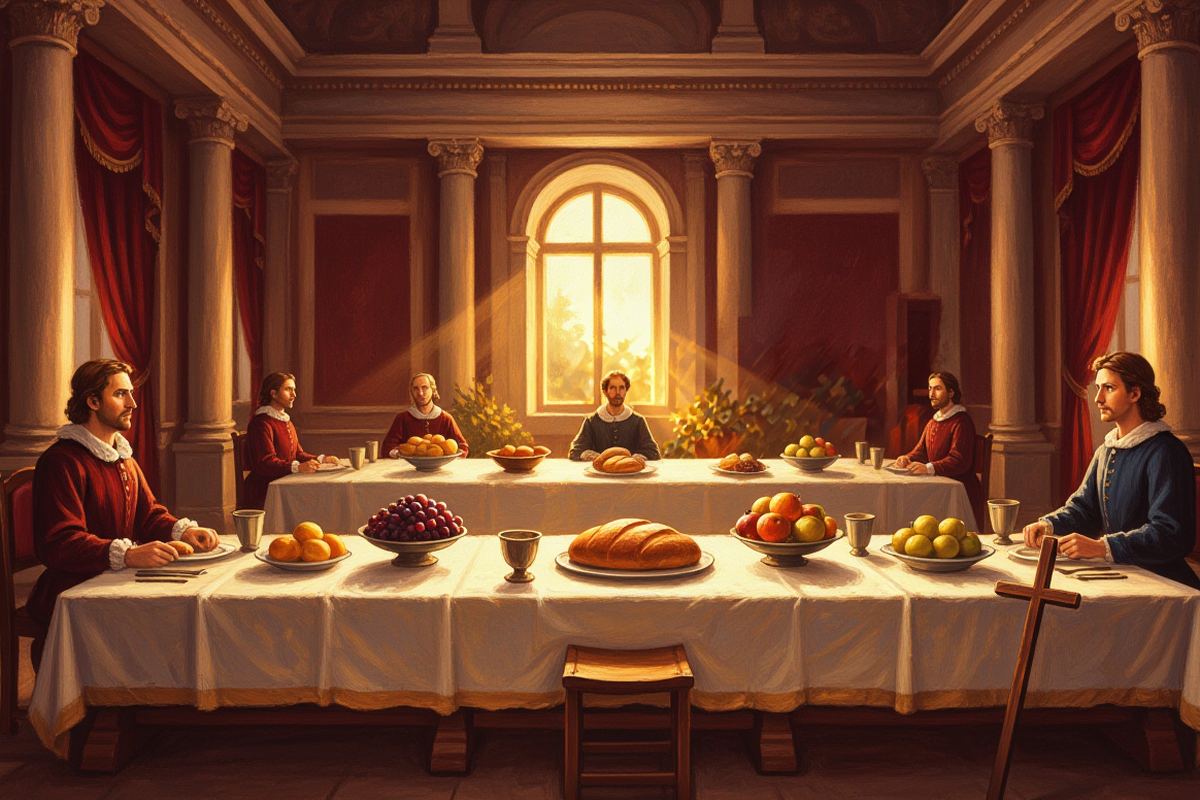
Mephibosheth at the King’s Table
Dr. Hohman’s final story shows grace at work. David, a man after God’s heart, had made a covenant with his friend Jonathan to care for his family. After Saul and Jonathan died in battle, David asked, “Is there still anyone who is left of the house of Saul, that I may show him kindness for Jonathan’s sake?” (2 Samuel 9:1–11). Ziba, Saul’s servant, told him of Jonathan’s son, who was lame in both feet.
2 Samuel 4:4 explains why. Mephibosheth was five when the news of Saul and Jonathan’s death came. His nurse fled with him, knowing new kings often killed the old king’s family, and in her haste he fell and became lame. He was living in Lo Debar, a desolate place.
Brought before David, Mephibosheth bowed, likely expecting death. David called him by name and said, “Do not fear, for I will surely show you kindness for Jonathan your father’s sake.” Mephibosheth answered, “What is your servant, that you should look upon such a dead dog as I?” Dr. Hohman connects David calling his name with Isaiah 43:1: “I have called you by your name; you are Mine.”
That is grace, he says. The Father shows you kindness because of Jesus, not your performance. David gave Mephibosheth everything that belonged to Saul, with Ziba’s 15 sons and 20 servants to farm the land, and he ate at the king’s table like one of the king’s sons.
Dr. Hohman sees communion in this. At the Lord’s table, the part of you that feels like your downfall goes under the table where no one sees it, and everyone sees you as a king’s son. Jesus broke the bread and shared the cup of the covenant (1 Corinthians 11:23–25). All iniquity, and its penalty, was laid on Him (Isaiah 53:6), so God has sworn not to be angry with us or rebuke us (Isaiah 54:9). Those who receive the abundance of grace and the gift of righteousness will reign in life (Romans 5:17).
He closes by reading his daily blog on grace: when we are weak, then we are strong, because His grace is sufficient and His power is made perfect in weakness (2 Corinthians 12:9–10). In prayer he declares healing for those listening, including hearts and ears, as his own declaration of faith.
Living the Law of Love This Week
Dr. Hohman asks the church to think of specific areas they want to change and bring them to the Lord’s table. These steps come from the message:
- Receive His love first. Start each day remembering you were created as the object of God’s love, not to earn it.
- Stop comparing. You are uniquely designed; thank God for your gifts instead of measuring yourself against others.
- Trust the Spirit, not your effort. When you fall short, say, “Lord, I’m confident You’re changing me.”
- Refuse condemnation. Do not condemn yourself, and go to others to restore them gently rather than to judge.
- Consider others. Before you act, ask how it will affect someone else’s life, not just your own.
- Come to the table. At communion, put your weaknesses under the table and see Christ in you, the hope of glory.
Timestamped Outline
- 0:00 Review, prayer and being uniquely designed
- 2:09 God was not lonely: Malachi 3:6
- 3:22 Love needs an object
- 5:39 Born again into pure love
- 7:54 His plans for you are more than the sand
- 10:18 613 laws, and one law in the kingdom
- 12:47 God chooses the foolish and weak
- 14:52 He came to hold us, not scold us
- 18:02 Romans 8:1–4: no condemnation
- 20:19 Flesh versus Spirit: Romans 8:13
- 23:39 The letter kills, the Spirit gives life
- 26:07 The new commandment: John 13:34–35
- 29:46 The disciples did not believe
- 32:29 The woman at the well
- 34:44 Esteem others: Philippians 2
- 37:06 Jacob wrestles with God
- 39:35 Israel, a prince with God
- 41:49 God uses our failures
- 44:03 David’s promise to Jonathan
- 48:59 Mephibosheth brought to the king
- 54:12 A seat at the king’s table
- 55:29 Communion and the covenant
- 1:00:12 When I am weak, then I am strong
- 1:04:16 Closing blessing
Frequently Asked Questions
Why does God still call Himself the God of Jacob?
Dr. Hohman notes that even after Jacob’s name was changed to Israel, Jesus quotes God as “the God of Abraham, the God of Isaac, and the God of Jacob.” He believes God keeps the old name so we know that no matter how foolish or miserable our past has been, He is still our God. He is not the God only of the self-righteous, but of people who know they need Him.
Should we stop trying to be good people?
No. Dr. Hohman says we do put effort into serving one another in love, and his school’s motto is “good, better, best.” The difference is where our confidence rests. Our effort will sometimes fail, even when our heart is right. Our confidence rests in God, who began a good work in us and will complete it, so we trust His Spirit to do the changing instead of worrying about making ourselves perfect.
Who can take communion in this service?
Dr. Hohman invites every born-again believer to come, whether or not they attend NTC Ministries, because the Lord’s table belongs to the general assembly of the church. He asks people to come thinking of specific areas they want God to change, and to receive by the Holy Spirit rather than by their own strength, letting healing, strength and a renewed mind come to them.
Scripture References
All passages open in the New King James Version on Bible Gateway:
- Romans 8:1–4 — the law of the Spirit of life
- Malachi 3:6 — the Lord does not change
- 1 Corinthians 1:26–31 — God chooses the weak
- John 13:34–35 — the new commandment
- Galatians 5:13–15 — through love serve one another
- James 2:8 — the royal law
- Genesis 32:24–30 — Jacob becomes Israel
- 2 Samuel 9:1–11 — Mephibosheth at the king’s table
- 2 Corinthians 12:9–10 — grace is sufficient
How this summary was made: written with AI assistance from the sermon’s own transcript and checked against the Scriptures listed above.
Watch More Messages
If this message helped you rest in God’s love, there are hundreds more teachings from NTC Ministries waiting for you. Browse the full sermon archive and keep growing in His grace.