The biblical principle of first says that whatever we give God first redeems and blesses the rest, because putting Him first is part of His love language. In this opening message, Dr. William P. Hohman moves from ten weeks of teaching on kingdom economy into this new theme. He shows how believers live under two kingdoms, how God keeps His people like Noah in the ark, and why the firstborn, the first fruits and the tithe all belong to the Lord.
Below you will find the full video, a structured summary of the sermon, every Scripture he uses (linked to the New King James Version on Bible Gateway), a timestamped outline, and practical steps for putting God first this week.
Sermon at a Glance
This message was preached at NTC Ministries and posted on June 6, 2022. Dr. Hohman calls it a transitional message: it closes his ten-week teaching on kingdom economy and opens a new series on putting God first. He reminds the church that an economy is built by more than money; it is also built by what we do and how we do it.
He shares that he grew up in a poor family in Michigan’s Upper Peninsula with no one to teach him how to respect money. When he gave his life to Jesus, he and his wife committed to read the Bible and live the way it tells them to live. Their finances, he says, turned around drastically, and life changed in ways they never imagined.
| Detail | Information |
|---|---|
| Speaker | Dr. William P. Hohman |
| Series | The Biblical Principle of First, part 1 |
| Main text | Exodus 13:1–2, 12–15 and John 17:14–15 |
| Key theme | Giving God the first redeems the rest |
| Length | About 63 minutes |
Two Kingdoms, Two Economies
Dr. Hohman begins with a foundation from his kingdom economy series. There are two governments on the earth: the governments of the nations and the government of the kingdom of heaven. People ignore or mock the second until they are born again, but believers live under both. That is why Jesus said to render to Caesar the things that are Caesar’s and to God the things that are God’s (Matthew 22:21).
A good economy, he teaches, builds two things. It builds wealth, because God says He wishes us to prosper and be in health just as our soul prospers (3 John 2), and He gives us power to get wealth to establish His covenant (Deuteronomy 8:18).
It also builds joy, goodness, love and peace. When the righteous are in authority, the people rejoice (Proverbs 29:2). 2 Peter 1:2–3 says grace and peace are multiplied through the knowledge of God, who has given us all things that pertain to life and godliness. One does not take away from the other, he says; they accumulate together.
The difference is the root. Wealth pursued only for our own lusts brings sorrow upon sorrow, because what is birthed from lust produces bad fruit. Wealth that grows out of a heart of giving and loving brings no sorrow. As he grew in the love of God, he says, respect grew in him for people, for finances and for everything else.
Today’s paper money, he notes, has nothing backing it. Finances God brings and that are handled in love do have something backing them, and they cannot collapse.
That leads to the new subject. “I’m going to talk to you about the biblical principle of first today,” he says, “and this is God’s love language.” He reminds the church of Proverbs 13:22: a good man leaves an inheritance to his children’s children, and the wealth of the sinner is stored up for the righteous. God does not want His children poor, he insists. He wants them to have the means to do what He wants done.
Who are the righteous? Those who believe in Jesus, who was made sin for us so that we might become the righteousness of God in Him (2 Corinthians 5:21). Dr. Hohman believes that transfer of wealth is meant for this life, not only for heaven, and that now is the time.
In the World but Kept From the Evil One
His first main passage is John 17:14–15, from what some call Jesus’ high priestly prayer. Jesus says He has given His disciples the Father’s word, and the world has hated them because they are not of the world. Then He prays, “I do not pray that You should take them out of the world, but that You should keep them from the evil one.”
He notes that most translations say the evil one here and in the Lord’s Prayer (Matthew 6:13). Being a Christian, he explains, does not exempt us from trials and tribulation. But if we are building God’s economy and doing what He asks, we may go through it without partaking of it.
He tells believers distressed by world events to treat them like watching a movie: you see it, recognize that God said it would happen, and at the end you go home. Jesus said, in the New Living Translation he reads, that here on earth we will have many trials and sorrows, but to take heart, because He has overcome the world (John 16:33).
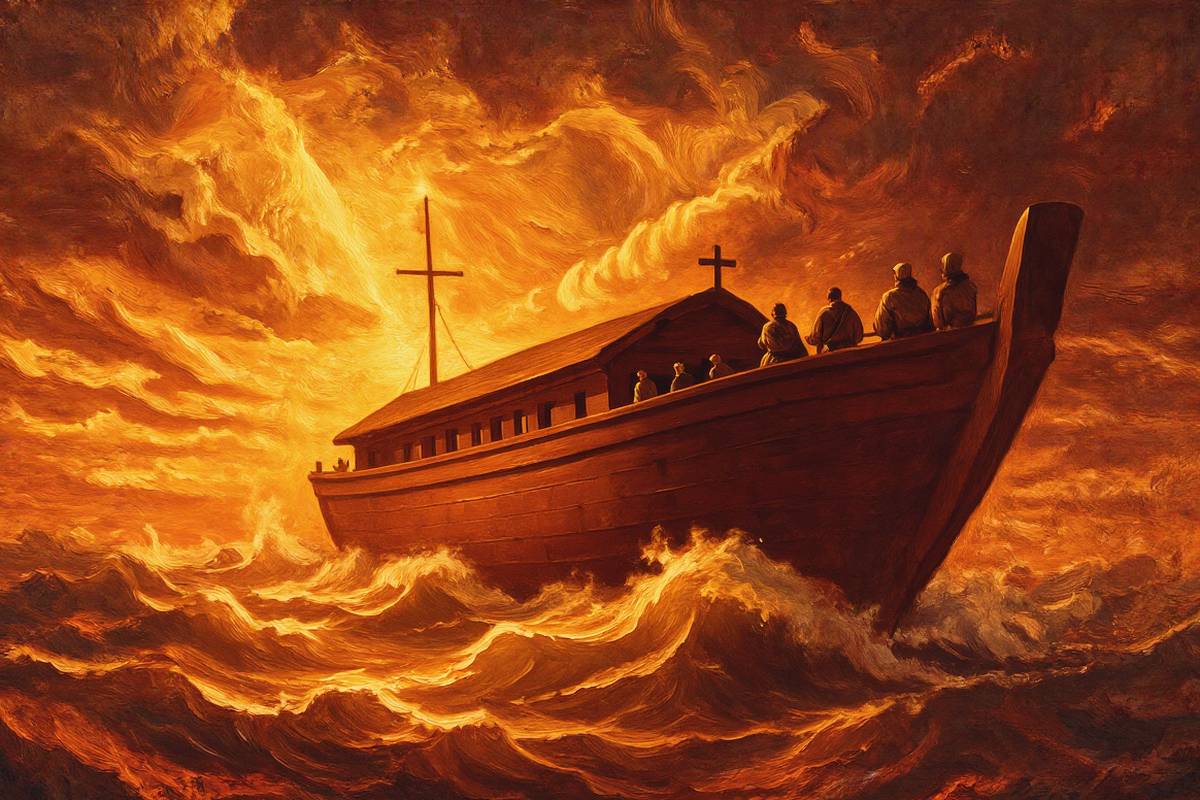
Noah is his picture of this. God told him a flood was coming and to build an ark. That, Dr. Hohman says, was Noah building an economy that would give him an advantage when everything changed. Then God said, “Come into the ark,” and the Lord shut him in (Genesis 7:1–16). God, he notes, was in the ark with them.
When the deluge broke out, those outside perished, but those inside were saved because they prepared ahead of time. Did they feel the turbulence? He is sure the boat rocked and reeled. Jesus said it would be as in the days of Noah (Matthew 24:37). We are not building a physical ark, he says, but the kingdom of heaven has an economy we are to build and enter.
Trouble that hits when life is already out of order unravels you, he says, but trouble that hits a well-ordered life feels insignificant. God is a God of decency and order (1 Corinthians 14:40), and Dr. Hohman draws the conclusion: when God is first, life comes into order; when He is not, order is impossible and we make mountains out of molehills.
The Biblical Principle of First and the Firstborn
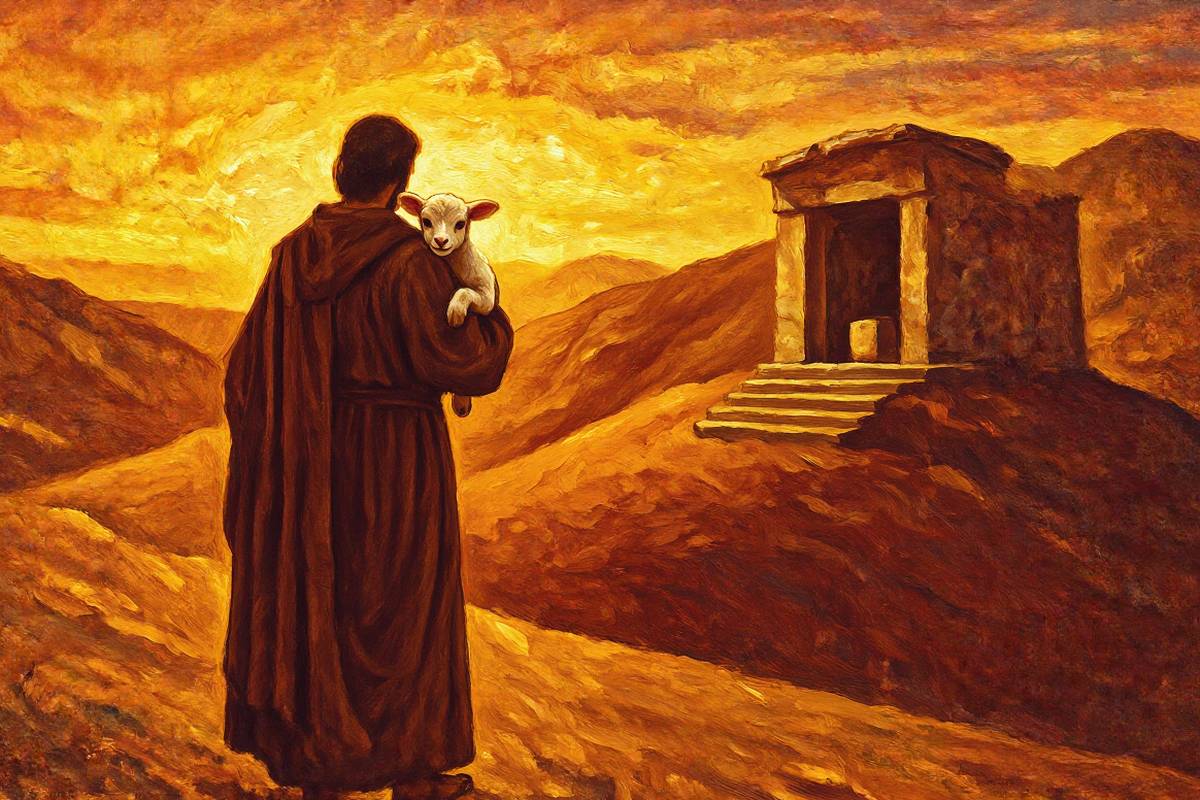
Next he turns to Exodus 13:1–2, where the Lord tells Moses, “Consecrate to Me all the firstborn, whatever opens the womb among the children of Israel, both of man and beast; it is Mine.” Consecrate, he explains, means to dedicate or set apart. God wants the first one.
In Exodus 13:12–13, the firstborn males of the animals belong to the Lord, but every firstborn donkey must be redeemed with a lamb, or else its neck is broken. The firstborn sons are redeemed as well. This, he says, is why the church holds baby dedications: parents give their lives to train up a child in the way he should go (Proverbs 22:6), asking God to redeem the child from the corruption of the world.
So the firstborn is either sacrificed or redeemed. How do you know which? A lamb is clean and a donkey is unclean. The firstborn of the clean is sacrificed, and the firstborn of the unclean is redeemed by the clean. The table below sets out the pattern he draws.
| In Exodus 13 | What happens | What it points to |
|---|---|---|
| Firstborn of a clean animal (a lamb) | Given to the Lord as a sacrifice | Jesus, born clean and without sin, given as the sacrifice |
| Firstborn of an unclean animal (a donkey) | Redeemed with a lamb, or lost | All people, born unclean, redeemed by the Lamb |
| Firstborn sons | Redeemed | Children dedicated to God and trained in His ways |
| The rest of the flock | Kept, once the first is given | The rest of our increase, redeemed when God gets the first |
We are all born unclean, he says, so we need to be redeemed, and only the One born without sin could do it. God prepared a body for Jesus (Hebrews 10:5), and He came pure and holy as the clean Redeemer. Christ has redeemed us from the curse of the law, having become a curse for us, so that the blessing of Abraham might come on the Gentiles (Galatians 3:13–14). As in Adam all die, even so in Christ all shall be made alive (1 Corinthians 15:22).
Here is the heart of the biblical principle of first: “you give the first and the rest are redeemed.” God gave His only begotten Son, and then the rest are redeemed. The curse is broken and the blessing can flourish.
Those who receive abundance of grace and the gift of righteousness reign in life (Romans 5:17). And Romans 5:8 says, “God demonstrates His own love toward us, in that while we were still sinners, Christ died for us.” Giving the first, Dr. Hohman says, is the language of love.
The Tithe Is the First, Not the Leftover
It takes faith to give the first one, he points out. If you have only one little lamb, you do not know whether there will be another. It would be easier to wait for a few more, or to give the lame one you do not want. That was the problem in Malachi’s day, he says: they offered what was not good, and God called it dishonor.
Our finances work the same way. The tithe is a tenth, but the tithe itself does not enact the blessing; our faith does. You do not know whether another paycheck is coming, yet you give the first to God. “Jesus was God’s tithe,” he says, and God did not lose by giving Him; many sons came to glory.
If we give the first ten percent, the rest is redeemed from the curse, and it will last longer and go further. It does not take faith to pay your bills and then give what is left, he says; it takes faith to give first. He reads Proverbs 3:9–10: “Honor the Lord with your possessions, and with the firstfruits of all your increase; so your barns will be filled with plenty.”
He compares it to picking teams at school: the child chosen first plays harder, and the one chosen last often stops trying. God wants to be first.
The most common reason people give for not tithing is that they cannot afford it. Some say they will tithe if they win a million dollars. He answers that if they did not tithe on a hundred, they will not tithe on a million, because whoever is faithful in what is least is faithful also in much (Luke 16:10). We do not pay the electric company first and tithe on what is left, he says, because the power company cannot redeem you or become an ark for you.
He reads Malachi 3:8–11, where God says the people have robbed Him in tithes and offerings, and invites them to bring all the tithes into the storehouse and try Him, to see whether He will not open the windows of heaven and rebuke the devourer. That, Dr. Hohman says, is how God delivers us from the evil one in our finances. Many are the afflictions of the righteous, but the Lord delivers him out of them all (Psalm 34:19).
He also notes a detail many miss. God says we robbed Him in tithes and offerings, but He tells us to bring the tithes into the storehouse. The tithe goes to the local church where you are fed; offerings beyond the tithe can go wherever you like, and God will bless them. Exodus 23:19 says the first of the firstfruits are brought into the house of the Lord.
First From Eden to Jericho
Dr. Hohman traces the principle through Scripture. The first tithe, he says, was in the Garden of Eden, where God let Adam eat from every tree except the tree of the knowledge of good and evil: “that’s mine” (Genesis 2:16–17).
When Israel crossed the Jordan, Jericho was the first city, small but heavily walled. God said all its silver, gold and treasure were His (Joshua 6:18–19). After that, they could keep the spoil. But Achan took some for himself, and in the next battle, at Ai, Israel was beaten (Joshua 7:1–5). God did not say capture ten cities and give Him one, he notes; He said the very first one.
In Genesis 4:3–5, Cain brought an offering of the fruit of the ground “in the process of time,” while Abel brought the firstborn of his flock. God respected Abel’s offering and not Cain’s. Cain did not bring the first, Dr. Hohman says, and so would not let God be part of His redemptive process. Leviticus 27:30 says all the tithe of the land is the Lord’s and holy to Him.
He gives a practical example from his first job after the Navy, when he was paid in cash. If you are paid ten hundred-dollar bills, which one is first? The first one that leaves your hand. If it goes to the mortgage, the power company or a new boat, God is not first.
The principle came before the law. We pray over a meal before we eat, not after. Abraham tithed to Melchizedek, king of Salem, and then refused to keep the king of Sodom’s goods, so no one could say a man had made him rich (Genesis 14:18–23).
His last passage is Exodus 13:14–15. When a child asks why the firstborn are sacrificed, the parent answers that by strength of hand the Lord brought them out of Egypt. Dr. Hohman tithes and tells his children it is for them, so they too will be blessed.
He closes with stories, including a man who began tithing ten dollars a week and two years later was tithing five hundred, and asked to be released from his promise; his pastor offered instead to pray him back to his old wage. Dr. Hohman also lists business founders he says became wealthy as tithers, including J. C. Penney, Welch, Colgate, Procter, Baldwin, Richard DeVos and John D. Rockefeller.
When he and his wife began tithing, people told them they could not afford it. They answered that they could not afford not to. Jesus asked why people call Him Lord and do not do what He says (Luke 6:46). He ends with a call to total commitment and a prayer to help build the ark God has planned for each believer.
Putting God First This Week
Here are practical steps drawn from this message on the biblical principle of first:
- Give first, then pay bills. Set aside the tithe before anything else leaves your hand, as an act of faith rather than leftovers.
- Bring it to your storehouse. Give the tithe to the local church where you are fed, and let offerings go wherever you choose.
- Start small and be faithful. Do not wait for a windfall; faithfulness in little is the path to much.
- Put God first in your day. Thank Him before meals and begin the day with Him, so order follows.
- Read your Bible and do it. His testimony began with a simple commitment to read Scripture and live as it says.
- Explain it to your children. Tell them why you give first, as Exodus 13 instructs, so the blessing passes on.
Timestamped Outline
- 0:00 From kingdom economy to a new theme
- 1:13 Two kingdoms on the earth
- 2:21 How his family’s finances turned around
- 3:30 God wants you wealthy and righteous
- 7:00 Money born of love has something backing it
- 8:12 First is God’s love language
- 11:18 John 17: in the world, kept from the evil one
- 14:26 Like watching a movie
- 15:20 Noah and the ark
- 18:34 When God is first, life comes into order
- 20:50 Exodus 13: consecrate the firstborn
- 24:29 Clean and unclean: Jesus the Redeemer
- 28:47 Give the first and the rest are redeemed
- 31:25 Jesus was God’s tithe
- 32:45 Proverbs 3: honor the Lord with first fruits
- 34:07 Picked first, picked last
- 36:28 Malachi 3: rebuking the devourer
- 38:48 Bring the tithe into the storehouse
- 40:45 Eden and Jericho
- 44:22 Cain and Abel
- 46:52 Which hundred-dollar bill is first?
- 49:16 Abraham tithes to Melchizedek
- 53:40 Testimonies of tithers
- 1:00:51 A call to total commitment
Biblical Principle of First Series
This is the first message in a series at NTC Ministries. Continue with the next teaching:
- You are here: The Biblical Principle of First #1: God’s Love Language and the Firstborn
- Next: The Biblical Principle of First #2: The Widow’s First Cake and the Redeeming Portion
Frequently Asked Questions
Can I give my tithe to a missionary or another ministry?
Dr. Hohman teaches that the tithe belongs in the storehouse, the local church where you are fed, because Malachi 3 says to bring all the tithes there and Exodus 23:19 says the first fruits go into the house of the Lord. Offerings beyond the tithe are a different matter. He encourages giving those to missionaries, outreaches or ministries you love, and says God will bless and increase you for it.
What if I cannot afford to tithe right now?
He says that is the most common reason people give, and that you will never feel able to afford it. Faithfulness starts with what you have now, not with a future windfall. He and his wife heard the same objection when they started and answered that they could not afford not to. In his teaching, the faith to give first is what redeems the rest of your income.
Does putting God first guarantee a life without trouble?
No. He is clear that believers will face trials and tribulation in this world. The difference is like Noah in the ark: the boat rocked and reeled, but everyone inside was safe. When God is first, he says, life comes into order, so the trouble that comes feels small compared with what it would be if everything were already unraveling.
Scripture References
All passages open in the New King James Version on Bible Gateway:
- Exodus 13:1–2 — consecrate the firstborn
- Exodus 13:12–13 — redeeming the unclean with a lamb
- John 17:14–15 — kept from the evil one
- John 16:33 — I have overcome the world
- Proverbs 3:9–10 — honor the Lord with your first fruits
- Malachi 3:8–11 — bring all the tithes into the storehouse
- Genesis 4:3–5 — Cain and Abel’s offerings
- Galatians 3:13–14 — redeemed from the curse
How this summary was made: written with AI assistance from the sermon’s own transcript and checked against the Scriptures listed above.
Watch More Messages
If this message encouraged you to put God first, there are hundreds more teachings from NTC Ministries waiting for you. Browse the full sermon archive and keep growing in the kingdom economy.