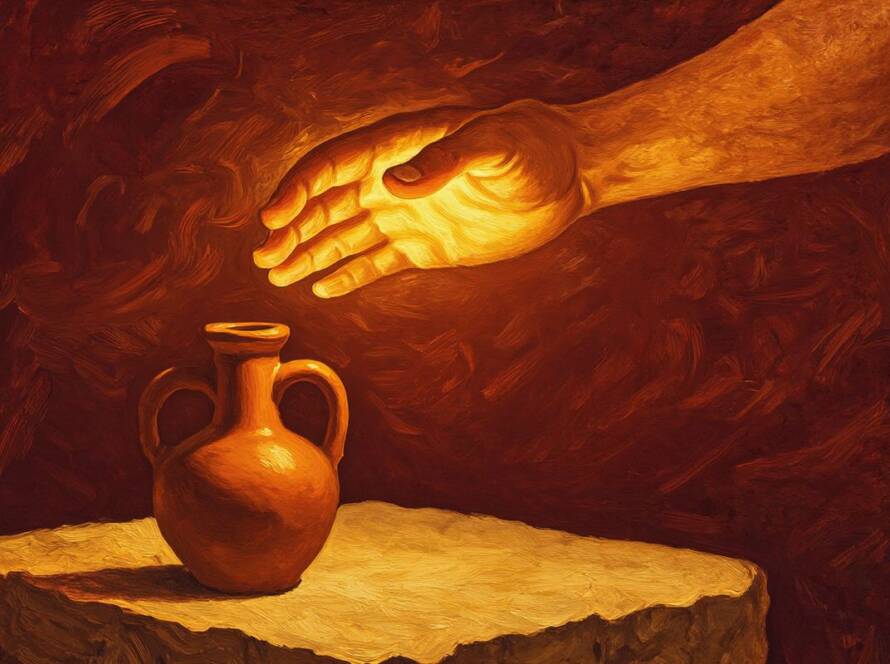
Who is Jesus? In this final message of the series, Dr. William P. Hohman answers that Jesus is both the Creator who made all things and the Redeemer whose blood covers every believer. He traces that blood from the animal skins God made for Adam and Eve, through Noah’s ark, the Passover lamb and the scapegoat of Leviticus 16, to the cross, where Jesus became sin for us so that we could become the righteousness of God. This message continues from Who Is Jesus? Part 4 — Creator and Redeemer, Beyond the Manger.
Below you will find the full video, a summary of how the blood of Jesus runs through the whole Bible, the Scripture behind each point (NKJV on Bible Gateway), a timestamped outline, and practical steps for walking free of condemnation.
Sermon at a Glance
This message was preached at the New Testament Church at the end of 2020, after worship, the year’s final offering and news of the January corporate fast. Pastor Hohman called it the last message of his series and, at the same time, the first of the next, because it opens the subject of the blood.
The sermon itself runs from about the 26-minute mark to the end of the recording, roughly 72 minutes, and closes with a prayer of salvation. His answer to who is Jesus is simple: the blood of Jesus is not a side topic. It is how the Creator became our Redeemer, and why a believer can stand before God without fear.
| Detail | Information |
|---|---|
| Speaker | Dr. William P. Hohman |
| Series | Who Is Jesus? (final message) |
| Main text | Hebrews 10:1–14 |
| Key theme | The blood of Jesus covers us and removes condemnation |
| Length | About 98 minutes including worship; sermon about 72 minutes |
Who Is Jesus? Creator and Redeemer With a Place in the Plan
Pastor Hohman begins by reviewing the series question, who is Jesus: He is Creator and Redeemer, and the Father, Son and Holy Spirit each have a function. That is why we pray to the Father in the name of Jesus, just as Jesus taught us to pray “Our Father in heaven” (Matthew 6:9). The Father is the master architect. He has the plan, your name is written in His book, and everything that pertains to you is already recorded there.
Jesus is the master builder, the contractor who made everything. Nothing that was made was made without Him (John 1:3). The Holy Spirit then breathes life into what has been created. So when God gives you a promise through a dream, a vision or His Word, Jesus accomplishes it as you obey, and the Spirit comes and empowers it.
Sometimes obedience feels like sweat on the brow with no wind under your wings. Pastor Hohman says that is fine: keep doing what God asked until the Holy Spirit lifts you. Every promise comes in a progression, from faith to faith (Romans 1:17), from strength to strength and from glory to glory (2 Corinthians 3:18).
Faith to faith is hearing the promise. Strength to strength is obeying when things look bad, like Abraham on Mount Moriah with wood and fire but no sacrifice, saying the Lord will provide (Genesis 22:8). Glory to glory is when the empowerment comes, and then another progression begins.
When God created man, there was already a plan of redemption. For five days of creation God called His work good, but man, made in His image, was very good, “the creme de la creme.” When Adam sinned, corruption came into all of creation, which is why creation still groans, waiting for the revealing of the sons of God (Romans 8:19–22).
The Promise of Genesis 3: A Crushed Head and a Bruised Heel
The moment the fall happened, Pastor Hohman says, the Word went into action. In Genesis 3:14–15 God curses the serpent to crawl on its belly and eat dust, and promises enmity between the serpent’s seed and the woman’s Seed. That is the pattern for us, too: when an attack comes against your health or finances, you come to the Word of God and declare it, just as God did.
He stresses that Satan is not an almighty ruler. Hell is a place of torment, not a throne room, and his path only goes lower. With God, by contrast, all things are possible.
The key is in the wording of verse 15. The Seed of the woman will crush the serpent’s head, and the serpent will strike His heel. In Scripture, Pastor Hohman teaches, the head always speaks of authority. Satan’s authority is crushed. But the bruised heel explains why, even for Christians, everything is not instant in this corrupted world: with a bruised heel you cannot run as fast as you want. So we keep doing what God said and trust the Holy Spirit to breathe life into it.
He points to Noah, who kept building the ark for decades while everyone mocked him, and whose family alone was saved. Then he quotes Numbers 23:19: God is not a man that He should lie. Has He said, and will He not do it? To keep that promise, Jesus Himself had to come. “The Word became flesh and dwelt among us” (John 1:14).

Faith Is Word and Deed: What God Did in Eden
Pastor Hohman returns to the beginning, which shows God’s perfect intention. Jesus spoke the birds, flowers and trees into existence. With man He did more. He said “Let Us make man in Our image” (Genesis 1:26), and then with His own hands He formed Adam from the dust. Man was created by both God’s word and God’s deed.
That, he teaches, is why faith is never only words. James says you can tell me about your faith all you want, and I will show you mine by what I do (James 2:18). In Eden, God did not only promise redemption; He acted and made clothing of animal skins for Adam and his wife (Genesis 3:21). Their fig-leaf clothing would have had to be remade every day, the picture of toiling under the curse without getting ahead.
He links this to obedience. Whatever the righteous man does shall prosper (Psalm 1:3), but we have to keep applying ourselves, because if you love Jesus you will keep His commandments (John 14:15). The work was finished for Jesus on the cross, yet we still wait for the redemption of our bodies (Romans 8:23).
So redemption is a progression: you have been redeemed, you are redeemed, and you are being redeemed. That is why we are told to redeem the time (Ephesians 5:16). Some people get a revelation of grace and think they can sit down and do nothing. It has been purchased for you, he says, but you still apply yourself to obtain it, as a workman who does not need to be ashamed (2 Timothy 2:15). If we are made in His image, we speak and we act.
The Law of Blood: From Eden to the Passover
Pastor Hohman suggests calling the law of Moses “the law of blood,” because that is what it really is. When God clothed Adam and Eve, an animal had to die. Blood was shed, the first type and shadow of covering man’s sin. Leviticus 17:11 explains why: “the life of the flesh is in the blood,” and it is the blood that makes atonement for the soul. Atonement, he says, means a covering, which is what the skins were.
Noah’s ark, sealed inside and out with pitch (Genesis 6:14), carries the same picture. In the blood covenant God says: make sure the blood has been shed, and I will keep you, heal you, deliver you and prosper you.
The Passover in Exodus 12:3–13 is the third picture. Israel took one lamb per household and had to eat all of it, head and entrails. Pastor Hohman applies that to Bible reading: you do not skip the parts that deal with the mess in your life.
The blood was applied with hyssop to the lintel and doorposts, but never to the threshold. You do not walk on the blood, which is why the New Testament warns against trampling the Son of God underfoot (Hebrews 10:29). The death angel passed over every house under the blood. Like the ark in the flood, the blood kept them through the worst night imaginable.
That is the point for believers today. Who is Jesus? Our Redeemer from death, hell and the grave, from sickness and catastrophe. In this world we will have trouble, but He said to be of good cheer, because He has overcome the world (John 16:33). The blood of Jesus is our sanctuary, and it is not just for a year.
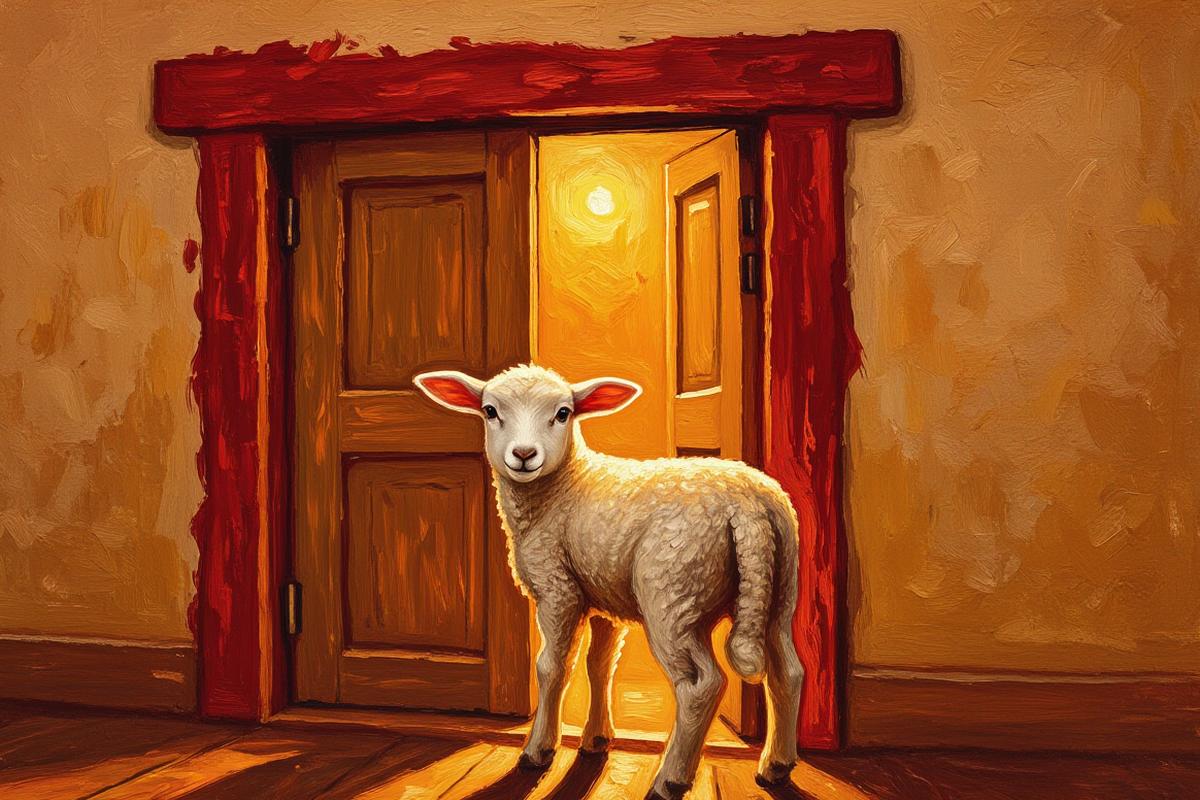
Jesus the Scapegoat Who Carried Our Sin
Under the old covenant, Pastor Hohman explains, there were five great offerings in the first chapters of Leviticus. The table below follows his summary of when each one was brought.
| Offering | When it was brought | What it showed |
|---|---|---|
| Whole burnt offering | When the worshiper was in fellowship with God and neighbors | Fellowship |
| Meal offering | When the worshiper was in fellowship with God and neighbors | Fellowship |
| Peace offering | When the worshiper was in fellowship with God and neighbors | Fellowship |
| Trespass offering | When you had wronged a friend, neighbor or family member | Broken fellowship with people |
| Sin offering | When you had gone against God or any holy thing of God | Broken fellowship with God |
The Day of Atonement brings the scapegoat into focus. In Leviticus 16:6–10 Aaron offers a bull for himself and his house, a type of Jesus the High Priest and the church as a family of priests. Then he takes two goats without blemish and casts lots: one for the Lord, slain and offered, and one to be the scapegoat. The blood of the first was sprinkled on the mercy seat and on everything that pertained to God’s business.
Then, in Leviticus 16:21–22, Aaron lays both hands on the live goat, confesses over it all Israel’s iniquities and sends it into the wilderness. Pastor Hohman sees Jesus as the scapegoat. On the cross all our sin came on Him. In the garden He prayed, “Let this cup pass from Me; nevertheless, not as I will” (Matthew 26:39), and it was not easy for Him.
He took the full wrath of the Father for every person ever born, and He became sin, though He knew no sin. That is why He cried, “My God, My God, why have You forsaken Me?” (Matthew 27:46). Jesus the scapegoat was forsaken so that God could tell us He will never leave us nor forsake us (Hebrews 13:5). All we like sheep have gone astray, and the Lord laid on Him the iniquity of us all (Isaiah 53:6).
Peter calls it the precious blood of Christ, a lamb without blemish and without spot, foreordained before the foundation of the world (1 Peter 1:17–20). He illustrates it with a boy who kept coming home late for supper. One night his plate was empty and his father’s was heaped full. After a long silence, the father swapped plates. The boy later called it the greatest example he ever had of the sacrifice Jesus made.
The blood of Jesus brings a covenant, he adds: everything I have is yours, and everything you have is mine. That is why we do not beg for healing or provision. If God did not withhold His only Son, how much more will He freely give us all things (Romans 8:32)?
No More Condemnation: The Blood of Jesus in Hebrews 10
Why do we need the blood of Jesus at all? The old system, Pastor Hohman says, had a weakness, and the weakness was us. Hebrews 10:1–4 says the law had only a shadow of the good things to come and could never make the worshipers perfect. If it had, they would have stopped offering. Instead there was a reminder of sins every year. They heard the bleating of lambs, smelled death and were constantly told they did not measure up, because the blood of bulls and goats cannot take away sins.
Many Christians who do not understand the blood of Jesus still live with that evil conscience. He describes people who, when corrected, immediately make excuses to justify themselves. God wants us instead to say, Lord, forgive me, help me, strengthen me, Holy Spirit. The apostles were threatened and simply prayed for boldness, and they were filled again (Acts 4:29–31). They did not let condemnation make them quit.
Romans 8:1–3 declares there is now no condemnation for those who are in Christ Jesus. We will still mess up, he says, but if we sin, we have an Advocate with the Father (1 John 2:1). Condemnation diminishes what God has done and what He has purposed for us, so why would we allow it? The righteous are as bold as a lion.
In Hebrews 10:5–10 Jesus says, “a body You have prepared for Me,” and comes to do the Father’s will. He takes away the first covenant to establish the second, and by that will “we have been sanctified.” Pastor Hohman explains that sanctified means made holy. Then Hebrews 10:11–14 contrasts priests who stand daily with Jesus, who offered one sacrifice and sat down, because by one offering He has perfected forever those who are being sanctified.
He closes with Romans 3:21–26: God declares sinners righteous when they believe in Jesus and the blood of Jesus shed for them. We all fall short, yet God made a way. The final verse is 2 Corinthians 5:21: He made Him who knew no sin to be sin for us, that we might become the righteousness of God in Him. You may not be as good as God, he says, but by that gift you are as right as He is.
There is only one way to the Father, he insists (John 14:6). No one else shed his blood for us. He ends with a boy who agreed to give blood to his sick sister and then asked when he would die. God will never ask that of you; the blood of Jesus was shed so you could have life more abundantly (John 10:10).
Living Under the Blood This Week
Pastor Hohman ended with an invitation to receive Jesus as Lord and to let the blood of Jesus cover you as an ark of protective love. Practical steps from the message:
- Keep obeying before the wind comes. If God has given you a promise, keep doing what He said until the Holy Spirit empowers it.
- Answer attacks with the Word. When trouble hits your health or finances, find what God has said and declare it, as He did in Genesis 3.
- Read all of the lamb. Do not skip the passages that deal with the mess in your life; read the whole Bible, not only the comforting parts.
- Refuse condemnation. When you fail, say “Lord, forgive me, help me,” and move on in the confidence of Romans 8:1.
- Drop the excuses. Receive correction without self-justifying, because the blood has cleansed your conscience.
- Thank Him for the full plate. Remember the exchanged plates and thank Jesus daily that the blood of Jesus gave you all that He has.
Timestamped Outline
- 0:00 Opening worship
- 5:14 Welcome, offering and God’s pleasure in our prosperity
- 8:08 Announcements and the January corporate fast
- 25:55 Pastor Hohman introduces the final Who Is Jesus message
- 28:20 Father, Son and Holy Spirit: architect, builder and breath
- 30:30 Faith to faith, strength to strength, glory to glory
- 33:38 Genesis 3:14–15: the serpent’s crushed head
- 35:40 Head means authority; the bruised heel
- 36:47 Noah, and Numbers 23:19
- 38:43 Created by word and deed; faith and works
- 40:53 Redeemed, being redeemed, and applying ourselves
- 43:11 The law of blood: Leviticus 17:11
- 50:03 The Passover lamb and the blood on the doorposts
- 55:08 The five great offerings of Leviticus
- 56:18 Leviticus 16: the two goats and the scapegoat
- 1:00:55 Jesus takes our sin and the Father’s wrath
- 1:04:43 1 Peter 1:17–20: the precious blood
- 1:09:49 The story of the empty plate
- 1:12:15 Hebrews 10:1–4 and the evil conscience
- 1:18:17 Romans 8:1–3: no condemnation
- 1:20:50 Hebrews 10:5–14: sanctified and perfected forever
- 1:28:31 Romans 3:21–26: yet God
- 1:35:11 One way to the Father; the blood transfusion story
- 1:37:28 Prayer of salvation
Who Is Jesus Series
This message closes the Who Is Jesus series at NTC Ministries. Start from the beginning or review the previous message:
- First message: Who Is Jesus? The Creator and Redeemer Who Bent Down for Us
- Previous: Who Is Jesus? Part 4 — Creator and Redeemer, Beyond the Manger
- You are here: Who Is Jesus? Part 5 — The Blood of Jesus, Our Covering and Our Redemption
Frequently Asked Questions
What does “without blemish and without spot” mean?
Pastor Hohman explains that a blemish is something a lamb is born with, while a spot is acquired from the corruption around it, like a childhood scar. Jesus had neither. He was born pure and never allowed this world to touch Him. That made Him the perfect sacrifice, and it is why Peter calls the blood of Jesus precious.
Why was Abel’s offering accepted and Cain’s was not?
Pastor Hohman says Adam must have passed the knowledge of the blood covering on to his sons (Genesis 4:3–7). Cain brought the work of his own hands, the vegetables from the sweat of his brow, as if to say, look what I did for You. Abel brought a lamb and thanked the Father for what He had done. Abel’s was accepted because it was a blood sacrifice that would atone for his soul.
What does it mean that the Holy Spirit seals us?
Pastor Hohman ties it to the roles of the Trinity. The Father had a plan before anything was created, Jesus came as the master contractor to do the work, and the Holy Spirit comes when we give our lives to Him. He seals us with the Holy Spirit of promise (Ephesians 1:13), breathes life into us, keeps making the Word alive in us and seals us from the corruption of this world.
Scripture References
All passages open in the New King James Version on Bible Gateway:
- Genesis 3:14–15 — the crushed head and the bruised heel
- Genesis 3:21 — God clothes Adam and Eve with skins
- Leviticus 17:11 — the life of the flesh is in the blood
- Exodus 12:3–13 — the Passover lamb
- Leviticus 16:21–22 — the scapegoat
- 1 Peter 1:17–20 — the precious blood of Christ
- Hebrews 10:1–4 and Hebrews 10:11–14 — one sacrifice forever
- Romans 8:1–3 — no condemnation
- 2 Corinthians 5:21 — the righteousness of God in Him
How this summary was made: written with AI assistance from the sermon’s own transcript and checked against the Scriptures listed above.
Watch More Messages
If this message helped you answer who is Jesus for yourself, there are hundreds more teachings from NTC Ministries waiting for you. Browse the full sermon archive and keep growing in the redemption He purchased for you.