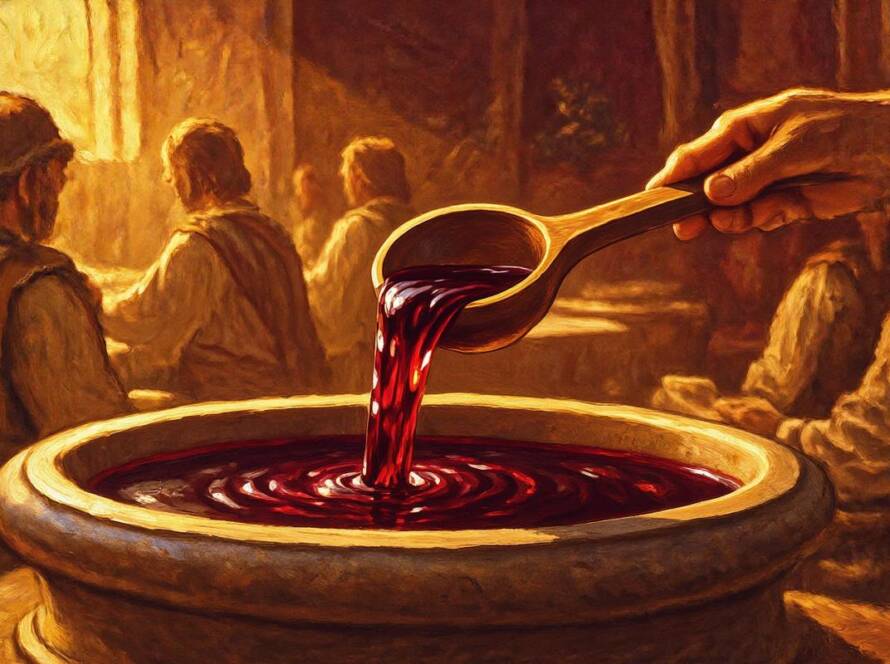
Who is Jesus? In this message, Dr. William P. Hohman answers that question from John 1: Jesus is the eternal Word who created everything, the God with us who humbled Himself to live among corrupted people, and the Redeemer who keeps bending down to lift us up when we fall. Where people give up after they have “bent over backwards” for someone, Jesus never quits on us.
Below you will find the full video, a structured summary of the sermon, the Scripture behind each point (linked to the New King James Version on Bible Gateway), a timestamped outline, and practical steps for receiving Jesus as Redeemer this week.
Sermon at a Glance
This service from NTC Ministries in Merrill, Wisconsin, was posted on October 27, 2020. It opens with worship and an offering message reminding the church that God is not a waiter looking for a tip; He asks for commitment and faithfulness, a tithe of all our increase. Dr. William P. Hohman, the senior pastor, then continues his teaching on who Jesus is, calling it part two of the series.
He frames the message with a familiar phrase. People say they “bent over backwards” for someone who never appreciated it, and then they stop helping. Aren’t you glad, he asks, that Jesus never had that attitude? The rest of the sermon traces every time Jesus bent down for us, and ends with an invitation to receive Him.
| Detail | Information |
|---|---|
| Speaker | Dr. William P. Hohman |
| Series | Who Is Jesus? (the speaker calls this part two) |
| Main text | John 1:1–5 and John 8:2–11 |
| Key theme | Jesus the Creator, God with us and Redeemer, who never stops bending down for us |
| Length | About 98 minutes including worship; the sermon begins near 30:00 |
The Eternal Word Who Creates
Pastor Hohman returns to the foundation of the series, John 1:1–5: in the beginning was the Word, the Word was with God, and the Word was God. All things were made through Him, and without Him nothing was made. In Him was life, and that life was the light of men.
He is blunt about what that means for us. You may be a nice person, but in the big scope of creation our worth and value are limited. “The only thing that can bring out our value and our potential” is Jesus Christ, because He is the Word who was there from the beginning. Read beside Genesis 1:1–5, the point is plain: the Word creates.
That, he says, is why you read your Bible. What God says will be created in you when you let Him speak into your life. But we have to accept it. In order for God to fulfill what He says, we must listen and receive it, like a sponge absorbing His Word.
Many people, he notes, get offended when God starts speaking and turn the conversation to someone else: what about them, what about the minister? He uses Peter as the example. After denying Jesus three times, Peter went back to fishing, and Jesus met him on the shore and asked three times, “Do you love me?” (John 21:15–22). When Jesus told Peter how his life would end, Peter immediately pointed at John and asked, what about him?
Little by little, God worked with Peter until he came to total obedience, and that gives hope to every one of us. Just one little crack where you let God speak, Pastor Hohman says, and your life will change. You will grow stronger, become more obedient and become a greater tool in His hands.
Who Is Jesus? The Creator Who Bent Down
Walking through Genesis 1, Pastor Hohman pauses on each day: the waters separated, the dry land, the vegetation, the lights, the fish and birds, the animals, and every time God said it was good. He marvels at the detail Jesus put into creation, from every color found in flowers to the many shades of green and the distinct minerals in each vegetable.
A single apple seed, he says, holds far more than one apple. Inside it are apple trees and orchards, farms and businesses, canneries, trucking companies and grocery stores. That is the potential God builds into what He makes, and He builds even more into people.
Then God switched gears. In Genesis 1:26–27, God said, “Let Us make man in Our image, according to Our likeness; let them have dominion.” Dominion, he explains, is a kingdom term. God handed this precious creation over to us. When people stop respecting the brilliance of creation and God’s Word, they start to destroy it, as the oil spill in Valdez showed. In Genesis 1:31, God saw everything He had made, and indeed it was very good.
You are the pinnacle of all that God has created, Pastor Hohman says. Yet the very first thing Jesus did in creating you was bend over. Genesis 2:7 says the Lord God formed man of the dust of the ground and breathed into his nostrils the breath of life. The master craftsman, the God of all glory, knelt in the dirt and fashioned it in His own image before you had eyes to see or a heart to beat.

How Corruption Clouds the Mirror
We do not usually look at ourselves as phenomenal, Pastor Hohman says. We look in the mirror and see the flaws and the faults, not what God created. That happened because Adam and Eve listened to the deceiver. Satan told them the tree would make them like God, when they were already like Him. Adam was right there and did nothing to defend the truth, and corruption came into everything they were meant to rule.
He calls the result a two-pronged fork. One prong is the pride that says my weakness is stronger than God’s strength: I am not educated enough, not strong enough, so I will not even try. Like Moses, we tell God we cannot speak. Yet the foolishness of God is wiser than men, and the weakness of God is stronger than men (1 Corinthians 1:25).
The other prong is projecting the same view onto everyone around us. People who think little of others, he says, are often reflecting what they see in their own mirror. Romans 5:12 explains the root: through one man sin entered the world, and death spread to all. Sin is not just stealing an apple from the neighbor’s tree; that is only its fruit. It is a nature that came into every one of us.
That is why God’s correction is always for our good. Jesus came full of grace and truth, and Pastor Hohman warns that teaching only grace is not the gospel. With Peter, Jesus gave both: I forgive you, and this is what is going to happen. Accepting both, he says, takes maturity, putting on our big boy pants and big girl pants instead of walking away when God speaks about spending, eating or attitude.
He applies this to money too. When our expectations exceed our maturity, we pile up debt for things we do not need. His counsel is simple: repent, ask God to forgive you, and stop buying things just because you feel like it.
God With Us: Emmanuel Who Came to Dwell
Jesus did not see Himself the way we see ourselves, because He had no sin nature. Matthew 1:23 says a virgin would bear a son and they would call His name Immanuel, “God with us.” Pastor Hohman stresses the word with. He did not come as God above us, looking down, or as a God we have to search for. He is God with the good, the bad and the ugly, God with everybody.
So Jesus bent down again. He who was rich became poor so that through His poverty we might become rich (2 Corinthians 8:9). He was born in a stable to a young girl without education or status, and to a carpenter, and He submitted Himself to be raised by them. Mary herself wondered why God would look on a lowly handmaiden, yet the angel told her she had found favor (Luke 1:28–30).
Jesus also refused to use His power for His own comfort. When Satan told Him to turn stones into bread after forty days of fasting, He answered that man does not live by bread alone (Matthew 4:3–4). Pastor Hohman paraphrases His heart this way: I am here to experience their life, not impose my life. He contrasts this with missionaries of past centuries who told converts they had to dress, eat and talk like them to be real Christians.
Even so, people could not miss who He was. John 1:14 says the Word became flesh and dwelt among us, and we beheld His glory, full of grace and truth. Pastor Hohman tells of arriving at a prayer conference in the desert near Alexandria, Egypt, with a young apostle, H.G. Strickland, after crusades in Uganda. About nine thousand people were gathered under tents.
The moment they walked in, a man ran up and said, “You’re different.” Pastor Hohman explains that the difference was not them; they had simply listened to God and obeyed, and His glory showed up. He reports that eight women born deaf received their hearing there. If that happened through limited men, he says, imagine Jesus. He is the wow factor.
The Redeemer Who Stooped Lower
For thousands of years, Pastor Hohman says, God spoke through the fathers and visited from time to time, but He never came to dwell. Then He came. John 3:16–17 is the welcome mat of heaven: whoever believes should not perish, because God did not send His Son to condemn the world but to save it. Welcome, he notes, means it is well in this home: no fighting, peace, love. God is not willing that any should perish (2 Peter 3:9).
The clearest picture of the Redeemer is John 8:2–11. Early in the morning, the scribes and Pharisees dragged a woman caught in adultery into the street with stones in their hands, demanding that Jesus choose between her and the Law of Moses. Jesus crouched down and wrote in the dirt. When they kept pressing, He stood and said whoever was without sin should throw the first stone, then knelt again.
Pastor Hohman believes the message was the dirt itself. Jesus stooped lower than religion, lower than the anger of men and lower than the woman, remembering the dust He once shaped into His masterpiece. One by one, from the eldest down, the accusers dropped their stones and left. “Neither do I condemn you,” He told her; “go and sin no more.” Grace and truth again.
Then He stood up, and that matters. At the cross Jesus humbled Himself, became sin for us and went back to the dust in burial, but on Sunday morning He stood up. Now He asks everyone who believes, where are your accusers? With that woman we can answer, none, Lord. There is therefore now no condemnation to those who are in Christ Jesus (Romans 8:1).
Redeemer, Pastor Hohman explains, means the purchase price. Jesus did not only take us out of corruption; He placed us into His kingdom. The table below follows his summary of each time Jesus bent down for us.
| Jesus bent down… | What it accomplished, as taught |
|---|---|
| To create | He formed man from the dust and breathed life into him |
| To be with us | He left glory and was born in a stable as God with us |
| For the accused woman | He made condemnation leave |
| To die for us | He took our sin and our penalty of destruction |
| Then He stood up | He proved death has no power and condemnation has no place |
He illustrates it with a family he and his wife Pam found broken down near Merrill. He drove them to a dealership, then lent them his own van for several days. When the man asked how to repay him, the answer was nothing: he had simply taken them out of a hard situation and into an easier one. That, he says, is what God wants us to accept from Him.
Receiving Jesus as Redeemer This Week
Pastor Hohman closes with Psalm 103:1–4: bless the Lord, O my soul, and forget not all His benefits. He forgives all our iniquities, heals all our diseases, redeems our life from destruction and crowns us with lovingkindness and tender mercies. Jesus came to give life and life more abundantly (John 10:10), the very life of God. Here are the practical steps from this message:
- Let the Word speak. Read your Bible expecting that what God says will be created in you, and give Him one little crack to work with.
- Stop pointing at others. When God deals with you, resist Peter’s reflex of asking, what about him?
- Repent of the pride of weakness. Stop telling God your weakness is stronger than His strength, and say yes to what He asks.
- Look in the mirror of the Word. See the masterpiece He created and redeemed, not only the flaws.
- Drop your stones. Since Jesus refused to condemn you, refuse to send others on guilt trips; the only trip He wants is from darkness to light.
- Tell somebody. Pastor Hohman asks everyone who receives Christ to tell another person that Jesus is their Lord and Savior.
The Spirit and the bride say come (Revelation 22:17). As Pastor Hohman puts it, He is the responsible one, but we are the ones to respond to His ability.
Timestamped Outline
- 5:09 Offering: God is not looking for a tip
- 30:14 Who is Jesus, part two: bending over backwards
- 32:23 John 1:1–5, the eternal Word
- 34:34 Genesis 1: the Word creates
- 35:30 Peter, offense and “what about him?”
- 39:18 One little crack: letting God change you
- 40:18 The days of creation were good
- 42:15 The potential in one apple seed
- 43:24 Made in His image to have dominion
- 47:46 The deception in the garden
- 48:46 Grace and truth, not grace alone
- 49:59 Genesis 2:7: kneeling in the dirt
- 52:57 The pride that says “I can’t”
- 54:24 Romans 5:12 and the sin nature
- 56:57 Emmanuel, God with us
- 1:00:01 Not living by bread alone
- 1:01:30 John 1:14: we beheld His glory
- 1:02:54 Prayer conference near Alexandria, Egypt
- 1:06:45 John 3:16–17: the welcome mat of heaven
- 1:10:39 Mary found favor
- 1:12:14 John 8: the woman caught in adultery
- 1:20:54 Redeemer means the purchase price
- 1:23:47 The stranded family and the borrowed van
- 1:27:19 Psalm 103: forget not all His benefits
- 1:34:15 Invitation and prayer of salvation
Who Is Jesus Series
This message is part of a series at NTC Ministries on the identity of Jesus. Continue with the next teaching:
- You are here: Who Is Jesus? The Creator and Redeemer Who Bent Down for Us
- Next: Who Is Jesus? Part 2 — The Redeemer Who Wore the Crown of Thorns
Frequently Asked Questions
Why does this sermon spend so long on Peter?
Pastor Hohman uses Peter to show how God works with people over time. Peter promised to die with Jesus, denied Him, went back to fishing, and still needed to be asked three times if he loved Jesus. Even then, Peter pointed at John. Yet little by little he came to full obedience, and tradition says he was crucified upside down. For Pastor Hohman, that journey gives hope to anyone who struggles to let God speak.
Does God only care about Christians?
No. Pastor Hohman stresses that Emmanuel means God with us, and us means everybody, not only Christians. Whosoever in John 3:16 encompasses everyone, and it is not God’s will that any should perish. What has to change, he says, is the person’s willingness to humble themselves, look to Jesus and let Him into their heart.
What should someone do after praying to receive Christ?
At the end of the service, Pastor Hohman leads a prayer asking forgiveness for pride and for worshiping at the altar of this corrupted world, and committing to listen to and follow Jesus every day. He then gives one instruction: tell somebody. Jesus said that unless we acknowledge Him before men, He cannot acknowledge us before the Father, so he urges new believers to say out loud that Jesus Christ is their Lord and Savior.
Scripture References
All passages open in the New King James Version on Bible Gateway:
- John 1:1–5 and John 1:14 — the eternal Word became flesh
- Genesis 1:26–27 and Genesis 2:7 — made in His image from the dust
- Romans 5:12 — sin entered through one man
- Matthew 1:23 — Immanuel, God with us
- John 3:16–17 — the welcome mat of heaven
- John 8:2–11 — the woman caught in adultery
- Romans 8:1 — no condemnation in Christ Jesus
- Psalm 103:1–4 — forget not all His benefits
How this summary was made: written with AI assistance from the sermon’s own transcript and checked against the Scriptures listed above.
Watch More Messages
If this message helped you see who Jesus is, there are hundreds more teachings from NTC Ministries waiting for you. Browse the full sermon archive and keep growing in the life He came to give.