Faith to faith strength to strength and glory to glory is the path of spiritual growth every Christian is meant to walk. In this message, Dr. William P. Hohman explains that redemption has two sides: a legal side, where everything Jesus paid for already belongs to you, and a practical side, where you learn to bring it into your life through faith, obedience and repentance. His key instruction is to break up the fallow ground of the heart.
This message continues from From Faith to Faith, Strength to Strength, and Glory to Glory — Running for the Eternal Prize. Below you will find the full video, a structured summary, the Scriptures he uses (linked to the New King James Version on Bible Gateway), a timestamped outline, and practical steps you can take this week.
Sermon at a Glance
This message was posted on April 18, 2023, as part of a series that grew out of an earlier teaching on becoming worshipers. Dr. Hohman opens by saying that our walk with God is not just giving our life to the Lord and going to church once in a while. There is a progression, and God wants to work with us until our purpose is being used and His glory is being displayed.
He then reviews the earlier messages before teaching on tilling up the fallow ground, which he says will help believers who want to obey God but cannot seem to find it in themselves to follow through.
| Detail | Information |
|---|---|
| Speaker | Dr. William P. Hohman |
| Series | From Faith to Faith, Strength to Strength and Glory to Glory |
| Main text | Jeremiah 4:1–4 and Hosea 10:12 |
| Key theme | Bringing the legal side of redemption into practical, everyday life |
| Length | About 71 minutes |
Worship That Knows Who He Is
The series began with Psalm 95:6: “Oh come, let us worship and bow down; let us kneel before the Lord our Maker.” Dr. Hohman distinguishes praise from worship. Praise thanks God for what He has done, is doing and will do, and it is exuberant and open. He reminds the church that praise silences the enemy and the avenger (Psalm 8:2), so if the world seems to be coming at you with fangs, start praising the Lord.
Worship goes further. It acknowledges who God is, and that is where real change takes place. We tend to think life has changed when the storm stops, the money comes in or we feel better. Worship instead lets His presence be magnified inside us, producing peace, joy, love and the fruit of the Holy Spirit. God calls Himself I AM WHO I AM (Exodus 3:14), and when we let the Great I Am into our lives, His strength and peace come within us.
That requires a laying down. Dr. Hohman says we must lay down our own strength, or we will always trust it before God’s, and lay down our own goodness, or we will look to it instead of truly desiring God. This laying down is what matures us and makes us different people.
Two Sides of Redemption: Legal and Practical
When you are born again, he teaches, you legally receive everything. If God did not spare His own Son, how shall He not with Him freely give us all things (Romans 8:32)? That is the legal side. It does not depend on whether we believe it, because even if we are faithless, He remains faithful (2 Timothy 2:13). Our believing is what brings it into our here and now. That is the practical side, and it is why we must learn to walk by faith.
He compares it to learning a new culture. Raised in Michigan’s Upper Peninsula, he could live off the land for months, but at seventeen the military sent him to Brooklyn, New York, and he had to learn street savvy fast. Christians likewise need instruction, encouragement and help again and again. That is one reason Jesus gave the prayer of agreement (Matthew 18:19).
His main illustration is an inheritance. An attorney called to say that a single relative on Pam’s side of the family, someone she barely remembered, had left an inheritance to her and her siblings. The letter confirmed the money was theirs, yet it was useless to them while it was not in their spending hand. Only when they proved who they were and met the probate court’s requirements was the money transferred into their account.
That, he says, is the difference between the legal and practical sides of redemption. He notes that Martin Luther struggled with the book of James, yet James says faith is shown by works, and when God saw Abraham’s faith it was accounted to him for righteousness (James 2:18–23). Jesus said, “You are My friends if you do whatever I command you” (John 15:14). That is not a taskmaster’s law; it is fulfilling the requirements that bring what is legally ours into practical use.
Faith to Faith: Hearing Until It Comes Up
Faith comes by hearing, and hearing by the word of God (Romans 10:17), so Dr. Hohman calls review good for you. Confessing the Word, he explains, is not about convincing yourself intellectually. It is sowing the Word into your life until revelation pops up. When Peter declared that Jesus was the Christ, Jesus said flesh and blood had not revealed it to him, but the Father (Matthew 16:15–17). The condition of the heart decides whether that revelation comes up quickly or takes a lifetime.
He tells of a prophet at a convention who told him that if he danced like David first thing at his office for ten days, a stubborn problem in his life would break. He felt foolish but did it for several days, then let it slip. When he later complained to the Lord, the answer was that He had sent His prophet to tell him how to break it, and he had not done it. He repented, went back, finished the days, and the problem simply went away.
To obey, he says, is better than sacrifice (1 Samuel 15:22). In Romans 1:16–17 the righteousness of God is revealed from faith to faith. When you are reading your Bible and suddenly see something you never saw before, that is God speaking. Apply it and stay committed to it.

Strength to Strength in the Valley of Baca
Commitment is not always easy, because there is a real devil whose job is to steal the word sown in your life. In the parable of the sower, Jesus said Satan comes immediately to take it away (Mark 4:15), and he keeps coming back in different ways. That is why God takes us not only from faith to faith but from strength to strength: we are going to be tried.
Dr. Hohman insists that trials are not God tempting us, because God cannot be tempted and does not tempt anyone (James 1:13). Our part is to submit to God and resist the devil until he flees. Jesus resisted Satan with the Word for forty days in the wilderness, and the devil departed from Him until an opportune time (Luke 4:13).
Psalm 84:4–7 describes those whose strength is in God and in whose hearts are His ways. Passing through the Valley of Baca, which he explains means a valley of weeping, they make it a spring, and the rain fills the pools. They go from strength to strength. The key is having a settled way in the heart that looks to God first instead of reaching for the right counselor, attorney or doctor.
He gives a revealing test: when you need refreshing, is your first thought God or a vacation? Vacations are good, he says, but most people come back needing a rest, because the heart was not where it should be.
Two more passages explain the purpose of trials. James 1:2–4 says the testing of your faith produces patience, and patience has a perfect work so you lack nothing. 1 Peter 1:6–8 says the genuineness of your faith, more precious than gold tested by fire, will be found to praise, honor and glory. He jokes that he has the patience of eternity legally, if not always practically, and confesses it to sow seed until it grows.
Glory to Glory: The Glory Jesus Gave Us
2 Corinthians 3:18 says we are being transformed into the same image from glory to glory, just as by the Spirit of the Lord. Knowing this intellectually does not mean you will live it perfectly. Love, joy, strength and revelation are the fruit of the Holy Spirit, not of our personality or talents.
In Isaiah, the Lord says He will not give His glory to another (Isaiah 42:8). Dr. Hohman explains that this was under the old covenant. Jesus became sin for us so that we might become the righteousness of God in Him (2 Corinthians 5:21), so we are no longer “another”; we are sons in Him who can come boldly to the throne of grace (Hebrews 4:16).
In John 17:4–5, Jesus asks the Father to glorify Him with the glory He had before the world was. He had laid it aside and become poor so that we might become rich (2 Corinthians 8:9). Then, in John 17:20–23, He prays for everyone who will believe through the apostles’ word and says, “The glory which You gave Me I have given them.” Jesus never had a prayer go unanswered, so legally that glory is yours.
The glory is meant to be experienced. His children once described coming home from frying fish at a restaurant smelling of it, simply because they had been surrounded by it. In the same way, being in Christ means others can sense God’s presence on us. He recalls Smith Wigglesworth stepping into a train car in Germany full of nuns and priests, who fell to the floor under conviction of sin because of God’s presence on him.
Our fight, he says, is not against flesh and blood (Ephesians 6:12). It is the good fight of faith (1 Timothy 6:12), the work of getting rid of whatever in us we would otherwise lean on. He expects to see many people delivered and set free, and reads 1 Samuel 2:8: God raises the poor from the dust to make them inherit the throne of glory.
The table below summarizes the three stages as he teaches them in this message.
| Stage | Key passage | What it looks like | What it requires |
|---|---|---|---|
| Faith to faith | Romans 1:16–17; Romans 10:17 | Revelation comes up from the Word you keep hearing | Hearing again and again, and obeying what you hear |
| Strength to strength | Psalm 84:4–7; James 1:2–4 | Valleys of weeping become springs | Resisting the thief and looking to God first |
| Glory to glory | 2 Corinthians 3:18; John 17:22 | Others sense God’s presence on your life | Laying down your own strength so the Spirit bears fruit |
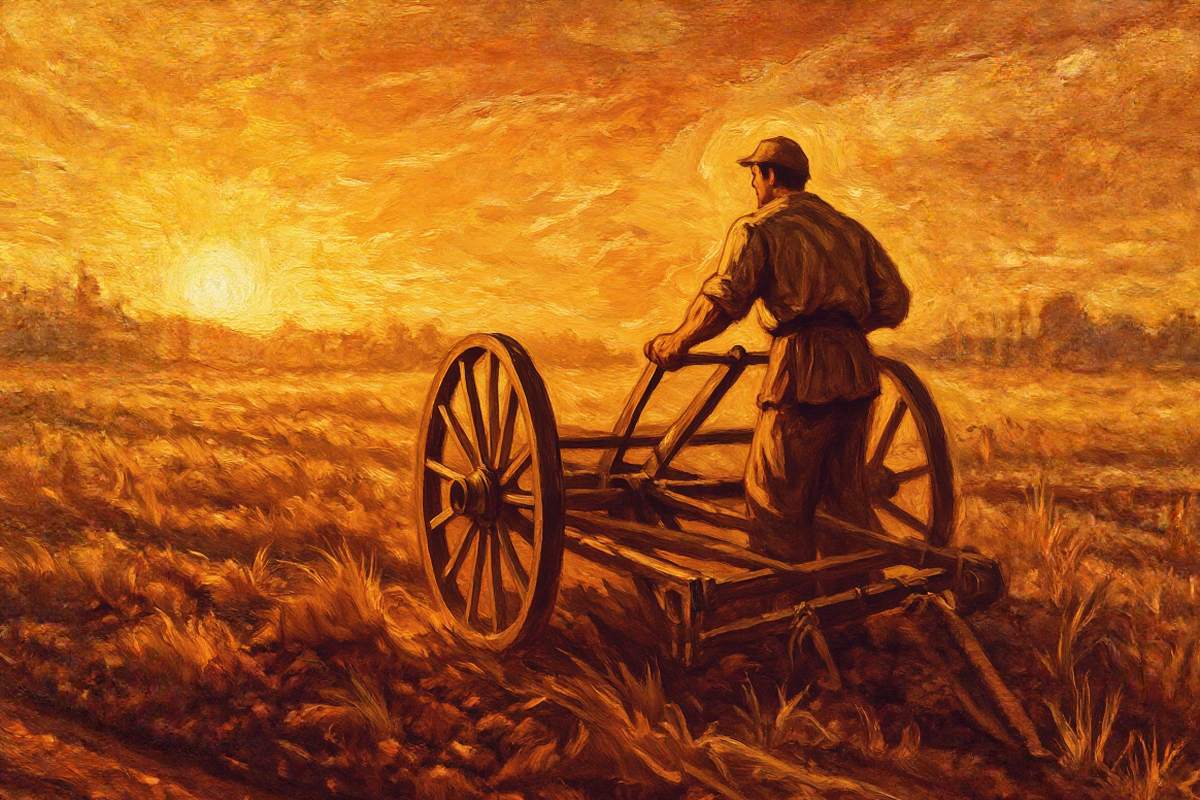
Faith to Faith Strength to Strength and Glory to Glory Starts With the Fallow Ground
The main text is Jeremiah 4:1–4: “Break up your fallow ground, and do not sow among thorns. Circumcise yourselves to the Lord.” Fallow ground, Dr. Hohman explains, is idle, uncultivated and unproductive ground, a place in your life where the Spirit of God is producing nothing. The same command appears in Hosea 10:12: sow righteousness, reap mercy, break up your fallow ground, for it is time to seek the Lord.
Evil, he notes, is not only violent crime. It is also a heart not tender enough to be grieved, that blames someone else or points elsewhere when correction comes. Paul counted everything he once gained as rubbish for the excellence of knowing Christ (Philippians 3:7–8). None of us can do that in our own strength, so we look to God’s strength.
Breaking up the ground is repentance. He shares a statement from a class he teaches: there was a time when his greatest strength was weakness, because he was stronger at running from something than at doing it. Quoting Barnes’ Notes, he warns not to sow the seeds of repentance on unfit soil. Repentance without a tilled heart is like the smoker who says he can quit anytime because he has quit a thousand times.
John the Baptist told the religious leaders to bear fruits worthy of repentance (Matthew 3:8), because baptism alone would not change them. Israel likewise promised to do everything the Lord said, and the very next day did none of it. Adam was formed from the dust, and whatever we plant in that earth will come up. Only God can circumcise the heart, which is why we are saved by grace through faith (Ephesians 2:8–9). If He said it, He will make it good (Numbers 23:19).
1 Peter 1:22–23 says we purify our souls by obeying the truth through the Spirit, in sincere love of the brethren. He tells how African believers who held weekly all-night prayer meetings at home often stop attending church regularly within months of moving to the United States, because there are too many choices. If you really wanted to be there, he says, you would be. He adds that there were times he did not like his wife but kept loving her, and grew in love.
Galatians 6:7–10 promises that whoever sows to the Spirit reaps everlasting life, and tells us to do good especially to the household of faith. When the church applied that to its food program, it exploded. Get a habit of giving, he says, and God will support that habit. He closes with Acts 3:19–21: repent, so that times of refreshing may come from the presence of the Lord.
Walking It Out This Week
Here are practical steps drawn from this message:
- Worship who He is. Go beyond thanking God for what He does and spend time acknowledging the Great I Am.
- Finish what God told you. If you started an act of obedience and let it slip, go back and complete it.
- Keep hearing the Word. Review and confess the same truth until revelation comes up in your heart.
- Look to God first. When you need help or refreshing, turn to Him before anyone or anything else.
- Break up hard ground. Let correction grieve you instead of excusing it, and repent of leaning on your weakness.
- Love and give on purpose. Love the brethren fervently and build a habit of doing good to the household of faith.
Timestamped Outline
- 0:00 A progression of spiritual growth
- 1:14 Praise and Psalm 8:2
- 2:29 Worship acknowledges who He is
- 5:03 The legal side of redemption
- 6:12 From the woods to Brooklyn
- 8:18 The unexpected inheritance
- 10:32 Faith shown by works
- 12:39 Review and faith by hearing
- 14:36 The prophet and the ten days
- 17:36 Romans 1:16–17: from faith to faith
- 18:32 The thief comes to steal the word
- 20:47 Psalm 84: the Valley of Baca
- 25:31 James 1 and 1 Peter 1: trials and patience
- 28:09 2 Corinthians 3:18: glory to glory
- 31:43 John 17: the glory He gave us
- 38:08 The fragrance of His presence
- 39:43 The good fight of faith
- 45:02 Jeremiah 4: break up your fallow ground
- 49:17 Repentance and weakness
- 54:48 Made from dirt: circumcise your hearts
- 57:53 1 Peter 1:22: purified by obeying
- 1:02:24 Galatians 6 and the food program
- 1:09:14 Acts 3:19: times of refreshing
From Faith to Faith Series
This message is part of a short series at NTC Ministries. Go back to the previous message or continue where this one leaves off:
- Previous: From Faith to Faith, Strength to Strength, and Glory to Glory — Running for the Eternal Prize
- You are here: From Faith to Faith, Strength to Strength and Glory to Glory, Part 2 — The Two Sides of Redemption
- Next: From Faith to Faith, Strength to Strength and Glory to Glory #5 — Break Up the Fallow Ground
Frequently Asked Questions
Is confessing Scripture just positive thinking?
Not as Dr. Hohman teaches it. He admits that earlier in his walk he sometimes confessed the Word to convince himself, and says that was not right. Confession is sowing God’s Word into your heart again and again until the Father brings revelation, the way Peter’s recognition of Jesus came from the Father and not from flesh and blood. You are planting seed, not talking yourself into something.
Does God send trials to test us?
Dr. Hohman says no. Following James, he teaches that God cannot be tempted and does not tempt anyone; that is Satan’s job. Trials still serve a purpose, because the testing of faith produces patience and proves faith genuine. Our part is to submit to God and resist the devil with the Word, as Jesus did in the wilderness, until the enemy leaves.
Why does repentance come before glory?
Because the seed of God’s Word cannot grow in hard, thorny ground. Dr. Hohman describes repentance as tilling the heart: letting correction grieve you, admitting where your strength has been your own weakness, and asking God to forgive you for substituting yourself for Him. Once the ground is broken up, the Word produces righteousness, and that is where God’s glory can rest on your life.
Scripture References
All passages open in the New King James Version on Bible Gateway:
- Jeremiah 4:1–4 — break up your fallow ground
- Hosea 10:12 — it is time to seek the Lord
- Romans 1:16–17 — from faith to faith
- Psalm 84:4–7 — from strength to strength
- 2 Corinthians 3:18 — from glory to glory
- John 17:20–23 — the glory You gave Me
- Romans 8:32 — freely give us all things
- 1 Peter 1:22–23 — purified by obeying the truth
- Acts 3:19–21 — times of refreshing
How this summary was made: written with AI assistance from the sermon’s own transcript and checked against the Scriptures listed above.
Watch More Messages
There are hundreds more teachings from NTC Ministries waiting for you. Browse the full sermon archive and keep growing from faith to faith.