An introduction to God begins with the name He gives Himself in the very first verse of the Bible: Elohim, the Creator. In this opening message of a new series on the names of God, the speaker shows that Elohim never stopped creating, that the name itself points to the Father, the Son and the Holy Spirit working together, and that the same God who created the universe is the one who makes covenant with us and makes us new creations.
Below you will find the full video, a structured summary of the sermon, the Scripture behind each point (linked to the New King James Version on Bible Gateway), a timestamped outline, and practical steps for getting to know God as Elohim this week.
Sermon at a Glance
This message opens a new teaching series at NTC Ministries and was posted on October 10, 2023. The speaker explains that he began preparing for it almost two years earlier, as the Lord spoke to him about this series and the ones to follow, and that the study has bolstered his own faith. He calls the opening message an introduction to God, because so many people have never really been introduced to who God is.
The heart of the sermon is the first name of God in Scripture, Elohim. He unpacks three things about it: Elohim is the Creator who is still creating, the name is plural and reveals the Father, Son and Holy Spirit, and Elohim is the God who makes covenant. The service closes with communion.
| Detail | Information |
|---|---|
| Speaker | The pastor (not named in the recording) |
| Series | An Introduction to God: The Names of God (part 1) |
| Main text | Genesis 1:1 and Genesis 1:26–27 |
| Key theme | Elohim, the Creator God who makes covenant |
| Length | About 66 minutes, ending in communion |
Why an Introduction to God?
Ask people in the world who God is, the speaker says, and some will answer money, their job or Mother Earth. Even a popular online encyclopedia describes God only vaguely, as the main object of faith in monotheistic religions. Those answers are vague because people have never been introduced to Him. Even born-again Christians, who know Him personally, sometimes struggle to say who God is beyond Lord, Savior or a supreme being.
God answers that question through the titles He gave Himself, and the meaning of each title paints a picture of who He is. Hebrews 1:1–2 says that God, who at various times and in various ways spoke through the prophets, has in these last days spoken to us by His Son.
We do not know Him completely yet. 1 Corinthians 13:12 says, “For now we see in a mirror, dimly, but then face to face.” The speaker explains that mirrors in Paul’s day were polished brass, or people looked into water, so the reflection was never perfectly clear. One day we will know Him as fully as He knows us.
Meanwhile, the more we know God, the greater our faith. He refers to an earlier series of his called God Is to You Who You Believe He Is. Born-again Christians who do not believe God is a healer struggle constantly with their health and look for the best doctor, when the best doctor is Jesus. They need to know Him as healer, he says, as Jehovah Rapha, one of the names this series will cover.
Elohim, the Creator Who Never Stops Creating
The first name is Elohim, found in the first verse of the Bible: “In the beginning God created the heavens and the earth” (Genesis 1:1). The speaker loves that even the first four words, “In the beginning God,” form a complete revelation. The God in that verse is a Creator, and that is what Elohim means. The title appears more than 2,500 times in the Bible, yet many Christians have never heard it.
Some people think God created everything, rested on the seventh day and stopped. The speaker disagrees. When God said, let there be light, the light did not stop; the universe has kept expanding since the days of Galileo, and today’s instruments show it still growing. God never said stop. He is still Creator.
That matters because people limit God. They read the miracles of the Gospels and think that was then. Some denominations teach that God does not do that anymore. But when a man asked Jesus, if You are willing, You can make me clean, Jesus answered, “I am willing” (Matthew 8:2–3). Everything may have been planned in the beginning, but not everything has been fulfilled yet.
The speaker explains that Elohim is a compound word. The first part, El, means strength or mighty one. He notes that the national airline of Israel is named El Al, and that the series will later look at El Elyon, the strength of the Most High. It takes mighty strength to create something out of nothing, and the name Elohim adds a new dimension to God’s power: He is the God who creates.
When you give your life to Jesus, you are in relationship with the God who creates. That is why the things which are impossible with men are possible with God (Luke 18:27). We look at our situations through a keyhole, he says, and decide nothing good can come of them. Instead, trust Him and acknowledge Him in all your ways (Proverbs 3:5–6). And get moving, he adds, because you cannot steer a parked car.
So far, he says, Elohim shows two facets. The first is total power, might and complete sovereignty: in the beginning there was only God, and He needs nothing outside Himself to exist. The second is complete creativity. He calls those things which do not exist as though they did (Romans 4:17). God is all-knowing, and every true discovery of science was established by Him first.
It is the truth of His Word that establishes all things; if you abide in His word, you will know the truth, and the truth will make you free (John 8:31–32). By faith we understand that the worlds were framed by the word of God (Hebrews 11:3), and that Word is still living and powerful (Hebrews 4:12).
The same creative power is available in your life. You do not have to keep living the way you have been living. God’s thoughts toward you are thoughts of peace, to give you a future and a hope (Jeremiah 29:11), and Jesus came that you might have life more abundantly (John 10:10). But if you do not know it, the speaker warns, it will not happen; it is done according to your faith (Matthew 9:29).

Elohim Is Plural: Father, Son and Holy Spirit
The ending of the name Elohim is plural, and the speaker teaches that it reveals a triune God. Genesis 1:26–27 says, “Let Us make man in Our image, according to Our likeness; let them have dominion.” Who said it? Elohim: the Father, the Son and the Holy Spirit. So God created man in His own image, which is why we are spirit, soul and body.
Notice who gives the dominion, he says. Not the Father alone, not Jesus alone, not the Spirit alone, but all three together. To exercise proper dominion on the earth, believers need all three active in their lives. Some denominations, he says, do not want the Holy Spirit around; then they do not know Elohim. Each Person of the Godhead moves, shifts, changes and provides for us in a different way.
All three were present in creation. In Genesis 1:2–3, the Spirit of God was hovering over the waters; the speaker says hovering means brooding, like a hen over her eggs. Then God spoke, and the Word went forth. Colossians 1:16 says all things were created through Jesus and for Him, and John 1:1–3 says the Word was with God and was God, and without Him nothing was made that was made.
He gives a simple picture of how the three work together, which the table below summarizes.
| Person | Role as the speaker teaches it | What it means for us |
|---|---|---|
| The Father | The Architect, the mind behind everything | Rest with Him and let Him share His heart |
| Jesus the Son | The Builder | Talk with Him; He builds His church |
| The Holy Spirit | The One who breathes life into what is built | Allow intimacy with Him; He pours God’s love into our hearts |
That is why unless the Lord builds the house, they labor in vain who build it (Psalm 127:1), and why Jesus said He would build His church and the gates of Hades would not prevail against it. Anything living grows, he says; if it is not growing, it has stopped living. The love of God has been poured out in our hearts by the Holy Spirit (Romans 5:5).
He answers those who teach that there is only Jesus. When Jesus was leaving, He promised another Helper, the Holy Spirit, who would abide with us forever (John 14:16–17). God is one in the way a winning team plays as one. Jesus prayed that believers would be one just as He and the Father are one (John 17:21); if oneness meant Jesus only, that prayer would make no sense.
He adds that salvation does not come by works, but rewards and blessings come as we know God more and work with Him. When people say Jesus came into their heart, he says, it is partly true: the Holy Spirit is the one who comes in to rule and reign, and He reveals the Son and the Father to us.
The God Who Makes Covenant
There is another facet of Elohim: He is the one who makes covenant with those He created. The speaker teaches that Jehovah keeps the covenant, but Elohim makes it. You could not be born again or have a new life without a covenant with God.
He points to Abram. God put Abram to sleep and cut a covenant with the sacrifice (Genesis 15:9–18); covenant, he explains, means to cut until blood flows. The speaker describes the Holy Spirit moving between the halves of the sacrifice. When Abram woke up, he was a new man with a new name, Abraham. Because God could swear by no one greater, He swore by Himself (Hebrews 6:13).
It was Elohim who brought you into a new creation. The Father chose you, the Word was the seed, and the Holy Spirit brought the life. You were born again not of corruptible seed but incorruptible, through the word of God (1 Peter 1:23). Paul had this revelation when he wrote that the gospel “is the power of God to salvation for everyone who believes” (Romans 1:16–17).
In Revelation 3:14, Jesus is called “the Amen, the Faithful and True Witness, the Beginning of the creation of God.” The speaker says amen is not just a way to end a prayer. It means, I am confident in Elohim; You are creating and accomplishing this right now. That is why we pray what God’s Word says.
He models such a prayer for a sound mind, thanking God that He has not given us a spirit of fear but of power, love and a sound mind (2 Timothy 1:7), and being anxious for nothing, letting requests be made known with thanksgiving and receiving the peace that guards heart and mind (Philippians 4:6–7).
A deer-hunting picture follows. You sit in a tree watching two lanes, and the deer shows up somewhere you never expected. That is how God works. He rarely comes the way we plan, but He gets it done, because He creates something out of nothing.
The speaker also addresses Revelation 3:14 more closely. He explains that in the early church a priest named Arius taught that Jesus was created by God and therefore was not God, reading his view into verses like this one. The heresy spread quickly, and the church answered it with the Nicene Creed. Other translations make the meaning plain: the Amplified Bible calls Jesus the origin and author of God’s creation, and the speaker says the originating source is closest to the original.
A Brand New Creation
In Matthew 16:13–18, Jesus asked His disciples who people said He was. Peter answered, “You are the Christ, the Son of the living God.” Jesus said this was revealed by the Father, and on this rock He would build His church. The speaker teaches that the rock is not Peter but the revelation God brings into a heart. What is in your mind can be taken from you, he says, but not what is birthed in your heart. That is why you must be born again (John 3:7).
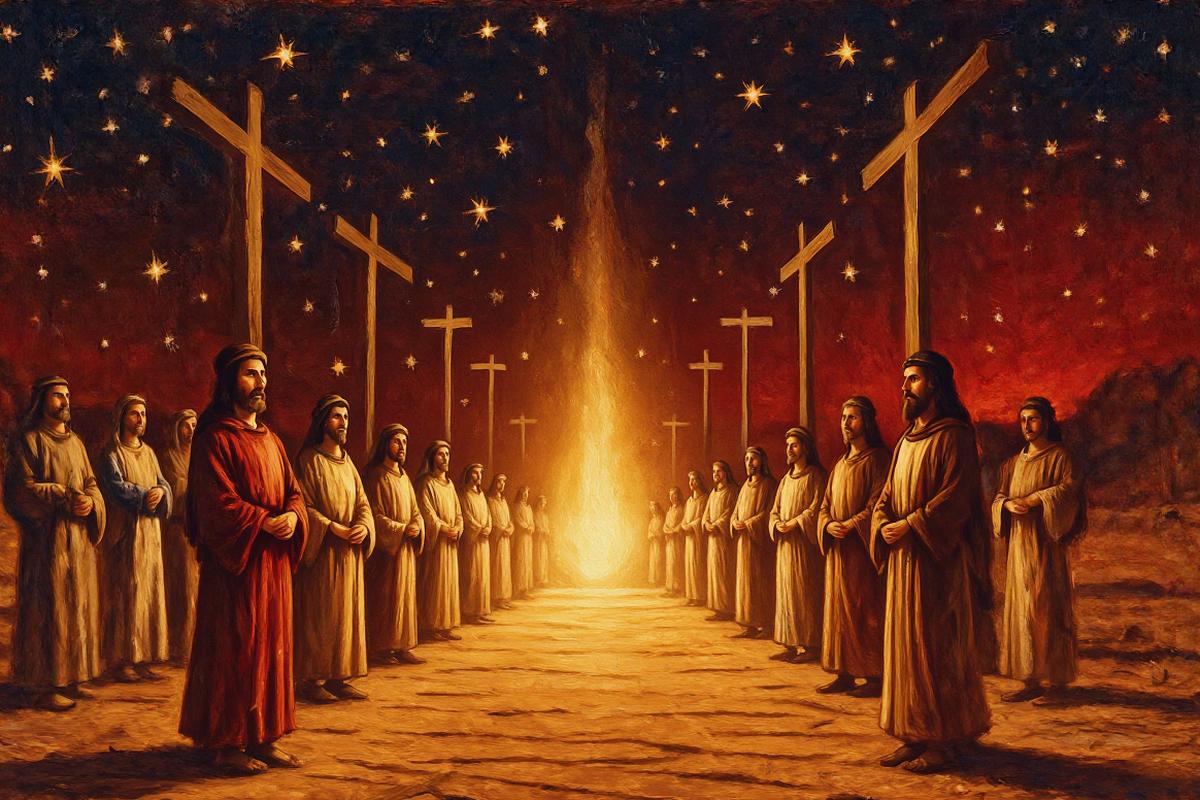
“If anyone is in Christ, he is a new creation” (2 Corinthians 5:17). The speaker contrasts two Greek words for new. Neos describes something old that has been redone or renewed. Kainos, the word used here, means brand new, never existed before. You may be 40 years old, he says, but if you are in Christ, you are a person who never existed before.
Ezekiel 36:24–27 describes the same work: God will sprinkle clean water, give a new heart and a new spirit, take away the heart of stone and put His Spirit within us. The Creator does that.
Enoch shows what walking with this God looks like. The speaker teaches that the name of Enoch’s son Methuselah meant that when he died, the flood would come; Methuselah lived 969 years, the longest of anyone. Enoch walked so closely with God that “he was not, for God took him” (Genesis 5:24).
In Jeremiah 32:38–41, God promises an everlasting covenant: He will not turn away from doing them good, and He will rejoice over them to do them good. The speaker challenges the idea that God destroys people’s lives to teach them a lesson. When he asks such people what they learned, they do not know. That is not our God, he says; He draws us close and teaches like a good teacher.
He finishes with Psalm 91:2–4: the Lord is my refuge and my fortress, He covers you with His feathers, and His truth is your shield. He sees the whole Godhead there: the Father who makes covenant, the Spirit who covers, and Jesus, the truth. With that intimacy, there is no place for fear.
Getting to Know Elohim This Week
Before communion, the speaker explains why he called the message an introduction to God. When you introduce a friend, you do not just say their name; you describe what they do, because the activity behind a name tells you who someone is. Communion does the same, remembering what Jesus did with His body and His blood in a new covenant. These steps come from the message:
- Stop limiting God. When a situation looks impossible, remind yourself that Elohim still creates something out of nothing.
- Say amen with confidence. End each prayer believing Elohim is already at work, and pray what His Word says.
- Welcome all three. Rest with the Father, talk with Jesus about what He is building, and yield to the Holy Spirit.
- Get out of the parked car. Ask God for direction, then take a step so He can steer you.
- Remember who you are. If you are in Christ, you are a brand new creation, not a patched-up version of the old.
- Tell someone about Him. You cannot exaggerate God’s goodness, so testify about Jesus during the week.
Timestamped Outline
- 0:00 A new series on the names of God
- 1:09 Who does the world say God is?
- 2:34 Titles God gave Himself: Hebrews 1:1
- 3:42 Seeing in a mirror dimly
- 5:52 Elohim in Genesis 1:1
- 8:37 Creation is still taking place
- 10:06 El: strength and the mighty one
- 13:15 Sovereignty and creativity
- 17:40 Hebrews 11:3: creative power for you
- 19:57 Elohim is plural: let Us make man
- 22:39 Dominion needs Father, Son and Spirit
- 24:05 The Spirit hovering; Colossians 1:16
- 31:28 Architect, Builder and Breath of life
- 34:04 Elohim makes covenant
- 38:43 Jesus, the Amen
- 43:19 The deer you never expected
- 44:30 Revelation 3:14 and the Arian heresy
- 47:06 Peter’s revelation: Matthew 16
- 51:05 Kainos: a brand new creation
- 53:35 Enoch walked with God
- 54:56 Jeremiah 32: God is not a destroyer
- 57:02 Psalm 91: refuge and fortress
- 1:00:50 Why this is an introduction to God
- 1:02:19 Communion and closing prayer
Names of God Series
This is the first message in an eleven-part series at NTC Ministries on the names of God. Continue with the next teaching:
- You are here: An Introduction to God: The Names of God, Part 1 — Elohim, the Creator Who Makes Covenant
- Next: An Introduction to God: The Names of God #3 — El Shaddai, the All-Sufficient One
Frequently Asked Questions
Why study the names of God at all?
Because the speaker teaches that the greater your faith, the more you know of God. Each name God gave Himself is a title with a meaning, and together they paint a picture of who He is. Someone who does not know God as healer will keep struggling with health, he says, while someone who knows Him as Creator stops limiting what He can do.
Did God stop creating after the sixth day?
No. The speaker teaches that God rested on the seventh day but never stopped being Creator. The light He spoke into being did not stop, and the universe is still expanding. Everything may have been planned in the beginning, but not everything has been fulfilled yet, which is why he expects God to keep creating in, for and through believers today.
What does amen really mean?
The speaker explains that amen means so be it, and that Jesus Himself is called the Amen in Revelation 3:14. Saying amen at the end of a prayer is not a way of running out of words. It is a declaration of confidence that Elohim is moving and acting right now to accomplish what His Word says, even before you can see it.
Scripture References
All passages open in the New King James Version on Bible Gateway:
- Genesis 1:1 — in the beginning God created
- Genesis 1:26–27 — let Us make man in Our image
- 1 Corinthians 13:12 — in a mirror, dimly
- Hebrews 11:3 — the worlds framed by the word of God
- John 1:1–3 — all things made through Him
- Revelation 3:14 — the Amen, the Beginning of the creation of God
- 2 Corinthians 5:17 — a new creation
- Jeremiah 32:38–41 — an everlasting covenant
- Psalm 91:2–4 — my refuge and my fortress
How this summary was made: written with AI assistance from the sermon’s own transcript and checked against the Scriptures listed above.
Watch More Messages
If this message helped you see God more clearly, there are hundreds more teachings from NTC Ministries waiting for you. Browse the full sermon archive and keep getting to know Him by name.