Holy Spirit and power belong together: the Holy Spirit comes into you when you are born again, and He comes upon you with power when Jesus baptizes you in the Holy Spirit. In this third message of the series, Dr. William P. Hohman shows from Scripture that these are two separate experiences, explains why God gives visible evidence of His power, and teaches that speaking in tongues is the pure language God promised to restore. It continues from Holy Spirit and Power #2 — The Language of the Spirit: Gift of Tongues and Prayer Language.
Below you will find the full video, a structured summary of the sermon, every Scripture he uses (linked to the New King James Version on Bible Gateway), a timestamped outline, and practical steps for receiving and using the power of the Holy Spirit this week.
Sermon at a Glance
This service was recorded at the New Testament Church in Merrill, Wisconsin, and posted on July 28, 2020. It opens with worship, the offering and announcements for a week of revival meetings with evangelist Joan Pierce, a Vacation Bible School and the church’s first clothing bank. Dr. Hohman begins preaching at about 36 minutes and closes with a prayer for salvation and the baptism in the Holy Spirit.
He describes the message as having three parts: the power that comes with the baptism, the evidence God gives for it, and the nature of speaking in tongues as a heavenly language. Throughout, his concern is that misinformation keeps believers from the power, the love and the goodness of God.
| Detail | Information |
|---|---|
| Speaker | Dr. William P. Hohman |
| Series | Holy Spirit and Power, part 3 |
| Main text | John 20:19–22, Acts 1:4–9 and Zephaniah 3:9 |
| Key theme | The baptism in the Holy Spirit brings power and visible evidence |
| Length | About 104 minutes including worship; the sermon starts near 36:30 |
Jesus the Baptizer and the Power to Witness
Dr. Hohman recaps the foundation he laid in the earlier messages. Jesus has a threefold ministry. He is the Lamb of God who takes away the sin of the world and justifies us. He is Lord, which means owner, master and ruler. And He is the baptizer in the Holy Spirit. People can baptize us in water, but only Jesus can baptize us in the Holy Spirit.
Making Jesus Lord, he says, means dying to my wants, my desires and having my way. Jesus Himself came to do the will of the Father (Hebrews 10:7) and did only what He saw the Father do (John 5:19). John the Baptist made the same distinction: he baptized with water, but the One coming after him would baptize with the Holy Spirit and fire (Matthew 3:11).
He notes that there has never been a revival, awakening or renewal without people receiving the baptism of the Holy Spirit. In the developing nations where most of his ministry has taken place, even denominations that oppose it at home are baptized in the Holy Spirit, because they have real demons to fight. At a prayer meeting in Davao City, Philippines, he warned believers not to become a spiritually lazy church; they needed God as doctor, provider and counselor.
He reads Deuteronomy 8:18: God gives the power to get wealth so that He may establish His covenant. Blessings are not for bigger houses and fancier boats but to get the work done. That is why Jesus promised power to be His witnesses, and Dr. Hohman asks the church to say the word “evidence.” Believers are meant to be evidence of the power of God.
Near the equator, he once heard a loud sound from three blocks away. It was a church where everyone was praying in tongues, lifting their hands and prophesying. Every church he has ministered in across the developing world, he says, shows evidence of the Holy Spirit and power, and he wants the same for churches at home.
Born Again and Baptized: Two Different Experiences
The first fallacy he addresses is the idea that a believer already has the Holy Spirit and so there is no separate baptism. Dr. Hohman agrees that nobody can be born again without the Holy Spirit, but says the baptism of the Holy Spirit is a totally separate experience. He shows it from John 20:19–22.
The passage begins “the same day,” the day Jesus rose and spoke to Mary at the tomb. That evening the disciples were hiding behind shut doors for fear. Jesus stood among them, said “peace be with you,” showed them His hands and His side, and then breathed on them and said, “Receive the Holy Spirit.” Here, he teaches, is where the apostles were born again.
He explains that the Greek word behind “breathed” is emphysao, which means to breathe into, as you would inflate an inner tube. It is the same picture as God breathing the breath of life into Adam’s nostrils in Genesis 2:7. The same breath that let Adam live in this earth now came into the apostles so they could live in the kingdom of God. Unless you are born again, Jesus said, you cannot see the kingdom (John 3:3).
Yet that was not the end. In Luke 24:49 Jesus told the same disciples to wait in Jerusalem until they were endued with power from on high. Dr. Hohman teaches that “endued” means to put on as a garment, like slipping into a dry, comfortable garment on a cold damp day. God wants His children to become comfortable with the Holy Spirit on their lives.
Many Christians, he says, are afraid of God’s power. He tells of an evangelism training at the church where college students from Wausau had just been baptized in the Holy Spirit. An older man who had been bent over for ten years came forward, and a student laid hands on him and commanded healing in Jesus’ name. The man stood up with no pain. The student then went and sat out, and later admitted he was afraid. “Misinformation is a terrible thing,” Dr. Hohman says.
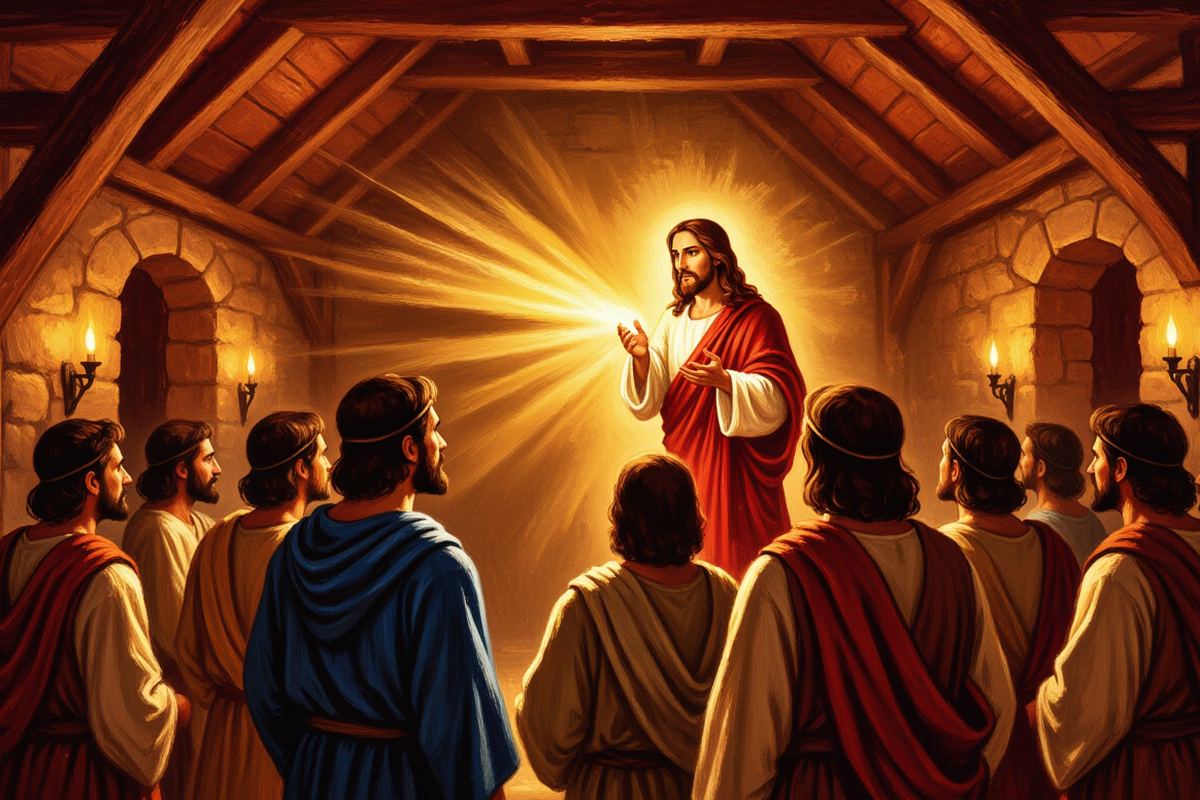
Dunamis: The Holy Spirit and Power in Action
Next he reads Acts 1:4–9. Forty days after His resurrection, Jesus commanded the disciples not to leave Jerusalem but to wait for the Promise of the Father, because John baptized with water but they would be baptized with the Holy Spirit not many days from now. They asked whether He would now restore the kingdom to Israel. He told them it was not for them to know times or seasons, but they would receive power when the Holy Spirit came upon them.
Dr. Hohman stresses the word upon. Forty days earlier the Spirit came in, inflating them and making them born again. Now He would come upon them, and ten days later at Pentecost He did. Jesus first had to ascend, take His seat at the right hand of the Father and pour out the Spirit on all who will receive. He will not force anyone, but every child of God needs it.
The word for power is dunamis, from which we get the English word dynamite. He defines it as a superhuman power that comes with enormous energy and produces phenomenal, extraordinary and unparalleled results. The same word, he says, described the Roman army, which advanced through any opposition. That is the power God wants His people to carry, so that they do not lean on their own understanding but acknowledge Him in all their ways (Proverbs 3:5–6).
He shares what he has witnessed of the Holy Spirit and power at work: three people raised from the dead, blind eyes opened, and bedridden people jumping up and running. He describes a young minister who had been hit by a semi while riding his motor scooter, with his skull crushed and every bone on one side broken. Carried in on a litter, he got up healed. In Dr. Hohman’s account, the man’s doctor said the new x-rays showed no broken bone at all, and called it a miracle of God.
His appeal is simple: do not be afraid of the Holy Spirit and power; embrace it. People with billions of dollars need the power of God too. God wants each believer to be a conduit His power flows through, and the evidence of an intimate love relationship with the Creator.
Why God Gives Evidence
Before turning to evidence, Dr. Hohman separates two uses of tongues. The gift of tongues, one of the nine gifts of the Spirit, is a message from God to man, so it must be interpreted. He tells how, as a children’s minister driving home from a conference in Marinette, the Lord told him to pull over on the main street of Norway, Michigan, and prophesy at noon. He spoke out in tongues, then interpreted it publicly. He says about three-fourths of what was prophesied there, including the school, daycare, food program, radio and worldwide ministry, has now been fulfilled.
When you are baptized in the Holy Spirit, he adds, you can prophesy, because God said He would pour out His Spirit on all flesh and sons and daughters would prophesy (Acts 2:14–18). He also points to Amos 3:7, that God reveals His plans to His servants the prophets. Personal tongues, by contrast, are a message from a recreated spirit to God, speaking divine mysteries, and are not interpreted.
To explain evidence, he goes back to the flood. The earth was founded upon the seas (Psalm 24:1–2), God laid up the deep in storehouses (Psalm 33:7), and He spread out the earth above the waters (Psalm 136:6). Before it ever rained, a mist went up from the ground (Genesis 2:6). Then in Noah’s day the fountains of the great deep were broken up and the windows of heaven were opened (Genesis 7:11–12).
God could have judged the earth with a plague, as He did in Egypt, but He chose a flood that left evidence: fault lines, tectonic plates, canyons and mountains carved by water. Dr. Hohman sees the same principle in Jesus’ promise. You will receive power, then you will be a witness, and there will be evidence in your life of what He has done.
The table below follows how he lines up the two kinds of evidence:
| Experience | What the Spirit does | Evidence as he teaches it |
|---|---|---|
| Born again | Breathes into you (John 20:22) | An inner witness in your heart; a changed life |
| Baptized in the Spirit | Comes upon you (Acts 1:8) | Tongues that flow out like a river of living water and bless others |
| The flood | Fountains of the deep broken up | Fault lines, plates and canyons all over the earth |
1 Corinthians 14:22 settles the point for him: tongues are for a sign, not to those who believe but to unbelievers. They are evidence, no different from the fault lines left by the flood.

Speaking in Tongues: A Pure Language
Dr. Hohman calls tongues the distinctive seal of the baptism in the Holy Spirit, the same Spirit by whom believers are sealed for the day of redemption (Ephesians 4:30). He makes three points about speaking in tongues.
First, speaking in tongues is a language. The Greek word is glossa, from which we get the word glossary. A word creates a picture from experience: say snow and you picture shoveling and sleigh rides. God chose words as the evidence of the experience you had with Him. At Pentecost the crowd was confused (Acts 2:6), but the believers were in one accord. You may not speak fluently at first, he says, and that is fine; you will grow.
Second, speaking in tongues is the language of the spirit. He who speaks in a tongue speaks to God and speaks mysteries (1 Corinthians 14:2). Paul said he will pray and sing both with the spirit and with the understanding (1 Corinthians 14:14–15). Dr. Hohman explains that his understanding can only ask what his knowledge allows, but when his spirit prays he can ask what God’s Spirit knows.
Since life and death are in the power of the tongue (Proverbs 18:21), praying in tongues declares the knowledge of God over your future, and fruit follows. Do not forbid it (1 Corinthians 14:39), and do not judge it by feelings, because we live by faith.
Third, it is a pure language. In Genesis 11:1 the whole earth had one language. At Babel, the Lord said that because the people were one and had one language, nothing they proposed would be withheld from them, so He confused their language (Genesis 11:5–7). In the upper room the opposite happened: they were all in one accord (Acts 2:1), united around one desire, the power of God.
The key promise is Zephaniah 3:9, which he reads as “for then I will restore to the peoples a pure language,” that they may all call on the name of the Lord and serve Him with one accord. He teaches that “restore” means to give back a language, and that a pure language cannot be defiled, twisted or distorted. God restores unity by giving His family the same heavenly language. Paul spoke of the tongues of men and of angels (1 Corinthians 13:1), and Dr. Hohman adds that praying this way also directs angels on your behalf.
He links this to Romans 8:26: we do not know how to pray as we ought, but the Holy Spirit prays through us. Anyone who has tried to talk with someone who speaks another language knows how hard communication can be; tongues remove that barrier between us and God. “It’s a necessity,” he says, not an option.
Receiving the Holy Spirit and Power This Week
Dr. Hohman closes by urging the church to have the courage to obey God rather than give in to intimidation and misinformation. The Spirit gives the utterance, but you do the speaking. He warns against being like Esau, who cried “what about me” after the blessing was given away (Genesis 27:34–38). God has more than enough for every child who comes to Him.
- Settle the foundation. Receive Jesus as Savior and make Him Lord, owner, master and ruler, before asking Him to baptize you in the Holy Spirit.
- Ask Jesus to baptize you. He is the only baptizer in the Holy Spirit; tell Him plainly that you want this ministry of His in your life.
- Submit your tongue. In your quiet time, give the Lord your tongue and begin speaking out in a language you do not understand, trusting Him for the words.
- Pray with spirit and understanding. Pray what He tells you in your own language, then keep praying in the spirit about the same matter.
- Walk by faith, not feelings. Keep praying in tongues even when you do not sense His presence, and watch for fruit over time.
- Seek Him first. Move past superficial prayers for money and things and seek first the kingdom of God and His righteousness (Matthew 6:33).
The service ends with a prayer for forgiveness, for Jesus to be Lord, and for the Holy Spirit and power with the evidence of speaking in tongues.
Timestamped Outline
- 0:00 Welcome, opening prayer and worship
- 10:49 Revival meetings with evangelist Joan Pierce
- 36:32 Dr. Hohman: Jesus the baptizer in the Holy Spirit
- 39:07 No revival without the baptism of the Holy Spirit
- 41:28 Deuteronomy 8: power to establish His covenant
- 45:04 Only Jesus baptizes in the Holy Spirit
- 47:28 The fallacy: “I already have Him”
- 49:35 John 20: He breathed on them
- 50:42 Luke 24:49: endued with power
- 51:57 Afraid of God’s power
- 55:05 Acts 1:4–9: wait for the Promise
- 57:55 Dunamis, explosive power
- 59:02 Miracles he has witnessed
- 1:04:06 The gift of tongues and a prophecy in Norway, Michigan
- 1:07:28 The earth founded on the waters
- 1:10:04 Evidence of the flood
- 1:13:45 Tongues are for a sign: 1 Corinthians 14:22
- 1:18:44 Glossa: tongues is a language
- 1:22:40 The language of the spirit
- 1:27:27 A pure language: Genesis 11
- 1:32:18 Zephaniah 3:9: one language restored
- 1:36:13 Have the courage to obey God
- 1:40:26 Prayer for salvation and the baptism
Holy Spirit and Power Series
This message is the third in a five-part teaching on the baptism in the Holy Spirit. Start from the beginning or continue with the next message:
- First message: Holy Spirit and Power #1: The Importance of the Holy Spirit and Jesus the Baptizer
- Previous: Holy Spirit and Power #2 — The Language of the Spirit: Gift of Tongues and Prayer Language
- You are here: Holy Spirit and Power #3 — Born Again, Baptized, and the Evidence of a Pure Language
- Next: Holy Spirit and Power #4: The Benefits of Speaking in Tongues
Frequently Asked Questions
Do I have to speak fluently the first time I pray in tongues?
No. Dr. Hohman says many people sound halting when they are first baptized in the Holy Spirit, and it does not matter to God. You will grow and increase in your heavenly language over time. He compares it to young children whose first words only an older sibling can understand. The important thing is to yield your tongue and begin speaking, because the Spirit gives the utterance but you do the talking.
Why are some tongues interpreted and others not?
He distinguishes the gift of tongues from personal prayer in tongues. The gift of tongues is a message from God to people, so it must be interpreted, whether by the speaker or by someone else. Personal tongues are a recreated spirit speaking mysteries to God. Nobody, not even the speaker, is meant to understand them, and that is why they are not interpreted in worship or prayer.
Can a woman prophesy or preach, according to this message?
Yes. Dr. Hohman points to the promise in Acts 2 that God will pour out His Spirit on all flesh and that sons and daughters will prophesy. On that basis he tells the church not to say that a woman cannot preach the Word of God. Anyone baptized in the Holy Spirit, he teaches, can prophesy as the Spirit leads.
Scripture References
All passages open in the New King James Version on Bible Gateway:
- John 20:19–22 — He breathed on them: receive the Holy Spirit
- Luke 24:49 — endued with power from on high
- Acts 1:4–9 — you shall receive power
- Acts 2:14–18 — I will pour out My Spirit on all flesh
- Genesis 7:11–12 — the fountains of the great deep broken up
- 1 Corinthians 14:22 — tongues are for a sign
- 1 Corinthians 14:14–15 — pray with the spirit and the understanding
- Genesis 11:5–7 — one language at Babel
- Zephaniah 3:9 — a pure language restored
How this summary was made: written with AI assistance from the sermon’s own transcript and checked against the Scriptures listed above.
Watch More Messages
If this teaching stirred a hunger for more of God’s power, there are hundreds more messages from NTC Ministries ready for you. Browse the full sermon archive and keep growing in the Holy Spirit.