Holy Spirit and power belong together: Jesus baptizes believers in the Holy Spirit so that the power of God can work through their lives, and speaking in tongues is both the first evidence of that baptism and a daily way to build yourself up. In this fourth message of the series, the pastor opens a new section on the benefits of speaking in tongues, tracing the theme from Babel to Pentecost, through Philip’s revival in Samaria and into Paul’s teaching in 1 Corinthians 14.
It follows Holy Spirit and Power #3 — Born Again, Baptized, and the Evidence of a Pure Language. Below you will find the full video, a structured summary of each point, the Scripture behind it (linked to the New King James Version on Bible Gateway), a table of the three common myths he answers, a timestamped outline and practical steps for this week.
Sermon at a Glance
This service from NTC Ministries in Merrill, Wisconsin, was posted on August 10, 2020. It opens with worship, a missions offering for a needed kitchen grease trap, and a report that at least 81 people gave their lives to Jesus Christ during the previous week’s community outreach. For the offering, the pastor reads 1 Corinthians 9:11: if ministers have sown spiritual things, it is a small thing to reap material support.
The teaching itself begins at about the 32-minute mark. The pastor explains that this part of the Holy Spirit and power series is a series in itself on the benefits of speaking in tongues, and he ends the service by leading listeners in a prayer to receive Jesus and the baptism in the Holy Spirit.
| Detail | Information |
|---|---|
| Speaker | The pastor of NTC Ministries |
| Series | Holy Spirit and Power, message 4 of 5 |
| Main text | Acts 8:9–24 and 1 Corinthians 14 |
| Key theme | The benefits of speaking in tongues for every believer |
| Length | About 98 minutes, with the teaching starting near 32:00 |
Holy Spirit and Power: The Anointing the World Resists
The pastor starts with a question: why do so few churches talk about speaking in tongues? His answer is that the spirit of this world is called an antichrist spirit. “It’s not an anti-Jesus spirit, it’s an anti-Christ spirit,” he says, and Christ means the anointing, the power of God. Churches that back away from that power end up weak, sick and without strength, because they no longer want the Holy Spirit moving in their midst.
By contrast, he wants signs, wonders and miracles to increase. It is not that God is increasing things, he explains; people’s hunger and desire are allowing Him to move. God does not force anything on anybody. We are the ones who have to allow it.
He reviews what the earlier messages established: Jesus is the baptizer in the Holy Spirit, and it is God’s will that all believers receive that baptism from Him. Acts 10:38 says God anointed Jesus with the Holy Spirit and with power, and He went about doing good and healing all who were oppressed by the devil. That, the pastor says, is God’s purpose for us now: to be Christ-like Christians. You are not a Christian because you go to church, but because His Holy Spirit is in you and you allow Him to do with you what He needs to do.
When Jesus’ ministry was introduced, John the Baptist announced that He would baptize with the Holy Spirit and fire (Matthew 3:11), a promise repeated in all four Gospels. In John 1:29–34, John says, “I did not know Him,” even though they were cousins. He knew Him physically, the pastor explains, but he did not know who He really was until the evidence came: the Spirit descending and remaining on Him. Jesus is the Lamb of God who atones for our sins, the Son of God, and the one who baptizes with the Holy Spirit.
Speaking in Tongues Edifies You
Some say that because you receive the Holy Spirit when you are born again, nothing more is needed. The pastor agrees that you cannot be a Christian without the Holy Spirit, but he points back to the book of Acts, where the series showed again and again the difference between having the Spirit at new birth and being baptized in the Spirit with power.
The first benefit he names is in 1 Corinthians 14:4: “He who speaks in a tongue edifies himself.” To edify means to build and construct, like a contractor who keeps working until the building is finished. It means increasing strength. And what is built is not our own desires. When we pray in tongues, he teaches, God is adjusting and changing us so we can fulfill what He has called us to do, the way He has called us to do it.
He connects this to fear. Many Christians are terrified by bad news because they did not build themselves up. The love of God is poured out in our hearts by the Holy Spirit (Romans 5:5), and perfect love casts out fear (1 John 4:18). When you pray in tongues, fear leaves. When people ask how he stays so calm through hard news, his answer is simple: pray in tongues and edify yourself.
His picture is a dead car battery. You turn the key and hear only clicking, so a friend pulls up with jumper cables connected to a running engine. After a few minutes, your car starts. “That’s what praying in tongues does,” he says. Your jumper cables latch on to the Holy Spirit and build you up. Better still, once the battery is charged it keeps charging itself, so you do not have to be jumped again at the grocery store. Prayer from others brings relief, but you must keep building.
A Pure Language Restored: From Babel to Pentecost
The pastor next goes back to Genesis 11:1–7. The whole earth had one language and one speech, and the people said, let us build a city with a tower that reaches to heaven. No dictator ordered it; they were in unity. God confused their language because, being one people with one language, nothing they proposed would be withheld from them.
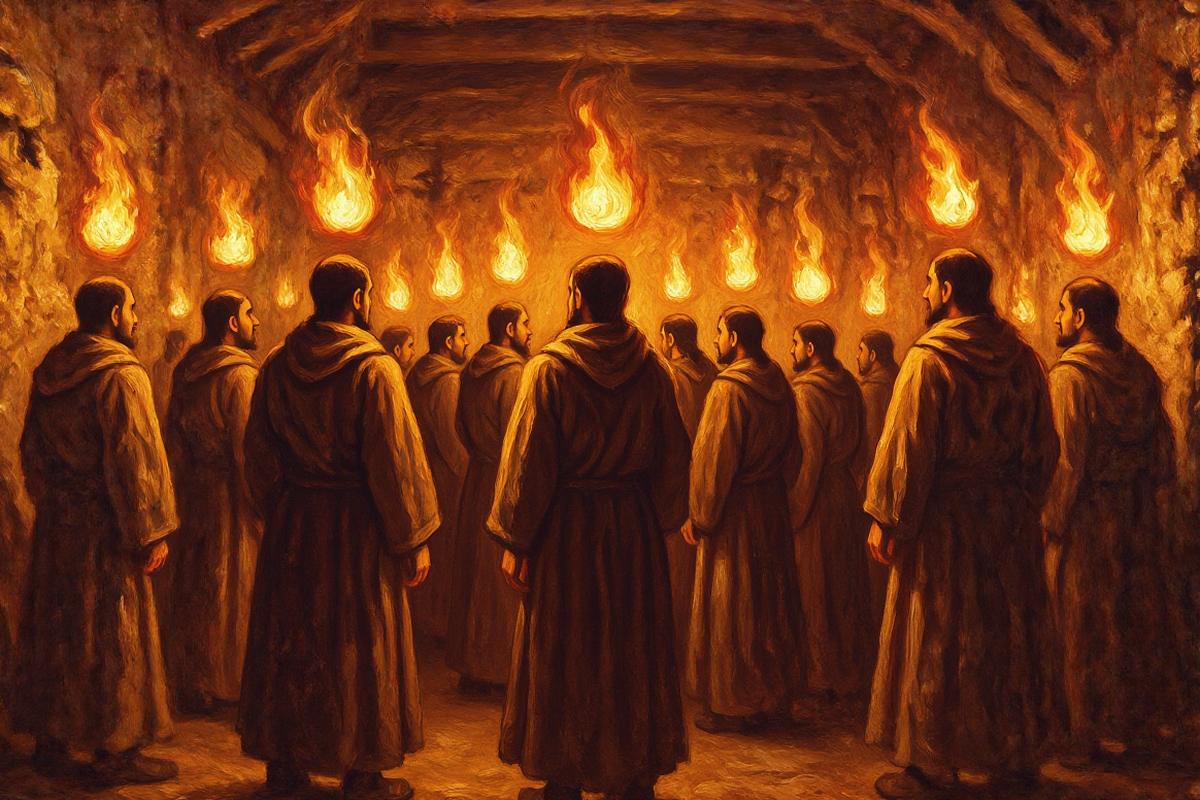
After the resurrection, Jesus breathed on His disciples and said, “Receive the Holy Spirit.” Forty days later He told them to wait in Jerusalem for the promise. The Spirit was in them, the pastor notes, but they also needed the Spirit upon them. On the day of Pentecost they were all with one accord, the power of the Holy Spirit came upon them, and they all spoke with other tongues (Acts 2:1–4). God gave back one common language.
That restoration was prophesied in Zephaniah 3:9: “For then I will restore to the peoples a pure language, that they all may call on the name of the Lord, to serve Him with one accord.” The pastor calls it God’s language, the language of heaven. To restore means to give back a language through which people can purpose again. A Christian with no sense of purpose should start speaking in tongues.
He applies the point to the church. The vocabulary should not be “this is what the pastor wants us to do” but “we will do this,” because everyone in the body of Christ is a servant. There should be no spectators, only servers. He points to the churches, schools, colleges, clinics, day cares and food programs the ministry supports in 34 nations and 27 states, not as bragging, but as evidence of what God does with people who yield to the Holy Spirit.
Tongues Are a Sign to Unbelievers
God gives evidence of His power, the pastor teaches. He did not simply remove the wicked from the earth in Noah’s day; He sent a flood, and the pastor says evidence of it remains in the earth’s crust. At the Red Sea, God could have struck down Pharaoh’s army in one night, as He did with the firstborn of Egypt. Instead the sea parted for Israel and then closed on the chariots, and the pastor says remains of those chariots can still be seen on the sea floor.
Speaking in tongues is evidence of the same kind, and it starts with you. He has the congregation read 1 Corinthians 14:22 aloud: “Therefore tongues are for a sign, not to those who believe but to unbelievers.” Believers accept the Bible because God said it. Unbelievers ask for proof, so God gave a sign.
He also answers the claim that you cannot pray in tongues without interpretation. When God speaks to us through a heavenly language, it must be interpreted, or we will not know what He is saying. But when we pray to God in the Holy Spirit, it does not need interpretation, because it has nothing to do with our intellect. It is God’s thoughts, and He does not want our understanding involved.
Simon and the Samaritan Believers
The main text comes about one year after Pentecost. The pastor first sets a foundation from Romans 8:9: if anyone does not have the Spirit of Christ, he is not His. You must have the Holy Spirit to be born again, but there is another experience of the Spirit for a different purpose. One gives you new life; the other keeps that new life on fire, like a can of gas thrown on a brush fire that is starting to go out.
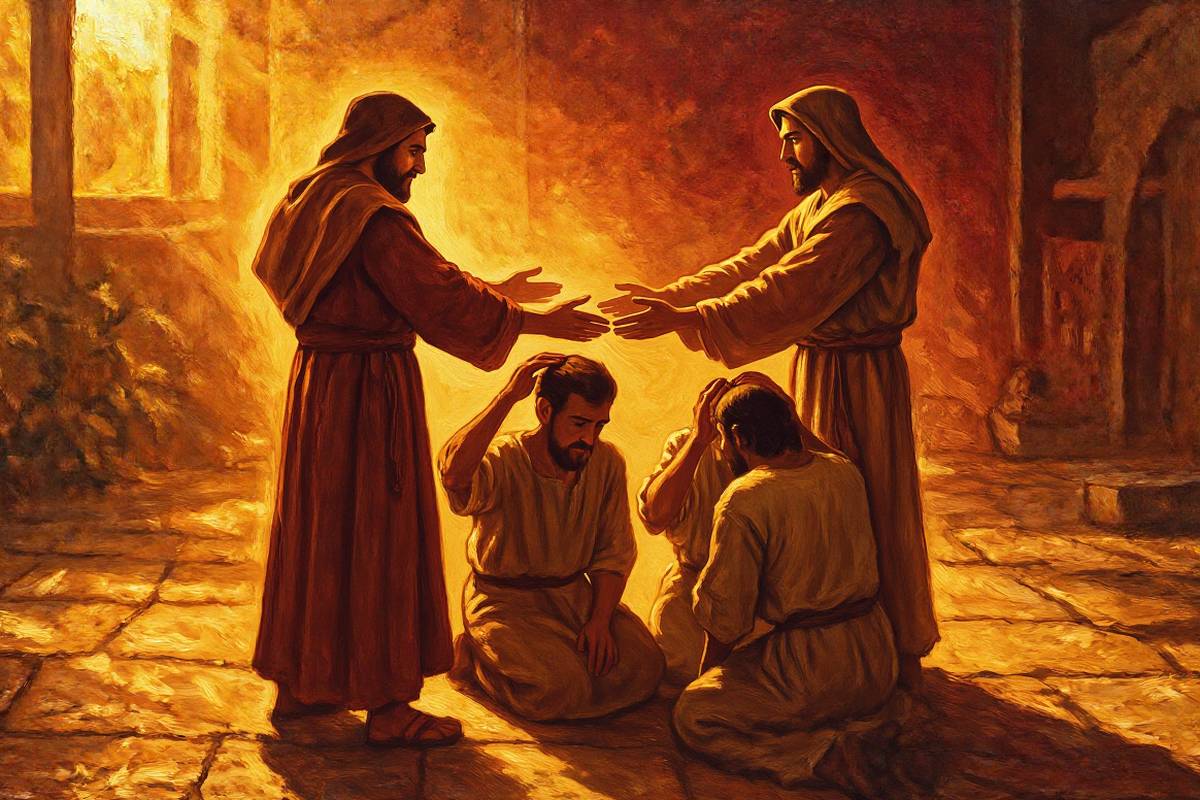
In Acts 8:9–13, the Samaritans had followed Simon the sorcerer, who astonished them with his sorceries. When Philip preached the kingdom of God and the name of Jesus Christ, men and women believed and were baptized, and Simon himself believed. In Acts 8:14–17, the apostles heard that Samaria had received the word of God and sent Peter and John to pray that they might receive the Holy Spirit, because He had fallen on none of them yet. They were born again and baptized in water, but they still needed the baptism in the Spirit.
The pastor tells of a crusade near Lake Victoria in Uganda, where the crowd grew from about 700 to several times that over three nights. Two young men approached him wanting the power they had seen in the signs and miracles, but they would not receive Jesus. He asked whether any king would give power to someone who refused to serve him, and they walked away.
That is Simon’s error in Acts 8:18–24. He saw something when hands were laid on the believers, which the pastor teaches was them speaking in tongues, and offered money for the power. Peter told him he had neither part nor portion in this matter. The pastor explains that “matter” here is the Greek logos, which he defines from a Greek dictionary as a word in verbal communication. Simon had no part in that speaking because his heart was not right. Simon humbled himself and asked for prayer.
Praying in Tongues: Myths and Perfect Prayer
The pastor says people often believe things about tongues because they were taught wrong or taught through fear. Besides the idea that new birth makes the baptism unnecessary, he names three common myths and answers each one from Scripture and experience.
| Myth | His answer |
|---|---|
| You cannot control it | The gift of prophecy is subject to the prophets, and so is tongues. They spoke as the Spirit gave them utterance: you do the speaking and He gives the words. |
| It will burst out unexpectedly and embarrass you | It is God’s will, like salvation and healing, but you still have to receive it. A hundred-dollar bill does not jump out of your wallet into the offering on its own. |
| It sounded the same, so I quit | No one speaks a new language fluently at first. His wife began with only a few syllables, kept yielding, and the language grew. |
He finds that last point in Isaiah 28:9–12: “For with stammering lips and another tongue He will speak to this people,” and this is the rest and the refreshing. Stammering, he explains, describes a child just weaned from milk who mimics his parents. That is how speaking in tongues often begins.
To pray in tongues is also to pray perfect prayer. Paul says in 1 Corinthians 14:2 that he who speaks in a tongue speaks to God and in the spirit speaks mysteries. In Romans 8:26–27, the Spirit helps in our weaknesses and makes intercession with groanings which cannot be uttered, according to the will of God. When you do not know what to pray, the Holy Spirit is never at a loss for words, and that prayer keeps going until everything that needs prayer has been prayed. Paul also spoke of the tongues of men and of angels (1 Corinthians 13:1), which the pastor calls the heavenly language.
1 Corinthians 14:14–15 says, “If I pray in a tongue, my spirit prays, but my understanding is unfruitful.” The pastor cites brain research from the University of Pennsylvania, led by Andrew Newberg, which he says found the language center of the brain was not under the speaker’s control during tongues. As a machinist working to tight tolerances, he would pray in tongues under his breath all day, because his spirit and his mind were doing two different things.
Speaking in tongues is the doorway to the other gifts. After reading 1 Corinthians 14:39, he says the more you pray in tongues, the more the nine gifts of the Spirit will manifest. Jude 20 calls it building yourself up on your most holy faith. “You become a giant in faith and ability,” he says, and a congregation praying in tongues can run through a troop and leap over a wall (Psalm 18:29).
Living It Out This Week
The pastor closes by leading everyone in a prayer to make Jesus Lord and ask Him for the baptism in the Holy Spirit, and then by praying in tongues together. These steps come straight from the message:
- Ask Jesus to baptize you. He is the baptizer in the Holy Spirit, and it is God’s will for every believer, but you must receive it.
- Pray in tongues daily. Like a charged battery, keep building yourself up instead of waiting for a jump-start.
- Keep yielding as the language grows. If it sounds simple at first, keep going, the way a child learns to speak by mimicking.
- Pray what you know, then pray in the Spirit. The pastor prays for his wife, children, grandchildren and church leaders by name, then prays in tongues over them.
- Serve, do not spectate. Build yourself up so you can do your part in the body of Christ.
- Pass it on. When hands were laid on others in Acts, the Spirit came on them too. Pray with others to receive.
Life and death are in the power of the tongue (Proverbs 18:21). The pastor urges believers to give their tongue to the Holy Spirit and watch the fruit of God start to be produced through them.
Timestamped Outline
- 10:28 Missions offering and 1 Corinthians 9:11
- 15:52 81 salvations at the community outreach
- 32:20 Benefits of speaking in tongues; the antichrist spirit
- 35:32 Acts 10:38: anointed with the Holy Spirit and power
- 36:31 John the Baptist introduces the baptizer
- 39:29 New birth versus baptism; 1 Corinthians 14:4
- 42:49 The jumper-cable illustration
- 45:02 Babel: one language and one speech
- 46:17 Pentecost restores one language
- 49:51 Zephaniah 3:9: a pure language
- 52:02 God leaves evidence: the flood and the Red Sea
- 54:05 1 Corinthians 14:22: tongues are for a sign
- 56:12 Acts 8: revival in Samaria
- 59:17 The Uganda crusade story
- 1:02:37 Simon offers money for the power
- 1:04:36 No part in this matter: logos
- 1:07:02 Three myths about speaking in tongues
- 1:12:03 Isaiah 28: stammering lips
- 1:13:30 Romans 8:26–27: the Spirit intercedes
- 1:19:48 Research the pastor cites on tongues
- 1:27:57 1 Corinthians 14:39: the doorway to the gifts
- 1:29:11 Jude 20: spiritual muscle
- 1:34:50 Prayer to receive the baptism in the Holy Spirit
Holy Spirit and Power Series
This message is part four of a five-part teaching at NTC Ministries. Start from the beginning or continue where this one leaves off:
- First message: Holy Spirit and Power #1: The Importance of the Holy Spirit and Jesus the Baptizer
- Previous: Holy Spirit and Power #3 — Born Again, Baptized, and the Evidence of a Pure Language
- You are here: Holy Spirit and Power #4: The Benefits of Speaking in Tongues
- Next: Holy Spirit and Power #5 — The Person of the Holy Spirit Within Us
Frequently Asked Questions
Can someone receive the baptism in the Holy Spirit without serving Jesus?
No. The pastor teaches that the world cannot receive the Holy Spirit, because the baptism is a ministry of Jesus to people who are already born again. In Samaria, the believers were saved and baptized in water before Peter and John prayed for them. His story of the two young men in Uganda makes the same point: no king gives his power to someone who refuses to serve him, so the first step is to make Jesus your Lord.
Does praying in tongues replace praying with my understanding?
No. Paul said he would pray with the spirit and also with the understanding. The pastor prays in English for what he knows, naming his family and church leaders, and then he will pray in tongues over them, because the Spirit prays for things he does not know. He also values praying in agreement with others. His concern is that many believers only ask others to pray for them instead of going directly to God themselves.
What does the pastor mean when he says there should be no spectators?
He teaches that everyone in the body of Christ is a servant with a part to play. People who sit back and watch others do everything, he says, are living a religious life rather than one filled with the Holy Spirit. Speaking in tongues builds you up for your part, and he reminds listeners that Jesus will return to reward those who are faithful, so believers should want to hear Him say well done.
Scripture References
All passages open in the New King James Version on Bible Gateway:
- Acts 10:38 — anointed with the Holy Spirit and power
- John 1:29–34 — He who baptizes with the Holy Spirit
- 1 Corinthians 14:4 — speaking in a tongue edifies
- Genesis 11:1–7 and Zephaniah 3:9 — one language lost and restored
- 1 Corinthians 14:22 — tongues are for a sign
- Acts 8:14–17 — the Samaritans receive the Holy Spirit
- Isaiah 28:9–12 — stammering lips and another tongue
- Romans 8:26–27 — the Spirit makes intercession
- Jude 20 — building yourself up
How this summary was made: written with AI assistance from the sermon’s own transcript and checked against the Scriptures listed above.
Watch More Messages
If this message stirred your hunger for the Holy Spirit, there are hundreds more teachings from NTC Ministries waiting for you. Browse the full sermon archive and keep building yourself up in your most holy faith.