The kingdom of heaven is the kingdom of God as Jesus now administers it: by grace, from the right hand of the Father, through people who have been given new, tender hearts. In this fourth message of the Building Kingdom series, the pastor shows how a hard heart turned God’s mercy into the harshness of the law, how a soft heart receives everything Christ purchased, and how Jesus builds His church as a colony of heaven on earth.
He grounds the teaching in Matthew 16, where Jesus first speaks of the church at Caesarea Philippi, and in the way Rome expanded its kingdom through colonies such as Philippi. Below you will find the full video, a structured summary, every Scripture he uses (linked to the New King James Version on Bible Gateway), a timestamped outline and practical steps for living as a citizen of heaven.
Sermon at a Glance
This message was preached at NTC Ministries in Merrill, Wisconsin, and posted in April 2025 as part four of Building Kingdom. The pastor opens by recalling an old-timer at a ministers’ convention in Seattle who promised to preach something everyone knew, then something only he knew, then something nobody knew. Much of the teaching on the kingdom, he says, falls into that last group, because it is rarely taught even among Pentecostals and charismatics.
He notes that there is one verse on being born again, yet by his count 69 verses speak of the kingdom of God and 32 of the kingdom of heaven, 101 in all. This message sets out to teach the kingdom of heaven plainly.
| Detail | Information |
|---|---|
| Speaker | The pastor of NTC Ministries (not named in the recording) |
| Series | Building Kingdom (message 4) |
| Main text | Matthew 16:13–19 |
| Key theme | The church as heaven’s called-out colony, living from a new heart |
| Length | About 66 minutes, ending in a prayer of salvation |
The Kingdom of Heaven, Administered by Grace
Earlier in Building Kingdom, the pastor taught that the kingdom has had different administrations, which the King James Version calls dispensations. The kingdom was first handed to Adam and administered in innocence. As people’s hearts changed after the fall, the administration changed too, all the way to Jesus. Now Jesus is risen and seated in the heavens, and that is why Scripture speaks of the kingdom of heaven. It is still always the kingdom of God, he explains, but today it is administered by grace.
When we are born again, God gives us a new heart. He takes away the stony, hard heart and gives a heart of flesh that is tender and can be molded, so that He can speak into us and administer His kingdom through us (Ezekiel 36:26). The heavens belong to the Lord, but the earth He has given to the children of men (Psalm 115:16). God is in charge, the pastor says, but we are the ones administering here.
That administration starts with the mouth. “If you will change the way you speak, you will change the way you see,” he says, and when you change the way you see, the best of life comes into your family and your job. Jesus taught that by your words you will be justified and by your words you will be condemned (Matthew 12:37).
After the fall, he says, life came to be run by the five physical senses, which is why Psalm 24:7–10 calls on the gates to lift up their heads so the King of glory can come in.
What a Hard Heart Does
To show how much the condition of the heart matters, the pastor sets two stories side by side. God does not want anyone to perish (2 Peter 3:9). When Cain murdered Abel, God sentenced him to be a vagabond, and Cain complained that the punishment was more than he could bear and that whoever saw him would kill him. God did not stone him. He put a mark on Cain so that no one would harm him (Genesis 4:8–15).
Later, a hard heart left Israel in bondage in Egypt. God brought them out with mighty signs and the wealth of Egypt (Exodus 12:35–36), water from a rock and manna. Still they grumbled, and so He gave them the law. David prophesied that God never wanted sacrifices and offerings; He wants a broken spirit and a contrite heart (Psalm 51:16–17).
The first person to break the law, the pastor recalls, simply gathered sticks on the Sabbath on a cold desert night to warm his family, and he was put to death (Numbers 15:32–36). Cain committed murder and received mercy. The difference was not God; it was the hard heart of the people. The wages of sin is death (Romans 6:23), he says, not because God does it, but because a hard heart brings it in.
| Story | What happened | What it shows, as he teaches it |
|---|---|---|
| Cain kills Abel | Murder, yet God marks and protects him | God’s heart is mercy, even toward the worst |
| Israel in the wilderness | Grumbling after miracles of water, manna and wealth | Hearts hardened by complaint invite the law |
| The man gathering sticks | Put to death for a small Sabbath offense | A hard heart limits the mercy people can receive |
| The new birth | A heart of flesh replaces the heart of stone | A tender heart receives the kingdom of heaven |
This world, he warns, will only give you a hard heart toward God, and life gets harder and harder. That is why Hebrews 3:15 and Hebrews 4:7, quoting the Psalms, say not to harden your hearts as in the rebellion. God will not keep your heart soft for you; His presence keeps it tender when you keep going to Him. Think about His love, the pastor urges, for as high as the heavens are above the earth, so great is His mercy (Psalm 103:11).
Without God there is arguing at home and refusal to forgive small things. Be tenderhearted toward one another (Ephesians 4:32). If Jesus could say from the cross, “Father, forgive them, for they do not know what they do” (Luke 23:34), He expects the same of us. If anger over what people did to you is that big, he says, it has made God that small.

You Already Have Everything
The pastor reads Luke 16:16 aloud with the church: the law and the prophets were taught until John, but since then the good news of the kingdom of God is told and everyone presses into it. When the kingdom is taught, people want in. He also recalls the parable in which Satan comes to steal the word of the kingdom from those who hear it without understanding (Matthew 13:19).
John the Baptist, he explains, was the delegated authority of the old order. He preached the law to Herod over his marriage to Herodias, and it got him killed (Mark 6:17–18). Jesus preached grace, and that also got Him killed, but He rose from the dead, victorious over death, hell and the grave. Giving your life to Jesus does not mean trouble disappears; it means you have victory over it. In the world you will have tribulation, but be of good cheer (John 16:33).
In the kingdom of God’s first administration, God created everything and then gave it all to Adam. Jesus, the last Adam, came to get it all back. God has blessed us with every spiritual blessing in the heavenly places in Christ (Ephesians 1:3), and His divine power has given us all things that pertain to life and godliness (2 Peter 1:3–4). So prayer, the pastor says, is not a list of requests. It is talking with God, the way you would with a spouse or friend. He tells people to begin each morning by asking God to tell them again how much He loves them.
That is why Jesus could tell people under the law not to worry about food, drink or clothing, and instead to seek first the kingdom of God and His righteousness (Matthew 6:25–33). The birds do not sow or store in barns, yet the Father feeds them; the lilies are arrayed beyond Solomon’s glory. “O you of little faith,” the pastor says, is not a slam. Jesus is saying you do not need much faith; you just have to believe God loves you.
On This Rock I Will Build My Church
The central text is Matthew 16:13–19, and the pastor has the church repeat the place name: Caesarea Philippi. Jesus asks who people say He is. Peter answers, “You are the Christ, the Son of the living God.” Jesus calls him blessed, because the Father revealed it, and says that on this rock He will build His church. The rock, the pastor teaches, is the revelation that Jesus is the Son of God; Christ, not any man, is the head of the church.
Simon, he says, means a reed easily blown in the wind; Peter means a small rock the wind cannot move. What brings that stability? Knowing that Jesus is the Son of God. On that rock Jesus builds His church, and the gates of hell will not prevail against it.
Then Jesus gives the keys of the kingdom of heaven. He jokes that when the church left its small first building, 59 keys came back. But keys belong to the house owner. Jesus spoke of every scribe instructed concerning the kingdom of heaven as a householder who brings out of his treasure things new and old (Matthew 13:52). Freely you have received, freely give (Matthew 10:8).
What the passage does not say is just as telling. This is the first time the word church appears in Scripture, yet the disciples never asked what it meant. The pastor’s explanation is that they lived under Roman rule, the word was common, and Jesus said it at Caesarea Philippi. To show why that matters, he turns to Acts 16:11–12, where Philippi is called the foremost city of that part of Macedonia, a colony.
A Colony of Heaven: Apostles, Evangelists and the Called-Out Ones
Rome, as the pastor describes it, was the strongest power on earth, yet preferred to expand without shedding blood, because a kingdom’s strength is its territory. Regions that gave themselves to Rome received roads, theaters and schools. He says Philippi was even called Little Rome, named its roads after Rome’s, and reached the highest level of partnership: a colony, with a Roman fort.
Rome first sent out an envoy to negotiate peace with a region, which he identifies as the origin of the word apostle. That, he notes, is why “turn or burn” preaching is not God’s way. Once a city said yes, Rome sent families to settle there and teach the people how to be Roman citizens. That is the ekklesia, the called-out ones, the assembly. In the same way, believers are called out of darkness into His marvelous light (1 Peter 2:9) to teach people the goodness of God.
Rome also sent heralds, the evangelists, whose message was good news. The angel was an evangelist when he announced “good tidings of great joy” to the shepherds (Luke 2:10), and Anna became the first to tell everyone the Savior had come (Luke 2:36–38). In the body of Christ there is neither male nor female (Galatians 3:28); people function as God calls them, and no function makes anyone better than another.
The pastor explains that the herald carried four points: a war has been declared against us; a son has been born into the family; the war has been won; and there is a wedding to which you are invited. That is the gospel. There was a war, a Son was born, He disarmed principalities and powers and made a public spectacle of them (Colossians 2:15), and now He invites us to the wedding dressed in the righteousness of God in Christ (2 Corinthians 5:21).
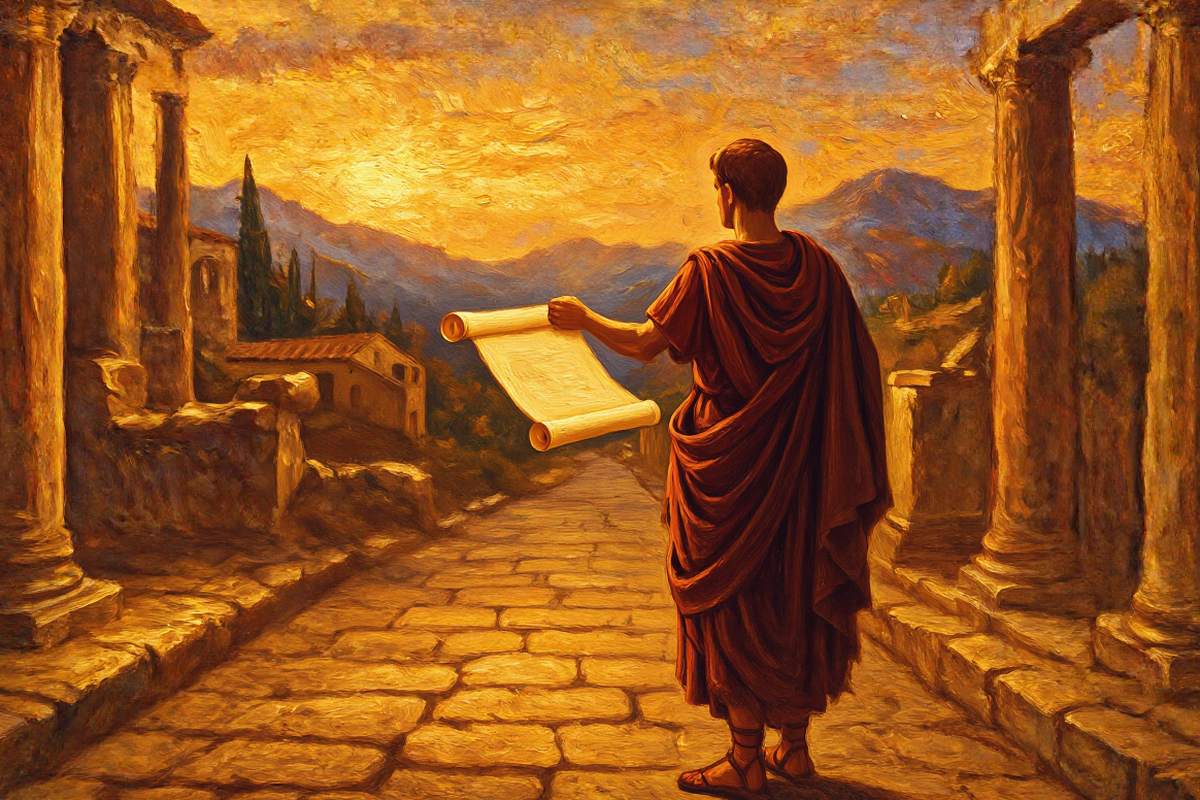
Thinking from the kingdom of heaven explains why Jesus chose His disciples rather than waiting for them to choose a rabbi: “You did not choose Me, but I chose you and appointed you that you should go and bear fruit” (John 15:16). He chose us out of the world (John 15:19). The pastor applies Rome’s saying, “When in Rome, do as the Romans do,” to the church: when in heaven, do as heaven does. God determines where each person dwells (Acts 17:26), and there we bless people, like the exiles told to build houses and seek their city’s peace (Jeremiah 29:5–7).
That is the Great Commission of the kingdom of heaven: all authority has been given to Jesus in heaven and on earth, so go and make disciples, teaching them to observe all He commanded (Matthew 28:18–20). Asked why the church is not growing, the pastor answers that one person cannot do it all; the called-out ones must do their job. Churches grow when the church functions, as the fivefold ministry equips the saints for the work of ministry (Ephesians 4:11–15).
Our Citizenship Is in Heaven
The pastor’s final text is Philippians 3:17–20. He reminds the church that Paul reached Philippi after meeting a group of women praying by a river, where a woman who traded in textiles gave her life to Jesus and carried the good news home (Acts 16:13–15). Paul warns of those whose god is their belly and who set their minds on earthly things, living by feelings, but says, “For our citizenship is in heaven, from which we also eagerly wait for the Savior, the Lord Jesus Christ.”
Jesus, he says, was the chief apostle who only heralded good news. Once He met a widow following her only son’s coffin, told the young man to arise and gave him back to his mother (Luke 7:11–15). He is the giver of life, and He blesses His people by His power, not their effort.
“You need to learn to say yes to Jesus,” the pastor says. The more you say no, the harder your heart gets, and you are the one building barricades between yourself and what God has for you. Every person stands before God. Now is the day of salvation (2 Corinthians 6:2), and out of the heart flow the issues of life (Proverbs 4:23).
Life in the kingdom of heaven brings peace that surpasses understanding (Philippians 4:7) and strength to run and not grow weary (Isaiah 40:31), and He who began a good work will complete it (Philippians 1:6). He closes by leading a prayer to receive Jesus, ending with whom the Son sets free is free indeed (John 8:36).
Living as a Citizen of Heaven This Week
These steps are drawn directly from this message on the kingdom of heaven:
- Change the way you speak. Notice your words this week; the pastor teaches that changing your speech changes how you see.
- Keep your heart tender. Spend time in God’s presence daily and forgive quickly, before anger makes God small to you.
- Start the morning with His love. Before asking for anything, ask God to tell you again how much He loves you.
- Seek first the kingdom. When worry rises about provision, remember that the Father has already given you all things in Christ.
- Function where you are planted. Bless the people around you at work and at home, as a citizen of heaven living in a colony.
- Disciple someone. Do not leave it to one person; share good news and teach others how heaven does things.
Timestamped Outline
- 0:00 Something nobody knows: the untaught kingdom
- 1:10 101 kingdom verses and the administrations
- 2:26 The kingdom of heaven and a new heart
- 3:32 Change the way you speak
- 4:43 Cain and God’s mercy
- 7:55 The law and the man gathering sticks
- 9:16 Do not harden your hearts: Hebrews 3 and 4
- 11:27 Luke 16:16: everyone presses into the kingdom
- 12:43 John the Baptist and Jesus
- 13:58 All spiritual blessings: Ephesians 1:3
- 16:07 Seek first the kingdom: Matthew 6
- 18:19 Caesarea Philippi: Matthew 16
- 20:36 The keys of the kingdom
- 22:48 The first mention of church; Acts 16
- 24:17 How Rome expanded its kingdom
- 28:35 Philippi, the colony called Little Rome
- 30:06 The apostle as envoy
- 35:23 The ekklesia and the evangelist
- 40:44 Your inheritance and the fivefold ministry
- 44:16 Chosen and called out: John 15
- 49:06 The herald’s four-point message
- 51:32 The Great Commission: Matthew 28
- 54:37 Philippians 3: citizenship in heaven
- 1:04:25 Prayer to receive Jesus
Frequently Asked Questions
Is the kingdom of heaven different from the kingdom of God?
Not in substance. The pastor teaches that it is always the kingdom of God, while kingdom of heaven describes how it is administered now that Jesus is risen and seated in the heavens. Under this administration the kingdom runs on grace rather than law, and believers on earth carry out what heaven has decided, much as Roman colonists carried out the rule of Rome in Philippi.
Does God punish people with hardship?
The pastor says God did not want to destroy Israel; He let pressure come so that they would humble themselves and turn back to Him. The wages of sin is death, he teaches, but that is not God doing it. A heart hardened toward God brings the harshness into life, while a tender heart keeps receiving His mercy, as Cain did even after murder.
Why does the pastor say the building is not the church?
Because the church is the ekklesia, the called-out people. He says the building is properly a basilica, a word he connects to the title King of kings, and the people are the kings and priests Jesus rules with. That is why he asks how many are born again and how many are called out, and expects the same hands to go up.
Scripture References
All passages open in the New King James Version on Bible Gateway:
- Matthew 16:13–19 — on this rock I will build My church
- Acts 16:11–12 — Philippi, a colony
- Luke 16:16 — everyone is pressing into the kingdom
- Matthew 6:25–33 — seek first the kingdom of God
- Ephesians 1:3 and 2 Peter 1:3–4 — all things already given
- Hebrews 3:15 — do not harden your hearts
- Genesis 4:8–15 and Numbers 15:32–36 — mercy and law
- Matthew 28:18–20 — make disciples of all nations
- Philippians 3:17–20 — our citizenship is in heaven
How this summary was made: written with AI assistance from the sermon’s own transcript and checked against the Scriptures listed above.
Watch More Messages
If this message opened your eyes to the kingdom, there are hundreds more teachings from NTC Ministries ready for you. Browse the full sermon archive and keep learning to live as a citizen of heaven.