Building Gods Kingdom #7 teaches that religious tradition can rob God’s Word of its power, and that one of the clearest examples is the way many churches limit women in ministry. Dr. William P. Hohman lays more groundwork for how the kingdom is governed, from water baptism and the twelve apostles to Paul’s call to the Gentiles, and then walks through the women God has used to lead, prophesy, plant churches and carry the gospel.
This message continues from Building God’s Kingdom #5: House Owners Who Hold the Keys of the Kingdom of Heaven. Below you will find the full video, a structured summary of the sermon, the Scripture behind each point (linked to the New King James Version on Bible Gateway), a timestamped outline, and practical steps for living it out.
Sermon at a Glance
This message was preached at NTC Ministries the Sunday after Mother’s Day and posted on May 20, 2025. It runs about 74 minutes. Pastor Hohman, who notes that the church he founded is nearly 40 years old, says the house has always had women ministers and that they have blessed it incredibly. He calls this teaching groundwork: the two passages most often used against women preaching, in 1 Corinthians and 1 Timothy, are saved for the following week.
His method is stated at the start. Hermeneutics is simply the way you study the Bible, and its first rule is that Scripture always interprets Scripture. It is not what you think, what an aunt said or what your father always believed. The question is always what the Bible itself says it means.
| Detail | Information |
|---|---|
| Speaker | Dr. William P. Hohman |
| Series | Building God’s Kingdom (message #7) |
| Main texts | Mark 7:13, Ephesians 3:1–7, Galatians 1–2, Romans 16 |
| Key theme | How tradition limits God’s Word, and the place of women in kingdom ministry |
| Length | About 74 minutes |
A Prophet, a Hospital and the Problem of Tradition
When the church was brand new, Pastor Hohman asked the Lord whom to bring in to minister. The Lord pointed him to Ephesians, where the church is built on the foundation of the apostles and prophets with Jesus Christ as the chief cornerstone (Ephesians 2:20). He had come to establish the work apostolically, so he needed a prophet. The only one he knew was a woman, Linda Sutter, whom he had met at the charismatic conventions after the Jesus people revival.
The first time she ministered there, she prophesied the three buildings the church now has, the radio station and the tower exactly where it stands, along with things not yet fulfilled. Later the Lord sent her to Albania, then in civil war, to start a hospital. She and another woman were left at the border by their driver, hitchhiked in with four Muslim men, and sang worship songs all the way. The men begged them to keep singing because they had never felt anything like it.
One of those men served under the country’s ruler and knew the head of the Ministry of Health. The women were given a building for free, with utilities paid, and the church in Wisconsin shipped over the equipment from a Wisconsin clinic that had moved into a bigger, new building. A hospital was started, he stresses, by women.
Yet in many churches, he says, men walk out when a woman ministers, because tradition has shaped how they see women in ministry. Jesus told the Pharisees that by their tradition they were making the Word of God of no effect (Mark 7:13). Tradition squeezes people and holds them back from what God wants out of them. What is impossible with man is possible with God, but first we have to strip away the thinking that holds us back from His power.
Kingdom Government and Water Baptism
The series is about the kingdom as a form of government. Pastor Hohman compares it to a constitution that stays the same while different administrations carry it out. The kingdom of God always was and always will be, but the way it has been administered on earth has changed, starting with Adam as its first representative.
Water baptism, he says, is a statement that you are giving your life to that government and to those who represent it. That is why Jesus insisted on being baptized by John, saying it was fitting to fulfill all righteousness (Matthew 3:13–15). John was the administrator of the kingdom on earth at that time, and Jesus submitted to him even though John must decrease and Jesus increase.
As the heart of man changed, so did the administration. Under law it was strict: the first man to break the Sabbath, by gathering sticks to warm himself, was put to death (Numbers 15:32–36). That seems cruel, he says, but it reflected the hardness of man’s heart. Then the law came through Moses, but grace and truth came through Jesus Christ (John 1:17).
Now we are born again under the kingdom of heaven, called that because Jesus rules and reigns from heaven. God takes out the stony heart and gives a heart of flesh and puts His Spirit within (Ezekiel 36:26–27). That is why, for someone truly born again, the greens are greener and the blues are bluer.
The Spirit and the Word always agree. The Spirit will never contradict Scripture, which is why we are told to test the spirits (1 John 4:1). If you think God told you something, check it against the Word.

Twelve Apostles, Matthias and Paul
Jesus commissioned twelve apostles to lead, and He told them they would sit on thrones judging the twelve tribes of Israel (Matthew 19:28). Judas could have been forgiven for his betrayal, Pastor Hohman says, just as Adam could have been. Instead, like Adam blaming the woman, he did not repent, and he died by his own hand.
Pastor Hohman sets this inside three institutions God established: the family in Genesis 2, which is the building block of society; human government in Genesis 9, to keep order among families; and the church in Acts 2, through which heaven’s will comes into every part of society.
In Acts 1:20–26, Peter quotes the Psalms: “Let his dwelling place be desolate” and “Let another take his office.” The replacement had to have been with them from John’s baptism until Jesus was taken up. They put forward Joseph called Justus and Matthias, prayed, cast lots, and Matthias was numbered with the eleven. Twelve, he teaches, speaks of complete government. Casting lots was one way God led His people under the old covenant, not a practice for today.
These twelve were chosen from Jerusalem under the law and preached the kingdom from Old Testament prophecy. But the church was a mystery hidden in the old covenant, so Jesus called Paul from heaven and gave him the revelation found in his letters. Paul calls himself an apostle not from men nor through man, but through Jesus Christ and God the Father (Galatians 1:1). In times past God spoke through the fathers; in these last days He has spoken by His Son (Hebrews 1:1–2).
When false apostles undermined him, Paul said he had become a fool in boasting because the church compelled him; in nothing was he behind the most eminent apostles (2 Corinthians 12:11). His message reached beyond the Jews to a kingdom where there is neither Jew nor Greek, slave nor free, male nor female (Galatians 3:28).
On the Damascus road, Jesus told Paul He would make him a minister and a witness and would deliver him from the people, both Jews and Gentiles, to open their eyes and turn them from darkness to light (Acts 26:16–18). Every minister, Pastor Hohman says, has to settle this first: you are delivered from people, because those whose lives are a mess will try to pull you away from the truth. The goal is that they turn and receive their inheritance.
Apostles Who Guard the Church
In Ephesians 3:1–7, Paul speaks of the dispensation of the grace of God given to him. Pastor Hohman explains dispensation as administration: Paul was given the revelation of how grace is administered in the kingdom of heaven. Even so, he did not rush out to preach it. God spent years building the man who could stand against opposition.
He describes the word mystery as something you can know, but only by becoming a member, like wondering what goes on inside a church building until you come in. Paul’s ministry was a gift of grace. God gives some to be apostles, prophets, evangelists, pastors and teachers until we all come into the unity of the faith (Ephesians 4:11–13). Should we still have all five today? Yes. Can they be women? Yes.
One apostolic function is to protect the church and keep it unified. Among the things the Lord hates, one who sows discord among brethren is singled out (Proverbs 6:16–19). Pastor Hohman says he can speak gently into almost any failure, but try to divide the church and you meet a mama bear. He admits he has done it several times and cried every time.
Heresy has always tried to creep in. John’s letters answered those who denied that Jesus came in the flesh, which is why he writes of what our hands have handled concerning the Word of life (1 John 1:1–3). As a caution, he tells how Augustine, saved out of a secretive sect, was made a bishop within two years, before he had been cleansed of its thinking. Pastor Hohman links the later poverty vow and the idea of finding holiness by withdrawing from people to that influence, and says a leader needs good things put in before he is trusted with decisions.
Paul faced the same battle. He marveled that the Galatians were turning so soon to a different gospel (Galatians 1:6–7). He refused to let false brothers bring the church into bondage (Galatians 2:1–5), and he opposed Peter to his face at Antioch when fear of the circumcision group made Peter pull away from the Gentiles (Galatians 2:11–14).
Good news, he insists, is for everyone. The angels announced good tidings of great joy for all people (Luke 2:10). If a message only benefits an elite group, it is not God. An heir who stays a child is no different from a slave (Galatians 4:1), but those who receive abundance of grace and the gift of righteousness will reign in life through Jesus Christ (Romans 5:17).
He adds a personal note. When he used to thank the Lord that he was debt free, he says the Lord answered, “William, every bum out on the street is debt free,” and told him to confess that he is a debt-free property owner. Do not let religion or tradition rob you of what God has for you.
Women in Ministry Through Scripture
Those who reject women in ministry, Pastor Hohman says, hold back half the gifts the church needs to mature. He then lists the women God has used, both under the old administration of the kingdom and in the early church. The table below follows his account of each.
| Woman | Role as he describes it |
|---|---|
| Miriam | The first praise and worship leader, out in front of everybody |
| Deborah | Led Israel into battle as a general and governed the nation |
| Esther | Saved the whole nation from genocide |
| Anna | A prophetess who heralded the Christ to all Jerusalem |
| The Samaritan woman (Photini) | First told publicly that Jesus was the Christ; went out and evangelized |
| Lydia | A supporter of the work who hosted a church in her house |
| Mary of Bethany | First to understand Jesus would die and rise; anointed Him |
| Mary Magdalene | Chosen herald of the resurrection, called the apostle to the apostles |
| Priscilla | Co-pastor with Aquila; helped pioneer a church and disciple Apollos |
| Phoebe | A leader of many who carried Paul’s letter to Rome |
| Junia | Outstanding among the apostles, in Christ before Paul |
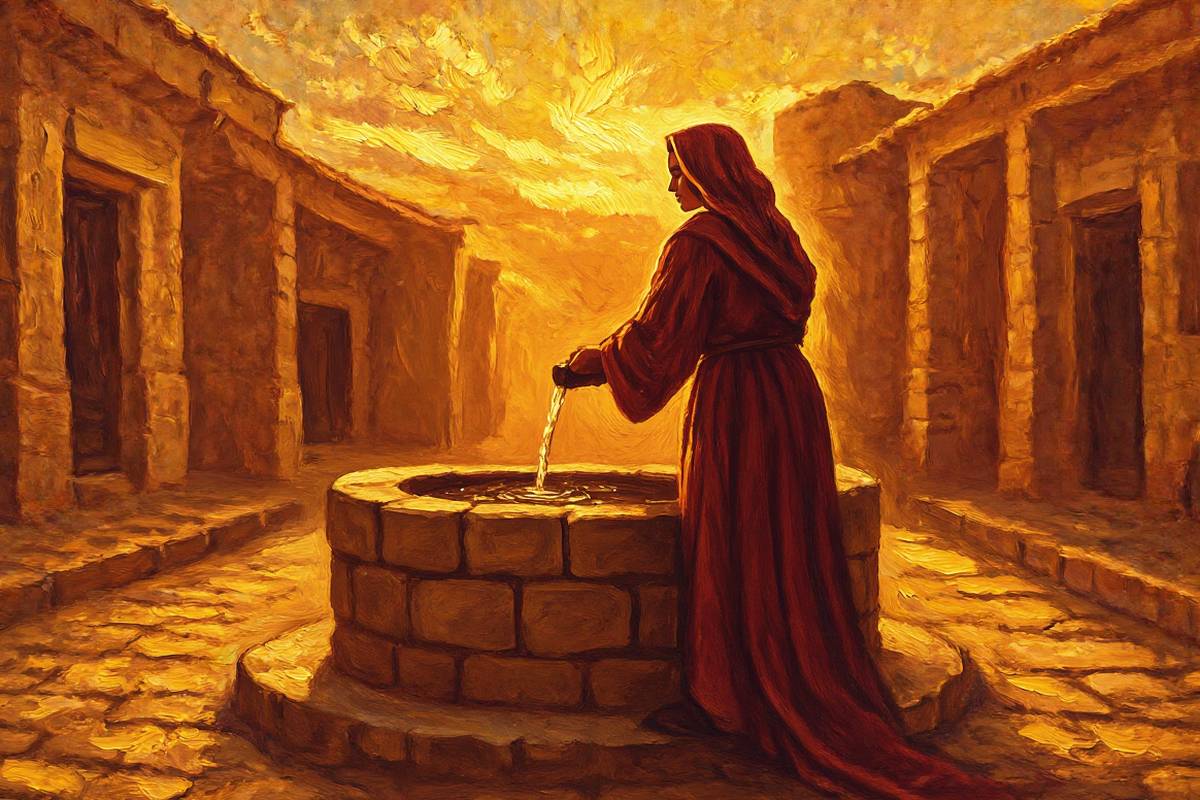
Anna, a widow of great age, served God with fasting and prayers night and day, gave thanks when she saw the child, and spoke of Him to all who looked for redemption (Luke 2:36–38). The Samaritan woman at Jacob’s well was the first person to whom Jesus said publicly that He was the Christ (John 4:25–29). Pastor Hohman recounts church tradition that knows her as Photini, says she planted many churches, and says she was martyred under Nero.
He notes that historical writings from several traditions call Mary Magdalene the apostle to the apostles. She stayed at the cross when others left and was the one Jesus sent to herald His resurrection first.
Paul commended Phoebe as a servant of the church and a helper of many, including himself (Romans 16:1–2). Pastor Hohman teaches that the word translated helper means a female guardian, protectress or patron, and that one translation renders it a leader of many. He also points to Andronicus and Junia, who are of note among the apostles and were in Christ before Paul (Romans 16:7).
He closes with Psalm 68:11–12, which he reads in a translation that speaks of the women who announce the news as a great host. Not every woman is called to the ministry, he says, but great is the number of women declaring the good news. If Paul commends all these women, there must be more to the two verses people quote against them, and that is next week’s study.
Building Gods Kingdom in Your Own Life
Here are practical steps drawn from this building gods kingdom message:
- Let Scripture interpret Scripture. Before holding a view about women in ministry or anything else, ask what the whole Bible says, not what family or custom has always said.
- Test what you hear. When you sense God telling you something, check it against the Word. The Spirit never contradicts it.
- Refuse traditions that cancel God’s Word. Name one belief you have never questioned and compare it with the passages in this message.
- Guard the unity of your church. Do not sow discord. Bring concerns to leadership instead of to other members.
- Honor women in ministry. Receive ministry from women whom God has gifted, as Paul received Phoebe and Junia.
- Receive your inheritance. Do not settle for the beggarly elements of this world when God has given you abundance of grace.
Timestamped Outline
- 0:00 Women in the church under the kingdom of heaven
- 1:09 Linda Sutter, the church’s first prophet
- 3:21 Two women start a hospital in Albania
- 6:33 Mark 7:13: tradition makes the Word of no effect
- 9:49 Scripture always interprets Scripture
- 11:00 Water baptism and submitting to kingdom government
- 13:19 A new heart under grace
- 14:20 Jesus commissions twelve apostles
- 17:56 Family, government and church
- 20:19 Acts 1: Matthias replaces Judas
- 23:36 Paul chosen from heaven
- 26:14 An apostle not from men: Galatians 1:1
- 30:49 Acts 26: delivered from the people
- 34:01 Ephesians 3: the administration of grace
- 41:18 Apostles protect the church from division
- 45:12 Augustine and traditions that crept in
- 50:55 Galatians 1: a different gospel
- 53:12 Galatians 2: false brothers and freedom
- 56:36 Paul opposes Peter at Antioch
- 1:00:07 Women God used under the old administration
- 1:03:38 The Samaritan woman at the well
- 1:07:41 Mary Magdalene and Priscilla
- 1:09:03 Phoebe and Junia in Romans 16
- 1:11:34 Psalm 68: the women who announce the news
Building Gods Kingdom Series
This message is part of an ongoing teaching series at NTC Ministries. Go back one message or keep going:
- Previous: Building God’s Kingdom #5: House Owners Who Hold the Keys of the Kingdom of Heaven
- You are here: Building God’s Kingdom #7: How Tradition Limits God’s Word and the Women He Uses in Ministry
- Next: Building Gods Kingdom #8: The Judaizers, Paul’s Stand and Women in the Church
Frequently Asked Questions
Does this sermon cover 1 Corinthians 14 and 1 Timothy 2?
Not yet. Pastor Hohman says plainly that this week is groundwork and that the two big passages people use against women ministering will be taught the following week. He says the answer is not a simple yes or no. You have to read those verses hermeneutically, alongside everything else Paul wrote, because the same Paul commends Phoebe, Junia and Priscilla. There has to be more to those verses than face value.
Why does he connect baptism with government?
Because the series treats the kingdom as a government with an administration. In his teaching, water baptism says you are giving your life to that government and to those who represent it. Jesus Himself submitted to John’s baptism because John was the kingdom’s administrator on earth at that time. Pastor Hohman says there is much more to baptism and that he will teach on it further.
Is every woman called to preach?
No. Reading Psalm 68, he says that not every woman is called into the ministry, just as not every man is. His point is that God has always used women and that great is the number of those declaring the good news. Refusing them, he says, holds back half the gifts the church needs to grow and mature into what God intends.
Scripture References
All passages open in the New King James Version on Bible Gateway:
- Mark 7:13 — tradition makes the Word of no effect
- Ephesians 2:20 — the foundation of apostles and prophets
- John 1:17 — grace and truth came through Jesus Christ
- Acts 1:20–26 — Matthias chosen
- Acts 26:16–18 — Paul’s commission
- Ephesians 3:1–7 — the dispensation of grace
- Galatians 2:11–14 — Paul opposes Peter
- Luke 2:36–38 — Anna the prophetess
- Romans 16:1–2 and Romans 16:7 — Phoebe and Junia
- Psalm 68:11–12 — a great company proclaimed it
How this summary was made: written with AI assistance from the sermon’s own transcript and checked against the Scriptures listed above.
Watch More Messages
If this message opened your eyes, there are hundreds more teachings from NTC Ministries waiting for you. Browse the full sermon archive and keep growing in the kingdom God has called you into.