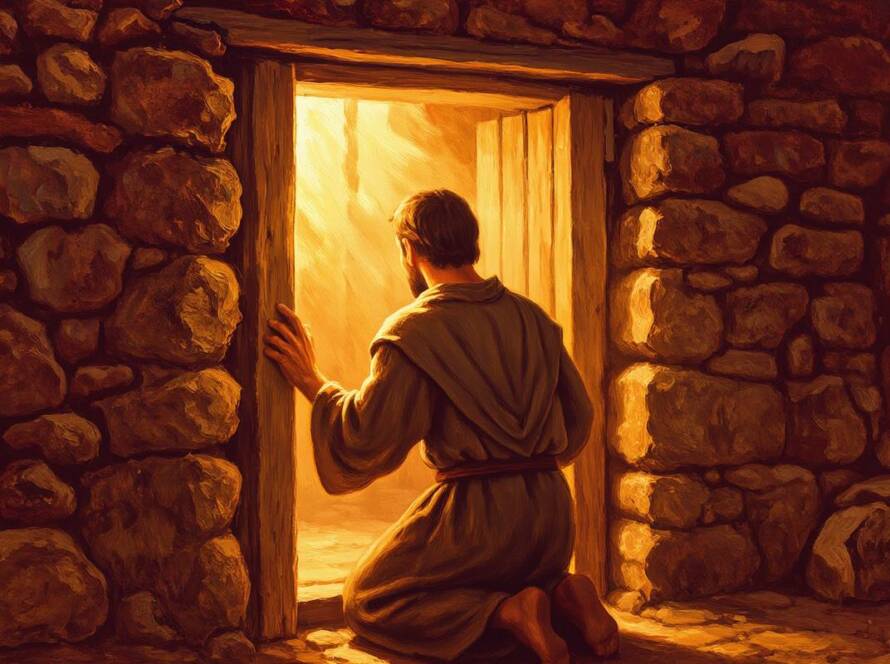
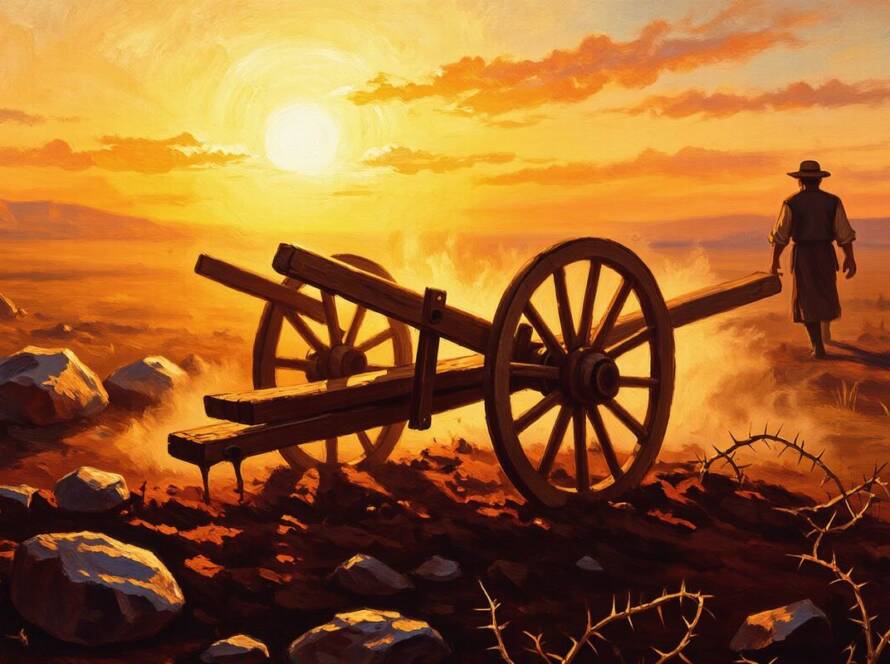
An introduction to God is really an introduction to His names, because each name tells us who He is and not only what He does. In this message, the pastor turns to El Shaddai, God Almighty, the all-sufficient one. He teaches that the name comes from the picture of a fertile field and of a mother who nourishes, and that knowing El Shaddai moves believers from a scarcity mindset to confident expectation that God will produce more than enough.
He traces the name through Abraham, Isaac, Jacob and Moses. This teaching continues from An Introduction to God: The Names of God, Part 1 — Elohim, the Creator Who Makes Covenant. Below you will find the full video, a structured summary, every Scripture linked to the New King James Version on Bible Gateway, a timestamped outline and practical steps.
Sermon at a Glance
This message was preached at NTC Ministries and posted on November 1, 2023, as part of a teaching series on the names of God. It runs about 69 minutes and closes with an invitation to give your life to Jesus Christ. After a short review of Elohim and Jehovah, the pastor spends the whole message on El Shaddai.
His central picture is a farmer who plants a field and keeps looking out the window, expecting a harvest. God, he says, is that fertile field, and those who know Him by this name learn to expect increase in every part of life.
| Detail | Information |
|---|---|
| Speaker | The pastor of NTC Ministries |
| Series | An Introduction to God: The Names of God, #3 |
| Main text | Genesis 17:1–2 and Genesis 28:1–4 |
| Key theme | El Shaddai, the God who is more than enough |
| Length | About 69 minutes, ending with a prayer of salvation |
Knowing God, Not Only in a Crisis
The pastor explains why he calls the series an introduction to God. When Adam sinned, he was separated from God, and apart from God corruption sets in. So over time God revealed Himself through different titles in Scripture, so that we would know who He truly is and what He does, and grow in a more intimate relationship with Him.
Christianity, he says, is a growth process. If you have been born again for twenty or thirty years and have no more revelation of God than when you started, you are not really looking for a deeper relationship.
A believer who only prays when in hot water, or only comes to prayer meeting when he needs God to come through, has no real relationship, he warns. That person is saying, I only need You when my back is against the wall. The answer is daily time in prayer and in the Word, even when you do not feel anything. God promises to be found by those who seek Him with all their heart (Jeremiah 29:13). When you know who He is, what He does follows.
He reviews the first two names. Elohim appears in Genesis 1:1, “In the beginning God created the heavens and the earth.” He teaches that El means strength, the strong and mighty one, and that Elohim is still creating today, making people new creations in Christ. Jehovah is the covenant keeper and grace giver who dwells with His people and makes sure all He promised comes to pass. Paul said the same in Philippians 1:6: He who began a good work in you will complete it.
El Shaddai, the All-Sufficient One
The name El Shaddai first appears in Genesis 17:1–2. When Abram was ninety-nine years old, the Lord appeared to him and said, “I am Almighty God; walk before Me and be blameless,” and promised to multiply him exceedingly. The pastor points out that God Almighty here does not simply mean the God of might and power. The name carries a different meaning entirely.
He teaches that Shaddai is drawn from the picture of a field. A fertile field produces an abundance of crops to sustain life. The name is also connected with the breast, the all-nourishing one, picturing the nourishment a mother gives. Put together, El Shaddai is the God of more than enough, the all-sufficient one, whatever circumstance you face.
When you see this name, the pastor says, God is telling you that He is more than enough to meet any need you will ever have. He will produce even against the natural order. In Genesis 17:6–8, God promises to make Abraham exceedingly fruitful, to bring kings from him, and to establish an everlasting covenant to be God to him and his descendants.
That promise reached beyond Israel. In Jesus Christ, the pastor says, God brought Jew and Gentile together into one new man. We are heirs of God and joint heirs with Christ. In a natural estate, four children split an inheritance four ways. In Christ, each one receives everything, not a portion.
He contrasts this with a scarcity mentality that finds a problem in every solution, answering every suggestion with “yeah, but.” The person who knows El Shaddai says instead: it does not matter what is happening, I will be multiplied and I will increase. Galatians 3:7–9 says that only those of faith are sons of Abraham and are blessed with believing Abraham. That blessing, he adds, should overflow to your boss, your job and your family.
He shares how his and Pam’s families once laughed at their commitment to Christ, yet now they are the first people the family calls. He reports praying for a brother-in-law facing a heart operation, telling him he was fine, and the doctor then confirming no operation was needed. Persecution may come when you get to know the all-sufficient one, he says, but it will be turned around for you.

An Introduction to God Through Abraham and Isaac
Abraham was seventy-five when God first promised him many children. Ten years later nothing had happened, so Sarah gave him her maid Hagar, and Ishmael was born when Abraham was eighty-six. The pastor calls Ishmael the son of the flesh, a good human idea. At ninety-nine, God came as El Shaddai and promised a son through Sarah. It seemed impossible, yet a year later Isaac, whose name recalls laughter, was born.
If El Shaddai could do that in Abraham’s impossible situation, the pastor asks, can He multiply you, bring your children back to the altar and bring your family together again? Yes, but we have to quit trying to make it happen ourselves. El Shaddai will give direction, and we have to do what He says and keep doing it.
Isaac passed the name on. In Genesis 28:1–4, as Jacob fled from his angry brother Esau, Isaac blessed him: “May God Almighty bless you, and make you fruitful and multiply you,” and give you the blessing of Abraham. Isaac had seen El Shaddai work contrary to nature in his own birth, and he wanted his son to trust Him.
Jacob left home with nothing but his father’s blessing and the birthright. When you are born again, the pastor says, you have God’s birthright and blessing too. Yet Jesus taught us to pray, “Your kingdom come. Your will be done on earth as it is in heaven” (Matthew 6:10). God brings heaven’s blessing to us now.
On the road, Jacob dreamed of a ladder with angels ascending and descending. In Genesis 28:13–15, God promised that his descendants would be as the dust of the earth, that all the families of the earth would be blessed in him, and, “I will not leave you until I have done what I have spoken to you.” The things impossible with men are possible with God (Luke 18:27), because His name is El Shaddai.
This is why, the pastor says, giving is never money lost. No farmer plants a field and doubts he will get a harvest. People who say they never give to get do not know El Shaddai, the fertile field. What you sow, you will reap, so expect increase.
Jacob and the Speckled Flocks
When Jacob reached Laban’s house, he fell in love with Rachel and agreed to work seven years for her. Laban gave him Leah instead and demanded seven more years for Rachel. The pastor recalls his own father-in-law once harnessing him to a plow, and he did it because he loved Pam.
Laban changed Jacob’s wages ten times (Genesis 31:7). Yet Laban had only a handful of sheep and goats when Jacob arrived and became very wealthy, and he knew it was because of Jacob. When Jacob wanted to leave, Laban begged him to stay. Jacob agreed to keep only the speckled, spotted and striped animals as his wages.
The pastor describes what Jacob did: he peeled stripes into branches, set them in the watering troughs, and let the strongest animals mate in front of them, and the young were strong and speckled (Genesis 30:37–43). The lesson is obedience. Some say that under grace they can do anything and God will still bless them, but El Shaddai says, obey Me and I will turn it around.
Hebrews 10:23 says, “Let us hold fast the confession of our hope without wavering, for He who promised is faithful,” and Hebrews 3:6 speaks of holding fast our confidence firm to the end. Abraham and Sarah tried their own strength with Ishmael; Jacob followed God’s instructions. If we keep the Word before our eyes the way Jacob’s flocks kept seeing those rods, increase will come.
In Genesis 35:9–12, God appeared to Jacob again, renamed him Israel and said, “I am God Almighty. Be fruitful and multiply.” God brought him out of Laban’s house wealthy, reconciled him with Esau and built a nation through him. The word Almighty, he teaches, always relates to blessing and multiplication. The table below follows the El Shaddai passages he walks through:
| Passage | Who meets El Shaddai | What the name promises, as taught |
|---|---|---|
| Genesis 17:1–2 | Abram at ninety-nine | Multiplication beyond natural limits |
| Genesis 28:1–4 | Jacob, blessed by Isaac | Fruitfulness and the blessing of Abraham |
| Genesis 35:9–12 | Jacob, renamed Israel | A nation and kings from his body |
| Exodus 6:2–3 | Moses | The God the patriarchs knew as more than enough |
| Psalm 91:1–2 | Moses’ psalm, as he teaches | Shelter for those who stake their claim |
| Revelation 19:11–16 | The returning Christ | Judgment as abundant as His blessing |
Abiding Under the Shadow of the Almighty
In Exodus 6:2–3, God told Moses that He appeared to Abraham, Isaac and Jacob as God Almighty, but by His name the Lord He was not known to them. It was so important that those three generations knew Him as El Shaddai, the pastor says, that He did not even need to reveal Himself as Jehovah to them.
Moses came to know El Shaddai too, and saw multiplication as Israel left Egypt. The pastor reads Psalm 91:1–2: he who dwells in the secret place of the Most High shall abide under the shadow of the Almighty. He teaches that dwell means to remain, to stake your claim. We stake our claim with our mouth: “I will say of the Lord, He is my refuge and my fortress.” He leads the church in declaring that El Shaddai is more than enough to heal, to provide, to restore marriages and to reconcile families.
Jesus taught the same in John 15:4–8: “Abide in Me, and I in you.” The pastor gives the Greek word as meno, meaning to stay put in a place, a state or a relationship, always expecting. A farmer who plants corn keeps looking out the window for the green tops, then the stalk, then the ear, then the golden harvest. That is abiding.
When he teaches leadership to ministers, he tells them faith is doing what God told you to do until He shows up and does it Himself. Jacob kept watering the flocks before the rods until God blessed him. Jesus said that whoever abides in Him bears much fruit, and by this the Father is glorified. The Father wants you to prosper and be in health, just as your soul prospers (3 John 1:2).

Receivers and the Choice Before Us
Abiding comes with a price. 2 Timothy 3:12 says all who desire to live godly in Christ Jesus will suffer persecution. The pastor says people who do not know El Shaddai will criticize you when you prosper. Like the seed on stony ground in Matthew 13:5–6, plants without roots wither in the heat. He pictures a farmer who keeps moving his plants to whichever field had rain last week; none of them ever produce.
Many people never put down roots, he says. When the honeymoon ends, or there is trouble at church or at work, they move on, and twenty years later they face the same problem. The world says time heals all wounds, but he has seen people grow more bitter over time. Wounds will come in every relationship. If God told you to stay, abide, ask Him what to do and keep doing it.
The twelve spies saw grapes of great abundance in the promised land, but ten said it was impossible and looked to their own strength. Only Joshua and Caleb brought a good report and later took the land. God gives seed to the sower and bread to the eater (2 Corinthians 9:10), and harvests go to receivers.
John 1:11–12 says Jesus came to His own, and His own did not receive Him, but as many as received Him, to them He gave the right to become children of God. Only when we receive, the pastor teaches, does God have the authority to produce in our lives. His school’s motto expresses that attitude: good, better, best, never let it rest until my good is better and my better is best.
Whatever El Shaddai does, He does in abundance, including judgment. In Revelation 19:11–16, the rider on the white horse, called Faithful and True and the Word of God, treads the winepress of the fierceness and wrath of Almighty God. His wrath, the pastor says, is equal to His blessing, so choose the abundance of blessing. He urges everyone not to wait another minute.
Living Under El Shaddai This Week
The message ends with a prayer in which listeners give their heart, soul, mind and strength to Jesus and confess, “You are my all-sufficiency.” Here are practical steps drawn from this introduction to God:
- Seek Him daily, not only in a crisis. Set a daily time for prayer and the Word, even on days when you feel nothing.
- Speak the name over your needs. Like Moses in Psalm 91, say out loud that El Shaddai is more than enough for your health, provision and family.
- Drop the “yeah, but.” When you notice yourself finding a problem in every solution, replace it with expectation of increase.
- Obey the instructions you have. Like Jacob with the speckled flocks, keep doing what God told you until He shows up.
- Sow with expectation. Give the way a farmer plants, expecting a harvest so you can be a blessing to others.
- Put down roots. If God placed you in a church, a job or a marriage, abide there instead of moving on at the first wound.
Timestamped Outline
- 0:00 Why a series called an introduction to God
- 1:21 Christianity is a growing relationship
- 2:28 More than crisis prayers
- 3:37 Elohim: Genesis 1:1
- 4:51 Elohim and Jehovah reviewed
- 6:11 El Shaddai first appears: Genesis 17:1-2
- 7:19 The fertile field and the nourishing one
- 8:40 More than enough: Genesis 17:6-8
- 11:06 Joint heirs with Christ
- 12:13 The “yeah, but” mentality
- 13:27 Sons of Abraham by faith: Galatians 3
- 15:52 Family testimonies
- 19:13 Ishmael and Isaac
- 21:46 Isaac blesses Jacob: Genesis 28:1-4
- 26:21 Jacob’s ladder: Genesis 28:13-15
- 27:26 Sowing and expecting a harvest
- 29:53 Jacob, Laban, Rachel and Leah
- 33:23 The speckled and spotted flocks
- 35:30 Obedience and holding fast: Hebrews 10:23
- 40:18 Jacob becomes Israel: Genesis 35
- 42:52 Exodus 6 and Psalm 91
- 45:18 Abide in Me: John 15
- 49:41 Persecution and putting down roots
- 55:03 The spies and receiving: John 1:11-12
Names of God Series
This message is part of the Introduction to God series at NTC Ministries on the names by which God reveals Himself:
- Previous: An Introduction to God: The Names of God, Part 1 — Elohim, the Creator Who Makes Covenant
- You are here: An Introduction to God: The Names of God #3 — El Shaddai, the All-Sufficient One
- Next: An Introduction to God (The Names of God) #4: Adonai, Owner, Master and Ruler
Frequently Asked Questions
Why did Abraham, Isaac and Jacob not know God as Jehovah?
The pastor reads Exodus 6:2–3, where God tells Moses that He appeared to the patriarchs as God Almighty but was not known to them by His name the Lord. He teaches that the impossible situations those three generations faced made it essential for them to know God as El Shaddai, the all-sufficient one who produces against nature, so He did not need to reveal Himself to them as Jehovah.
Is this message about getting rich?
The pastor says plainly that he is not believing for anyone to live in poverty, but he does not want prosperity heaped on himself either. The purpose is to be able to bless and help others, like the Good Samaritan who had enough to care for a stranger. He also warns that increase brings criticism, so believers need deep roots to keep abiding when it comes.
How do you respond to El Shaddai if you have never given your life to Jesus?
The message closes with a prayer the pastor leads for anyone watching. You ask God to forgive you for living without Him, confess that Jesus died for your sins and was raised from the dead, and invite Him into your life. You give Him your heart, soul, mind and strength, ask to be filled with His Spirit, and declare that He is your all-sufficiency.
Scripture References
All passages open in the New King James Version on Bible Gateway:
- Genesis 17:1–2 and Genesis 17:6–8 — El Shaddai appears to Abram
- Genesis 28:1–4 — Isaac blesses Jacob in the name of God Almighty
- Genesis 35:9–12 — Jacob renamed Israel
- Exodus 6:2–3 — known as God Almighty
- Psalm 91:1–2 — under the shadow of the Almighty
- Galatians 3:7–9 — blessed with believing Abraham
- John 15:4–8 — abide in Me
- John 1:11–12 — as many as received Him
- Revelation 19:11–16 — the wrath of Almighty God
How this summary was made: written with AI assistance from the sermon’s own transcript and checked against the Scriptures listed above.
Watch More Messages
If this message helped you know God as more than enough, there are hundreds more teachings from NTC Ministries waiting for you. Browse the full sermon archive and keep growing in your relationship with Him.