An Introduction to God, part four, teaches that God’s name Adonai reveals Him as owner, master and ruler, and that making Him Lord is the doorway to His protection, provision and friendship, not to a harsh taskmaster. Dr. William P. Hohman reviews Elohim, Jehovah and El Shaddai, explains why he believes the church will be taken out before God’s wrath, and then shows Adonai through the bond servant of Exodus 21, the prayer of Jesus in Gethsemane and the calling of Gideon.
This message continues from An Introduction to God: The Names of God #3 — El Shaddai, the All-Sufficient One. Below you will find the full video, a structured summary of the sermon, every key Scripture (linked to the New King James Version on Bible Gateway), a timestamped outline, and practical steps for this week.
Sermon at a Glance
This message is part of the An Introduction to God series at NTC Ministries and was posted on November 8, 2023. It runs about 76 minutes, on a Sunday when the church also held a water baptism, and it ends with a prayer of commitment. Pastor Hohman opens with a question people rarely ask aloud: if we are meant to build a relationship with the Lord, who exactly are we relating to?
His answer is that God introduced Himself to fallen mankind by name. In Eden He simply walked and talked with Adam in the cool of the day. After the fall no one sought God, so God came to people in their problems and in their good times and told them who He is. Each name is an invitation into relationship, and this session focuses on Adonai.
| Detail | Information |
|---|---|
| Speaker | Dr. William P. Hohman |
| Series | An Introduction to God (The Names of God), part 4 |
| Main text | Exodus 21:1–6 and Judges 6 |
| Key theme | Adonai, the loving owner, master and ruler who makes bond servants His friends |
| Length | About 76 minutes, ending in a prayer of commitment |
An Introduction to God Through His Covenant Names
Pastor Hohman reviews the names covered so far. Elohim appears in the first verse of the Bible, “In the beginning God created the heavens and the earth” (Genesis 1:1). Elohim is the God who wants to make covenants with mankind. A covenant is more than a contract, he explains; it is always in blood, and the word itself means to cut until blood flows.
Satan wants a covenant with mankind too, but his is always forced and perverted, the opposite of God’s covenants, which exist to pour out His goodness. Jehovah, or Yahweh, means covenant keeper. When you give your life to Jesus Christ you enter covenant with the Father through Him, the mediator between God and man. Even the words Old and New Testament mean old and new covenant.
A covenant is never earned. It rests on promise. Abraham believed God and it was accounted to him for righteousness (Genesis 15:6), and believers are now heirs of those promises. El Shaddai joins El, strength, with Shaddai, which he describes as a fertile field and the many-breasted one who can provide for everyone. He quotes Romans 8:32: if God did not spare His own Son, how will He not freely give us all things?
The table gathers the Hebrew and Greek words Pastor Hohman defines in this message.
| Word | Meaning as taught | Where it shows up |
|---|---|---|
| Elohim | The covenant-making God; plural, pointing to Father, Son and Holy Spirit | Genesis 1:1 |
| Jehovah (Yahweh) | Covenant keeper, the grace giver | Printed LORD in capitals in the King James Old Testament |
| El Shaddai | Strength of God; the all-sufficient provider | “God Almighty” in Revelation 19:15 |
| Adonai | Owner, master and ruler; plural and possessive | Printed Lord with lowercase letters; used over 300 times |
| Adon | Lord or sir, used of a man | Gideon’s first words to the angel |
| Kurios | Greek counterpart of Adonai: supreme in authority, controller | Acts 2:36; 2 Corinthians 3:17 |
| Doulos | Bond servant, a slave by choice | Romans 1:1; James 1:1; 2 Peter 1:1 |
| Soteria | Salvation: rescued and given safety, delivered, healed, saved | 1 Thessalonians 5:9 |
El Shaddai and the Wrath to Come
The previous session ended in Revelation 19, because El Shaddai is abundant not only in goodness but in wrath. Pastor Hohman separates three kinds of wrath. The wrath of man is wars and rumors of wars. The wrath of Satan is anything that brings terror; he comes to steal, kill and destroy so that people back away from covenant with God. Then, after three and a half years of terror once the church is gone, comes the wrath of God on all who refuse to obey Him.
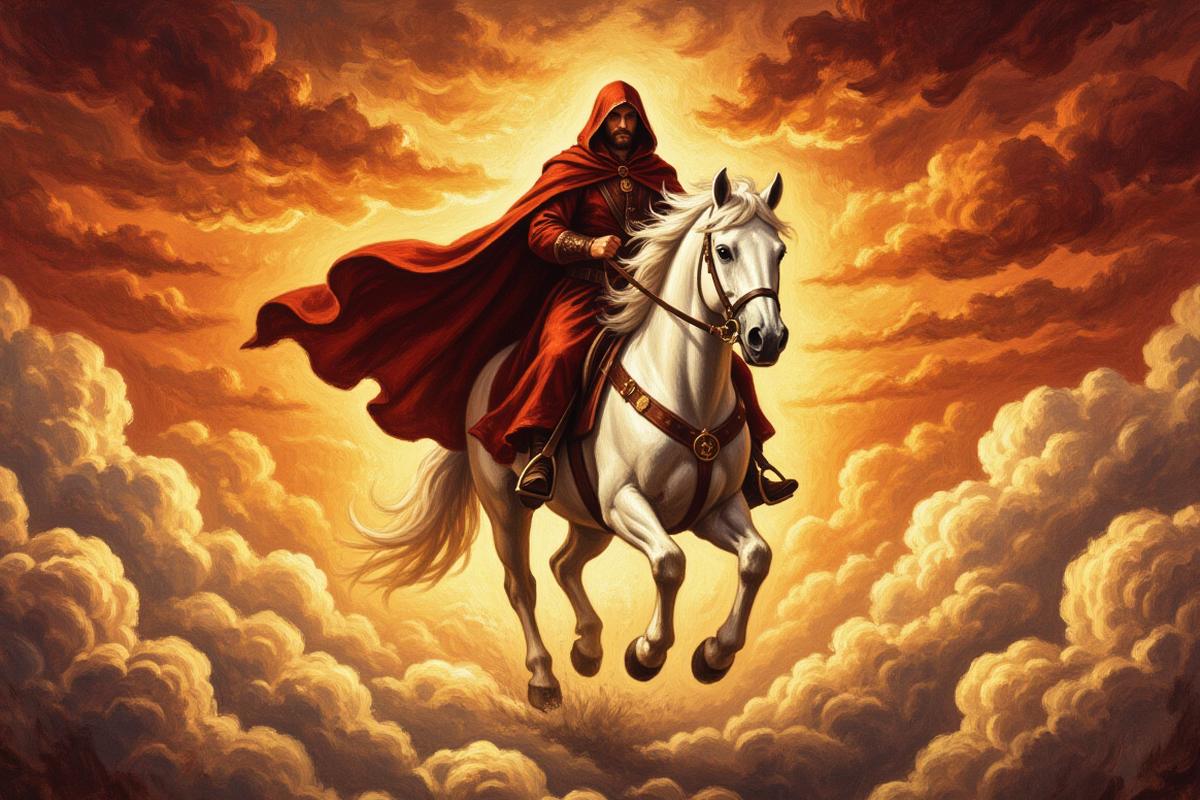
In Revelation 19:11–16 the rider on the white horse is Faithful and True, His robe dipped in blood, His name the Word of God (John 1:1–4). He treads the winepress of the wrath of God Almighty, El Shaddai, which Pastor Hohman links to the lone figure treading the winepress in Isaiah 63:1–3. On His thigh is written King of kings and Lord of lords.
The same measure applies to blessing. Those who cut covenant with God receive more than they can ask or imagine (Ephesians 3:20), and it will take the ages to come for Him to show the riches of His grace (Ephesians 2:7).
Pastor Hohman states his belief in the rapture of the church before the tribulation and gives three passages. We shall be saved from wrath through Him (Romans 5:9). Jesus delivers us from the wrath to come (1 Thessalonians 1:10). “For God did not appoint us to wrath, but to obtain salvation through our Lord Jesus Christ” (1 Thessalonians 5:9).
The rescue, he says, is not huddling in a corner while the earth burns. Jesus takes His bride to the marriage supper of the Lamb, and just before the rider appears an angel says, “Blessed are those who are called to the marriage supper of the Lamb!” (Revelation 19:9). He has delivered us and translated us into the kingdom of the Son of His love (Colossians 1:13). God will have the last word on all evil.
Adonai: Owner, Master and Ruler
That title on the rider’s thigh leads into the main subject. The Greek kurios, he explains, is the counterpart of the Hebrew Adonai: owner, master and ruler. In the King James Old Testament, Jehovah is printed LORD in capitals over 2,500 times, while Adonai is printed Lord with lowercase letters. Adonai is used more than 300 times in the Old Testament, and like Elohim it is plural and possessive, confirming Father, Son and Holy Spirit. Used of a man, the word is adon, simply lord or sir.
Because the world is corrupt, people imagine a master who squashes them under his thumb. Adonai is not that. Pastor Hohman shares that when his oldest daughter was in high school and running with the wrong crowd, he would be in prayer when she came home and could tell her who she had been with and what she had done. Eventually she screamed that she hated him. He explained that God only wants to get His best to her, and that as long as she chose a self-willed life she would only ever get her own best.
There is a way that seems right to a man, but its end is the way of death (Proverbs 14:12). Anything gained without the Lord is lost; what does it profit to gain the whole world and lose your own soul (Mark 8:36)?
In Psalm 110:1, “The LORD said to my Lord,” Jehovah speaks to Adonai: sit at My right hand till I make Your enemies Your footstool. Peter quotes it at Pentecost and concludes that God has made this Jesus “both Lord and Christ” (Acts 2:34–36). Jesus is seated at the Father’s right hand, and the Holy Spirit now rules in the church.
That is why churches that reject the Holy Spirit miss so much. In 2 Corinthians 3:14–17 the veil is removed when one turns to the Lord, and “the Lord is the Spirit; and where the Spirit of the Lord is, there is liberty.” Kurios means supreme in authority, the controller who says what to do, when and how. Yet His rule brings liberty, not bondage.
The Bond Servant of Exodus 21
For a picture of Jesus as both Savior and Lord, Pastor Hohman turns to Exodus 21:1–6. A Hebrew who could not provide for himself or his family could serve a well-off household for six years. In the seventh he went free with nothing to pay. If the master had given him a wife and children during that time, they stayed with the master.
During those six years the master owned him and was responsible for all his affairs. He fed, clothed and protected him, and paid for any medical need. The servant in turn did what he was told, the way he was told. Pastor Hohman compares it to any job: if you ignore what your employer asks or do it your own way, you will not keep that job long. Doing your own thing is what got the servant into trouble in the first place.
This, he says, pictures someone coming to Jesus as Savior. You reach the end of your rope, lonely, afraid, addicted or drinking, and Jesus saves you from it. He will save anyone from anything. But after that you face a choice: go out free and be on your own, or make Him Adonai.
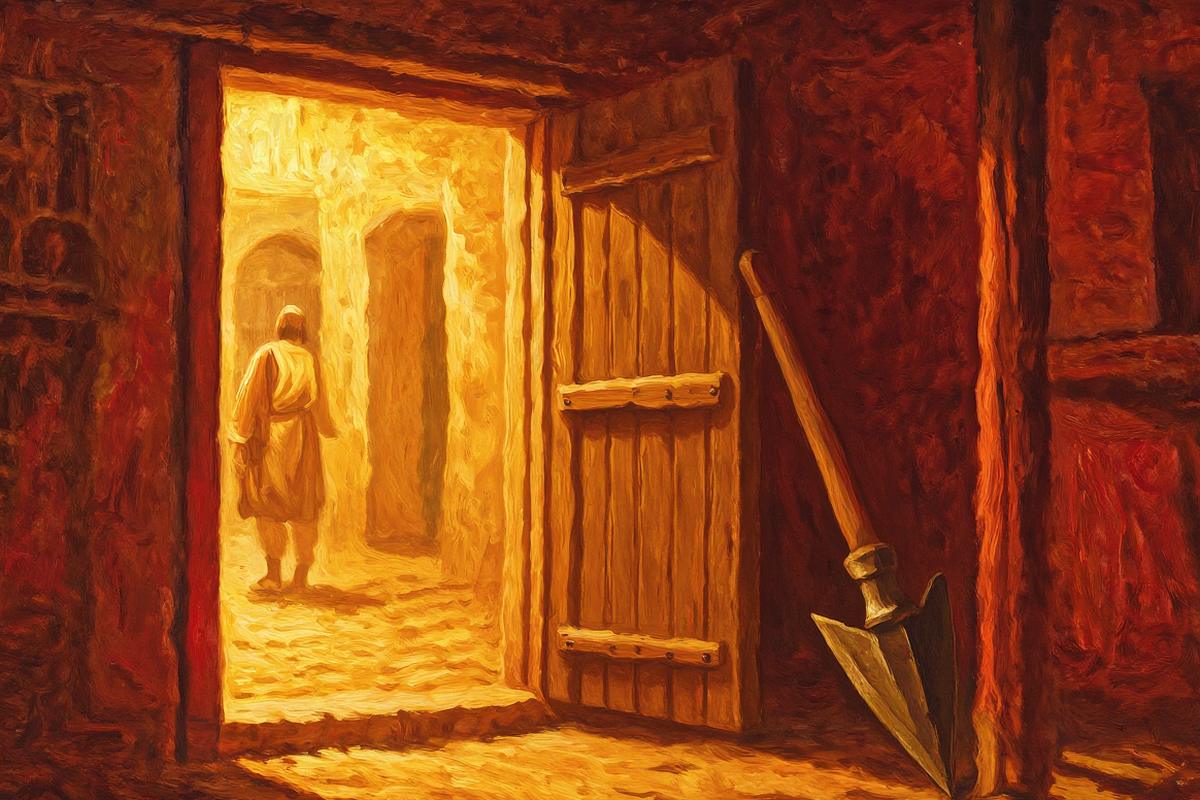
Verses 5 and 6 describe the second choice. If the servant says, “I love my master, my wife, and my children; I will not go out free,” his master brings him to the judges and the doorpost and pierces his ear with an awl, and he serves him forever. That servant is a bond servant, a doulos, a slave by choice. Pastor Hohman notes that some preach grace as license to do whatever you want, but the Bible calls believers to choose to serve.
A bond servant learns to ask the Holy Spirit what He wants and needs. And the master who already provided deliverance, health and food will not then crush him. How much more will He freely give?
Not My Will, but Yours
Jesus could have sinned, Pastor Hohman says, but He came to do the Father’s will, as it is written of Him in the volume of the book (Hebrews 10:7). In Gethsemane, facing the scourging, the cross and a criminal’s death, He prayed, “nevertheless not My will, but Yours, be done” (Luke 22:42–44). An angel came and strengthened Him. That was Jesus choosing to be a bond servant.
The first time you come to Christ, he says, you have no other choice; you are at the end of yourself. The real decision comes later, when life is good, your health is strong and you have peace. Then the Lord asks you to lay down your will. Scripture warns that when people say “peace and safety,” sudden destruction comes (1 Thessalonians 5:3). You were bought with the most expensive price of all, and the only real freedom is yielding to Adonai.
Because Jesus humbled Himself as a bond servant, God highly exalted Him and gave Him the name above every name, so that every knee will bow and every tongue confess that Jesus Christ is Lord (Philippians 2:9–11). Paul writes that whoever is called in the Lord while a slave is the Lord’s freedman (1 Corinthians 7:22).
Pastor Hohman says the Lord brought John 15:13–14 to his remembrance in the night: “You are My friends if you do whatever I command you.” The servant who refused to go free became his master’s friend. The apostles wore the title proudly: Paul, a bondservant of Jesus Christ (Romans 1:1), James (James 1:1), who once doubted his brother, and Simon Peter (2 Peter 1:1).
The fear of the Lord, that is wisdom (Job 28:28). He urges the church not to push aside what the Holy Spirit has been dealing with them about, because now is the accepted time (2 Corinthians 6:2).
Gideon Learns to Say Adonai
In Judges 6, Israel had backslidden and the Midianites oppressed them for seven years, burning crops and driving people into holes and caves. A prophet told them the reason: you have not obeyed My voice (Judges 6:7–10). Pastor Hohman applies it today: bondage comes through disobedience, and the answer is not rebuilding the old but working with Jesus to build the new.
Gideon was threshing wheat in a winepress to hide it when the Angel of the Lord said, “The LORD is with you, you mighty man of valor!” (Judges 6:11–13). Gideon answered with adon, an ordinary “my lord,” and complained that if Jehovah were with them, where were the miracles? Israel knew God only as Savior, Pastor Hohman says, and wanted to know why He was not saving them. God was looking for someone to make Him Lord.
The angel said, “Go in this might of yours” (Judges 6:14–18), and this time Gideon answered with Adonai, even while protesting that his clan was the weakest and he the least. His self-image meant nothing to God. After fire consumed his offering, Gideon feared he would die, but the Lord said, “Peace be with you; do not fear, you shall not die,” and he named the altar The-LORD-Is-Peace (Judges 6:20–24).
Gideon then tore down the idols. Of 32,000 volunteers, 22,000 went home afraid, and the drinking test at the water left 300 men against a vast army. With horns and torches in clay jars they shouted, the sword of the Lord and of Gideon, and the enemy turned on one another (Judges 7:19–22). When Jesus is only Savior, he says, you must figure everything out yourself; when He is Adonai and you do what the Holy Spirit says, the enemy destroys himself.
Pastor Hohman adds his own testimony. The church once faced three lawsuits at the same time and he was on the nightly news for months. Its insurance attorneys told him to stop talking, but he kept sharing Jesus, and every one of those cases was dropped within a week.
Living Under Adonai This Week
Pastor Hohman closes by reminding the church that baptism pictures dying to yourself and rising to live for the Lord, and that the church is a battleship, not a cruise ship. Here are practical steps drawn from the message:
- Know Him as more than Savior. Tell Jesus plainly that He is your Lord, owner, master and ruler, not only your rescuer.
- Lay down your will in good times. Do not wait for a crisis; yield when life is going well and you feel strong.
- Ask what the Holy Spirit wants. Begin decisions with what He wants and needs, then do it His way even before you understand why.
- Stop pushing it aside. Act today on what the Holy Spirit has been dealing with you about, rather than one day.
- Rest in the rescue. Let Romans 5:9 and 1 Thessalonians 5:9 replace fear of the future with confidence.
- Pray the commitment prayer. He leads the church to receive Jesus as Savior, call Him Lord and say, I am Your bond servant.
Timestamped Outline
- 0:00 Who are we relating to?
- 1:09 God introduces Himself by name
- 2:23 Elohim and covenant in blood
- 3:45 Jehovah, the covenant keeper
- 4:56 El Shaddai, the all-sufficient God
- 7:40 The wrath of man, of Satan and of God
- 8:50 Revelation 19: the rider on the white horse
- 12:09 King of kings and Lord of lords
- 13:28 A father, a daughter and a self-willed life
- 15:48 Saved from wrath: Romans 5 and 1 Thessalonians
- 21:09 The marriage supper of the Lamb
- 23:37 LORD and Lord in the King James
- 27:55 Psalm 110 and Acts 2
- 31:29 The Lord is the Spirit
- 35:13 Exodus 21: the Hebrew servant
- 40:53 The pierced ear: a bond servant forever
- 43:24 Jesus in Gethsemane
- 48:54 Philippians 2: the name above every name
- 50:20 The Lord’s freedman and His friends
- 54:10 Paul, James and Peter as bond servants
- 56:49 Israel under the Midianites
- 59:28 Gideon in the winepress
- 1:07:54 Gideon’s 300
- 1:13:57 A battleship, and the prayer of commitment
An Introduction to God Series
This message belongs to a longer series on the names of God. Start at the beginning or continue:
- First message: An Introduction to God: The Names of God, Part 1 — Elohim, the Creator Who Makes Covenant
- Previous: An Introduction to God: The Names of God #3 — El Shaddai, the All-Sufficient One
- You are here: An Introduction to God (The Names of God) #4: Adonai, Owner, Master and Ruler
- Next: An Introduction to God (The Names of God) #5: Adonai and the Bond Servant
Frequently Asked Questions
Does the word salvation mean more than going to heaven?
Pastor Hohman teaches that the Greek word for salvation in 1 Thessalonians 5:9 means rescued and given safety, and also delivered, healed and saved. So he does not see himself living under God’s wrath, even in sickness. He describes believers as delivered from sickness and destruction and moved into the kingdom of the Son of God’s love, all through a blood covenant with Him.
Why does the King James print LORD and Lord differently?
According to this sermon, the King James translators printed Jehovah with all capital letters, LORD, a little over 2,500 times in the Old Testament, and printed Adonai with a capital L and lowercase letters. Watching for that difference, he says, helps a reader see whether a verse speaks of God as covenant keeper or as owner, master and ruler. Psalm 110:1 uses both in one line.
What does the pierced ear in Exodus 21 picture?
It pictures a servant who could walk away free but chooses to stay out of love for his master and family. Pastor Hohman sees it as the step after salvation, when a believer who has been rescued decides to make Jesus Lord for life. The mark was public, before the judges at the doorpost, and in his reading the servant who made that choice became his master’s friend.
Scripture References
All passages open in the New King James Version on Bible Gateway:
- Exodus 21:1–6 — the servant who chooses to stay
- Psalm 110:1 and Acts 2:34–36 — the LORD said to my Lord
- Revelation 19:11–16 — King of kings and Lord of lords
- 1 Thessalonians 5:9 — not appointed to wrath
- 2 Corinthians 3:14–17 — where the Spirit of the Lord is
- Luke 22:42–44 — not My will, but Yours
- Philippians 2:9–11 — every tongue confesses Jesus is Lord
- John 15:13–14 — you are My friends
- Judges 6:11–13 — Gideon in the winepress
How this summary was made: written with AI assistance from the sermon’s own transcript and checked against the Scriptures listed above.
Watch More Messages
If this message helped you know God better, there are hundreds more teachings from NTC Ministries waiting for you. Browse the full sermon archive and keep getting to know the God who calls you His friend.