Working to build a strong economy, in this message, means living well in two economies at once: the earth’s system of toil and the kingdom of heaven’s system of giving and receiving. Dr. William P. Hohman teaches that believers are citizens of heaven living in exile, called to work hard, bless the place where God has put them and let Him multiply the result. This is part nine of the Kingdom Economy series and follows Kingdom Economy #7: Your Heavenly Account in a Kingdom That Cannot Be Shaken.
Below you will find the full video, a structured summary of the sermon, the Scripture behind each point (linked to the New King James Version on Bible Gateway), a timestamped outline, and practical steps you can take at work and at home this week.
Sermon at a Glance
This message was preached at NTC Ministries and posted on May 17, 2022. It runs about an hour and ends with a prayer of salvation and a prayer of commitment. Pastor Hohman opens by defining the word itself. The Greek word behind economy is translated dispensation in the King James Version and administration in others. It describes how things are run.
He adds that economy covers more than money. It is the thrifty, efficient use of material resources, but also of non-material ones: our efforts, our words, our language and our motion. When things are run poorly, people mourn, but when the righteous are in authority, the people rejoice (Proverbs 29:2).
| Detail | Information |
|---|---|
| Speaker | Dr. William P. Hohman |
| Series | Kingdom Economy (part 9) |
| Main text | Jeremiah 29:4–7 and 1 Peter 2:9–21 |
| Key theme | Citizens of heaven work hard and bless where they live, and God multiplies it |
| Length | About 62 minutes |
Your Words Build Your Economy
Pastor Hohman starts with words, because words are part of our economy. You cannot walk into a bank to ask for a mortgage, tell the banker off and expect favor. The same is true in the spiritual realm. If we talk about lack, we will have lack. If we talk about abundance, we will have abundance. Words, he says, are magnets.
He compares them to time-release cold capsules, where each tiny pellet sets off at a different moment. Our words keep setting in motion what we declare. That is why negative, contrary and grumpy people rarely seem to have much hope. He recalls that in Michigan’s Upper Peninsula, even in deep recession, people did not complain, unlike places where everything was poor me and woe is me.
He calls this a mindset with a spiritual source. Over every region, he teaches, a principality tries to express itself through personalities. We can yield to the Holy Spirit and speak life, abundance and success, or yield to that influence and speak lack, sorrow and illness. Death and life are in the power of the tongue, and those who love it will eat its fruit (Proverbs 18:21).
Even salvation comes through the mouth. If you confess with your mouth the Lord Jesus and believe in your heart that God raised Him from the dead, you will be saved (Romans 10:9–10). Salvation, he explains, is all-encompassing: healed, delivered, set free, with goodness, joy and peace. So you cannot grumble about your job every day and expect it to improve. Your words are drawing you away from it.
Two Economies: Toil and Grace
The heart of the message is that there are two economies in this world, and believers must function in both. The first is the earth curse system, where we work hard by the sweat of our brow. Whether you are an executive or lifting and lugging in a hot factory, you are sweating.
Satan, Pastor Hohman warns, is cunning. He walks about like a roaring lion seeking whom he may devour (1 Peter 5:8), and he comes only to steal, kill and destroy (John 10:10). He plants thoughts contrary to truth. Pastor Hohman’s reminder, shared for 35 years, is that nobody hired you to make you a millionaire. They hired you to help them succeed, and it provides for you along the way.
It was not always this way. Adam was created in innocence, and that was the economy of the kingdom at the time. Before God made him, He planted the garden and put him in the middle of it. Adam never prayed a petition until the fall; he never had to ask for food or clothes. His time with God was simply talking.
After the fall, the economy changed. Genesis 3:17–19 says the ground is cursed, in toil you shall eat of it all the days of your life, and in the sweat of your face you shall eat bread. That is the system of this world, and Paul affirms it: if anyone will not work, neither shall he eat (2 Thessalonians 3:10–11).
Heaven’s economy runs differently. We are saved by grace through faith, and that is the gift of God (Ephesians 2:8). The world is a buy, sell and gain system; the kingdom of heaven is a give and receive system, where God intervenes to supply for us. The table below sums up the contrast as Pastor Hohman draws it.
| Earth curse system | Kingdom of heaven economy |
|---|---|
| Began after the fall (Genesis 3:17–19) | Rooted in grace through faith (Ephesians 2:8) |
| Toil and the sweat of your brow | God intervening to supply |
| Work hard and receive; buy, sell and gain | Give and receive (Luke 6:38) |
| Render to Caesar what is Caesar’s | Render to God what is God’s |
| A city that will not last (Hebrews 13:14) | The city that is to come |
Jesus confirmed both when His opponents tried to trap Him with a question about paying taxes. Holding a denarius, He asked whose image was on it, and said, “Render to Caesar the things that are Caesar’s, and to God the things that are God’s” (Mark 12:13–17). Pastor Hohman’s point is that Jesus was describing two economies. We have to live in both and give each what it is owed.

Citizens of Heaven Living in Exile
Pastor Hohman takes the church to Philippians 3:20: “For our citizenship is in heaven, from which we also eagerly wait for the Savior, the Lord Jesus Christ.” Do I believe in aliens? he asks. Every Christian is one. We were born from above, so we will never quite fit in here, and we are not supposed to.
Hebrews 13:14 adds that here we have no continuing city, but we seek the one to come. This earth curse system is corrupted and cannot last, so no matter how bad it gets, it will end. Meanwhile we work for the economy of our family and business, and, as kingdom citizens, for the economy of the kingdom of heaven.
Peter calls believers aliens, strangers and exiles in this world and urges them to abstain from fleshly lusts that war against the soul (1 Peter 2:11). Being in exile means we cannot simply resist where we are. Dropping out of society does not make life better. Pastor Hohman’s summary is memorable: “You just got to choose your hard.”
Building a strong, godly marriage is hard, but divorce is hard too, and it brings sorrow on sorrow. Financial discipline is hard, but so is debt. Only one of each pair produces a harvest.
We are in the world but not of it. God says to come out from among them and be separate, and He will be a Father to us (2 Corinthians 6:17–18). That does not mean withdrawing from people. We work alongside them and witness to them, but we do not let our souls form attachments that corrupt them. The soul, he says, is where God’s life flows through us and where our economy is built.
Working to Build a Strong Economy Where You Are
For a picture of exile done well, Pastor Hohman turns to Jeremiah. When Nebuchadnezzar carried Jerusalem into Babylon, false prophets told the captives they would be home in two years, so there was no point doing anything. Through Jeremiah, the Lord said otherwise: it would be seventy years, so apply yourselves and prosper.
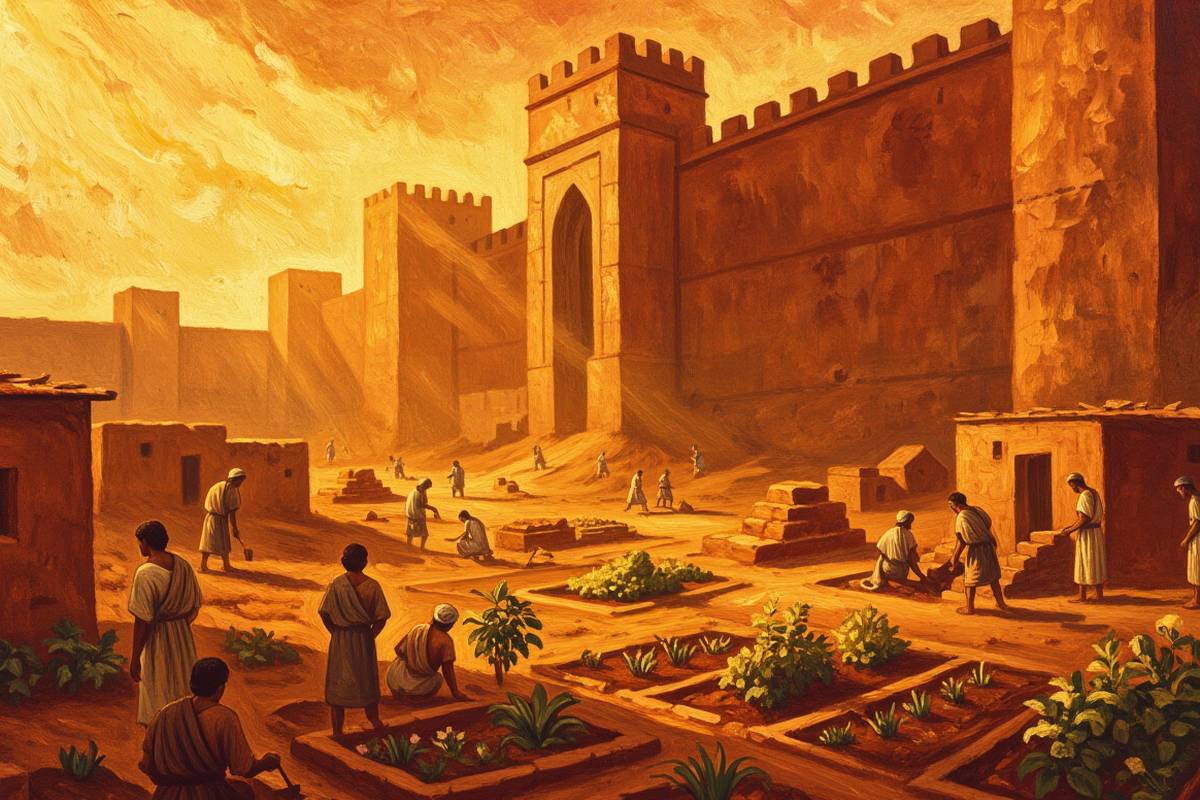
Jeremiah 29:4–7 tells the exiles to build houses, plant gardens, marry and multiply, and to seek the peace of the city where God sent them and pray to the Lord for it, because in its peace they will have peace. If you work to make the place where you are prosper, Pastor Hohman says, you will prosper. Then God adds that He knows the plans He has for them, plans of good and not evil, to give a future and a hope (Jeremiah 29:11).
He illustrates with his own story. While starting out as an evangelist, he took a job at a company that built garbage trucks. The plant was dim, filthy and gloomy, and people walked around as if in a fog. He began arriving early to take down the fluorescent bulbs, wash them and put them back, and it took him weeks to brighten the whole place. He started talking with people, sharing the Lord and speaking positive things.
The owner, known to him as Butch, was not a Christian. Pastor Hohman would call out that the Lord was blessing the place, that they would have three shifts and five years of work ahead. Butch later put him on nights in the painting department with a picnic table by the paint shop where he could read his Bible and pray, and he led the man working there to the Lord.
Years later, after Pastor Hohman had moved to plant the church, Butch called to thank him. Everything he had said had happened: three shifts, trucks shipping to other countries, and five years of business ahead. Butch and his wife had both given their lives to Jesus. This, Pastor Hohman says, is what we are called to do: not resist the people we work for, but bless them and help them grow.
He adds a plain truth: if people do not have money, they cannot give it to you, but when they grow, they bless those who helped them. Because he worked hard to bless every employer, companies called him directly, and after one paper mill job in Escanaba, Michigan, ended, the contractor offered him an office job rather than let him go.
Giving is part of this too. “Give, and it will be given to you,” Jesus said, good measure, pressed down, shaken together and running over (Luke 6:38). Pastor Hohman applies it beyond money: give yourself to make other lives better. The church, for example, once washed the windows of every business on the main street before a parade.
He links this to Proverbs 13:22: a good man leaves an inheritance to his children’s children, but the wealth of the sinner is stored up for the righteous. In Ecclesiastes, he notes, the sinner works hard gathering only to give it to the one who pleases God (Ecclesiastes 2:26). He credits the ministry’s churches, schools, clinics and broadcasts in many nations to applying these principles, co-laboring with God rather than treating Him as a servant, and praying for His kingdom to come (Matthew 6:10).
Declare, Follow and Bless
Peter, Pastor Hohman says, is the New Testament version of Jeremiah. He wrote to believers scattered in exile, in places where they were demeaned and beaten. From Peter’s letter he draws three callings for every child of God: declare, follow and bless.
Declare. 1 Peter 2:9–12 says we are a chosen generation, a royal priesthood, a holy nation, God’s own special people, so that we may proclaim the praises of Him who called us out of darkness into His marvelous light. We are kings and priests in exile. Others may slander us as evildoers, yet by seeing our good works they may glorify God in the day of visitation, the times of refreshing from the presence of the Lord (Acts 3:19). We withdraw from sin, not from society.
Follow. In the face of unjust treatment, we follow the example of the Lord who suffered patiently. 1 Peter 2:19–21 says that enduring grief while suffering wrongfully is commendable before God, because Christ suffered for us and left us an example to follow in His steps. God does not want you to have a bad life, Pastor Hohman explains, but this is one way we draw on our account in heaven.
Bless. We are not to return evil for evil or insult for insult, but on the contrary to bless, knowing that we were called to this so that we may inherit a blessing (1 Peter 3:9). So ignore the coworker who says you will work yourself out of a job.
Jesus taught the same in Matthew 5:43–48: love your enemies, bless those who curse you, do good to those who hate you and pray for those who spitefully use you, so that you may be sons of your Father in heaven. If believers live this way, Pastor Hohman says, people will think an alien showed up. When they see the increase God brings, they will pass blessing on to you.
Act Your Way Into the Right Feeling
Many people wait until they feel right to do right. Someone hurt their feelings, so they pull back. But Scripture says that if the spirit of the ruler rises against you, do not leave your post, for conciliation pacifies great offenses (Ecclesiastes 10:4). In Pastor Hohman’s words, “it’s much easier to act yourself into a feeling than feel yourself into an action.”
His proof is Cain. When God did not accept Cain’s offering from the sweat of his brow, Cain was angry and his face fell. The Lord asked why, and told him that if he did well, he would be accepted, but that sin lies at the door and he must rule over it (Genesis 4:6–7). Your countenance may be down, Pastor Hohman says, but start doing right and it will lift. Wait for your feelings and the enemy will bind you.
His own habit was to spend up to half an hour each day praying for whatever company he worked for, just as the ministry’s teachers pray over their students’ chairs each morning. Then no weapon formed against you will prosper (Isaiah 54:17).
He closes with a prayer of salvation, then invites believers to commit to working hard where they are while reaping from the kingdom of heaven. He reminds them that Isaac sowed in a land of famine and reaped a hundredfold in the same year, until the Philistines envied him (Genesis 26:12–14).
Living the Kingdom Economy This Week
Here are the practical steps for working to build a strong economy drawn from this message:
- Watch your words. Stop grumbling about your job and start declaring what God says about your work and your provision.
- Choose your hard. Pick the hard work that produces a harvest in your marriage, finances and job rather than the hard that brings sorrow.
- Seek the welfare of your workplace. Like the exiles in Babylon, work to make your company prosper and pray for your boss by name.
- Make something better. Find a practical way to serve, the way Pastor Hohman cleaned the light bulbs in a gloomy plant.
- Bless instead of retaliating. When you are treated unfairly, answer with blessing and follow Christ’s example.
- Do right before you feel right. Act on what God says today and let your countenance catch up.
Timestamped Outline
- 0:00 What the word economy means
- 1:15 Words are magnets
- 3:29 Life and death in the power of the tongue
- 5:55 Two economies in this world
- 8:14 Adam’s economy of innocence
- 10:32 The earth curse system: Genesis 3:17–19
- 11:33 Heaven’s give and receive economy
- 12:50 Render to Caesar: Mark 12:17
- 14:00 Our citizenship is in heaven
- 16:19 Aliens, strangers and exiles
- 18:53 Choose your hard
- 21:35 Jeremiah’s letter to the exiles
- 23:59 The garbage truck company
- 28:33 Everything you said happened
- 31:34 If people do not have money, they cannot give it
- 32:31 Give and it will be given: Luke 6:38
- 35:39 The wealth of the sinner: Proverbs 13:22
- 40:34 Declare, follow and bless
- 43:05 A royal priesthood: 1 Peter 2:9–12
- 46:22 Following the suffering Lord
- 50:09 Called to inherit a blessing: 1 Peter 3:9
- 51:16 Love your enemies: Matthew 5
- 56:16 Act your way into a feeling: Cain
- 59:31 Prayer of salvation and commitment
Kingdom Economy Series
This message is part of a ten-part teaching series at NTC Ministries. Start from the beginning or continue where this one leaves off:
- First message: Kingdom Economy #1: The Two Economies — Learning How Heaven Works
- Previous: Kingdom Economy #7: Your Heavenly Account in a Kingdom That Cannot Be Shaken
- You are here: Kingdom Economy #9: Working to Build a Strong Economy as Citizens of Heaven
- Next: Kingdom Economy Part#10
Frequently Asked Questions
Does God just drop money from heaven if I believe?
No. Pastor Hohman says plainly that there is no money tree in the yard and nothing falls from heaven in paper bags. God blesses through people and through work. We do our part in the earth’s economy, working hard and blessing those we work for, and then by faith we expect God to do His part. He describes this as co-laboring with God rather than treating Him as a servant.
Why did God accept Abel’s offering and not Cain’s?
As Pastor Hohman tells it, Cain brought what he had produced from the sweat of his brow and presented it as his own achievement. Abel simply offered back the lamb God had given him. The contrast mirrors the two economies: one based on our toil, the other on receiving from God. When Cain grew angry, God told him to do well and master the sin crouching at his door.
Should I stay at a job where I am treated badly?
Pastor Hohman does not give a rule for every case, but he teaches that offense alone is not a reason to walk away. Scripture says not to leave your post when a ruler’s anger rises against you. He urges believers to keep doing right, pray for the company and their boss, and bless instead of retaliating, following Christ’s example of patient suffering, and to let God bring the increase.
Scripture References
All passages open in the New King James Version on Bible Gateway:
- Genesis 3:17–19 — in the sweat of your face
- Mark 12:13–17 — render to Caesar and to God
- Philippians 3:20 — our citizenship is in heaven
- Hebrews 13:14 — no continuing city
- Jeremiah 29:4–7 — seek the peace of the city
- Luke 6:38 — give, and it will be given
- 1 Peter 2:9–12 — a royal priesthood in exile
- 1 Peter 3:9 — called to inherit a blessing
- Genesis 4:6–7 — if you do well
How this summary was made: written with AI assistance from the sermon’s own transcript and checked against the Scriptures listed above.
Watch More Messages
If this message encouraged you, there are hundreds more teachings from NTC Ministries waiting for you. Browse the full sermon archive and keep building your life on kingdom principles.