Kingdom faith starts with knowing what you already have. In this fourth message of the series, Dr. William P. Hohman teaches that many Christians beg God for blessings Jesus already purchased, like Jacob wrestling for a blessing he already held. Through Jacob’s new name, Revelation 1:5–6 and Psalm 91, he shows that believers are made kings and priests, and that faith is voice activated: we say what God has said. It continues from Kingdom Faith #3 — Those Things That Are Not As Though They Were.
Below you will find the full video, a summary of each point with the Scripture behind it (linked to the New King James Version on Bible Gateway), a table of the names he explains, a timestamped outline and practical steps for this week.
Sermon at a Glance
This message was posted by NTC Ministries on February 8, 2022, and runs about 56 minutes. It belongs to the Kingdom Faith teaching and continues the theme of calling those things that be not as though they were: speaking what God has promised instead of declaring what you see.
Pastor Hohman opens by having church members lay hands on a woman facing an operation that week, praying for a skillful surgeon and a quick recovery. Then he turns to the heart of the message: a lot of people are blessed and do not even know it. When believers talk as though Jesus never gave them anything, he says, it is a tragedy.
| Detail | Information |
|---|---|
| Speaker | Dr. William P. Hohman |
| Series | Kingdom Faith, message 4 |
| Main text | Genesis 32:24–28, Revelation 1:5–6 and Psalm 91:1–8 |
| Key theme | You are already blessed; faith is voice activated |
| Length | About 56 minutes, ending with Hebrews 13:15 |
Jacob Already Had the Blessing
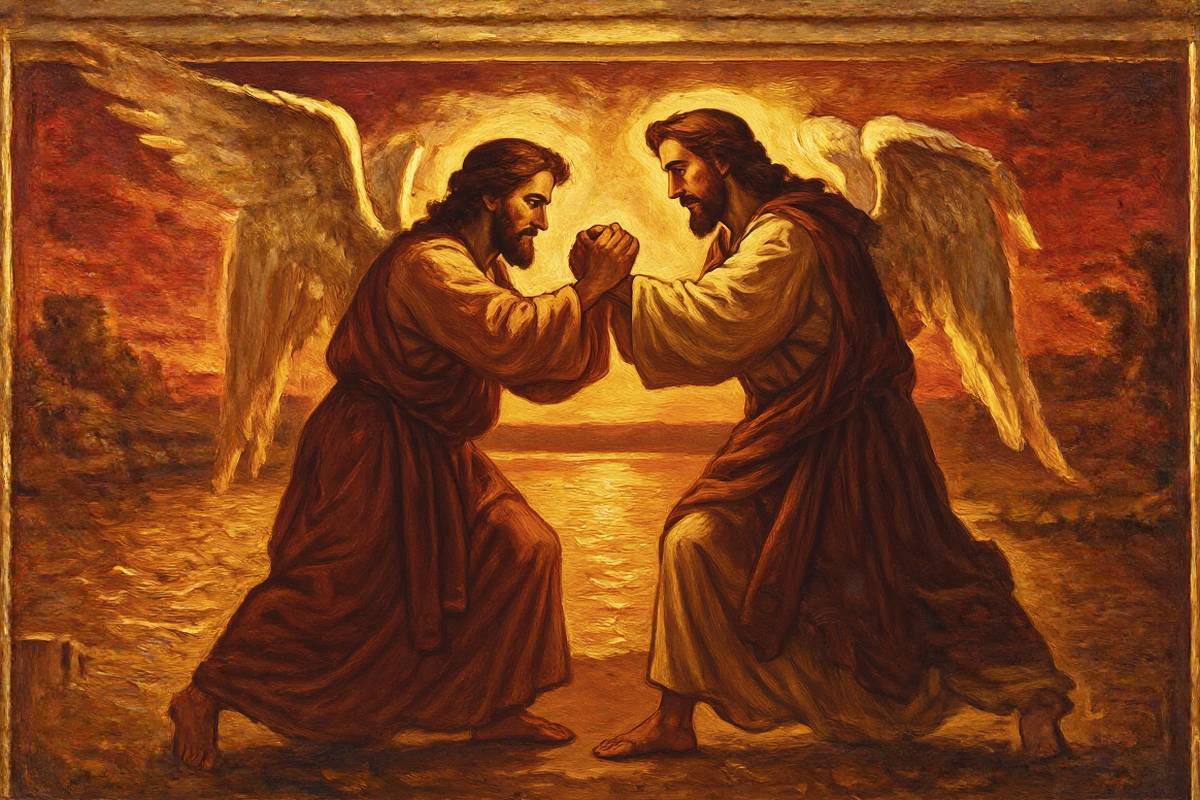
In Genesis 32:24–28, Jacob wrestles with God until daybreak and says, “I will not let You go unless You bless me!” Pastor Hohman loves that line, but he points out the problem: Jacob was already blessed. He held the firstborn blessing and the inheritance, yet he did not comprehend it or take it. Many Christians are the same, praying God bless me when they cannot be any more blessed than they are.
So God changed Jacob’s name. The table below follows Pastor Hohman’s explanation of the names in this message and what each one says about identity.
| Name | Meaning as taught | What it says about identity |
|---|---|---|
| Jacob | Heel grabber; supplanter, one who takes by treachery or force | Trying to get what is already yours by your own striving |
| Israel | A prince with God | One who has inherited the blessing of the King |
| Abram to Abraham | From head guy to father of a multitude | Declaring who God already said you are |
| Saul to Paul | A persecutor renamed | Your past does not cancel your future |
| Numbers | In Hebrew, a book of names | Freed slaves given names of promise |
Jacob came out of the womb grabbing his brother Esau’s heel, and with his mother’s help he took the blessing by treachery. Esau despised his inheritance and gave it away. Israel, though, means a prince with God. From then on, every time Jacob heard his name, it told him you are blessed, not you are trying to get blessed. Pastor Hohman sees Jacob as his past and Israel as his future.
He applies that personally: William was my past, but son of God is my future. Every saint has a past and every sinner has a future. David was an adulterer and a murderer, yet he became the greatest worshiper the world has known. Paul persecuted believers, called himself one born out of due time, and received the revelation behind much of the New Testament.
Dead religion, he says, tells people they are worthless sinners and keeps them begging God as if He were their servant. Jesus already served us; He said it is finished. Now it is up to us to take hold of what He has given, always giving God the glory, because it is all by grace through faith, and even faith is His gift (Ephesians 2:8).
Even for those older in years, God renews our youth like the eagle’s (Psalm 103:5). Jesus is seated in heaven, waiting on us to receive what He has done.
Made Kings and Priests
The church reads Revelation 1:5–6 together: to Him who loved us and washed us from our sins in His own blood, and has made us kings and priests to His God and Father. When you give your life to Jesus, Pastor Hohman says, He has already made you a king and a priest. He is not trying to make you one.
He compares many believers to the pauper in The Prince and the Pauper, who could not shake a pauper’s mentality even when dressed as a prince. That is why we are made new creations in Christ (2 Corinthians 5:17). It is an inside job: the new man rises up in us. I am not making myself a king, he says; I am just accepting what He did.
Feelings have nothing to do with it. Most people live by their feelings, but he urges the church to start talking like kings and inheritors of the world. Revelation 5:10 says He has made us kings and priests to our God, and we shall reign on the earth. Dominion was given to Adam and handed to the devil, and Jesus, the last Adam, took it back.
Now the devil only has lies. He whispers in your ear using your own voice so you think the thoughts are yours. That is why we cast down imaginations and every high thing that exalts itself against the knowledge of God (2 Corinthians 10:5). Only a king’s children inherit from a kingdom, and believers are children of almighty God. He has the church declare: I’m a king.
Struggles with sin stay attached, he says, until you take a new mentality by declaring what God already did. Soon you cannot live any other way.
Kingdom Faith Is Voice Activated
We are created in God’s image and likeness, and God calls those things which do not exist as though they did (Romans 4:17). So believers do the same. People who live by their senses run to the doctor, the counselor or the pastor to fix their life without wanting to change. If a farmer sows ragweed, he says, praying for corn will not help. What you sow is what comes up.
The woman with the issue of blood said to herself that if she touched His garment she would be made whole (Mark 5:25–34). She pressed through the crowd, and Jesus asked who touched Him, because somebody had faith. That, Pastor Hohman says, is Christianity. The early church was known for the great confession, and we have drifted to depending on the great church meeting and the pastor.
Words matter. If your church keeps calling you a no-good sinner, he says, leave. To God you are fearfully and wonderfully made, the pearl of great price He gave everything to obtain. Until you start declaring it, it lies dormant. When you declare it, it grows and God responds.
See, faith is voice activated, he says. If you confess with your mouth the Lord Jesus and believe in your heart that God raised Him from the dead, you will be saved (Romans 10:9–10). He adds a word to ministers from James 3:1: teachers receive a stricter judgment, because they are to disciple others in what to do and how to do it.
The church reads Romans 8:16–17: we are children of God, heirs of God and joint heirs with Christ. Like Jacob, believers already have a birthright. So I have to beg God for nothing, he says; I have to declare what He has already given me. I have the mind of Christ, and He has promised never to leave me nor forsake me.
All Things That Pertain to Life and Godliness
Why do we already have all things? Because Jesus died. His death redeemed us from darkness, but by dying He also allowed the inheritance to be delivered to us. Without it we would still be under the law, trying to work for what cannot be earned.
2 Peter 1:2–4 says grace and peace are multiplied through the knowledge of God and of Jesus our Lord. If you lack peace, he says, find out who Jesus really is. His divine power has given us all things that pertain to life and godliness, through exceedingly great and precious promises, so that we partake of the divine nature and escape the corruption in the world through lust.
He gives His beloved sleep (Psalm 127:2). Jesus said not to worry about what you will eat or wear, because the Father feeds the birds (Matthew 6:25–26). At his chickadee ranch, Pastor Hohman watches the birds simply come and eat from his hand. If God did not withhold His own Son, how much more will He freely give us all things (Romans 8:32)?
Partaking of His nature means losing greed and the spirit of mammon; any king would rather his children hold wealth than the wicked. The corruption we escape is the want to have, Jacob’s striving and cunning, which began when Adam fell and had to make the earth produce by the sweat of his brow (Genesis 3:19). Jesus did the work and hands us the benefit.
Abraham shows the pattern. Romans 4:13–18 says the promise came through the righteousness of faith. God told him, “I have made you a father of many nations” (Genesis 17:5), and changed his name from Abram to Abraham. Once Abraham declared who he was, within a year the child came, though he was 99 and Sarah 89. Contrary to hope, in hope he believed.
The Bible holds thousands of promises, Pastor Hohman says, and believers need to know what God said about them and say it too. He declares abundance over his own life even before he sees it in the bank. A double-minded man should not expect to receive anything from the Lord (James 1:6–8), but we can receive everything if we agree with Him.
What Feeds God Is His Word
God is a speaking God. In Genesis 1, God said and then God saw (Genesis 1:3–4). If we start saying, we will start seeing. You cannot wait to see before you believe; you speak, and then you believe in your heart. By faith the worlds were framed by the word of God (Hebrews 11:3).
Pastor Hohman explains with a simple picture: what you are made of is what feeds you. People are mostly water, so they drink water. Deer that herd into cedar swamps fill their bellies but starve, because cedar has no nutrition for them. In the same way, words contrary to God may make the flesh feel good while destroying your life, for life and death are in the power of the tongue (Proverbs 18:21).
What feeds God is His word. As rain and snow water the earth, so His word will not return void (Isaiah 55:10–11). In the beginning was the Word, and without Him nothing was made (John 1:1–3). Without faith it is impossible to please God (Hebrews 11:6), so speaking out what He said is what pleases Him.
That is why praise matters. At a big game, fans shout while spectators just sit there. Many in church are spectators who only want Jesus to bail them out. Saying praise You, Lord, You are my healer, is what activates faith. I do the doing, he says, but He does the completing, and we are complete in Him (Colossians 2:10).
Hebrews 3:1 calls Jesus the Apostle and High Priest of our confession. The Greek word for confession, he teaches, means to say the same thing as God says. I’m blessed coming in and going out, the head and not the tail (Deuteronomy 28:6–13). The outcome of faith is God’s part, but the effort of faith is ours.
He reads an expanded translation of 1 Corinthians 3:21–23: all things are yours, and you are Christ’s. Jesus asked whether He would find faith on the earth when He returns (Luke 18:8). When the disciples asked for more faith, He said that faith like a mustard seed could tell a mulberry tree to be uprooted, and it would obey you (Luke 17:5–6).
This is not denying reality, he stresses. Kingdom faith is not Christian Science, which says sickness does not exist. We live in a fallen world, but God put us here to show the world what He has given. Whatever is born of God overcomes the world, and this is the victory, even our faith (1 John 5:4).

I Will Say of the Lord: Psalm 91
When Israel left 400 years of slavery, slaves had no names, only work. Pastor Hohman notes that the Hebrew title of Numbers means names, because God began giving the people names of promise, health and abundance. But they declared their lack instead and died in the wilderness. He has the church say: I lack no good thing (Psalm 34:10).
He teaches that Moses declared Psalm 91:1–8 to those freed slaves: “I will say of the LORD, He is my refuge and my fortress; my God, in Him I will trust.” It does not say think it. It says say it. The word dwell, he explains, means to stake a claim and resist all claim jumpers. You stake your claim by saying the Lord is your refuge, and you keep demonic doubt away by saying it again.
The secret place means a covering or hiding place where you cannot be found. Surely He delivers you from the snare of the fowler, covers you with His feathers, and makes His truth your shield. You will not fear the terror by night or the arrow by day, which he reads as demonic attack at night and evil plots of slander by day. A thousand may fall at your side, but it will not come near you.
Declaring His names is how this works: Jehovah Rapha the healer, the Lord our righteousness, El Shaddai the all-sufficient One. Enter His gates with thanksgiving and His courts with praise (Psalm 100:4). Believers are not appointed to wrath (1 Thessalonians 5:9); they will only watch the reward of the wicked.
He closes with Hebrews 13:15 in three versions: continually offer the sacrifice of praise, the fruit of lips that confess His name and proclaim allegiance to it. His name is what He does: He heals, delivers and provides.
Living It Out This Week
- Stop begging for what you have. Replace God bless me with thank You that I am already blessed in Christ.
- Say who you are. Declare daily that you are a king and a priest, an heir of God and a joint heir with Christ.
- Watch what feeds you. Notice words that make your flesh feel good but contradict God, and replace them with His promises.
- Sow the right seed. Pick one promise from 2 Peter 1 or Romans 8 and speak it over your situation until it takes root.
- Stake your claim in Psalm 91. Say aloud each morning: the Lord is my refuge, my fortress, my God; in Him I will trust.
- Be a fan, not a spectator. Offer the sacrifice of praise by naming what God does: healer, provider, deliverer.
Timestamped Outline
- 0:00 Calling those things that be not, and opening prayer
- 2:07 Blessed and not knowing it
- 3:03 Jacob wrestles: Genesis 32:24–28
- 5:03 Israel means a prince with God
- 9:10 Revelation 1:5–6: kings and priests
- 12:10 Say it: I’m a king
- 14:07 Ragweed seed and running to others
- 15:28 The woman who touched His garment
- 16:45 Faith is voice activated
- 19:04 Romans 8:16–17: heirs of God
- 20:18 2 Peter 1: all things already given
- 22:41 The chickadee ranch
- 27:34 Abraham, father of many nations
- 30:41 God is a speaking God
- 33:10 What feeds you
- 35:38 Fans and spectators
- 39:06 Hebrews 3:1: the High Priest of our confession
- 43:58 Faith as a mustard seed
- 47:21 Numbers, the book of names
- 48:29 Psalm 91: I will say of the Lord
- 54:21 Hebrews 13:15: the sacrifice of praise
Kingdom Faith Series
This message is part of the Kingdom Faith teaching series at NTC Ministries. Start from the beginning or continue where this one leaves off:
- First message: Kingdom Faith: Calling Those Things That Are Not as Though They Were
- Previous: Kingdom Faith #3 — Those Things That Are Not As Though They Were
- You are here: Kingdom Faith #4: Kings and Priests Who Already Have the Blessing
- Next: Kingdom Faith #5: Calling Things That Are Not as Though They Were
Frequently Asked Questions
Is declaring God’s promises the same as denying reality?
No. Pastor Hohman says plainly that he is not denying what he has, and he contrasts this teaching with Christian Science, which says there is no sickness or evil. He acknowledges a fallen, corrupted world. The point is not to ignore the problem but to speak what God has promised about it, as Abraham did when he faced his age and still believed God.
Why does Pastor Hohman say ministers face a stricter judgment?
He cites James 3:1, which warns that not many should become teachers, because they will receive a stricter judgment. A minister is responsible to disciple people in what to do and how to do it, so God holds him to account for what he says and how he says it. He jokes that some who were heading into ministry might decide to get a factory job instead.
What does it mean that Jesus is the High Priest of our confession?
Pastor Hohman teaches from Hebrews 3:1 that confession means to say the same thing as God says. Jesus is waiting for believers to agree with what He has declared about them: blessed, highly favored, the head and not the tail. When we say what God says, faith is activated, and Jesus, as High Priest, brings that confession to completion.
Scripture References
All passages open in the New King James Version on Bible Gateway:
- Genesis 32:24–28 — Jacob becomes Israel
- Revelation 1:5–6 — made kings and priests
- Romans 8:16–17 — heirs of God, joint heirs with Christ
- 2 Peter 1:2–4 — all things that pertain to life and godliness
- Romans 4:13–18 — Abraham calls things that are not
- Romans 10:9–10 — confess with your mouth
- Hebrews 3:1 — the High Priest of our confession
- Psalm 91:1–8 — I will say of the Lord
- Hebrews 13:15 — the sacrifice of praise
How this summary was made: written with AI assistance from the sermon’s own transcript and checked against the Scriptures listed above.
Watch More Messages
If this message helped you see what you already have in Christ, there are hundreds more teachings from NTC Ministries to build your faith. Browse the full sermon archive and keep declaring what God has said.