Motivational gifts are the foundational gifts God places in every believer, and this ninth message in the series turns to the gift of leadership, which the pastor also calls organization or administration. Before he gets there, he lays out a simple principle: God’s kingdom runs on gifts, every gift is an investment, and God expects a return on His investment in your life.
This message continues from Motivational Gifts #8: The Gift of Giving, the Arms of the Body of Christ. Below you will find the full video, a structured summary, the Scripture behind each point (linked to the New King James Version on Bible Gateway), a review of all seven motivational gifts, a timestamped outline, and practical steps you can take this week.
Sermon at a Glance
This message was posted on September 26, 2023, and runs about 69 minutes, closing with a prayer of surrender. The pastor, who says he has been at the church for 37 years and married to Pastor Pam for 50, spends the first part on why God gives gifts at all, then reviews the first five motivational gifts before teaching on the sixth, leadership.
His goal is practical. Understanding these motivational gifts, he says, stops us from judging one another, keeps us from thinking too much or too little of ourselves, and moves us from sitting at home to serving others with what God has given.
| Detail | Information |
|---|---|
| Speaker | The pastor (not named in the recording) |
| Series | Motivational Gifts, message 9 of 10 |
| Main text | Romans 12:4–8 and Matthew 25:14–30 |
| Key theme | God expects a return on His investment; the gift of leadership |
| Length | About 69 minutes |
A Kingdom Built on Gifts and Investment
The pastor begins in Genesis. When God made Adam in His image and likeness (Genesis 1:26), He gave him a gift: dominion over the works of His hands. When Adam gave that authority away, God did not quit. He answered with another gift: “For God so loved the world that He gave His only begotten Son” (John 3:16).
The gifts keep coming. We cannot even believe without the gifts of grace and faith; we are saved by grace through faith, and it is the gift of God, not of works (Ephesians 2:8–9). When we are born again, He gives us His righteousness, and those who receive abundance of grace and the gift of righteousness will reign in life (Romans 5:17). Living with the Lord, he says, is simply this: freely receive, freely give.
Then he asks who has ever invested in something. Stocks, a job, a business, a marriage: in each case you expect a return. God is no different. When He created Adam He expected a family and a kingdom, and the whole Bible, he says, is about a King, a kingdom and a royal family.
What has God invested in you? His Word, first of all. We are born again of incorruptible seed, the Word of God that lives and abides forever (1 Peter 1:23). Jesus said that if we abide in Him and His words abide in us, the Father is glorified when we bear much fruit (John 15:7–8). That fruit is God’s return on His investment.
He has also given the Holy Spirit and His gifts: tongues, interpretation, prophecy, the word of wisdom, the word of knowledge, discerning of spirits, faith, gifts of healings and the working of miracles (1 Corinthians 12:7–11). And He has given the fivefold ministry, apostles, prophets, evangelists, pastors and teachers, to equip the saints for the work of ministry until we all come to the unity of the faith (Ephesians 4:8–13). The pastor rejects the idea that these gifts have ceased.
The key, he says, is to keep applying what we receive even when pressure comes. When he teaches leadership, he tells people to do what God told them to do until He shows up. He compares it to fifty years of marriage with Pastor Pam: you keep doing your part even on hard days, and God brings fulfillment.
The Parable of the Talents: God Expects a Return
Many people say they are part of the body of Christ, the pastor observes, but sit at home and do nothing for anyone. If his hands refused to work, they might still be attached, but they would not be contributing to his life. Watching on television or online does not replace being part of a church where you can serve, because every gift is meant to benefit other people.
He illustrates this with a testimony about his sister Sally. While he was out of the country, the Lord spoke to him in prayer about her, and he learned she was back in the hospital, asking only for her brother. The church prayed on Sunday. When he drove to Michigan to see her, the nurse said she had done a complete turnaround, and he laid hands on her and prayed. The gifts, he says, are always for somebody else, just as Jesus came not to be served but to serve (Matthew 20:28).
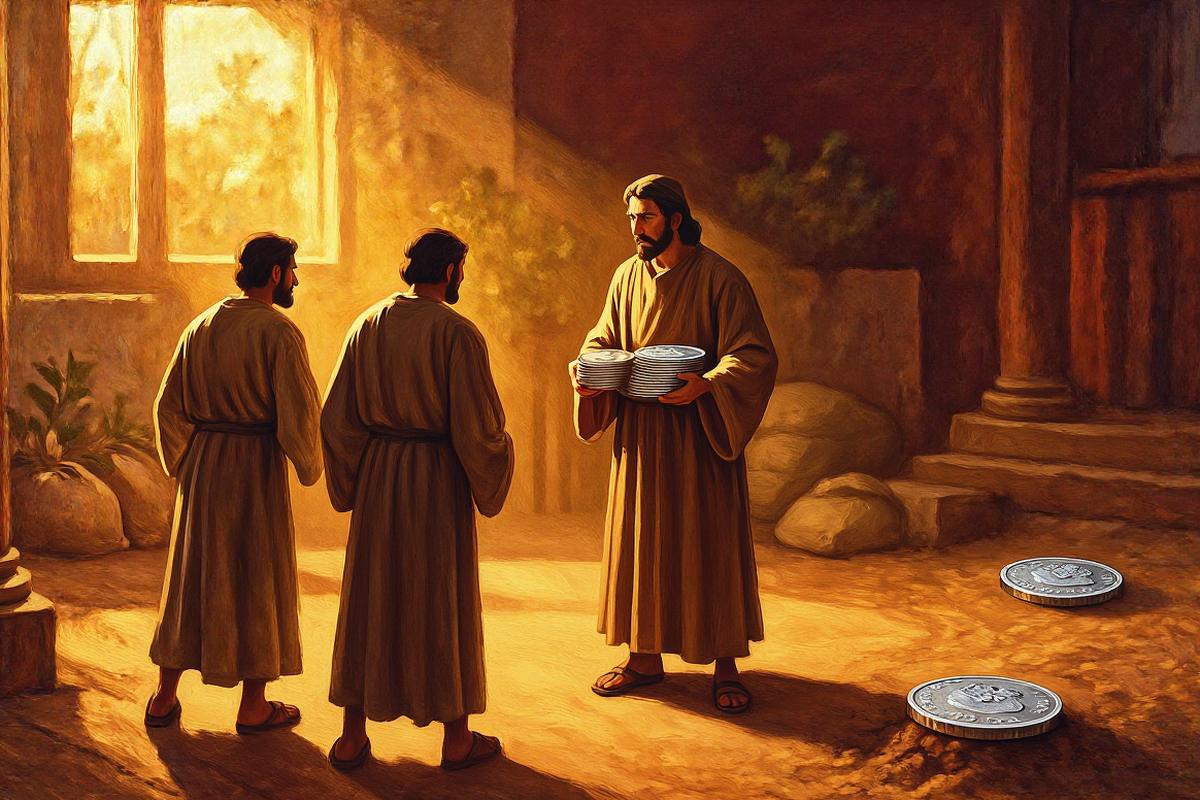
He then reads Matthew 25:14–30. A man traveling to a far country delivered his goods to his servants: five talents to one, two to another, one to another, each according to his ability. That, the pastor says, is what Jesus did when He ascended: He distributed His gifts to us. The first two servants traded and doubled what they had, and each heard, “Well done, good and faithful servant… enter into the joy of your lord.”
The third servant said, “I was afraid, and went and hid your talent in the ground.” Many believers do the same, the pastor says. They feel stirred to do something, then back away because they are afraid of doing it wrong. The master called that servant wicked and lazy, took his talent and gave it to the one with ten. “God wants an investment,” he says. “You gave your life to Jesus; like it or not, He’s invested in you.”
He has the congregation read 1 Peter 4:10 aloud from the NIV, which tells each one to use whatever gift he has received to serve others. Gifts are not just for goosebumps and enjoyment; they are for serving.
Reviewing the Motivational Gifts of Romans 12
The pastor counts 21 gifts across three chapters of the Bible: nine gifts of the Spirit, five ascension gifts, and seven motivational gifts. The first two groups are distributed as God wills; the seven motivational gifts are foundational in every believer’s life. He reads Romans 12:4–8: we have many members in one body, but not all members have the same function.
Why learn them? Because each of us tends to see life through the lens of our own gift. A giver may be frustrated that others are not giving as much. A server may think anyone who takes a break is a slacker. Understanding the motivational gifts lets us see one another’s strengths with kind affection.
It also keeps us balanced. Paul warns not to think of yourself more highly than you ought, since God has dealt to each one a measure of faith (Romans 12:3). The pastor reads The Message: be what we were made to be without enviously or pridefully comparing ourselves. Satan wants us to think less of ourselves in some areas and more highly in others; knowing the gifts lets us say, “I’m not that great, it’s God in me,” or, “I’m not that bad, I’m just not called to that.”
Here is how he reviews the first five, followed by the sixth, which he teaches in this message, and the seventh:
| Gift | Romans 12 | How the pastor describes it |
|---|---|---|
| Prophecy (perceiving) | Verse 6 | Quickly discerns good and evil and reveals truth; the eyes of the body |
| Serving | Verse 7 | Meets practical needs; the hands of the body; must serve well even when unappreciated |
| Teaching | Verse 7 | Instructs, clarifies and simplifies; cuts big truths into bite-sized pieces |
| Exhortation | Verse 8 | Encourages others, and must keep encouraging even when people dump on them |
| Giving | Verse 8 | Alert to needs, makes the most of resources without squandering; the arms of the body |
| Leadership (organization) | Verse 8 | Sees the big picture and organizes people; the head of the body |
| Mercy | Verse 8 | Shows mercy with cheerfulness |
A few details stand out. People with a prophetic motivation may respond more to a visiting prophet than to their own pastor, which is why the fivefold gifts are needed to feed each motivation. The teacher, he says, is like Pam cutting a steak into tiny pieces for their children. And exhorters must not grow weary in doing good, for in due season they will reap if they do not lose heart (Galatians 6:9).
The Motivational Gift of Leadership
Romans 12:8 says, “he who leads, with diligence.” The King James Version says he who rules. The pastor explains that the word means to stand in front of others. People with this motivational gift see what needs to be done, see the big picture, break it into parts and place people where they fit. That is why most fivefold ministers have it.
Leaders are the head of the body. They can set long-term goals, while a server often wants to see immediate results and may give up on a long project. Leaders are plodders who keep going while others criticize.
He illustrates this from his early years at the church. When he shared the vision God gave him, the church met in a living room, then in a garage, then in a rented building they later lost. Some people saw only opposition and left. Years later, one of them called from Kentucky, having watched online, and said, “Please forgive me.” Leaders, he adds, can be very tenderhearted. They get broken hearts often, but they do not let it make them hard or cynical.
Leaders generally do not seek the role. They step in only when there is a void of leadership or when God asks them to. Knowing the motivational gifts helps you love people instead of criticizing them, and pray that God would open their eyes to sow their gift into others.
He points to Abraham. In Genesis 18:17–19, the Lord says He cannot hide what He is about to do from Abraham, because He knows Abraham will command his children to keep His way. Because Abraham used what was in him, God kept him informed, and he interceded for Sodom down to ten righteous people (Genesis 18:23–32). If you sit on your hands, he warns, you miss what God wants to show you.
Lydia, Joseph and the Price of Leading
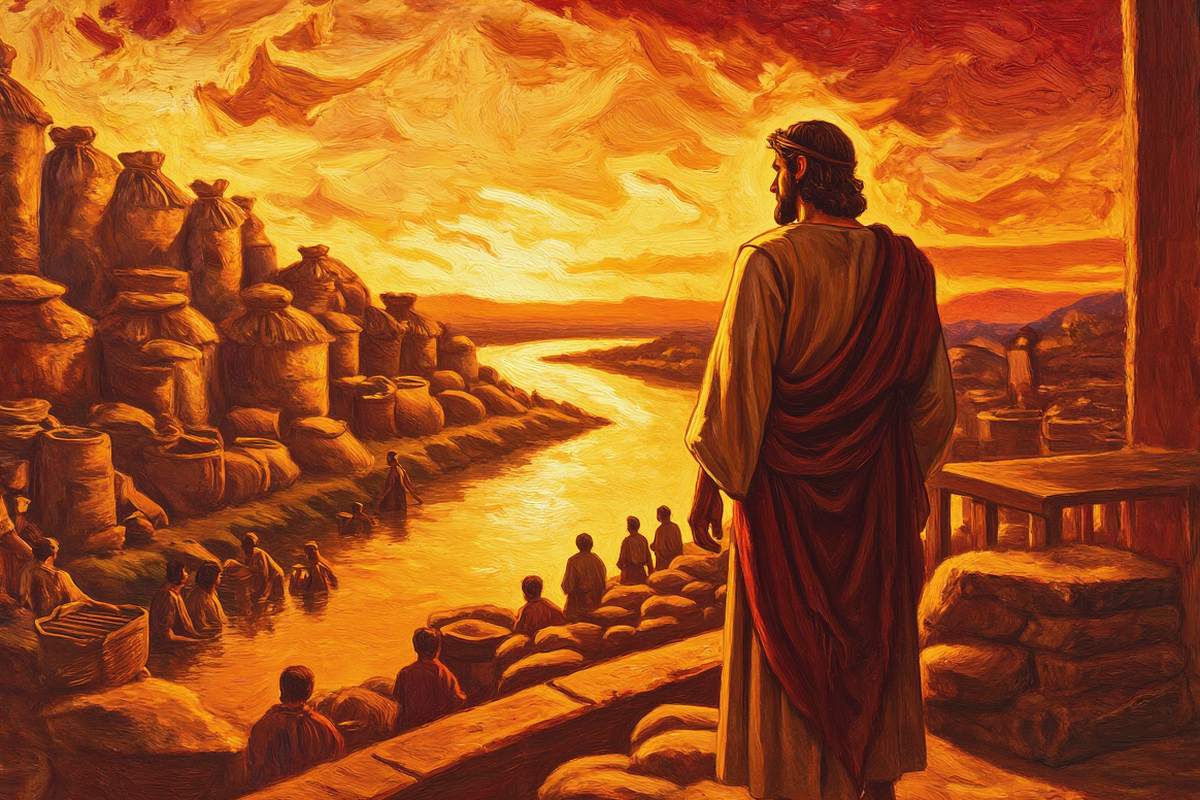
The first biblical example is Lydia. When Paul’s team held a Bible study by the river at Philippi, Lydia, a businesswoman in the textile trade, gave her life to Jesus. In Acts 16:14–15, she and her household were baptized, and she urged Paul’s team to stay in her house, and persuaded them. The pastor sees an organizer at work, even in getting her household baptized.
He believes her influence reached far: when Paul was later taken to Rome, he says, a church was already there, including business people reached through Lydia, who helped fund the work.
Every motivational gift comes with a guideline in Romans 12, and for leadership the pastor points to Romans 12:14: “Bless those who persecute you; bless and do not curse.” Because leaders gather people to accomplish things for the kingdom, Satan comes against them. Like a spearhead, they take an onslaught that others never feel, so they need to understand the principle of suffering and keep blessing.
To study leadership, he says, study Joseph in Genesis 37 through 45. Joseph received two dreams from God and led wherever he went. In Potiphar’s house he rose to the top, and when Potiphar’s wife lied about him he went to prison, where he again organized and was put in charge under the warden. In the end Pharaoh set him over all Egypt, second only to Pharaoh, organizing its economy (Genesis 41:39–41). “Don’t sit on your hands,” he says. “You might be a Joseph.”
He also points to Nehemiah and Deborah. One definition he offers: a leader is motivated by envisioning the will of God and working with people and resources to achieve it.
Marks of a Leader and How God Shows Up
The pastor then lists characteristics you may recognize in yourself. Leaders respect authority and an established order, because God is a God of order (1 Corinthians 14:40). They do not take charge unless there is a void. They see the big picture and set long-term goals; after 37 years, he says, he is seeing about three-fourths of what was prophesied over the church come to pass.
Leaders focus on planning rather than details. When the church built its school, he had a punch list of what had to be done and in what order. They needed a plumber but had no money, so they started digging trenches in hard clay with a blueprint. A plumber pulled up, asked what they were doing, and came back the next day with two trucks, a crew and materials, and would not take a penny. “You just use your gift and you do what God tells you to do to serve,” he says, and God shows up.
Leaders are problem solvers and visionaries, adventurous and confident in the outcome. They are diligent, practical and efficient, and they refuse to compromise on what is right. They encourage others and praise hard work. One pitfall, he warns, is being more loyal to visible hard workers than to people gifted differently. He tells of a staff member who researched a project for two years without acting; he was a teacher at heart, and a new assignment fit him better.
Leaders carry a strong sense of responsibility, endure complaints and roadblocks for the sake of the goal, and feel joy when they take on a challenge. Most important, every great spiritual leader takes the leading of the Holy Spirit seriously: not maybe later, but an immediate yes.
He ends with John 13:14–16, where Jesus washes His disciples’ feet: “If I then, your Lord and Teacher, have washed your feet, you also ought to wash one another’s feet.” He shares one more story: a manufacturer donated a semi-load of insulation, enough for the church facility, twenty homes and ten businesses. Christianity, he says, is not just going to heaven one day; it is getting heaven into you now.
Using Your Motivational Gifts This Week
These steps come straight from his teaching:
- Name what God invested. List what you have received: His Word, His righteousness, the Holy Spirit and your motivational gifts.
- Do not bury your talent. If fear of doing it wrong is holding you back, take one step of service this week anyway.
- Show up and serve. Be present in a local church where your gifts can benefit people, not only watch online.
- Stop judging through your lens. When someone does not serve or give the way you do, ask what their gift might be.
- Keep going until He shows up. Do what God told you to do, even when it seems no one is helping, and do not lose heart.
- Bless those who oppose you. If you lead or organize, answer criticism with blessing, as Romans 12:14 instructs.
His closing prayer turns that into a commitment: to live no longer only for yourself, but to look out for the interests of others (Philippians 2:4).
Timestamped Outline
- 0:00 A kingdom built on gifts
- 1:01 The gift of righteousness and investing
- 3:34 God invested His Word in you
- 6:11 Gifts of the Spirit and the fivefold ministry
- 8:29 Do what God said until He shows up
- 9:36 Hands that do not work
- 10:48 Prayer for his sister Sally
- 13:49 Matthew 25: the parable of the talents
- 16:46 The servant who was afraid
- 17:45 1 Peter 4:10: gifts are for serving
- 20:05 Romans 12: the seven motivational gifts
- 21:18 Why learn them: stop judging others
- 24:48 Review: prophecy
- 26:55 Review: serving
- 28:57 Review: teaching
- 31:00 Review: exhortation and giving
- 33:06 The gift of leadership
- 39:52 Abraham and Sodom
- 43:27 Lydia of Philippi
- 46:55 Romans 12:14 and the principle of suffering
- 49:15 Joseph, Nehemiah and Deborah
- 51:53 Characteristics of a leader
- 55:31 The plumber who showed up
- 1:01:51 John 13: the servant leader
Motivational Gifts Series
This message is part of a ten-part series on the motivational gifts at NTC Ministries. Start from the beginning or continue where this one leaves off:
- First message: Motivational Gifts #1: The River, the Streams and the 21 Gifts of God
- Previous: Motivational Gifts #8: The Gift of Giving, the Arms of the Body of Christ
- You are here: Motivational Gifts #9: God Expects a Return and the Gift of Leadership
- Next: Motivational Gifts #10: Complete in Christ and the Gift of Mercy (Romans 12)
Frequently Asked Questions
How many motivational gifts are there, and does everyone have one?
The pastor teaches that there are seven motivational gifts in Romans 12: prophecy, serving, teaching, exhortation, giving, leadership and mercy. Unlike the nine gifts of the Spirit and the five ascension gifts, these are foundational in every believer’s life. He adds that most people will not have just one; usually a couple will be more dominant, and you will recognize them as you hear them described.
Should a person with the gift of leadership always take charge?
No. According to the pastor, people motivated to lead usually hang back and step in only when there is a void of leadership or when God genuinely asks them to. He says that some ministries look chaotic to him and he could organize them quickly, but it is not his role. Instead of criticizing, he prays for those leaders and trusts God to work with them.
Why do leaders face so much opposition?
The pastor links leadership to Romans 12:14, “bless those who persecute you.” Because leaders gather people and resources to accomplish kingdom work, Satan tries to stop it. He compares a leader to a spearhead who takes an onslaught that the rest of the group may never feel. The answer is to understand the principle of suffering, keep blessing, and keep doing what God asked.
Scripture References
All passages open in the New King James Version on Bible Gateway:
- Romans 12:4–8 — the seven motivational gifts
- Matthew 25:14–30 — the parable of the talents
- 1 Peter 4:10 — use your gift to serve others
- John 15:7–8 — bearing much fruit glorifies the Father
- Ephesians 4:8–13 — the fivefold ministry gifts
- Romans 12:14 — bless those who persecute you
- Acts 16:14–15 — Lydia of Philippi
- Genesis 41:39–41 — Joseph set over Egypt
- John 13:14–16 — the servant leader
How this summary was made: written with AI assistance from the sermon’s own transcript and checked against the Scriptures listed above.
Watch More Messages
If this message helped you see the gifts God has placed in you, there are hundreds more teachings from NTC Ministries to explore. Browse the full sermon archive and keep putting your gifts to work.