Faith is the victory that overcomes the world, and this message shows how that faith grows: by knowing God’s Word closely, believing His report over every other report, and speaking it out until the promise appears. The speaker builds on 1 John 5:4–5 and the account of the twelve spies, and she shares her family’s own fight of faith when their daughter suffered a traumatic brain injury.
Below you will find the full video, a structured summary of this faith is the victory message, every Scripture used (linked to the New King James Version on Bible Gateway), a timestamped outline, and practical steps for standing on God’s Word this week.
Sermon at a Glance
This message was preached at NTC Ministries and posted on December 5, 2023. The speaker, who had last taught at the church on intimacy with the Word of God, picks up where that message left off. Knowing the Word, she says, is not about collecting facts; it is about knowing Jesus, who said He is the truth, and letting that truth renew the mind every day, not just on Sunday.
She then asks the question at the center of the message: when the doctor, the creditor or the evening news gives one report and God’s Word gives another, whose report will you believe?
| Detail | Information |
|---|---|
| Speaker | Not named in the recording |
| Series | Single message |
| Main text | 1 John 5:4–5 and Numbers 13:27–33 |
| Key theme | Overcoming faith comes from hearing and believing God’s report |
| Length | About 60 minutes |
Intimacy With the Word Comes First
The speaker opens with John 8:31–32. If you abide in the Word, Jesus said, you are His disciples indeed, and you shall know the truth, and the truth shall make you free. Abide means to dwell or continue. Know means more than hearing. And the freedom is from the bondage that comes from not knowing the truth and believing lies instead.
You do not live on one meal a week for your body, she points out, so you cannot live on one meal of the Word a week either. The seed of the Word needs to take root in the heart and change you from the inside out. She prays that the church will be doers of the Word and not forgetful hearers (James 1:22–25), thanking God that His Word is a lamp to our feet and a light to our path (Psalm 119:105).
God is a great giver, she says. He has given thousands of great and precious promises (2 Peter 1:4) covering life, health, peace, provision, protection and deliverance. All of them are yes in Christ, and in Him amen, to the glory of God through us (2 Corinthians 1:20). People often stop reading at “amen,” she notes, and miss “through us.” We have to take those promises and apply them to what we face, and God is glorified when we take Him at His word.
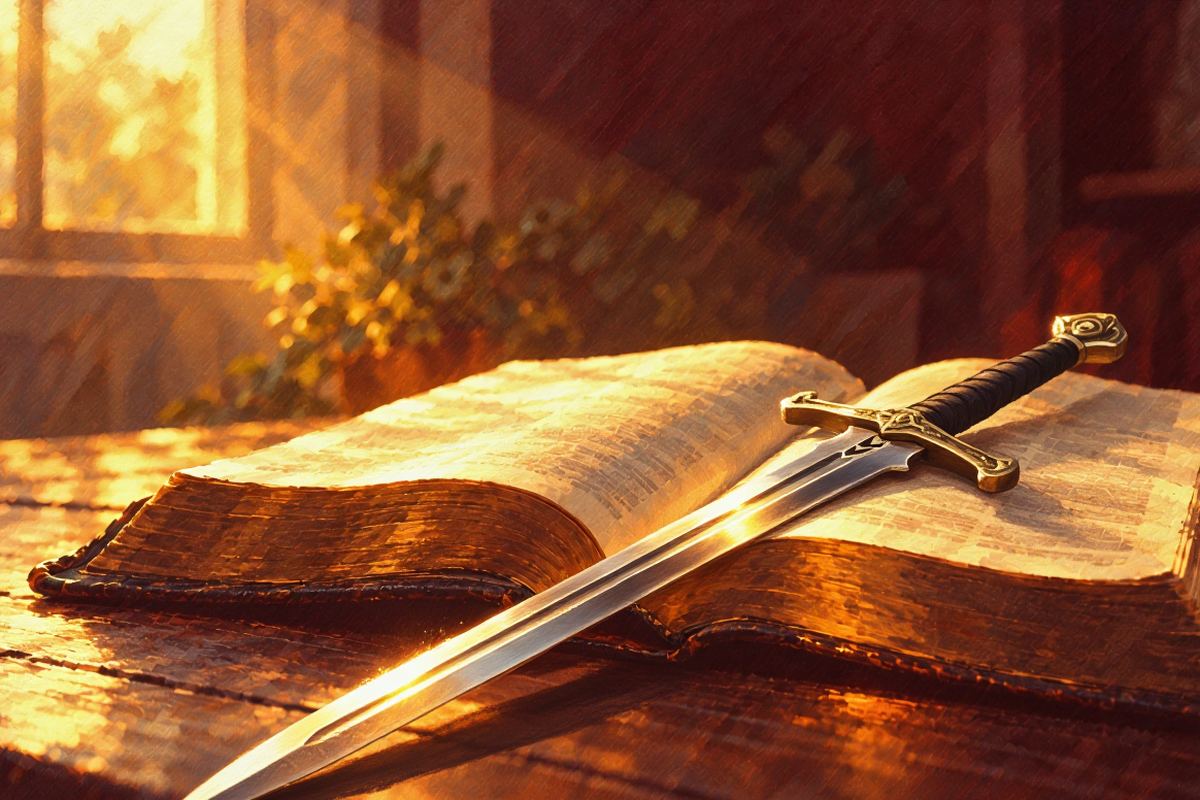
That is why we fight the good fight of faith (1 Timothy 6:12). We fight from a position of victory, not for victory. The Word is our weapon, the two-edged sword (Hebrews 4:12) that, in her words, “slices and dices that problem and sets the enemy flying.”
The better we know God’s Word, the more we grasp that the Father loves us as He loves Jesus (John 17:23). That builds confidence that we are forgiven once and for all, accepted in the Beloved (Ephesians 1:6), and made the righteousness of God in Christ.
That confidence also makes us bolder to stand on the Word in public. She warns that many Christians are afraid to stand on Scripture when issues arise, and that some church leaders have taken positions showing they do not know what it says. God’s Word, she says, must be our point of reference for every view we take, so that we overcome evil with good (Romans 12:21) and lies with truth.
Jesus modeled this in the wilderness, answering every temptation of the devil with the written Word (Matthew 4:1–11).
Faith Is the Victory That Overcomes the World
We need to remember, she says, that greater is He who is in us than he who is in the world (1 John 4:4), even when it does not feel that way. Romans 8:37 says we are more than conquerors through Him who loved us. If you truly grasp that God sent His only Son to take your place, she says, you will never doubt His love again, and you will be bold as a lion.
Jesus said that in this world we will have tribulation, but to be of good cheer, because He has overcome the world (John 16:33). If you have received Him, you are seated with Him in heavenly places (Ephesians 2:6). Just as Jesus is an overcomer, so is every believer.
Then comes the key text, 1 John 5:4–5: “whatever is born of God overcomes the world,” and this is the victory that has overcome the world: our faith. The world here, she explains, is not the planet but a system alienated from God, actively opposed to Him and His children, and lying under the influence of the evil one.
Faith in what? Verse 5 answers: the one who overcomes is the one who believes that Jesus is the Son of God. Many see Jesus only as a moral teacher or prophet, but believing He is the Son of the living God is what brings the faith that will overcome.
Being overcomers is part of our identity in Christ. “We’re not victims,” she says, “we are victors.” Feelings have nothing to do with the truth of what God says about you. We walk by faith, not by sight (2 Corinthians 5:7), and it has to be a way of life, not a Sunday thing.
Often the hardest things to overcome, she adds, are our own negative thoughts, which produce negative emotions. Thoughts that are not from God need to be dismissed immediately.
Whose Report Will You Believe?
How does overcoming faith come? Romans 10:17: “So then faith comes by hearing, and hearing by the word of God.” The speaker notes that the word translated God there is, in the original Greek, Christ, and the word of Christ is the gospel, the good news. Young’s Literal Translation renders it this way: faith is by a report, and the report through a saying of God.
So faith comes when we choose to believe the report of what God says. Faith, she teaches, is our title deed to all the promises of God. A title deed to a house or car means you own it. Every believer has been given a measure of faith (Romans 12:3), but it must be fed to grow and exercised by applying the Word daily. She quotes Corrie ten Boom: “faith sees the invisible, believes the unbelievable and receives the impossible.”
In Romans 10:13–16, Paul asks how people can call on the Lord unless they hear, and how they can hear without a preacher. Not all have obeyed the gospel, he writes, quoting Isaiah: “Lord, who has believed our report?” The source is Isaiah 53:1: “Who has believed our report? And to whom has the arm of the Lord been revealed?”
The arm of the Lord, she explains, is His power and might, and it shows up for the one who believes His report, not the doctor’s, the creditor’s or the media’s. If you do not know God’s Word, you will not even know what His report is. Faith, she says, is our positive response to what God’s Word says He has already done and promised.
She then shares the most dramatic time she and her husband had to choose whose report to believe. Their daughter Christina, then nineteen, was riding her bike to a friend’s house when she was hit by an SUV. Responding officers recognized her, so the family was reached quickly.
They chose to believe for full recovery. The neurosurgeon’s first words were that full recovery could not be expected. Christina was placed in a medically induced coma for nine days. The pressure in her brain did not come down as it should. Each time, the family answered: those are your facts, and we are not in denial, but God’s Word supersedes your facts.
They prayed Scripture over her and allowed no one into the room who would speak death. The speaker asked the Lord for a word just for Christina, and He gave her Psalm 103:4: He “redeems your life from destruction, who crowns you with lovingkindness and tender mercies.” They put Christina’s name into that verse and stood on it.
When the head ICU nurse gently asked whether she was prepared to care for Christina for life, the speaker heard herself answer no, “because I’m not going to have to.” After a fifth CT scan, the neurosurgeon showed her husband an area of the brain that was liquefying and said there was nothing more they could do. That, she says, is when God shows up. She testifies that God did show up: two months to the day after the doctor said brain death was setting in, Christina went back to college.
She credits God’s faithfulness and the church family who stood with them in prayer. When the devil told her to plan a funeral, she answered that she would not sorrow as those who have no hope (1 Thessalonians 4:13). Our focus has to be on the Lord, not the problem. Magnifying Him through praise does not change Him, she says; like a magnifying glass, it changes what we see.
The Ten Spies and Caleb
The speaker turns to Israel as a lesson in what not to do. God had promised Abraham an exceedingly good land and brought Israel out of Egypt with signs and wonders. He provided for them in the wilderness every step of the way, yet they complained constantly. They saw His acts, she says, but did not know His ways as Moses did (Psalm 103:7).
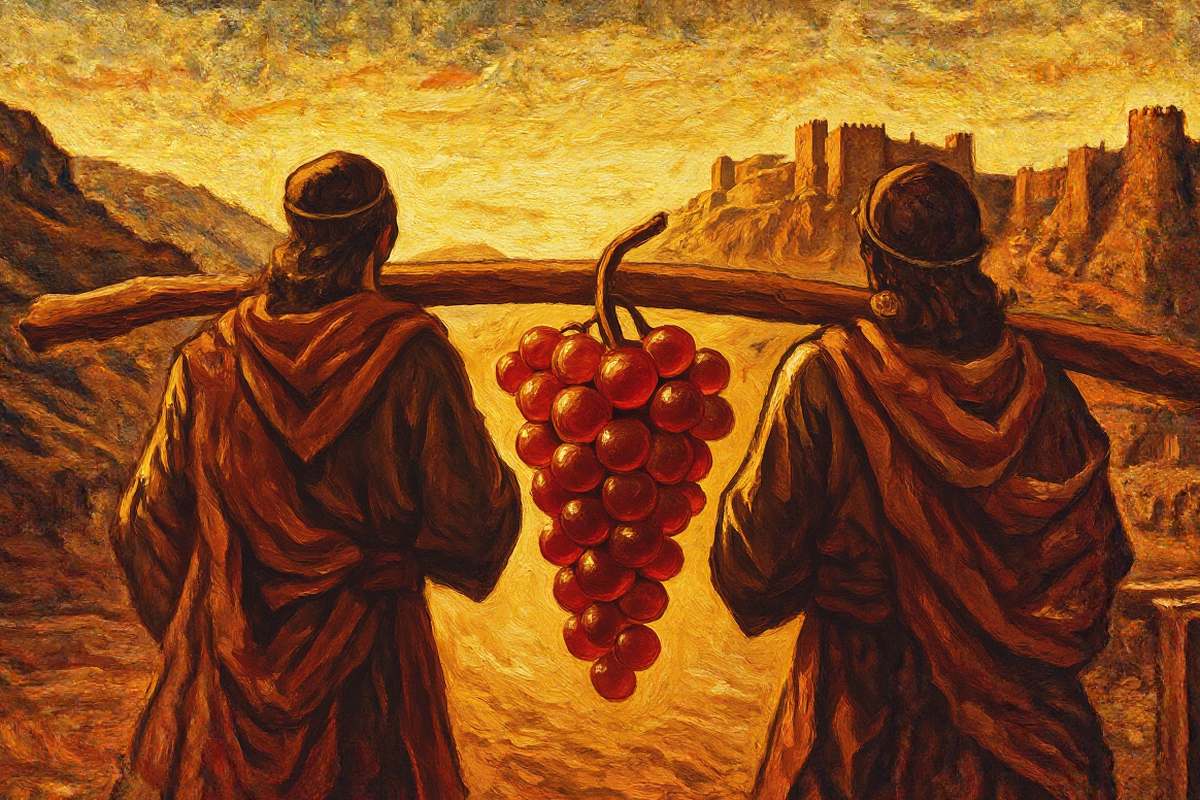
At the edge of the promised land, twelve spies went in for forty days. In Numbers 13:27–33, ten of them start well: the land truly flows with milk and honey, and here is a cluster of grapes so large it took two men and a pole to carry. Then comes the word “nevertheless,” negating everything they had just said. The people are strong, the cities fortified, and the descendants of Anak are there.
Caleb had a different spirit and followed the Lord fully (Numbers 14:24). He quieted the people and said, “Let us go up at once and take possession, for we are well able to overcome it.” Faith does not stop to make excuses, she says. Under grace, believers can say the same: I can do all things through Christ who strengthens me (Philippians 4:13).
The table below follows her comparison of the two reports Israel heard and what came of each.
| The ten spies | Caleb and Joshua | |
|---|---|---|
| Starting point | What they saw with their eyes | What God had promised |
| Key words | “Nevertheless,” “a land that devours its inhabitants,” “we were like grasshoppers” | “Let us go up at once,” “we are well able to overcome it” |
| Spirit | Fear and exaggeration | A different spirit, following the Lord fully |
| Result | Died in the wilderness, as they had spoken | Held the promise for over forty years and possessed the land |
The evil report also exaggerated, she notes; unbelief magnifies the negative report. She ties this to Isaiah 5:20, woe to those who call evil good and good evil. Even well-meaning believers do this, she says, when they call sickness something God sent to teach them, when God wants us well. Calling the land God said was exceedingly good a land that devours made God out to be a liar, and God is not a man that He should lie (Numbers 23:19).
The spies said they were like grasshoppers in their own sight, and so they were in the sight of the inhabitants. That was presumptuous, she says. Many years later, Rahab told Joshua’s spies that terror of Israel had fallen on Jericho and their hearts had melted (Joshua 2:9–11). Nobody’s heart melts over grasshoppers.
When you feel small, remind yourself that by your God you can run against a troop and leap over a wall (Psalm 18:29). God has not given us a spirit of fear, but of power, love and a sound mind (2 Timothy 1:7), so we can judge soundly whose report to believe. He will never leave us nor forsake us (Hebrews 13:5).
Speak It, See It, Hold On
Real faith cannot stay silent. Out of the abundance of the heart the mouth speaks (Matthew 12:34), Romans 10:8–10 says the word is near you, in your mouth and in your heart. That is how we were saved, and it is how we face every obstacle.
She urges listeners to speak God’s promises out loud at home, even when they do not feel much faith, because faith rises as they do. Then do not cancel those words by falling back into “I just feel rotten today.” Her focus, she says, is to declare that she is healed by the stripes of Jesus (1 Peter 2:24). Paul wrote, “I believed and therefore I spoke,” and “we also believe and therefore speak” (2 Corinthians 4:13). At Lystra Paul was stoned and dragged out of the city, yet after the disciples gathered around him he rose up and went back in (Acts 14:19–20).
Her pattern to overcome has four keys: know what God’s Word says about your need, meditate on it until you believe it, speak it out loud consistently, and see it on the inside until you know that you know.
She illustrates the last step with a testimony she heard about a minister praying for a blind woman who had been prayed for many times without change. He asked her to keep her eyes closed until she could see herself seeing on the inside. When she finally could, she opened her eyes and, as the story goes, could see perfectly.
Sometimes a promise is delayed, and we do not always know why. But through faith and patience we inherit the promises (Hebrews 6:12). Caleb and Joshua held on for more than forty years before they possessed the land. Faith without works is dead (James 2:26), so faith needs a corresponding action.
Everything we need is already in our born-again spirit, she says; that is why we work out our own salvation (Philippians 2:12–13), renewing the mind until it lines up with the spirit. When unbelievers see Christians overcome the same circumstances they face, they take notice. God always leads us in triumph in Christ and spreads the fragrance of His knowledge through us (2 Corinthians 2:14).
She ends with Revelation 21:7: “He who overcomes shall inherit all things, and I will be his God and he shall be My son.” The good news, she says, is that we are already overcomers by our faith. We just have to believe it and walk in it.
Living as an Overcomer This Week
Here are practical steps drawn from this faith is the victory message:
- Feed on the Word daily. Treat Scripture like daily meals, not a weekly snack, so faith keeps growing.
- Find God’s report. For each problem you need to overcome, look up what His Word says before you settle on any other report.
- Ask for a word. Like the speaker with Psalm 103:4, ask the Lord for a verse for your situation and put your name in it.
- Speak it out loud. Declare His report at home, and stop cancelling it with words of unbelief.
- Guard your circle. In hard seasons, keep close to believers who will stand with you, and away from voices that speak death.
- Magnify the Lord. Use praise and thanksgiving to bring Him into focus so the problem fades into the background.
Timestamped Outline
- 0:00 Intimacy with the Word of God
- 1:15 John 8: the truth makes you free
- 2:44 Thousands of promises, yes and amen
- 5:26 Fighting from victory, not for victory
- 9:28 Jesus answers temptation with the Word
- 10:42 More than conquerors
- 12:07 1 John 5: whatever is born of God overcomes
- 13:29 Not victims but victors
- 14:46 Faith comes by hearing
- 16:08 Faith is your title deed
- 18:49 Who has believed our report?
- 21:32 Christina’s accident
- 25:12 Psalm 103:4, a word for Christina
- 27:30 Back to college two months later
- 29:46 Magnify the Lord, not the problem
- 32:23 Israel complains in the wilderness
- 34:56 The ten spies’ evil report
- 37:31 Caleb: we are well able
- 40:21 Calling good evil
- 44:10 Rahab: our hearts melted
- 48:16 Speak the word of faith
- 51:50 Seeing yourself seeing
- 54:11 Faith and patience
- 58:19 He who overcomes inherits all things
Frequently Asked Questions
Is believing God’s report the same as denying the facts?
No. During her daughter’s coma, the speaker told the medical staff that their numbers were real facts based on their training, and that the family was not in denial. Their point was that God’s Word supersedes those facts. She draws a line between ignoring reality and choosing where to put your focus: she does not deny how she feels, but she refuses to let that be what she speaks or meditates on.
What if I do not feel like I have enough faith?
She says every believer has been given a measure of faith; it simply needs feeding and exercise. Start speaking God’s promises out loud even when faith feels small, and she says it begins to rise as you go. Faith comes by hearing the word of Christ, so the more of the gospel you take in, the stronger it grows.
Why does it sometimes take so long to see a promise fulfilled?
She admits we do not always know why a promise is delayed. Sometimes God is lining up other people and circumstances. Her answer is faith and patience, pointing to Caleb and Joshua, who held on for over forty years. However long it takes, she urges believers to stay faithful, keep acting on their faith and follow the Holy Spirit’s leading until the promise appears.
Scripture References
All passages open in the New King James Version on Bible Gateway:
- 1 John 5:4–5 — the victory that overcomes the world
- Numbers 13:27–33 — the ten spies and Caleb
- Romans 10:17 — faith comes by hearing
- Isaiah 53:1 — who has believed our report?
- John 8:31–32 — the truth shall make you free
- Romans 8:37 — more than conquerors
- Psalm 103:4 — redeemed from destruction
- Revelation 21:7 — he who overcomes inherits all things
How this summary was made: written with AI assistance from the sermon’s own transcript and checked against the Scriptures listed above.
Watch More Messages
If this message strengthened your faith, there are hundreds more teachings from NTC Ministries waiting for you. Browse the full sermon archive and keep feeding on God’s good report.