Being committed to Christ means more than praying a prayer of salvation. In this message, Pastor Paul Hohman teaches that once Jesus becomes Lord and Savior, the old way of thinking, speaking and living has to change, and he lays out what that commitment looks like through Paul’s farewell words in 2 Timothy 4: fight the good fight, finish the race, and keep the faith. Along the way he walks through the armor of God, the fourth man in the fiery furnace, and Elisha’s prayer for open eyes.
Below you will find the full video, a structured summary of the sermon, every Scripture he uses (linked to the New King James Version on Bible Gateway), a timestamped outline, and practical steps you can take this week to stay committed to Christ when life turns up the heat.
Sermon at a Glance
This message was preached at New Testament Church (NTC Ministries) and posted on November 16, 2020. Dr. Hohman and Pastor Pam were out of town that weekend, so Pastor Paul Hohman brought the Word. After worship, he preaches on what it means to stay committed to Christ, and the service ends in communion.
Pastor Paul’s starting point is simple. When we pray “Jesus, come into my heart,” we become a new creation, but that prayer is not permission to keep living the old way. Commitment, he says, is in word and in deed, and God shows up when we apply His Word to our lives. He then builds the message on three points from Paul’s last letter: fight the good fight, finish the race and keep the faith.
| Detail | Information |
|---|---|
| Speaker | Pastor Paul Hohman |
| Series | Committed to Christ (first message) |
| Main text | 2 Timothy 4:6–8, with Matthew 16:24–26 and Ephesians 6:10–18 |
| Key theme | Denying ourselves to fight the good fight, finish the race and keep the faith |
| Length | About 86 minutes in total, with the sermon beginning near the 33-minute mark and ending in communion |
Committed to Christ: Deny Yourself and Take Up Your Cross
Pastor Paul begins with the words of Jesus in Matthew 16:24–26: “If anyone desires to come after Me, let him deny himself, and take up his cross, and follow Me.” Accepting Jesus as Lord and Savior, he says, means changing the way we lived, the way we spoke, the way we acted and the way we thought. That kind of change takes discipline.
How do we deny ourselves? We stop entertaining the old thoughts that got us into trouble in the first place, the same thoughts that brought us to the point of crying out for help. Every one of us, he says, has that come-to-Jesus moment. God will not force the decision on anyone. He has given us free will, because if He simply made us obey, we would all be robots. What He wants is a heart given over to Him.
Next comes the cross. Pastor Paul reminds the church that the cross Jesus bore was not light. It took Him a long time to carry it, and He fell and struggled under it. In the same way, we sometimes struggle as we stay committed to Christ and to the vision of building and advancing His kingdom. Yet God constantly shows up and gives the strength we need once we deny ourselves, take up our cross and follow Him.
Jesus was not saying, “If anyone wants to sign up for our emails.” He was calling people to deny their lifestyle and their old ways. Following Jesus is not a religious duty fulfilled once or twice a week. “It’s a lifestyle, it’s a life change,” he says, built on a relationship with a God who will never leave us or forsake us. If God ever seems distant, it is not Him who moved.
The Fourth Man in the Fire
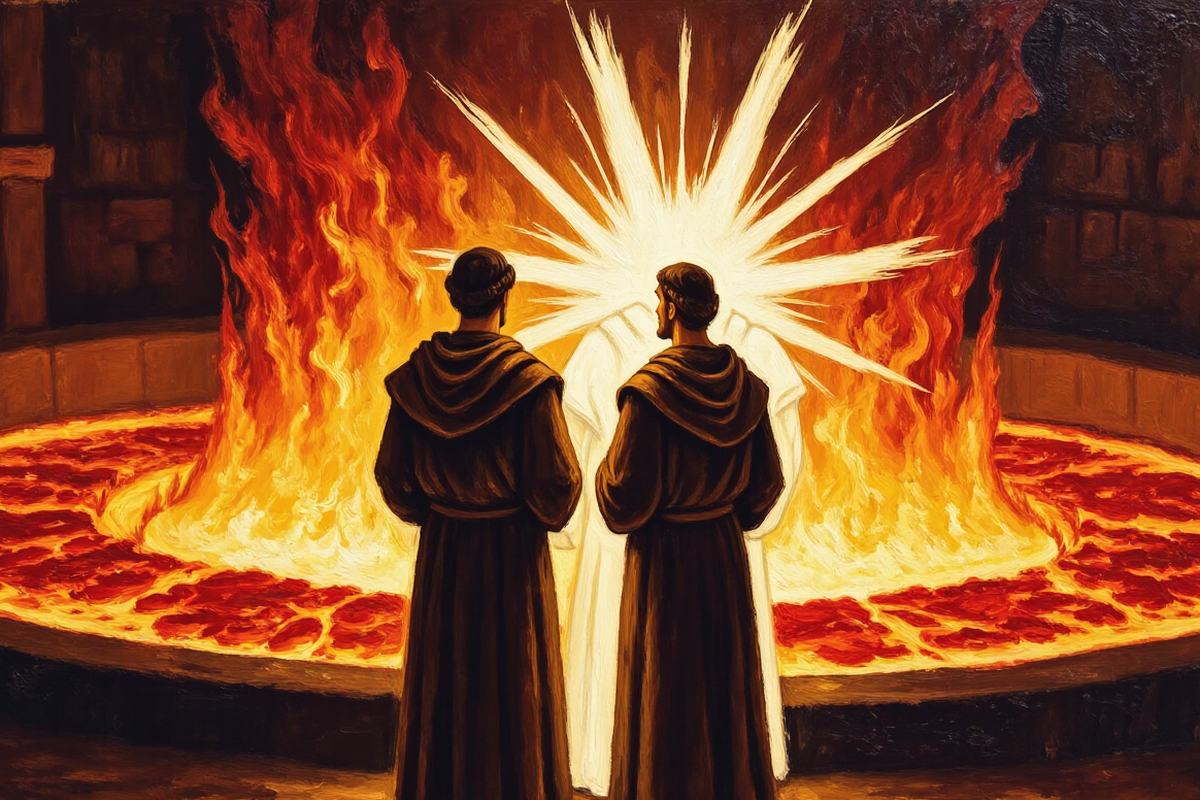
Pastor Paul turns to two Old Testament examples of people who stayed committed under pressure. The first is Shadrach, Meshach and Abednego, who refused to bow to the king’s idol (Daniel 3:19–25). They were bound and thrown into a furnace heated seven times hotter than usual, so hot that the men who threw them in died.
Yet when the king looked into the fire, the three were standing, and a fourth man was standing with them. Pastor Paul draws out a detail that matters: “Jesus didn’t come with the hose and put the fire out.” He stood with them in the middle of it. Whatever fires, winds and waves surround you, he says, God is with you, He will never leave you, and He will see you through.
He connects this to something Dr. Hohman had shared a few weeks earlier. When God gives a vision, He rarely shows the steps in between, the hills, valleys and mountains. Staying committed to Christ on that road means remembering that He is always with us.
The second example is Daniel (Daniel 6:10–22). When the king was tricked into forbidding prayer, Daniel refused to deny his God. He stood at his window and prayed, did not cower under social pressure, and was thrown into the lions’ den. The next morning the king ran out to find him safe. There are lions all around us too, Pastor Paul says, seeking to take us down and drive us away, but we cannot stop doing what God has commanded us to do.
Three Truths From Paul’s Final Words
The backbone of the sermon is 2 Timothy 4:6–8, which Pastor Paul calls Paul’s valedictorian speech. Before reading it, he reminds the church who Paul had been. As Saul, he was a persecutor of Christians, doing what he thought was right, until the Lord confronted him, blinded him and had him led to a house in the city, where his eyes were later opened (Acts 9:3–9).
That encounter was Saul’s come-to-Jesus moment. He denied himself, what he thought was right and what he thought was true, and changed his ways. The same man went on, Pastor Paul notes, to write a large part of the New Testament. His life is proof that full commitment to Christ can turn the worst opponent of the gospel into one of its greatest servants.
At the end of that life, Paul could write, “I have fought the good fight, I have finished the race, I have kept the faith.” He tells Timothy that a crown of righteousness is laid up for him, and not for him only, but for all who have loved the Lord’s appearing. “That’s us,” Pastor Paul says. God wants to give that crown to every believer who stays committed to Christ.
From verse 7 he draws his three points. First, there will be a battle, probably many of them, so we must fight the good fight. Second, there is a race, and Jesus has shown us the way, so we must finish it. Third, we need to be committed and keep the faith. The rest of the message unpacks each of these truths in turn.
Fight the Good Fight in the Armor of God
To explain the battle, Pastor Paul reads Ephesians 6:10–18. The fight is not physical, he says, but spiritual warfare is real, and Christians who are unaware of it often feel tired, dreary, knocked down and far from God without knowing why. Before reading further he stops to say, “The greatest strength a Christian can have is surrender.” Man’s wisdom is nothing next to God’s, and denying ourselves is that surrender.
“Be strong in the Lord and in the power of His might,” Paul writes, so that we may be able to stand against the wiles of the devil. There is a real devil, Pastor Paul says, and the wages of sin is still death. Praying a prayer is like signing up for the army: now we must discipline body and mind. “For we do not wrestle against flesh and blood,” the passage continues, “but against principalities, against powers, against the rulers of the darkness of this age.”
A good boxer prepares before a fight. “I don’t study my opponent, I just study God,” Pastor Paul says. When an attack comes, he answers with the Word: by His stripes we are healed (Isaiah 53:5) and no weapon formed against us shall prosper (Isaiah 54:17). That is the Word of God, the weapon for the battle.
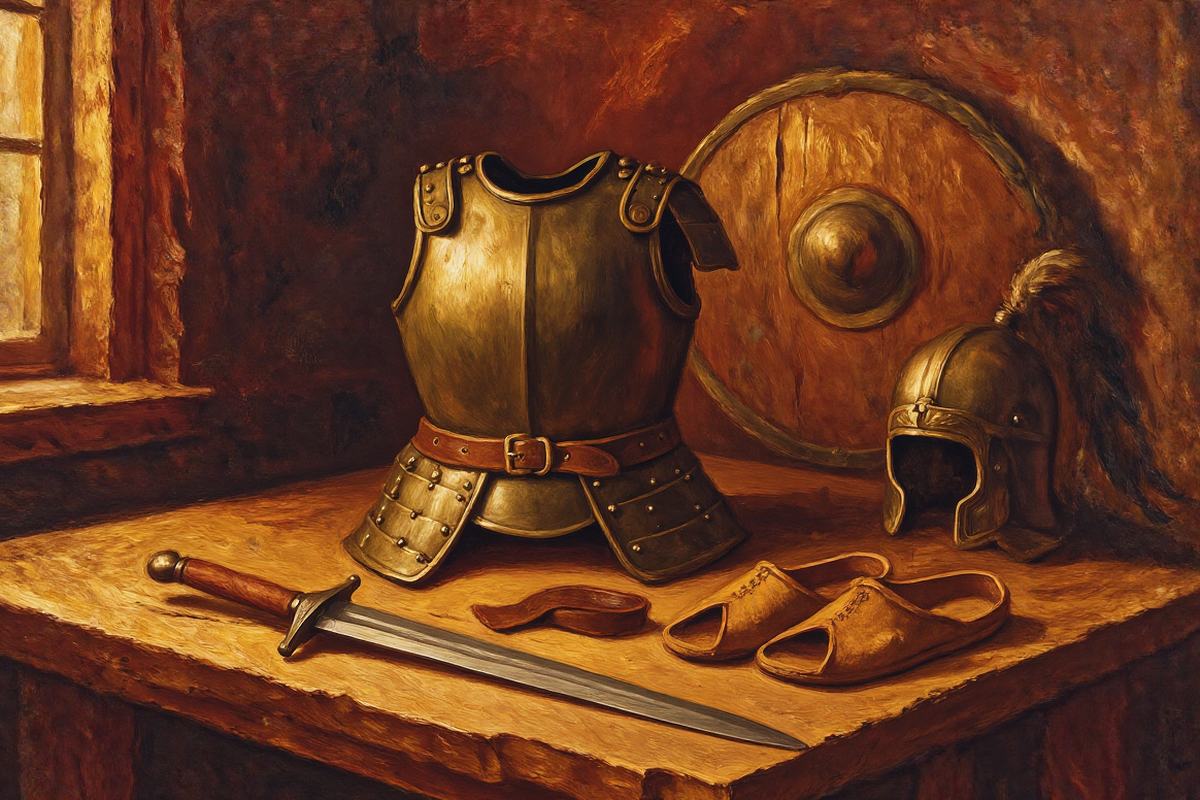
He then walks through each piece of the armor. The table below shows how he applies them when we fight the good fight in everyday life.
| Armor (Ephesians 6) | What it means, as taught | How to use it |
|---|---|---|
| Belt of truth | His Word is truth | Declare the Word over your life when sickness or trouble comes |
| Breastplate of righteousness | Walking according to the Word, right standing with God | Give no place to the devil when old desires resurface |
| Feet shod with the gospel of peace | Confidence that comes from knowing what the Word says | Walk, sleep, work and build relationships in peace instead of anxiety |
| Shield of faith | Without faith it is impossible to please God | Step out of your comfort zone and quench the fiery darts |
| Praying always | Prayer is the battle | Declare God’s promises, which are yes and amen in Him |
On the shield of faith he cites Hebrews 11:6. Faith means getting out of our own strength and wisdom, because with God all things are possible. He points to the vendor expo as a step of faith: a few hundred dollars raised for the food pantry the year before, and over a thousand this year. We will not grow weary while doing good, he says, for in due season we will reap if we do not lose heart (Galatians 6:9).
To fight the good fight, he adds, we pray. Prayer is not words to impress people. It is declaring the truth of God over our lives, because all the promises of God in Him are yes, and in Him amen (2 Corinthians 1:20). These are not suggestions. He closes this point with 1 Corinthians 15:58: be steadfast, immovable, always abounding in the work of the Lord, knowing that your labor is not in vain. Your breakthrough, he says, is right on the other side.
Lord, Open My Eyes: Elisha at Dothan
Pastor Paul then turns to one of his favorite stories since childhood, 2 Kings 6:8–23. The king of Syria keeps planning attacks on Israel, but the prophet Elisha keeps telling the king of Israel exactly what Syria is doing, because God reveals it to him. Furious, the Syrian king sends horses, chariots and a great army by night to surround the city of Dothan, all to capture one man.
Early the next morning, Elisha’s servant sees the army surrounding the city and runs back in a panic and asks what they should do. Elisha tells him that those with them are more than those with the enemy, and then prays, “Lord, I pray, open his eyes that he may see.” The Lord opens the young man’s eyes, and he sees the mountain full of horses and chariots of fire all around Elisha.
“What a powerful prayer,” Pastor Paul says, and he has the church repeat it: “God, open my eyes.” When we focus on everything going on around us, we get buried and crushed. But when we stay committed to Christ and what He has asked of us, we can walk through trouble with a smile while everyone else is panicking, because if God is for us, who can successfully come against us (Romans 8:31)?
Then Elisha prays the Syrians blind and leads them to the king of Israel, who is told not to kill them but to feed them and send them home. Israel throws a feast for its enemy, and the raiders do not come back. God takes what we might think is foolish, Pastor Paul says, and makes a way where there seems to be no way.
Finish the Race and Keep the Faith
The second truth is to finish the race, and that requires focus. Pastor Paul urges the church to stay captivated by God’s goodness, the joy that is our strength and the peace that covers us like a blanket. Reading 1 Corinthians 9:24–27 from the Passion Translation, he highlights that a true athlete is disciplined in every respect and practices constant self-control.
Staying committed to Christ will meet an objection: “That’s just the way I am.” His answer comes from 2 Corinthians 5:17, where old things have passed away and all things have become new. “It’s not just the way you are, that’s the way you were,” he says. When we plant the seeds of righteousness by applying the Word, fruit springs up: joy, peace, patience, kindness, and a love even for enemies that we never dreamed possible.
Paul did not run aimlessly or box like someone throwing wild punches. Champion athletes, Pastor Paul notes, give their whole lives to run a hundred meters or clear a pole, committed to what they eat and how they train. So how committed is the church to the Word? Are we letting in only what needs to be in, and studying to show ourselves approved? He leads the church in declaring “I am a champion,” because greater is He who is in you than he who is in the world (1 John 4:4).
Jesus did not stay in five-star hotels, he adds; He was more concerned with building the army of the living God, and His disciples, empowered by the Holy Spirit, carried that on. So what legacy will we leave? Will we hear, “Well done, good and faithful servant”?
The third truth is to keep the faith. Those who keep the faith are not easily shaken: when we train and discipline ourselves this way, things that used to knock us down no longer get through. Great peace have those who love God’s law, and nothing causes them to stumble (Psalm 119:165). We walk by faith, not by sight, knowing that we will all appear before the judgment seat of Christ (2 Corinthians 5:7–10). Whatever we sow, we will reap (Galatians 6:7), so he asks how we are sowing seeds in our families, workplaces and friendships.
The message closes at the Lord’s Table with 1 Corinthians 11:23–26. Pastor Paul points out that on the night He was betrayed, Jesus gave thanks. Communion, he says, is the best way to get back to our commitment to Christ: remembering how fully He committed Himself to us. He prays that God’s people would run and not grow weary and walk and not faint (Isaiah 40:31).
Living Committed to Christ This Week
Pastor Paul’s challenge is personal: is the vision God gave you sitting on the back burner? Here are practical steps drawn from this message:
- Deny the old thought patterns. When the old thinking that got you into trouble shows up, refuse to entertain it and replace it with what the Word says.
- Study God, not the enemy. Like a boxer who prepares before the fight, fill yourself with Scripture so you have the right weapon ready when attacks come.
- Pray “God, open my eyes.” When circumstances overwhelm you, ask to see that there are more with you than against you, and remember the fourth man in the fire.
- Take one step of faith. A new job, a promotion, or a place to serve at church that God has been speaking to you about: move it off the back burner.
- Keep the faith like a champion. Guard what you let in, practice self-control, and keep sowing seeds of righteousness so that fruit can grow.
- Give thanks in the storm. Follow the example Jesus set on the night He was betrayed, and thank God before you see the answer.
Timestamped Outline
- 33:00 Introducing our commitment to Christ
- 34:00 A new creation must apply the Word
- 35:00 Matthew 16: deny yourself
- 37:00 Take up your cross
- 38:00 A lifestyle, not a sign-up sheet
- 39:00 Shadrach, Meshach and Abednego
- 40:00 The fourth man in the fire
- 41:00 Daniel and the lions’ den
- 43:00 Saul becomes Paul
- 44:00 2 Timothy 4: three truths
- 45:00 Fight the good fight: Ephesians 6
- 47:00 Surrender is our greatest strength
- 50:00 The boxer’s battle stance
- 52:00 The breastplate of righteousness
- 54:00 The shield of faith
- 57:00 Praying always with all prayer
- 59:00 Elisha and the army at Dothan
- 1:03:00 Lord, open his eyes
- 1:06:00 Finish the race
- 1:07:00 1 Corinthians 9: train like a champion
- 1:13:00 I am a champion
- 1:14:00 Keep the faith
- 1:19:00 Communion: Jesus gave thanks
- 1:23:00 Closing prayer for open eyes
Frequently Asked Questions
Is saying the salvation prayer enough?
Pastor Paul affirms that praying “Jesus, come into my heart, be my Lord, be my Savior” makes us a new creation. But he stresses that the prayer does not mean we can keep living the same old way. He compares it to signing up for the army: it is the beginning of discipline, not the end. Commitment shows up in deed as well as word, and God shows up as we apply His Word.
Why does God seem distant at times?
Pastor Paul’s answer is direct: God is a God who will never leave us or forsake us, so when He seems far away, it is not Him who moved. It is us who need to deny ourselves and come back to Him. He also encourages praying Elisha’s prayer, asking God to open our eyes to see that He is at work in the middle of the trouble.
Why does this message end with communion?
Pastor Paul describes communion as the best way to return to the point of commitment to Christ. Jesus asked His followers to remember Him, and in doing so they remember His call to follow and His lifelong commitment to them. Jesus also gave thanks on the night He was betrayed, a model for our own storms.
Scripture References
All passages open in the New King James Version on Bible Gateway:
- 2 Timothy 4:6–8 — fight the good fight, finish the race, keep the faith
- Matthew 16:24–26 — deny yourself and take up your cross
- Ephesians 6:10–18 — the whole armor of God
- Daniel 3:19–25 — the fourth man in the fire
- Daniel 6:10–22 — Daniel in the lions’ den
- 2 Kings 6:8–23 — Elisha prays for open eyes
- 1 Corinthians 9:24–27 — run to win the prize
- 1 Corinthians 15:58 — steadfast and immovable
- 1 Corinthians 11:23–26 — the Lord’s Supper
How this summary was made: written with AI assistance from the sermon’s own transcript and checked against the Scriptures listed above.
Watch More Messages
This teaching continues in Committed to Christ #2 — Deny Yourself and Renew Your Mind. You can also browse the full sermon archive for hundreds more messages from NTC Ministries.