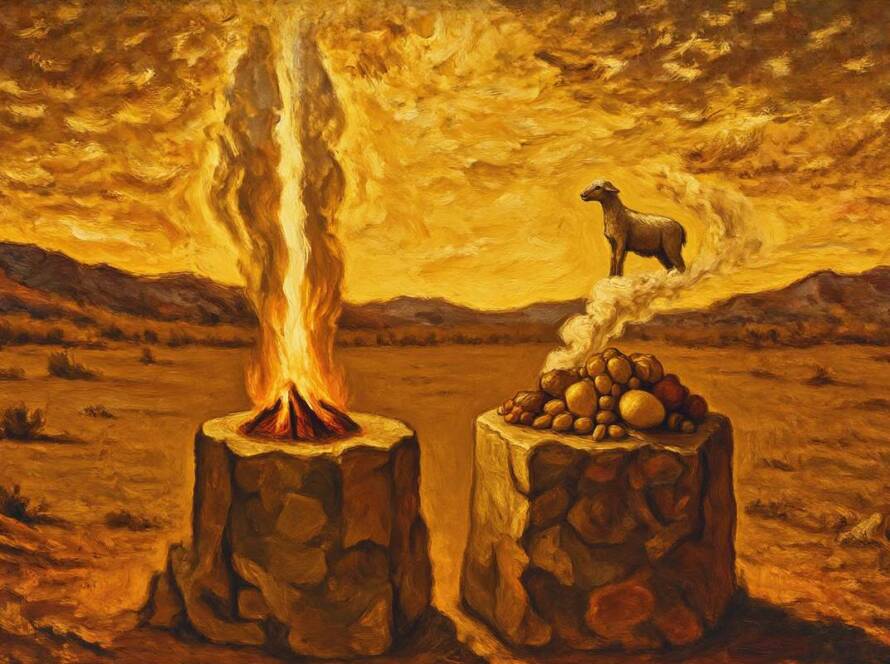
The Power of Words 7 teaches that your words become your reality: what you keep saying about yourself, good or bad, is the seed of the life you will eventually live. Dr. William P. Hohman shows from Deuteronomy 30, Proverbs 18:21 and James 3 that every word is a seed, that the tongue steers a life the way a small rudder steers a ship, and that believers can choose life by training their mouths. This message follows The Power of Words #6 on the God kind of faith.
Below you will find the full Power of Words 7 video, a structured summary of the sermon, every key Scripture linked to the New King James Version on Bible Gateway, a timestamped outline, and practical steps for sowing an abundant life with your words this week.
Sermon at a Glance
This message runs about 64 minutes. Pastor Hohman opens with prayer, saying that words can be more valuable than the money in your pocket or your bank because you literally create your future with them. After some remarks marking the 250th anniversary of the United States, he returns to the series at about the thirteen-minute mark.
The heart of the sermon is simple: you are where you are today in part because of what you have been saying about yourself. Made in God’s image and likeness, believers create with words just as God does, whether they realise it or not. The message closes with the congregation declaring Scripture-based confessions together.
| Detail | Information |
|---|---|
| Speaker | Dr. William P. Hohman |
| Series | The Power of Words (#7, Your Words Become Your Reality) |
| Main text | James 3:1–5 and Deuteronomy 30:19 |
| Key theme | Words are seeds; what you repeatedly say becomes your reality |
| Length | About 64 minutes, ending with a group confession |
You Are Prophesying Your Future
Pastor Hohman explains that being made in the likeness of God is more than having hands, feet and a head. It means living the way God lives, and God created with words. “Whether you like it or not, your words have been creating,” he says. Words are like seeds: when you speak something out, you give life to it, because you are a spiritual being. Jesus said His words are spirit and life (John 6:63).
He anchors the message in Deuteronomy 30:19, where God sets before His people life and death, blessing and cursing, and tells them to choose life so that they and their descendants may live. Words like “this is impossible” or “I’ll never get it,” he says, are not words of life but words of death. Choosing life is a choice, and it is made with the mouth.
“If you repeatedly say something, eventually it becomes a reality,” he says. He retells the story of the family dog named Lumpy, who developed lumps all over his body; after the name was changed, most of the lumps went away. Whether you realise it or not, he tells the church, you are prophesying your future.
That is fine when you say you are blessed, healthy, strong and fulfilling your goals. But this is a corrupted world, and everyone has to train their mouth. Paul warned that evil company corrupts good habits (1 Corinthians 15:33); constantly hearing corrupt words will shape the way you talk. When you speak good words, he says, you prophesy victory and success.
When Jesus spoke, people’s ears perked up because spirit and life were being spoken, when all they had known was spirit and death. Pastor Hohman says preaching should be the same: “big fat words, not little skinny words,” like hot air filling a balloon. If anyone speaks, Peter wrote, let him speak as the oracles of God (1 Peter 4:11). It changes lives, but first it changes you.
Every Word Is a Seed
Because the world is fallen, it is easy to prophesy the opposite. He is not talking only about vulgar speech. Negative, doubtful words, such as “I’ll never get out of debt” or “I can’t get a break,” trap people and hold them in bondage. The answer is Romans 12:2: do not be conformed to this world but be transformed by the renewing of your mind. Joy, he says, is not caused by a lottery win or a bonus; it is a decision.
The church reads Proverbs 18:21 aloud: “Death and life are in the power of the tongue, and those who love it will eat its fruit.” His picture is a table. “What are you serving up?” he asks. You will eat whatever you have been saying, but you can start serving different things: victory, increase, health, recovery and strength.
Every word is a seed, he teaches. God did not so much curse Adam as show him the picture on the seed packet of what he had planted. If you want apples, you plant apple seeds; you cannot plant thistles and expect good fruit, and then complain about the harvest. “You can’t talk negatively and expect to live a positive life,” he says.
Because believers share God’s image, they can share His works. Jesus said those who believe would do the works He did and greater (John 14:12), and that whoever believes that what he says will come to pass will have whatever he says (Mark 11:23). It might take a week, a month or five years, he says, but what you speak is yours.
John 10:10 shows why. The thief comes to steal, kill and destroy, but Jesus came that we may have life more abundantly, now and not only one day in heaven. God, Paul writes in Romans 4:17, calls those things which do not exist as though they did, speaking out what is meant to be, not what people see.
That is why faith speaks. In Romans 10:6–10, faith does not ask who will go up to heaven or down to the deep; the word is near you, in your mouth and in your heart. Believers are born again of incorruptible seed, the Word of God which lives and abides forever (1 Peter 1:23), so they speak that Word. He mentions the Scripture confessions he typed on an old typewriter when the church began, still available at the entrance.

Breaking a Poor Mouth
Pastor Hohman distinguishes sympathy from compassion. Sympathy climbs into the ditch with someone and agrees how terrible it is. Compassion holds them as you walk them out. People who tell everyone their troubles to gain sympathy, he says, are hurting themselves. “You can’t talk defeat and expect victory.”
“If you have a poor mouth, you’re going to have a poor life,” he says, and admits this one was hard for him. His family was poor when he was growing up. His parents taught thankfulness, but a mentality of “we don’t have enough” was ingrained, down to whether friends could stay for dinner. He had to stop letting that thought out of his mouth and started telling his own children, “Sure, bring them over.” The change was not instant, he says, but it worked.
He gives the church words to sow instead: I have the favor of God, blessings are chasing me down, doors are opening for me, new levels are in my future, I have the mind of Christ and the wisdom of God is formed within me. He believes in spiritual warfare, he says, but part of it is simply to stop saying what you have been saying. Otherwise the devil does not need to steal anything; he just applauds.
His second story is about patience. He used to struggle with impatience, and the Lord dealt with him, telling him that as an eternal being he has the patience of eternity. So he began saying it all the time: “I have the patience of eternity.” Inside he did not feel it at first, but he spoke only that, and it changed him. The only way to change your life, he concludes, is to change the words you speak.
Power of Words 7: The Rudder of Your Life
Pastor Hohman reads James 3:1–5 in the New King James and then The Message. Teachers receive a stricter judgment; whoever does not stumble in word is a perfect man, able to bridle the whole body. “See how great a forest a little fire kindles!” One little word, he says, can start a forest fire, or make angels sing and bells ring.
On the warning to teachers, he tells of a family whose home was chaotic. The wife gave her life to the Lord and the children were born again in children’s church, but the husband complained that his kids were swearing and blamed the church. Pastor Hohman pointed out that children’s church was one hour a week, about 52 hours a year. Parents, he says, are the greatest teachers their children have, and they bear that judgment.
The table below follows the three pictures from James 3 and the application he gives to each.
| Picture in James 3 | What it controls | His application |
|---|---|---|
| A bit in a horse’s mouth | The whole horse | A word in your mouth is controlling the direction your life is going |
| A small rudder on a large ship | A ship driven by fierce winds | Keep speaking your course; you will get there despite the opposition |
| A little fire | A great forest | One word can destroy, or make angels sing and flowers bloom |
He dwells on the rudder. In The Message, a small rudder in the hands of a skilled captain sets a course in the face of the strongest winds. Ships in James’s day were sailing ships, he notes, so the rudder had to hold its line against the wind. Storms will come, he says, but you keep speaking: I am in a safe harbor, my life is built on Christ, I am strong in the Lord and in the power of His might.
A word out of your mouth may seem of no account, he reads, but it can accomplish nearly anything, or destroy it. This is why the Power of Words 7 message keeps returning to the tongue: the direction of your life is being plotted by what you say.

Weigh Your Words
“Weigh your words,” he urges. Everyone has good and bad thoughts, and early on most are bad, but when the bad thoughts come, do not speak them out of your mouth; that is digging your own grave. God has given everything that pertains to life and godliness (2 Peter 1:3), and he lists examples: a good car, so you are not broken down by the road, and a good home without drafts or a leaking roof.
Start declaring it until it gets into your heart, he says. God promises that His word will not return to Him void, and that you will go out with joy and be led out with peace while the mountains and hills break into singing (Isaiah 55:11–12).
He also warns about a subtler phrase: “I have enough.” Saying it can build a resistance to God’s desire to give you more, perhaps for something He wants built in the church or the world. Believers are heirs of God and joint heirs with Christ (Romans 8:17). “Good, better, best, I’ll never rest until my good is better and my better is best.”
On worry, he points to Matthew 6:31: do not worry, saying, what shall we eat, drink or wear. Thoughts of lack will come, he says, but a thought that is not spoken dies without producing. The same is true of good thoughts if you refuse to speak them.
He tells of the church’s early board, made up of five senior pastors from around the country. One kept answering the vision with “you don’t need that,” and resisted a larger property. Pastor Hohman says he had to remove him, trusting God with all his heart and acknowledging Him in all his ways (Proverbs 3:5–6), and keeping himself from corrupt communication. Two voices compete for our attention, he says: the voice of faith and the voice of defeat.
Speak Grace to the Mountain
David is his first example. When all of Israel’s army said they could not fight Goliath, David told the giant he would take his head and give the Philistine army to the birds and beasts (1 Samuel 17:45–46). He called the end from the beginning, refused to speak the fear around him, and victory came.
His second is Zerubbabel. After the return from Babylonian captivity, the people needed to rebuild the temple but kept making excuses about money and resources. God sent word through Zechariah: “Not by might nor by power, but by My Spirit,” and the great mountain would become a plain as the capstone was brought out with shouts of “Grace, grace to it!” (Zechariah 4:6–7).
Grace, he explains, means favor with God, His blessing and goodness. Whatever mountain stands before you, debt or sickness or anything else, you speak grace to it and declare blessing over it. He encourages people to write down an end goal and start speaking the victory. In the house of the righteous there is much treasure (Proverbs 15:6).
Finally, in Matthew 15:10–20, the Pharisees complained that Jesus’ disciples ate with unwashed hands. Jesus answered, “Not what goes into the mouth defiles a man; but what comes out of the mouth, this defiles a man,” because what comes out of the mouth comes from the heart.
Living It Out This Week
Pastor Hohman asks the church to make a commitment to train their mouths, calling it one of the best decisions after becoming a Christian. Here are practical steps from the Power of Words 7 message:
- Audit what you repeat. Notice the phrases you say most about your health, money and future, because what you repeatedly say becomes your reality.
- Do not voice every thought. When a negative thought comes, refuse to speak it, and let it die without producing.
- Replace a poor mouth. Swap “we don’t have enough” for faith-filled answers, as he did with his own children.
- Pick one phrase to grow into. Like his “I have the patience of eternity,” choose a Scripture-based sentence for your weakest area and say it daily.
- Write down your end goal. Then speak grace to the mountain in front of it, as Zerubbabel was told to do.
- Offer compassion, not sympathy. Help others out of the ditch instead of agreeing how deep it is.
Timestamped Outline
- 0:00 Words create your future; opening prayer
- 12:52 You are where you are because of what you say
- 14:04 Words are seeds; choose life
- 15:04 Repeated words become reality: Lumpy
- 17:10 Evil communications corrupt good habits
- 19:21 Big fat words and the oracles of God
- 21:28 Be transformed: joy is a choice
- 22:31 Proverbs 18:21: what are you serving up?
- 24:43 John 10:10: an abundant life now
- 26:48 Romans 4:17: calling the end from the beginning
- 28:53 The word in your mouth and the confessions at the entrance
- 31:01 Sympathy versus compassion
- 33:07 Breaking a poor mouth
- 35:09 The patience of eternity
- 37:22 James 3:1–5 in the New King James
- 38:29 Teachers and the family in children’s church
- 41:46 The bit and the rudder
- 43:47 Weigh your words
- 45:51 My word shall not return void
- 46:56 The danger of saying “I have enough”
- 49:07 Matthew 6:31: do not speak out worry
- 51:12 The board member and the property
- 54:16 David and Goliath
- 55:17 Zerubbabel: grace, grace to it
- 58:34 Proverbs 15:6 and Matthew 15
- 1:01:41 Closing confession together
The Power of Words Series
This message is part of a multi-part teaching on the words of your mouth at NTC Ministries. Start from the beginning or continue where this one leaves off:
- First message: Power of the word #2 Creative
- Previous: The Power of Words #6
- You are here: The Power of Words #7 Your Words Become Your Reality
- Next: The Power of Words #8 Working To Build A Good Life
Frequently Asked Questions
Is speaking positively the same as lying about how I feel?
Pastor Hohman addresses this objection directly. Some people say they will not claim to be healed or full of joy because they are not hypocrites and are looking at how they feel. He answers that negative thoughts will come, but a thought dies without producing if you do not speak it, and the same is true of good thoughts. Speaking God’s Word over your situation is not denial; it is refusing to let the wrong seed be planted.
What is the closing confession in this message?
The church declares together that the Spirit of truth abides in them and guides them into all truth, that they are the righteousness of God, that they trust in the Lord with all their heart and lean not on their own understanding, that the Lord will perfect what concerns them, that they follow the Good Shepherd and know His voice, and that, as a new creation in Christ, they have the mind of Christ.
Does this mean Christians should never admit a problem?
Not in his teaching. He says compassion is needed and that he has been through hard things himself. The difference is what you do next: sympathy stays in the ditch, while compassion says “let’s find the victory in Jesus” and helps the person out. He also urges people to name the mountain, whether debt or sickness, so that they can speak grace and blessing to it.
Scripture References
All passages open in the New King James Version on Bible Gateway:
- James 3:1–5 — the bit, the rudder and the little fire
- Deuteronomy 30:19 — choose life
- Proverbs 18:21 — death and life in the power of the tongue
- John 10:10 — life more abundantly
- Romans 4:17 — calling things that are not as though they were
- 1 Samuel 17:45–46 — David speaks to Goliath
- Zechariah 4:6–7 — grace, grace to the mountain
- Matthew 15:10–20 — what comes out of the mouth
How this summary was made: written with AI assistance from the sermon’s own transcript and checked against the Scriptures listed above.
Watch More Messages
If this message helped you see the weight of your words, there are hundreds more teachings from NTC Ministries ready for you. Browse the full sermon archive and keep sowing words of life.