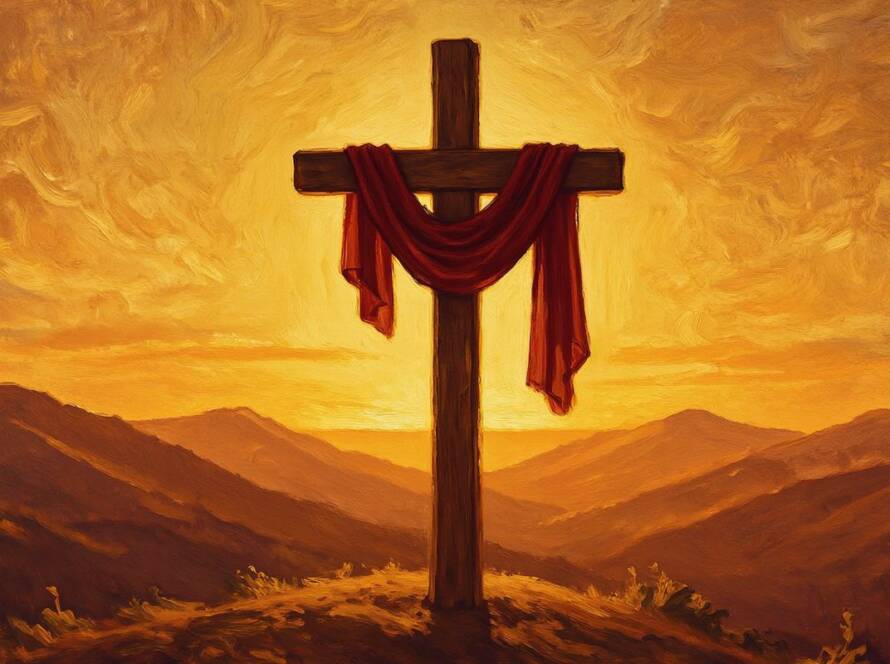
The divine exchange is what happened on the cross: Jesus took everything that was ours, our sin, punishment, sickness, death and poverty, and gave us everything that is His. In this fourth message of the series, Dr. Hohman walks back through Isaiah 52, 53 and 54, reviews the first four parts of that exchange, and then opens a fifth: Jesus became poor so that we, through His poverty, might become rich.
He also shows that God’s covenant of love cannot be revoked, explains why the problems in the world are corruption rather than God’s anger, and shares how the Lord provided for his family when they gave away everything to move to Merrill. Below you will find the full video, a structured summary, every Scripture linked to the New King James Version on Bible Gateway, a timestamped outline and practical steps.
Sermon at a Glance
This message was preached at NTC Ministries in Merrill, Wisconsin, and posted on October 15, 2024. It is the fourth teaching in a series Pastor Hohman says is winding down, with one more message planned on emotional and psychological freedom. It runs about 78 minutes and closes with communion, prayer for salvation and prayer for healing.
The core idea is simple. Everything God gives His children comes by grace, by a promise, and not by effort. As Pastor Hohman puts it, by a promise the Lord has given everything to me. The work of the believer is to learn to receive it.
| Detail | Information |
|---|---|
| Speaker | Dr. William P. Hohman |
| Series | My Divine Exchange (part 4) |
| Main text | Isaiah 52–54 and 2 Corinthians 8:9 |
| Key theme | Jesus became poor on the cross so we could become rich |
| Length | About 78 minutes, ending in communion |
The Problem, the Cure and the Covenant
Pastor Hohman opens by summarizing the three chapters that frame the series. Isaiah 52 shows the problem: people were in bondage because they did not know who God was. When Moses asked what name to give Israel, the Lord answered, I AM WHO I AM (Exodus 3:14). He teaches that the Hebrew name carries the idea of breath, the same breath God breathed into Adam (Genesis 2:7).
Adam lived in a garden God planted and was given dominion over everything. When he talked with the Lord, he never asked for anything, because he had everything. David caught the same revelation: “The LORD is my shepherd; I shall not want” (Psalm 23:1). Restoring that place of no want is what Jesus came to do.
On the cross, all the sin, penalty, weakness and inferiority of mankind came together at one time, and Jesus took it all. Hebrews 10:14 says that by one offering He has perfected forever those who are being sanctified. We are still being worked on, but in God’s eyes we are already perfect, not by effort or goodness but by grace. That is why Paul could write that God shall supply all your need according to His riches in glory by Christ Jesus (Philippians 4:19), meaning spirit, soul, body, emotions and finances.
Isaiah 53 is the cure and Isaiah 54 is the covenant. Just as God promised Noah never to flood the earth again (Isaiah 54:9–10), He promises that His kindness will not depart and that He will not be angry with His people. Pastor Hohman calls it an irrevocable covenant. All of God’s wrath was poured out on Jesus.
What about the trouble in the world? He compares it to a new car rusting from road salt. The manufacturer did not cause the rust; corruption did. In the same way, the problems we see are a corrupted, earth-cursed system, not God. Jesus foretold that not one stone of the temple would be left on another, removing the old to bring in the new temple, which is us. So believers do not need to fear. As Psalm 91:7 says, a thousand may fall at your side and ten thousand at your right hand, but it shall not come near you.
Knowing God Multiplies Grace and Peace
Did God make this covenant because we were good people? Pastor Hohman laughs at the idea and says, “I deserve two Hells.” It came only from God’s loving kindness. 2 Peter 1:2–4 explains how we step into it: grace and peace are multiplied to us in the knowledge of God and of Jesus our Lord, as His divine power has given us all things that pertain to life and godliness.
He stresses that “all things” includes natural things, not only spiritual ones. Believers are ambassadors in this world, and a nation takes care of its ambassadors. Through God’s promises we become partakers of the divine nature and escape the corruption that is in the world through lust. Knowing everything is already ours, we do not need to be greedy for anyone else’s things.
This is also why he urges people to come to church. The corporate anointing builds us up, and he notes that everyone leaves feeling better than when they came, unlike places that leave people worse off.
Then he turns to Isaiah 53:6: all we like sheep have gone astray, and the Lord laid on Him the iniquity of us all. God did not choose us for being impressive. He chose the foolish things of the world to put to shame the wise (1 Corinthians 1:26–27).
Pastor Hohman teaches that the Hebrew word for iniquity, avon, means not only the sin but all the punishment and penalty for it. Jesus is our scapegoat. Under the old covenant the priest laid his hands on the goat, declared every sin and curse over it, and sent it into the wilderness never to return. The old system left people under constant guilt and condemnation. Through the divine exchange Jesus took that away, so we can stand before the Father without inferiority, with the same mind that was in Christ Jesus (Philippians 2:5–8).

The First Four Parts of the Divine Exchange
Before adding something new, Pastor Hohman reviews the earlier messages on the divine exchange. Isaiah 53:10–12 describes the whole scene: it pleased the Lord to bruise Him, His soul was made an offering for sin, and He bore the sin of many. Because of that, a believer becomes an heir of God and a joint heir with Christ, who inherited everything. The table below sets out each divine exchange as he teaches it.
| Jesus received | So we receive | Key passage he uses |
|---|---|---|
| Punishment and God’s wrath | Forgiveness and peace with God | Isaiah 53:5 |
| Wounds | Healing | Matthew 8:16–17 |
| Our sin | His righteousness | 2 Corinthians 5:21 |
| Our death | His life | John 11:25–26 |
| Absolute poverty | Riches and abundance for every good work | 2 Corinthians 8:9 |
Peace. Isaiah 53:5 says the chastisement for our peace was upon Him. So Paul says to let the peace of God rule in your hearts (Colossians 3:15), and prays that the Lord of peace Himself give you peace always in every way (2 Thessalonians 3:16). Peace is already yours. One of the best ways to keep it flowing, he says, is to practice the presence of God daily by thanking Him rather than only asking.
Healing. In Matthew 8:16–17 Jesus cast out spirits with a word and healed all who were sick, sinners included, since no one was born again yet. Pastor Hohman’s answer to why some believers are not healed is that we have to learn to accept it. Our labor is to enter His rest (Hebrews 4:11), not to earn what is already done.
Righteousness. God made Him who knew no sin to be sin for us, that we might become the righteousness of God in Him (2 Corinthians 5:21). Abraham believed God and it was accounted to him for righteousness, before the law was given (Romans 4:3–8). Pastor Hohman calls any religion that says you must work to earn from God blasphemy against His name.
Life. The soul who sins shall die (Ezekiel 18:4), and sin, when full-grown, brings forth death (James 1:15). If Jesus took our sin, He took our death too. At Lazarus’s tomb He said, “I am the resurrection and the life” (John 11:25–26). Those who have died in Christ will rise, and those alive at His coming will never die.
The Fifth Divine Exchange: From Poverty to Riches
The new teaching in this message comes from 2 Corinthians 8:9: “For you know the grace of our Lord Jesus Christ, that though He was rich, yet for your sakes He became poor, that you through His poverty might become rich.” Pastor Hohman says you cannot get any clearer. The exchange is from poverty to riches, so that we have a constant supply of every need, no matter what.
He also reads it from The Passion Translation, which speaks of the extravagant grace of Christ, who impoverished Himself so that we would become rich beyond measure. Jesus did not become poor for His own sake. He did it for us.
Some say Jesus was only poor compared to heaven, and some ministers teach that He was dirt poor all through His earthly life. Pastor Hohman calls the second idea a lie. Jesus had enough to support Himself and His disciples, who had left their jobs, and they gave to the poor every day. Could you support your family and twelve students and give to the poor daily? He had so much that He needed a treasurer.
In John 12:3–8, Mary anointed Jesus’s feet with a pound of costly spikenard, worth about a year’s wages. Judas objected that it should have been sold for the poor, not because he cared for the poor but because he was a thief who kept the money box. Jesus was being robbed daily and it did not affect Him. Jesus said to let her alone. Pastor Hohman warns against religious-minded people who say giving should only go to the poor; there are other things God wants us to do, and Mary was blessed for honoring Him.
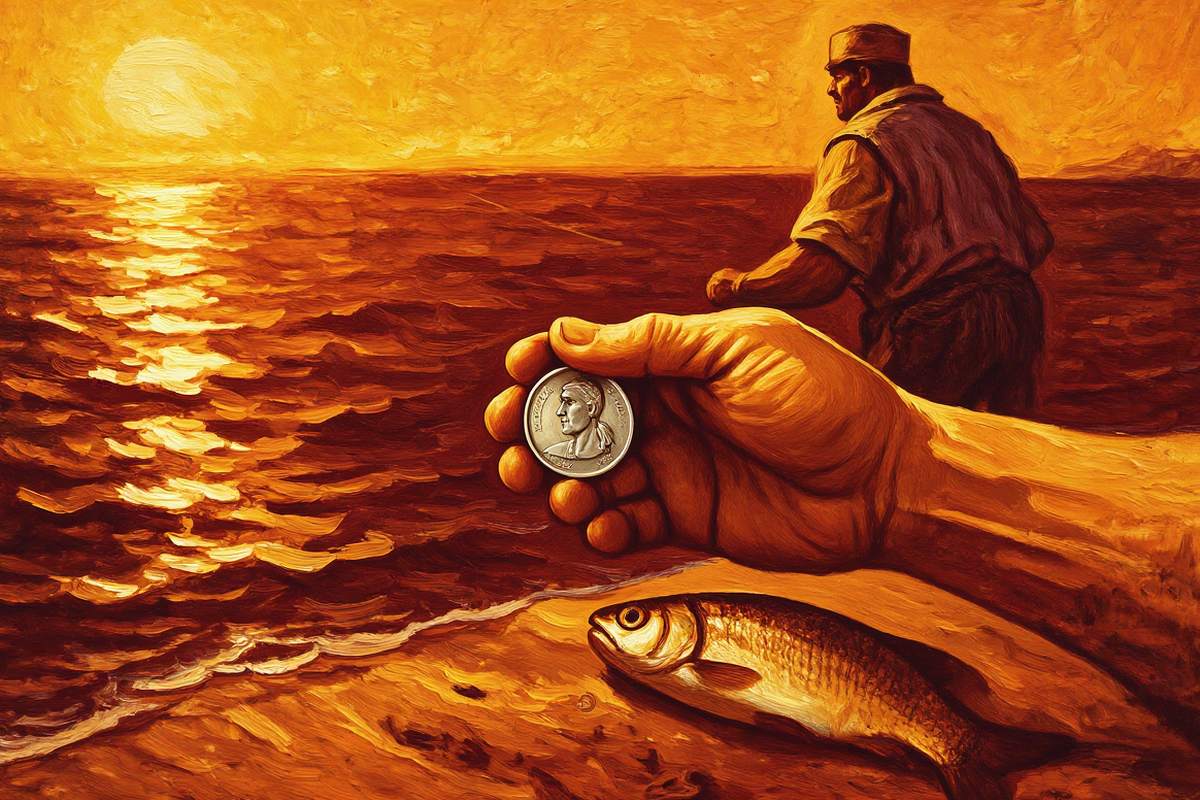
Then there is the temple tax in Matthew 17:24–27. Jesus sent Peter, a net fisherman, to cast a hook and open the mouth of the first fish, where he found the coin to pay for both of them. Jesus drew on the town’s own source of income. His earthly ministry showed abundance, and His supply was never exhausted.
When Did Jesus Become Poor?
If Jesus was not poor during His ministry, when did He become poor? Pastor Hohman’s answer is the cross, because that is the place of the divine exchange. He turns to Deuteronomy 28:47–48, where Moses describes absolute poverty: because Israel did not serve the Lord with joy and gladness of heart for the abundance of everything, they would serve their enemies in hunger, in thirst, in nakedness and in need of everything, with a yoke of iron on their neck.
Along the way he draws a lesson about gifts. A gift grows your relationship with the giver; wages grow your attachment to the money. A boss who pays you for forty hours does not become closer to you, but a stranger who gives you something freely makes you want to know him. That, he says, is the difference between grace and works. A works mentality leaves people closer to their stuff than to God, and they give only a stingy amount.
Jesus fulfilled every part of that curse. He was hungry, having not eaten before He was crucified. He was thirsty, saying “I thirst” on the cross (John 19:28). He was naked, His clothes taken and His robe gambled for. He was in need of everything, even buried in a borrowed grave (Luke 23:50–53).
So do we have to stay in lack, need and want? Pastor Hohman’s answer is no. The Lord is our shepherd and we shall not want. As we obey Him, finances, material things and blessings will come. The divine exchange means His poverty paid for our abundance.
Stories of Provision and Freedom
To show the divine exchange at work, Pastor Hohman shares how he and his wife Pam gave away everything they owned before moving to Merrill: his construction company, equipment, warehouse, cars and money. His own pastor was hesitant at first, then said the Lord was telling him the same thing. They had to ask a neighbor to drive the family of six there in a pickup.
On the way, Don Corey, a store owner he barely knew, insisted on giving him a gift, which turned out to be 400 dollars. A few weeks later a bank in Kingsford, Michigan, called about an account in his name. He had never set foot there and asked for two audits, but the money was his: 900 dollars. Later, a man who had received his equipment retired to Merrill and gave it all back just as the church was building. He is clear that God does not ask everyone to do what he did, but he says it happened again and again.
He recalls two elderly ladies who gave him hand-painted silk ties that had belonged to one of their husbands. He wore them until they wore out, because a gift that means something to the giver draws you closer to the giver. That, he says, is how we grow in intimacy with God, and why Paul wrote that whoever sows bountifully will reap bountifully, for God loves a cheerful giver (2 Corinthians 9:6–8).
After communion he tells of a ministers’ meeting in Angeles City in the Philippines, where a young woman suddenly began speaking and writing Chinese. She and her husband had spent over twenty years unable to learn Chinese and felt like failures. After God gave both of them the language, their pastor was buying them tickets to go to China as missionaries. He also shares the testimony of a woman told she could never carry a child, who later brought her baby son to be blessed.
Living the Divine Exchange This Week
Pastor Hohman sums up God’s plan of justice with Romans 8:31–32: He who did not spare His own Son, but delivered Him up for us all, how shall He not with Him also freely give us all things? Here are steps drawn from the message:
- Receive instead of earning. Stop working to please God and start living to receive what He has already given.
- Practice His presence daily. Spend time thanking God for His love, goodness and peace, especially in hard times.
- Grow in the knowledge of God. Grace and peace multiply as you learn who He really is, so stay in the Word and in church.
- Refuse fear about the world. Its trouble is corruption, not God’s wrath; His covenant of love will not depart from you.
- Give something precious. Bless others with gifts of real value and give cheerfully to every good work.
- Remember at the Lord’s table. Take communion as a remembrance of everything Jesus exchanged for you.
Timestamped Outline
- 0:00 Isaiah 52–54 and the name I AM
- 1:16 Adam had no want: Psalm 23
- 2:23 Perfected forever by one offering
- 4:43 The problem, the cure and the covenant
- 6:55 Rust, corruption and the world system
- 10:09 Grace and peace multiplied: 2 Peter 1
- 14:44 God chose the foolish things
- 15:46 Iniquity and the scapegoat
- 20:10 First exchange: punishment for peace
- 22:31 Second exchange: wounded so we are healed
- 24:38 Third exchange: sin for righteousness
- 31:12 Fourth exchange: death for life
- 33:32 Fifth exchange: 2 Corinthians 8:9
- 35:49 Was Jesus poor on earth?
- 36:51 Mary, the spikenard and Judas
- 40:56 The coin in the fish’s mouth
- 44:14 Absolute poverty: Deuteronomy 28
- 46:25 Gifts versus wages: grace and works
- 48:42 Jesus became poor on the cross
- 49:56 Giving everything away to move to Merrill
- 57:00 The hand-painted ties and 2 Corinthians 9
- 1:00:00 God’s plan of justice: Romans 8:31–32
- 1:05:38 A testimony from the Philippines
- 1:16:16 Closing prayer of blessing
Frequently Asked Questions
If God is never angry with believers, does He still correct us?
Yes. Pastor Hohman says God is loving, caring and good, and He does correct His children, but the way a parent warns a child reaching toward a toaster. He speaks to us and says don’t do that. Some people have heard that voice for years without being crushed by it. The reason to start obeying, he says, is that many more blessings open up when you do.
Is there any work left for a Christian to do?
There is, but it is not work to please God or earn His favor. Pastor Hohman teaches that we were created for good works, and each person has certain works that help them walk out the fulfillment of their life and see the perfection God has already placed in them. The work is for our benefit. If you are down on yourself, he says, start obeying God and you will begin to see what He sees.
Does God want every believer to give away everything they own?
No. Pastor Hohman is clear that giving away all he owned before moving to Merrill was his own walk, something God wanted to bring out of him. He says he is not telling anyone to do the same. He shares the story to encourage people that God will provide all their needs, and that the same provision is available to anyone who follows the path God gives them.
Scripture References
All passages open in the New King James Version on Bible Gateway:
- 2 Corinthians 8:9 — He became poor that you might become rich
- Hebrews 10:14 — perfected forever by one offering
- Philippians 4:19 — God supplies all your need
- Isaiah 53:10–12 — His soul an offering for sin
- Isaiah 54:9–10 — the covenant of peace
- 2 Peter 1:2–4 — grace and peace multiplied
- Deuteronomy 28:47–48 — absolute poverty
- 2 Corinthians 9:6–8 — sowing bountifully
- Romans 8:31–32 — freely given all things
How this summary was made: written with AI assistance from the sermon’s own transcript and checked against the Scriptures listed above.
Watch More Messages
If this message helped you see what Jesus purchased for you, there are hundreds more teachings from NTC Ministries ready to watch. Browse the full sermon archive and keep growing in the knowledge of God.