Faith to faith strength to strength, then glory to glory: in this seventh and final lesson of the series, the pastor brings every earlier teaching together. Faith grows as we give ourselves to God’s Word, strength grows as we keep hearing that Word through hard valleys, and glory comes as we behold the Lord and are changed into His image. He shows that God created a new people for His glory, that repentance clears the fallow ground of the heart, and that Christ in you is the hope of glory.
This message continues from From Faith to Faith, Strength to Strength, Glory to Glory #6 — Tilling Up the Fallow Ground. Below are the video, a summary, the Scripture behind each point (NKJV on Bible Gateway), a timestamped outline and steps for this week.
Sermon at a Glance
This is the seventh lesson in a teaching the pastor has brought for seven weeks, his last message on the subject and the third on breaking up the fallow ground. He promises that everything taught so far will come together, and that faith built on experience with God, not head knowledge, is the foundation of the Christian life. He ends with the parable of the sower, which he calls the foundation of the whole series, and an invitation to receive Jesus Christ.
| Detail | Information |
|---|---|
| Speaker | The pastor (not named in the recording) |
| Series | From Faith to Faith, Strength to Strength, Glory to Glory (#7, final lesson) |
| Main text | Romans 1:16–17, Psalm 84:5–7, 2 Corinthians 3:18 and Mark 4 |
| Key theme | God made us for His glory, and repentance clears the ground for the Word to bear fruit |
| Length | About 71 minutes, ending with a prayer of salvation |
Faith to Faith Strength to Strength: Three Stages of Growth
The first stage is faith to faith, and it begins when we give ourselves over to God’s Word. Romans 1:16–17 says the gospel of Christ is the power of God to salvation, for in it the righteousness of God is revealed from faith to faith, and the just shall live by faith. Believers live by faith, the pastor says, not by head knowledge or by what others told them. Secondhand opinions are like a twist in your glasses; God wants you to experience Him through an intimate relationship, so the lies of doubters and skeptics are destroyed.
The second stage is strength to strength. Psalm 84:5–7 describes those who pass through the Valley of Baca, make it a spring, and go from strength to strength. Being born again does not mean you have arrived; there is a long road, and everyone still has areas to work on. Strength comes to the one who keeps hearing without offense, even when he would rather not.
The pastor explains Baca as the valley of weeping, bitterness, hardship and trial. When a Christian magazine once asked him what faith is, he answered that “faith is just doing what God tells you to do until he shows up.” That is how a valley becomes a well. James 1:2–4 adds that the testing of your faith produces patience, and patience, given its perfect work, leaves you lacking nothing.
The third stage is glory to glory, where we are given over to the power of God. 2 Corinthians 3:18 says we all, with unveiled face, beholding as in a mirror the glory of the Lord, are being transformed into the same image from glory to glory, just as by the Spirit of the Lord.
Created for His Glory: Seeing God’s Face as a New Creation
Some people read that no man can see God’s face and live (Exodus 33:20) and stop there. The pastor says that was true under the old covenant, but not for a new creation. Like little Johnny, who told his teacher that people would see what God looks like in a few minutes, God’s children are given the privilege of seeing Him. And when we see His face, whatever in us keeps us from all He has for us begins to die away.
In Isaiah 43:5–7 God promises to gather sons and daughters from the east, west, north and south, everyone called by His name, whom He created for His glory. The pastor teaches that this is not only about the Jewish people; it points to a new race, the new creation of 2 Corinthians 5:17, where old things pass away and all things become new.
Without the new birth, a veil lies over the heart, which is why Jesus told Nicodemus that unless one is born again he cannot see the kingdom of God (John 3:3). Revelation, the pastor says, means the coverings taken away, and it comes through being humbled and brought to repentance.
God said in Isaiah 42:8 that He will not give His glory to another, yet that was under a cursed, corrupt system. In John 17:4–5 Jesus asks to be glorified with the glory He had before the world was. He became poor so we might become rich: He left glory and walked this earth as a man to redeem us and bring us from glory to glory.
Then comes the key passage. In John 17:20–23 Jesus prays not only for the disciples but for all who will believe through their word. He gives them the glory the Father gave Him, so that they may be made perfect in one and the world may know that the Father sent Him. The pastor’s point is that this happens here and now, because the world will not see us in heaven.
The word glory, doxa, he explains, is the weight of God: His presence, holiness and love, a tangible presence you can feel. God wants it on your life all the time, not only on Sunday. He had the church say it aloud: “God made me for his glory.”

From the Ash Heap to the Throne: Breaking Up the Fallow Ground
1 Samuel 2:8 says the Lord lifts the beggar from the ash heap to set them among princes and make them inherit the throne of glory. To anyone with no peace, no joy and no sleep, the pastor says: you need Jesus. He lifts you out of the ash heap so you can walk toward one goal, the throne of glory.
Then he turns to Jeremiah 4:1–4, where the Lord tells Judah and Jerusalem to break up their fallow ground and not sow among thorns. Fallow ground is idle ground that has not been tilled, hard and overgrown. Farmers know that rocks seem to rise out of the same field every year, he says, and the heart works the same way: bad things surface because God wants them removed so good things can grow.
He adds the picture of a rusty truck: nobody wakes up to find the rust hole gone; it only gets worse until someone works on it. No self-help book can fix our corruption, but the King of kings redeems your life from destruction and crowns you with lovingkindness and tender mercies (Psalm 103:4). Jesus is the somebody who changes it.
Clearing the fallow ground is where repentance comes in. The pastor explains the word for repent as a compound: one part means to walk differently and the other to think or look at things differently. Thinking differently alone is not enough; repentance means knowing the truth and then walking in it, as followers of Jesus.
He gives a candid example. The church needed a leader, and a candidate seemed proven. The night before, the Lord told him not to do it, but he had already announced it and went ahead, and it went badly. He asked the leadership and above all God to forgive him. His lesson: “never become loyal to a wrong decision.” Breaking up the fallow ground means finding the rocks, thistles and thorns and getting rid of them.
Purified by Obeying the Truth
1 John 3:1–3 says we are children of God now, and when He is revealed we shall be like Him, for we shall see Him as He is. Everyone who has this hope purifies himself, just as He is pure. That, the pastor says, is the reason behind every instruction: an encounter with Him that makes our weaknesses fall away.
Purification comes through obedience, and only you can choose it. 1 Peter 1:22–23 says you purified your souls in obeying the truth through the Spirit, born again of incorruptible seed. Obedience often looks small: the Spirit may prompt you to bake a pie for a neighbor or pay for the groceries of the person ahead of you. It may seem foolish, but something in you is being dealt with.
The devil, he warns, thrives on ignorance and disobedience, and from 1 John 2:15–17 he warns that love of the world squeezes out love of the Father.
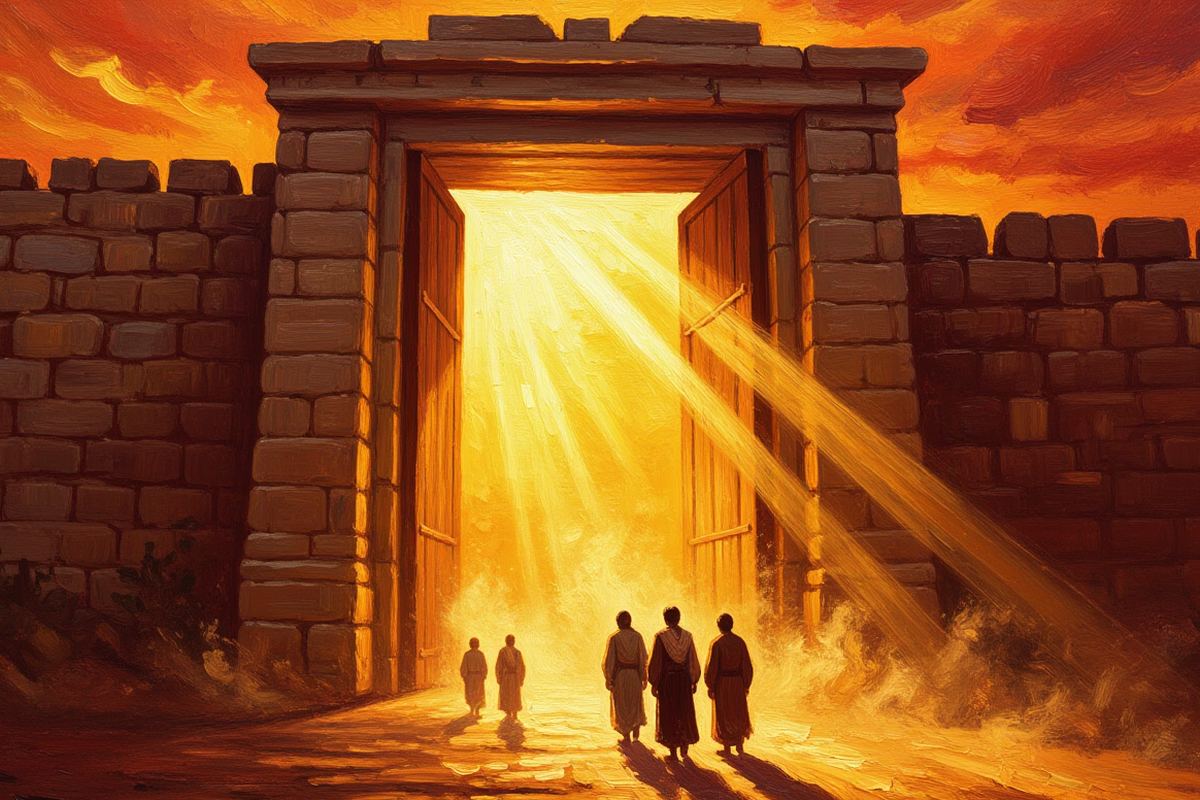
He then opens Psalm 24:7–10. In the ancient city, he explains, the gate was the place where legal documents were made and decisions settled, and the head always speaks of authority. To lift up your heads, O you gates, is to lift your authority to the place of right decisions so the King of glory can come in. He is the Lord of hosts, Jehovah Sabaoth, the commander-in-chief, who knows the outcome, and the outcome is glory.
Christ in You, the Hope of Glory: The Mystery Revealed
In Colossians 1:25–28, Paul tells the Gentile church at Colossae that he was commissioned to present the Word of God in its fullness: the mystery hidden for ages and generations but now disclosed to the saints. That mystery is Christ in you, the hope of glory, and Paul’s aim is to present everyone perfect in Christ. The pastor ties this back to Isaiah 43 and to Jesus’ prayer that believers be made perfect in one.
The word mystery, he explains, does not mean something you cannot know; it means something you can know once you are initiated, which is why no one sees the kingdom unless born again. If you confess with your mouth the Lord Jesus and believe in your heart that God raised Him from the dead, you will be saved (Romans 10:9). The kingdom, he adds, is not a fraternal order but an eternal order.
The words the pastor defines along the way unlock the whole faith to faith strength to strength teaching. The table gathers them as he gives them.
| Word | Meaning as taught | Why it matters |
|---|---|---|
| Baca | The valley of weeping, bitterness and trial | Faith turns the valley into a well |
| Glory (doxa) | The weight of God, His tangible presence | God made us to carry His presence daily |
| Repent | Walk differently and think differently | Changed thinking must lead to changed action |
| Head | Authority | Lift your authority to God’s gate of right decisions |
| Sabaoth | The general, the commander-in-chief | The King of glory knows the outcome |
| Mystery (mysterion) | Knowable once initiated | Born-again believers can see kingdom truth |
| Parable (parabole) | Cast down alongside a truth | A window that gives outsiders a glimpse |
| Adam (adama) | Earth, dirt | Whatever is sown in us is what grows |
The Christian mystery is given in secret to your heart, but not kept in obscurity. What Jesus tells you in the dark, you speak in the light, and what you hear in the ear, you preach on the housetops (Matthew 10:27). By contrast, the religious leaders of Jesus’ day held the Word to themselves and made their phylacteries broad to be seen by men (Matthew 23:4–5).
We are God’s fellow workers, God’s field and God’s building (1 Corinthians 3:9). Adam was made of dirt, and whatever is sown in dirt is what comes up. Evil company corrupts good habits (1 Corinthians 15:33), but people who share testimonies and praise lift those around them. Keep unbelieving friends to share the truth with, he says, but not as your closest companions.
The Parable of the Sower: Why It Comes First
The pastor calls Mark 4:1–20 the foundation of everything he has taught for seven weeks. Jesus said that if you do not understand this parable, you will not understand any parable. A parable, he explains, is a story cast down alongside a spiritual truth, a window that gives an outsider a glimpse, just as a doorkeeper in the house of God (Psalm 84:10) gets a glimpse inside.
The sower sows the Word, broadcasting it by hand, which the religious leaders had stopped doing. Read your Bible every day, he urges; it is not meant to collect dust on a shelf. The wayside is the hard path where Satan comes immediately to take the Word, because the Word is what would change you.
Stony ground receives the Word with gladness but has no root, so when tribulation or persecution comes for the Word’s sake, people fall away. Thorny ground is choked by the cares of this world, the deceitfulness of riches and the desires for other things. Here the pastor warns against keeping up with the Joneses, and against treating every increase as only for yourself.
He tells the story of J. C. Penney, the son of a Baptist pastor, who committed to tithe and kept increasing, eventually deciding to live on a tenth and give God ninety percent. About seven years after starting his own store, the pastor says, he had 30 stores and was a millionaire, yet he knew it was not for himself.
God wants you blessed, the pastor says, but not to keep it to yourself. Good ground hears the Word, accepts it and bears fruit thirty-, sixty- and a hundredfold. In John 14:30 Jesus said the ruler of this world had nothing in Him. That is the goal of clearing the fallow ground: nothing in us for the enemy to grip, and room to go from glory to glory here on earth.
Living Faith to Faith Strength to Strength This Week
The pastor closes by inviting everyone to repent of whatever keeps them from God’s best, and leads a prayer for those receiving Jesus Christ. Now is the day of salvation (2 Corinthians 6:2). Here are practical steps drawn from the message:
- Read the Word every day. You do not have to read it all at once, but let faith to faith grow from your own experience with God, not secondhand opinions.
- Stay in the valley until it becomes a well. Keep doing what God told you until He shows up, and let patience have its perfect work.
- Find the rocks. If His voice seems faint, ask what He told you to do that you have not done, then repent and reverse it.
- Obey the small promptings. Bake the pie or pay for the groceries; obeying the truth is how the soul is purified.
- Watch your company. Spend time with people who share testimonies and praise, while staying a friend to those who need the truth.
- Be seed-minded, not need-minded. If your sowing is not producing, look for the thorns of worry and riches that are choking the Word.
As he puts it, “we’re to become seed-minded not need minded.” The Word sown in good ground, kept through valleys and cleared of thorns, is how a believer moves from faith to faith strength to strength and on from glory to glory.
Timestamped Outline
- 0:00 Lesson seven: bringing it all together, Romans 1:16–17
- 5:43 What faith is, and James 1 on patience
- 6:45 Glory to glory: 2 Corinthians 3:18
- 8:41 Created for His glory: Isaiah 43
- 12:54 Jesus’ prayer in John 17
- 15:58 Doxa: the weight of God’s glory
- 17:02 From the ash heap to the throne: 1 Samuel 2:8
- 18:09 Break up your fallow ground: Jeremiah 4
- 23:24 What the word repent means
- 27:48 We shall be like Him: 1 John 3
- 31:01 Purified by obeying the truth: 1 Peter 1
- 34:41 Lift up your heads, O you gates: Psalm 24
- 37:24 Christ in you, the hope of glory: Colossians 1
- 40:02 What mystery and perfect mean
- 49:53 Phylacteries and Matthew 23
- 54:59 Seed-minded, not need-minded: Mark 4
- 1:02:47 Thorns and the deceitfulness of riches
- 1:09:07 Repentance and the prayer of salvation
From Faith to Faith Series
This is the closing message of the series at NTC Ministries. Start from the beginning or go back one message:
- First message: From Faith to Faith, Strength to Strength, Glory to Glory: Becoming Worshipers
- Previous: From Faith to Faith, Strength to Strength, Glory to Glory #6 — Tilling Up the Fallow Ground
- You are here: From Faith to Faith, Strength to Strength, Glory to Glory #7 — Created for His Glory
Frequently Asked Questions
Why don’t I hear God’s voice clearly right now?
The pastor suggests going back to the last thing God asked of you. If you have not done what He told you, or have not stopped what He told you to stop, why would He give new direction? Search your heart for rocks, thistles and thorns, ask God to forgive you and, where He directs, ask another person too. Clearing that fallow ground lets His voice become clear, crisp and strong again.
Does repentance only mean feeling sorry?
No. In this message, repentance has two sides: thinking differently and walking differently. Many people change their opinion while their behavior stays the same, like the driver who knew he should avoid a back road and got stuck anyway. Real repentance means knowing the truth and then applying yourself to it, which is why believers are called followers and disciples of Jesus.
Is prosperity the goal of this teaching?
The pastor says God wants His people blessed and prosperous, but never so they can keep it to themselves. In the parable of the sower, riches become thorns when increase turns into “for you, for you, for you.” His example of J. C. Penney is someone who gave more as he grew, and he says he and his wife taught their children that putting God first works. The aim is serving God first with whatever He gives.
Scripture References
All passages open in the New King James Version on Bible Gateway:
- Romans 1:16–17 — from faith to faith
- Psalm 84:5–7 — from strength to strength through the Valley of Baca
- 2 Corinthians 3:18 — from glory to glory
- Isaiah 43:5–7 — created for His glory
- John 17:20–23 — the glory given to believers
- 1 Samuel 2:8 — from the ash heap to the throne of glory
- Jeremiah 4:1–4 — break up your fallow ground
- 1 John 3:1–3 — we shall be like Him
- Colossians 1:25–28 — Christ in you, the hope of glory
- Mark 4:1–20 — the parable of the sower
How this summary was made: written with AI assistance from the sermon’s own transcript and checked against the Scriptures listed above.
Watch More Messages
If this message helped you break up the fallow ground of your heart, there are hundreds more teachings from NTC Ministries waiting for you. Browse the full sermon archive and keep growing from faith to faith.