Matters of the heart decide the course of a life. In this opening message of the series, the pastor teaches that every person has two hearts, a natural one that pumps blood and a spiritual heart that is either dead or alive to God, and that what grows in our lives is the harvest of what we allow to be sown into that spiritual heart. Nothing outside us, he says, is the real source of our problems.
He builds the message on the principle of the seed, from creation to the kingdom of God, and shows how God gives a new heart and then calls us to guard it and make it bigger. Below are the full video, a structured summary, the Scriptures linked to the New King James Version on Bible Gateway, a timestamped outline and practical steps.
Sermon at a Glance
This message was preached at NTC Ministries in Merrill, Wisconsin, and posted on October 21, 2021. It runs about 71 minutes and closes with an invitation to receive Jesus and with communion. The pastor explains that the church has just finished a series on change, and that people are built to change; in fact, believers are the only ones who can become brand new creations.
He opens in prayer that the blessings of the kingdom would come to pass in the church’s life, because he does not want to reach heaven and see everything he missed. This first message lays the groundwork for every other matters of the heart teaching: the spiritual heart is a garden.
| Detail | Information |
|---|---|
| Speaker | The pastor of NTC Ministries (not named in the recording) |
| Series | Matters of the Heart, part 1 |
| Main text | Proverbs 4:20–27 and 2 Timothy 3:1–5 |
| Key theme | Your spiritual heart produces whatever is sown into it, so guard it and let God enlarge it |
| Length | About 71 minutes, ending in communion |
Every Problem Is a Heart Problem
The first Scripture is 2 Timothy 3:1–5, which warns that in the last days perilous times will come. Difficult times are nothing new in history, the pastor says, but this passage is unusual. He explains that the word translated difficult or perilous can also carry the sense of insane, destructive and raging times.
He points to Jesus’ warning about distress and perplexity among the nations (Luke 21:25), and says perplexity describes a situation with no way out. Yet Paul does not blame those last-day troubles on earthquakes, storms or volcanoes. He lists people who love themselves and money, who are proud, unthankful, unforgiving, without self-control and lovers of pleasure rather than lovers of God, who have a form of godliness but deny its power.
The pastor’s key observation is that none of these is a natural disaster. Every one is a problem in a person’s own spiritual heart. Nobody made them that way; they are eating the fruit of what they allowed to be sown. People blame the job for being short with their spouse, or money trouble for being harsh with the children, but he says it is the heart, and the fruit of what was sown there is coming up.
Paul’s counsel is to turn away from such people, and the pastor explains why: it is contagious. He says God made man from the soil; the Hebrew word for ground is adamah, and our race is called Adam. We are a garden with the potential to produce incredible things or terrible things, which is why we are told that God is not mocked and whatever a man sows, he will reap (Galatians 6:7).
Two Hearts in Every Person
When Adam sinned, the pastor says, God held up a packet of seeds and showed him the harvest coming. In Genesis 2:17 the warning was that in dying he would die. Adam died first in his heart and, more than nine hundred years later, physically.
That is why everyone has two hearts: a natural, pumping heart and a spiritual heart. Every person is born with a spiritual heart that is dead to God. This, he says, is why religion is so deceptive. People do religious things, know Scriptures and know stories about Jesus, but their heart is not one with God, and loneliness grips them. Believers, by contrast, have a constant companion who walks with them, leads them and comforts them.
Most people ignore the heart until there is a problem; churches were packed after 9/11 and empty six months later, because people wanted something from God without giving Him their heart. To show how hard the natural heart works, he gives figures from his notes: about 75 beats a minute, two and a half billion beats in a 70-year life, and enough work in an hour to lift a 150-pound man to the top of a three-story building.
Doctors worry when the natural heart skips a beat. Yet even Christians with a new heart often do not understand why they should protect their spiritual heart. He teaches that matters of the heart affect every area of life: health, relationships, finances, emotions and mental state, today and in the years ahead.
When Adam’s heart died, he hid from God in fear. The pastor stresses that the fear of God means reverence and respect, not terror. God is not holding a club over you. When Peter was questioned about the temple tax, Jesus did not scold him; He sent him fishing and provided the coin from the fish’s mouth (Matthew 17:24–27).
The spiritual heart is the hidden person of the heart (1 Peter 3:4), the real you inside the “suitcase” of the body. It is the seat of our innermost feelings and the place where God communes with us or where we refuse Him. All God asks, he says, is that we give Him our heart, and keep giving it, rather than showing everyone how hurt it is.
The Principle of the Seed
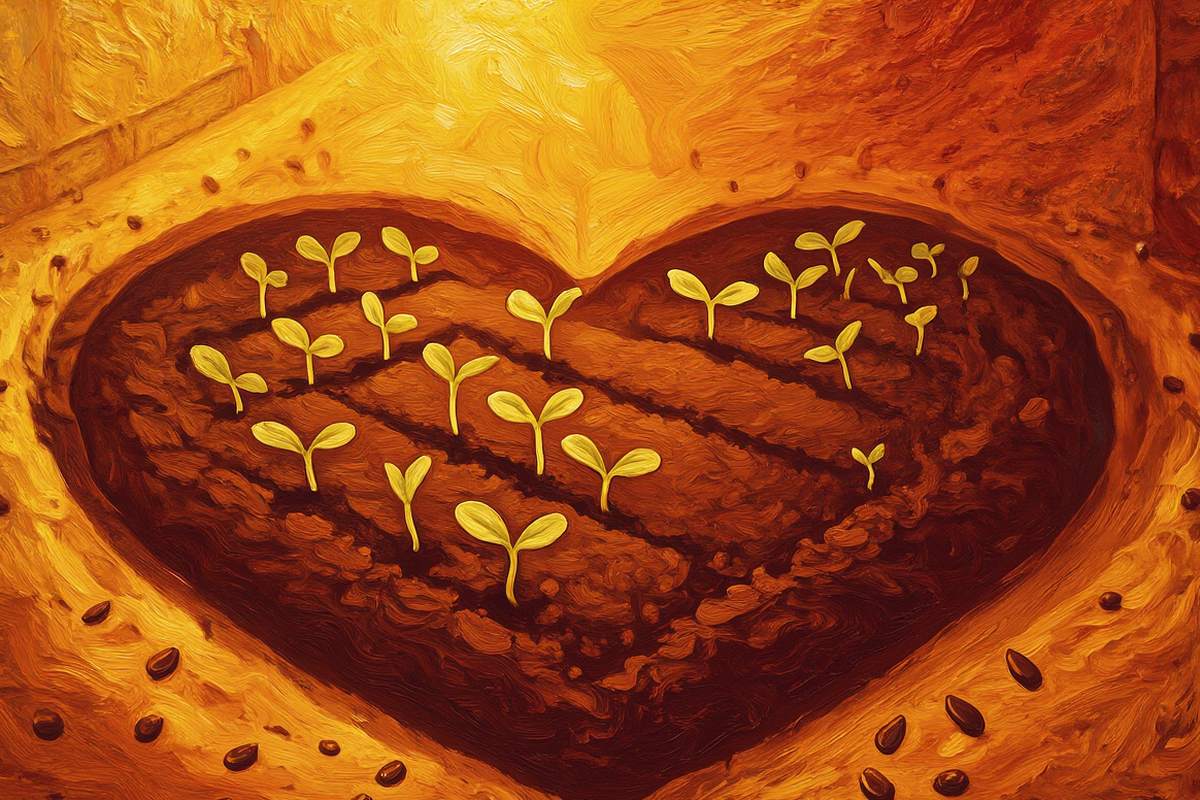
“Everything concerning our heart and our life is about seeds,” the pastor says. Whether weeds or carrots and corn come up, it is because of the seeds that were there. He lays out three points, summarized in the table below together with the passages he uses.
| Point | What he teaches | Scripture |
|---|---|---|
| 1. Creation began with a seed | Every plant yields seed after its kind, with the seed in itself | Genesis 1:11–12 |
| 2. The world runs on seed | Seedtime and harvest will not cease while the earth remains | Genesis 8:22 |
| 3. The kingdom works by seed | A man scatters seed, sleeps and rises, and the seed grows by itself | Mark 4:26–29 |
In Genesis 1:11–12, God commands the earth to bring forth plants yielding seed after their kind. An apple seed, he says, is really a tree, an orchard, thousands of apples, jobs and an economy. Everything we do is a seed, and through faith and patience we inherit the promises (Hebrews 6:12).
Seedtime and harvest are not only for farmers (Genesis 8:22); you are a garden, and the cycle will not stop. In Mark 4:26–29, Jesus compares the kingdom of God to seed cast into the ground. The pastor’s summary is simple: the seed determines what will be produced, and the ground determines how much. Tilled, watered, weeded soil gives a glory crop; neglected soil gives little.
God wants a harvest, not just for us, but so that we can abound to every good work (2 Corinthians 9:8). God did not curse Adam, and after the flood He spoke the same blessing to Noah, “be fruitful and multiply” (Genesis 9:1), and nobody can curse whom God has blessed. When hearts become callous toward God and at home with the world, they simply produce less.
A New Heart From God
We came into the world with a heart that was dead to God. In Ezekiel 36:24–27, God promises to give His people a new heart and a new spirit, take away the heart of stone and give a heart of flesh. The pastor describes it as a malleable heart, one God can work with. God also promises to put His Spirit within us and cause us to walk in His statutes.
That change does not come through great effort but through continually sowing good seed into the new heart. He warns about people who pray a prayer so they can go to heaven one day but want to keep living for the world; that does not change a life. In Christ we become a new creation (2 Corinthians 5:17), not a refurbished old car but something that never existed before. Behold means look, so we keep our eyes on the new things God is doing.
How does the new heart come? Still by seed. 1 Peter 1:22–23 says we are born again not of corruptible seed but incorruptible, through the word of God. The pastor once hosted a program on secular radio called The Sower, because the sower sows the word. When the word is sown in a heart, it brings up eternal life.
Believers who already have a new heart should keep reading the Bible, because the word produces the goodness, inheritance and future God has planned, the thoughts of peace that give a future and a hope (Jeremiah 29:11). Being born again, he says, is not about our great decision; it is the seed sown in our heart coming up as fruit, and we respond to it.
Guarding the Matters of the Heart
Matters of the heart do not end at salvation. A potted plant can become root bound and has to be moved into a bigger pot to keep growing. The same is true of the heart, the pastor says. After we receive a new heart, we are supposed to make it bigger, and we do that by loving the unlovely and forgiving those who offended us rather than bringing it up again.
He illustrates with the story of Henry Bashara, a 30-year-old man who, according to the account he reads, had surgery at Ohio State University on February 24, 1948. Twenty years earlier a friend’s .22 rifle had discharged by accident, and the bullet lodged in his heart. Doctors left it, and he lived normally until he could barely breathe or play with his children. Surgeons found a lime deposit had formed around the heart and restricted it. When they removed the shell, the heart expanded and began beating fully.
The parable is plain. When we let circumstances and offenses harden around our heart, they restrict our whole life. The way to break that shell off the spiritual heart is to forgive out loud and humble ourselves. It may hurt and you may have to swallow hard, but it opens the way to a bigger heart for people, for success and for growth.
The core passage is Proverbs 4:20–27: “Keep your heart with all diligence, for out of it spring the issues of life.” He explains that keep means to guard, protect and maintain. Guarding your heart is not selfish. Without it you quit, back away, stop blessing people and start speaking corrupt words, which Ephesians 4:29 forbids.
Verses 25 and 26 tell us to let our eyes look straight ahead and ponder the path of our own feet. After His resurrection, Jesus asked Peter three times, “Do you love Me?” and told him to feed His sheep. When Peter pointed at John and asked what about this man, Jesus told him to follow Him and not worry about John (John 21:15–22).
The pastor reads Proverbs 4:23 from the Jewish Bible as saying, guard your heart, for it is the source of your life’s consequences. A right heart does not guarantee you will avoid problems. It decides whether the outcome after them is promotion and increase or bitterness, fear and loss.

Growing a Bigger Heart
The strength of any relationship, the pastor reminds the church, is set by the person who wants it least. With God, it was never God who hid. It was Adam who hid, and God who called, “Where are you?” Adam was afraid because he allowed weakness to be sown into him.
In Psalm 119:31–32, the psalmist clings to God’s testimonies and says he will run the course of His commandments, for God shall enlarge his heart. That is why testimonies matter, he says: surround yourself with people who talk about the good things God is doing, not with the scoffers of 2 Timothy 3. It is not by might or power but by the Spirit (Zechariah 4:6).
The cheetah can run 70 miles an hour, but its heart is small for its body, so if it does not catch its prey in about a minute, it has to quit. Some Christians start in a flurry, then quit and lick their wounds when trouble comes. The pastor describes this as falling back into an animal life instead of a kingdom life. The answer to these matters of the heart is to pray, “Lord, help me to build a bigger heart.”
When he first moved to Merrill, he says, the Lord brought to mind a short poem: “They drew a circle that shut me out,” but “love and I had the wit to win: we drew a circle and took them in.” He took it as his life’s motto: keep walking in love and keep drawing circles that take people in.
So we do not lose heart (2 Corinthians 4:16–18). The outward man perishes, but the inward man is renewed day by day, and we look at the things not seen, which are eternal. “I don’t have to, I get to,” he says. He quotes Giuseppe Garibaldi, who offered recruits only hunger and battle and called those who love their country “with his heart and not with his lips only” to follow him.
That sounds like Jesus, who said of some, “These people draw near to Me with their mouth, and honor Me with their lips, but their heart is far from Me” (Matthew 15:8–9). Going to church does not make you a Christian any more than going into a garage makes you a car. God wants the spiritual heart, and He calls us to take up our cross and follow Him (Luke 9:23).
Living It Out This Week
The pastor closes with an invitation based on Romans 10:9, explaining that the Greek word for saved, sozo, includes being healed, delivered and blessed, and then leads communion from 1 Corinthians 11:23–25 and Isaiah 53:5. These practical steps come straight from the message:
- Trace the fruit to the seed. When something ugly comes out of you, stop blaming the job or the bills and ask what was sown in your heart.
- Sow the word daily. Read your Bible even after you are born again, because the word is the seed that produces what God has planned.
- Forgive out loud. Say, “I forgive them,” before a shell of offense hardens around your heart.
- Keep your eyes on your own path. When you are tempted to ask “What about them?”, ponder the path of your own feet instead.
- Choose your company. Spend time with people who share testimonies of what God is doing, not with scoffers.
- Ask for a bigger heart. In every conflict, pray, “Lord, help me to build a bigger heart,” and keep drawing circles that take people in.
Timestamped Outline
- 0:00 A new series: Matters of the Heart
- 1:06 2 Timothy 3: difficult times in the last days
- 5:27 We are a garden made from the soil
- 7:51 Every problem is a problem of the heart
- 9:52 Two hearts in every person
- 12:30 How hard the natural heart works
- 17:47 Adam hid in fear; God is not a beast
- 18:54 The temple tax and the hidden man of the heart
- 22:14 The heart is the seat of our existence
- 24:21 Genesis 1: everything begins with a seed
- 26:30 Genesis 8:22: seedtime and harvest
- 27:33 Mark 4: the kingdom works by seed
- 30:41 Ezekiel 36: a new heart and a new spirit
- 32:56 A new creation in Christ
- 34:03 1 Peter 1: born of incorruptible seed
- 37:12 Henry Bashara’s heart surgery
- 40:30 Proverbs 4: keep your heart with all diligence
- 44:03 Peter, John and “What about this man?”
- 47:36 A right heart and life’s outcomes
- 51:28 Psalm 119: You shall enlarge my heart
- 53:33 The cheetah’s small heart
- 55:54 Drawing circles that take people in
- 57:57 Garibaldi and Matthew 15
- 1:00:22 Communion and the invitation
Matters of the Heart Series
This is the first message in an eight-part series at NTC Ministries. Continue with the next teaching:
- You are here: Matters of the Heart #1: Guarding the Spiritual Heart and the Principle of the Seed
- Next: Matters of the Heart #2: Trusting God With Your Heart
Frequently Asked Questions
Does guarding my heart mean avoiding people who hurt me?
Not in the way it is often understood. The pastor does say to stay away from the scoffing, unloving attitudes listed in 2 Timothy 3, because they are contagious. But he also teaches that we enlarge our heart by loving the unlovely and forgiving those who offended us. Guarding the heart means watching what is sown into it, choosing what you dwell on, and refusing to let offense harden around it.
What does it mean that the Bible says to fear God?
The pastor explains that fearing God means reverence and respect, not being afraid of Him. Adam hid in fear only after his heart died through sin. God is not waiting with a club to punish every mistake; He is there to hold, help and care for His children. He points to how gently Jesus corrected Peter over the temple tax as a picture of the Father’s heart.
Why does the message end with communion?
Communion acknowledges a commitment of our lives to Jesus. The pastor explains that when Jesus broke the bread and shared the cup, He was saying He was fully committed to His disciples, giving His body and blood for them. Taking communion after a message about giving God your heart is a way of receiving all that He purchased, including healing, while committing your own heart back to Him.
Scripture References
All passages open in the New King James Version on Bible Gateway:
- Proverbs 4:20–27 — keep your heart with all diligence
- 2 Timothy 3:1–5 — perilous times in the last days
- Genesis 8:22 — seedtime and harvest
- Mark 4:26–29 — the kingdom grows like seed
- Ezekiel 36:24–27 — a new heart and a new spirit
- 1 Peter 1:22–23 — born of incorruptible seed
- Psalm 119:31–32 — You shall enlarge my heart
- 2 Corinthians 4:16–18 — we do not lose heart
- Matthew 15:8–9 — their heart is far from Me
How this summary was made: written with AI assistance from the sermon’s own transcript and checked against the Scriptures listed above.
Watch More Messages
If this teaching on matters of the heart helped you, there are hundreds more teachings from NTC Ministries waiting for you. Browse the full sermon archive and keep sowing good seed into your life.