The blood covenant does more than cover sin; it removes it. In this message the pastor teaches that the real problem of humanity is bad blood inherited from Adam, and that the pure, living blood of Jesus answers it completely, bringing forgiveness, healing and a new quality of life. He then walks through the seven times Jesus shed His blood, from Gethsemane to the spear in His side, and shows what each one purchased for believers.
This sermon continues from The Blood Covenant: The Full Penalty Jesus Paid for Sin. Below you will find the full video, a structured summary, every Scripture he uses (linked to the New King James Version on Bible Gateway), a table of the seven sheddings of blood, a timestamped outline and practical steps for this week.
Sermon at a Glance
This message was posted on March 9, 2021, as part of the long Blood Covenant teaching series at NTC Ministries. It runs about 73 minutes. The first half explains why the blood of Jesus is the dividing line of the Christian faith and what it means to live from revelation of that blood. The second half is a careful walk through the seven ways Jesus shed His blood.
The message closes with words of healing over the congregation, communion from 1 Corinthians 11, and an invitation to receive Jesus and, in the pastor’s words, exchange your blood for His.
| Detail | Information |
|---|---|
| Speaker | The pastor (not named in the recording) |
| Series | The Blood Covenant, Part 10 |
| Main text | Ezekiel 16:1–6 and the Passion accounts |
| Key theme | The seven-fold shedding of blood that removes sin and brings divine life |
| Length | About 73 minutes, ending in communion |
The Blood Covenant Removes Sin, Not Just Covers It
The pastor opens by contrasting the two covenants. In the Old Testament the blood of bulls, goats and sheep atoned for, or covered, sin. The sin kept piling up; it was not taken away, yet God could still come and be in the midst of His people. The blood of Jesus came to remove all sin and take it away.
Jesus did not only take our sin. He also took all the penalty for sin, which is the wrath of God, for all sins past, present and to come. And He did it voluntarily. The pastor points out that nobody else ever volunteered to come to the earth. Jesus is the only one who came by choice, to live in this cursed system and to redeem all of creation from it, and that includes you.
He then names the core problem: humanity has bad blood. It shows up in violence, arrogance, stealing, killing and deceiving, and it shows up in sickness and disease. Nobody chose it; it came through Adam and has polluted the human race for thousands of years. Jesus answered it with a different kind of blood. It was living blood, pure blood, holy blood, the blood of God, and it brings both spiritual wholeness and the ability for physical wholeness.
Miracle Healing, Divine Health and Divine Life
The pastor says he was ordained under the apostolic congress ministry of John G. Lake. He reports that Lake saw over 250,000 healings in Spokane, Washington, in a three-year period, and tells how Lake went into Africa during the bubonic plague, scooped the foam from a victim’s mouth onto his hand, and the plague under the microscope died after touching it.
From Lake’s writings he presents three arenas of healing. These are stages of growth, not a ladder of condemnation, and he compares them to his own children, who did not get the car keys on their first birthday.
| Stage | What it means as taught | Where it points |
|---|---|---|
| Miracle healing | You get sick and God heals you by His power | Receiving from God |
| Divine health | By revelation you simply do not get sick anymore | Walking in what God gave |
| Divine life | You give healing away freely to other people | Freely you have received, freely give |
Divine life is where Jesus’ words come true: the works He did, we will do too, and greater works, because He went to the Father (John 14:12; Matthew 10:8). When Jesus brought His blood into heaven and cleansed the heavenly tabernacle, it became possible for divine life to grow in us until we see miracle after miracle.
That growth takes desire. We cannot condemn ourselves if we are not perfect at it; we keep plugging away. Hebrews 11:6 says God is a rewarder of those who diligently seek Him, and the pastor believes the reward is not mainly money. It is revelation and intimacy with Him: revelation of righteousness, holiness, purity, healing and provision.
“In Your Blood, Live”: Ezekiel 16 and the People Around You
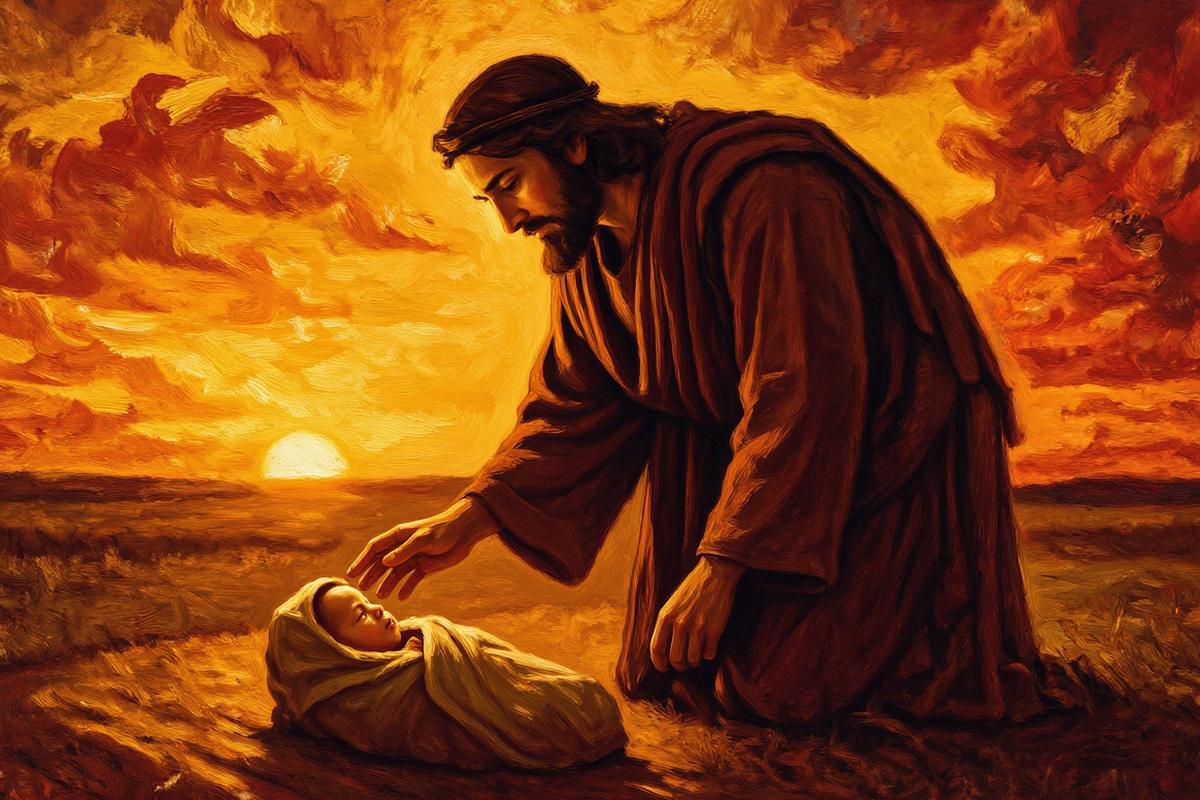
The pastor turns to a passage he says is rarely preached, Ezekiel 16:1–6. God describes Jerusalem as a baby thrown into an open field on the day of its birth, cord uncut, unwashed, unwanted. Then He says, “When I passed by you and saw you struggling in your own blood, I said to you in your blood, ‘Live!'”
That is a picture of Israel, God’s chosen people living in the corruption of their own blood, and its fulfillment is the church. Jesus shed His blood and said live. The thief comes to steal, kill and destroy, but He came to give life more abundantly (John 10:10). Eternal life is not only a quantity of life that lasts forever; it is a quality of life. Too many people get saved and only think about going to heaven one day.
The pastor then applies Ezekiel 16 to daily life. The hurting people you work with are “not bad people they’re just in their blood.” Addicts, cheaters and people who curse all day are wonderful people living in corrupt blood. As we pass by them, we are to see them, declare that they live, and bring them life. He tells of Smith Wigglesworth stepping into a German railway car full of priests and nuns who fell to the floor under conviction and were all born again.
Believers can do this because they are the righteousness of God, not as good as God but as right as God, as a gift. Romans 5:17 says those who receive abundance of grace and the gift of righteousness will reign in life. And 1 Peter 2:24 puts forgiveness and healing in the same verse: He bore our sins in His own body on the tree, and by His stripes we were healed. To shun the blood, he says, is to shun our Christian inheritance.
Revelation Instead of Tradition
The pastor admits he still faces issues from time to time and deals with them by faith, declaring the Word over his life, because no word of God returns void. But without taking hold of the blood of Jesus, believers wrestle even with the Word. That is why 1 Peter 3:15 tells us to always be ready to give a reason for the hope that is in us, with gentleness and respect.
Too often, he says, Christians only tell people what treatment they received or where to go for help in this world, instead of sharing what Jesus did for them. Without revelation of the blood, we may have head knowledge but we will not pass it on. He leads the church in a short prayer asking God to bring revelation of the blood of Jesus and of the blood covenant.
Tradition is what weakens that witness. Jesus said that tradition makes the word of God of no effect (Mark 7:13). The pastor illustrates with a young bride who cut both ends off a ham before roasting it because her mother always did. Her mother learned it from grandma, and grandma explained that her roaster was simply too small. The tradition did not make a better meal. Neither do ours; what we need is a meal of the living Word.
Before the main teaching he explains why seven matters. He calls it the numerical equivalent of perfection: seven days of creation, seven churches, seven seals, seven thunders and seven last plagues in Revelation, and seven miracles Jesus did on the Sabbath. Those seven were the withered hand, the unclean spirit at Capernaum, Peter’s mother-in-law, the woman bound for 18 years, the man with dropsy, the man at Bethesda and the man born blind at Siloam. Our path of faith, he says, is a place of rest, and we labor to enter that rest (Hebrews 4:11).
The Seven-Fold Shedding of Blood
The heart of this blood covenant message is the seven sprinklings, the seven ways Jesus shed His blood for us. The pastor stresses that seven is perfection both spiritually and physically, and that every part of Christ’s body was covered in blood so that every part of our life could be covered. The table follows his order and the passages he reads.
| Shedding of blood | What happened, as taught | Scripture he uses |
|---|---|---|
| 1. Sweat like blood | In Gethsemane, agonizing over the cup of wrath, His sweat became like drops of blood | Luke 22:44 |
| 2. Beaten with rods | Struck in the face before the high priest, with a rod or staff | Matthew 26:67; Micah 5:1 |
| 3. Scourged | A Roman scourge with metal and bone; from W. E. Vine’s description he counts 117 lacerations | Matthew 27:26; Psalm 103:2–3 |
| 4. Beard plucked out | He gave His back and cheeks and did not resist | Isaiah 50:6 |
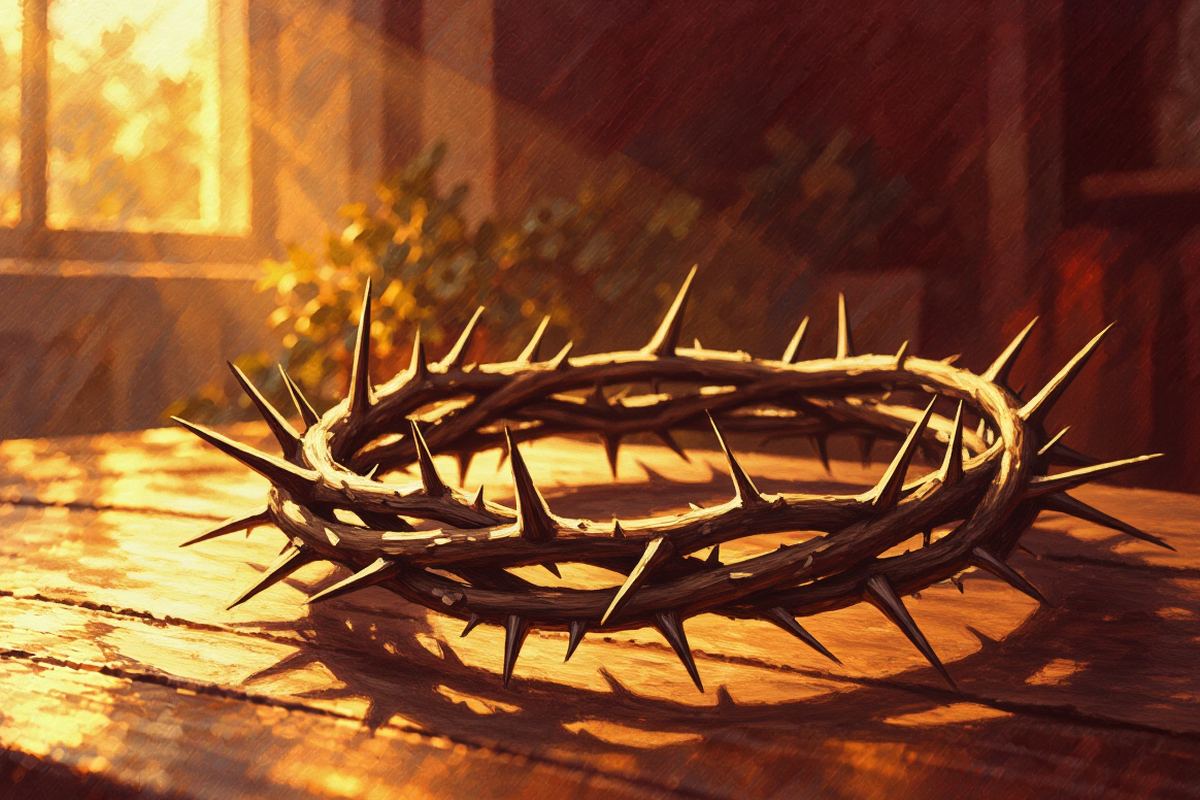
| 5. Crown of thorns | Thorns driven into His scalp by blows with the staff | Matthew 27:27–30; Isaiah 52:14 |
| 6. Crucifixion | Nails through His hands and feet | Matthew 27:35 |
| 7. Spear in His side | Blood and water flowed; not one bone was broken | John 19:31–36; Zechariah 12:10 |
In the garden (Luke 22:44) it was a cool spring night, so the sweat was not from heat. Jesus was agonizing physically, spiritually and emotionally over drinking the wrath of God. Before the high priest He was spat on and struck (Matthew 26:67), and Micah 5:1 foretold that they would strike the judge of Israel with a rod on the cheek.
The scourging after Pilate released Barabbas (Matthew 27:26) tore skin and flesh. The pastor ties it straight to Psalm 103: forget not all His benefits, who forgives all your iniquities and heals all your diseases. Jesus bore stripes for all diseases, old and new, known and unknown.
Isaiah 50:6 shows the beard plucked out, and the key point is that He gave His back and did not struggle or protest. In Matthew 27:27–30 the soldiers crowned Him with thorns two to three inches long. Thorns came with the curse in Genesis 3:17–19, so Jesus wore the curse on His head and redeemed creation, which waits for the revealing of the sons of God (Romans 8:19). He was so disfigured He seemed hardly human (Isaiah 52:14).
After the nails (Matthew 27:35) came the spear. In John 19:31–36 the soldiers found Jesus already dead, did not break His legs, and pierced His side, and blood and water came out. He was the Passover lamb, roasted whole with no bone broken (Numbers 9:12), and Zechariah 12:10 foretold that they would look on Him whom they pierced.
What the Blood of Jesus Says Over You
What does all of this mean for us? Not one detail God spoke was missed, and it was all carried out by ruthless, godless people. You will face troubled times and evil people in positions of authority, but God’s will still comes to pass. Jesus said that in the world you will have trouble, but be of good cheer, He has overcome the world (John 16:33). We have a blood covenant guaranteeing it.
The pastor then declares what the blood is to the believer. It is the blood of redemption and of freedom, so bondage is never God’s will for you. It is the blood of cleansing, which makes you spotless and whole when your actions cannot. You are a royal priesthood and a special people (1 Peter 2:9), and no one can call you common or unclean.
It is precious blood, more valuable than money, houses, careers or anything else. It is the blood of intercession that always speaks on your behalf, telling the Father you are His treasure. It is the blood of healing virtue, so no weapon formed against you will prosper (Isaiah 54:17). It is the blood of sanctification, of a new covenant, and of communion, uniting you with God so that nothing can separate you from His love (Romans 8:38–39).
Living the Blood Covenant This Week
The pastor closes with prayer for healing and provision, a word to someone at a crossroads that the road will be illuminated, and communion from 1 Corinthians 11:23–26. Here are practical steps drawn from the message:
- Ask for revelation of the blood. Pray daily, as he led the church to pray, for revelation of the blood of Jesus and the blood covenant, not just more information.
- Remember all His benefits. Read Psalm 103 aloud and name forgiveness and healing as two sides of the same work.
- See people in their blood. Look at difficult coworkers and neighbors as people needing life, not as bad people, and speak life over them.
- Give a reason for your hope. When someone asks how you made it through, tell them what Jesus did, with gentleness and respect.
- Drop empty traditions. Ask whether a habit is helping you hear God or is just a ham with its ends cut off.
- Stop condemning yourself. Like Paul, forget what is behind and look ahead; the blood has made you spotless and whole.
Timestamped Outline
- 0:00 Animal blood covered sin; Jesus’ blood removes it
- 1:07 Jesus took all the wrath of God voluntarily
- 2:06 Humanity’s problem is bad blood
- 3:21 John G. Lake and the plague
- 4:37 Miracle healing, divine health, divine life
- 6:24 Hebrews 11:6 and the reward of revelation
- 7:29 Ezekiel 16: struggling in your blood
- 9:41 Eternal life as a quality of life
- 13:06 Smith Wigglesworth on the train
- 15:29 1 Peter 2:24: forgiven and healed
- 18:00 1 Peter 3:15: the reason for your hope
- 20:24 Tradition and the ham story
- 23:18 Why seven means perfection
- 28:26 Seven Sabbath miracles
- 29:32 First shedding: sweat like blood
- 31:55 Second shedding: beaten with rods
- 34:18 Third shedding: the scourging
- 39:07 Fourth shedding: the beard plucked out
- 41:28 Fifth shedding: the crown of thorns
- 47:10 Sixth shedding: the crucifixion
- 49:17 Seventh shedding: the spear and the Passover lamb
- 58:11 What the blood of Jesus is to you
- 1:11:09 Communion from 1 Corinthians 11
Blood Covenant Series
This message belongs to a long teaching series at NTC Ministries. Start at the beginning or keep going:
- First message: The Blood Covenant
- Previous: The Blood Covenant: The Full Penalty Jesus Paid for Sin
- You are here: The Blood Covenant Part 10: The Seven-Fold Shedding of the Blood of Jesus
- Next: The Blood Covenant #11: Christ Our Covenant Head, and David’s Covenant Confidence
Frequently Asked Questions
Does this teaching mean a Christian who is sick lacks faith?
No. The pastor is careful to say that the three arenas are stages of growth and that it is not demeaning or condemning if someone is not yet walking in divine health. He says he has issues himself from time to time and deals with them by faith in the Word. His point is to keep growing and desiring revelation, not to judge anyone who is struggling.
Why does it matter that none of Jesus’ bones were broken?
The pastor explains that Jesus was the Passover lamb, and the Passover lamb had to be roasted whole without a broken bone. He notes that in Egypt roughly a quarter of a million families did this in one night. When the soldiers found Jesus already dead and did not break His legs, it fulfilled that pattern and showed He freely laid down His life.
Should we feel sorrow when we remember the cross?
The pastor says religion can use the cross to make us grieve for Jesus, but Jesus told the weeping women not to weep for Him. He knew He could lay His life down and take it again. The Passion was an act of mercy, love and grace, so believers remember it with gratitude and take hold of what His blood purchased.
Scripture References
All passages open in the New King James Version on Bible Gateway:
- Ezekiel 16:1–6 — in your blood, live
- 1 Peter 2:24 — by His stripes you were healed
- Psalm 103:1–5 — forget not all His benefits
- Luke 22:44 — sweat like drops of blood
- Isaiah 50:6 and Isaiah 52:14 — the suffering servant
- Matthew 27:27–30 — the crown of thorns
- John 19:31–36 — the spear and no bone broken
- Zechariah 12:10 — they will look on Him whom they pierced
- 1 Peter 3:15 — a reason for the hope in you
How this summary was made: written with AI assistance from the sermon’s own transcript and checked against the Scriptures listed above.
Watch More Messages
If this teaching on the blood of Jesus encouraged you, there are hundreds more messages from NTC Ministries to explore. Browse the full sermon archive and keep growing in the covenant God has made with you.