The blood covenant is an exchange, and surrender is how we take part in it. In this message the pastor teaches that God wants to express His wisdom, righteousness, sanctification and redemption through every believer, and that the door to all of it is daily surrender to Jesus. He traces the pattern from Daniel in Babylon to Abraham on Mount Moriah and shows why God tests whether we love Him more than the gifts He gives. This teaching continues from The Blood Covenant #20: Redeemed From Poverty Into the Blessings of Deuteronomy 28.
Below you will find the full video, a structured summary, every Scripture he uses (linked to the New King James Version on Bible Gateway), a timestamped outline, and practical steps for this week.
Sermon at a Glance
This message was preached at NTC Ministries in Merrill, Wisconsin, and posted on May 26, 2021. It runs about 80 minutes and closes with communion. The pastor opens by admitting that he is an introvert who has always wished he could express himself better, and then turns the thought around: God wants to express Himself in you, and He has no trouble doing it once you open up and let Him.
The only thing laid on us, he says, is surrender. Everything else in the blood covenant flows from that one choice, made again and again over a lifetime.
| Detail | Information |
|---|---|
| Speaker | The pastor (not named in the recording) |
| Series | The Blood Covenant, #21 |
| Main text | 1 Corinthians 1:30–31 and Genesis 22:1–18 |
| Key theme | Surrender opens the blessings of the blood covenant, which God gives with joy and without sorrow |
| Length | About 80 minutes, ending in communion |
Surrender Is the Key to the Blood Covenant
The pastor begins with the two covenants. From Adam onward, animal blood only covered sin, and a penalty remained. When Jesus shed His blood, the old was abolished and the new established: sin is now forgiven and removed as far as the east is from the west (Psalm 103:12). Believers should walk in liberty.
He reads Colossians 1:13–14: God has delivered us from the power of darkness and translated us into the kingdom of His Son, in whom we have redemption through His blood. To be redeemed, he explains, is to be taken from something and brought into something. We were held hostage by the enemy, the price was paid, and we were brought from darkness into light and from this corrupt earth-curse system into a kingdom where all the promises of God are yes and amen (2 Corinthians 1:20).
The trouble is that we grew strong in our own ways while we were in bondage. God does not choose many who are wise or strong in themselves (1 Corinthians 1:26–27); He chooses the humble who will surrender. Israel left Egypt, but the slavery never left Israel. Moses, the meekest man on earth (Numbers 12:3), learned to surrender. Meek, the pastor says, means teachable, which is why the meek inherit the earth (Matthew 5:5).
He then makes a point he repeats through the message: “I didn’t choose to become a Christian, I was chosen.” Jesus said, “You did not choose Me, but I chose you” (John 15:16). A woman from the church whose name was called on a TV game show did not come home bragging that she chose herself. People who keep hearing God call and stay in their seat, he says, are in bondage to whatever holds them back.
Christ Made Unto Us Wisdom
The central text is 1 Corinthians 1:30–31, read from the American Standard Version: of Him we are in Christ Jesus, who became for us wisdom from God, righteousness, sanctification and redemption, so that whoever glories should glory in the Lord. It is all Him, and once we are in Christ we keep learning to surrender so He can express His wisdom through us.
He applies this to witnessing. When the enemy whispers that you did not say enough, the answer is that it was enough, because it is the wisdom of God and not the intellect of man. Righteousness means rightness with God, so every promise can be expressed in your life. He asks the church to pray, “Jesus, express Yourself better through me.”
Daniel, Shadrach, Meshach and Abednego show the other way. Taken captive to Babylon, they asked to eat vegetables instead of the king’s food, and after the trial period they looked healthier than all the others (Daniel 1:8–20). The king found greater wisdom in them than in all his sorcerers, magicians and astrologers. Why? They surrendered to the Lord, and wisdom, righteousness, sanctification and redemption flowed.
Their testimonies followed: Daniel spent a night with the lions (Daniel 6:16–23), and the king saw four men walking loose in the fire, one like the Son of God (Daniel 3:19–25). The miraculous comes when we surrender. He calls it cause and effect: plant corn and you get a harvest. Surrender is the cause, and the effect comes from God, not from what we can think up.
Redeemed From the Curse for the Blessing of Abraham
The pastor reads Psalm 35:27, which Pastor Paul had shared that morning: the Lord has pleasure in the prosperity of His servant. Believers are sons now, he agrees, but servant pictures someone who surrenders to the master’s will, and a son works even closer with his father.
Then he returns to Galatians 3:13–14: Christ redeemed us from the curse of the law so that the blessing of Abraham would come upon the Gentiles and we would receive the promise of the Spirit through faith. You need the Holy Spirit more than breath, food or sleep, he says. He is the governor of the kingdom, and those led by the Spirit are the sons of God (Romans 8:14). Natural eyes cannot see what God has prepared, but He reveals it by His Spirit (1 Corinthians 2:9–12).
He recalls the two mountains of Deuteronomy 27:12–13: Ebal, the mount of curses, was easy to stand on; Gerizim, the mount of blessing, was hard to stay on. The natural mind finds it easy to expect the worst. But we are redeemed from the curses of Deuteronomy 28:15–68, which he groups as spiritual death, sickness and disease, and poverty.
The blessings of Deuteronomy 28:1–14 are ours instead: blessed coming in and going out, in the city and in the country, the head and not the tail. So when you go to the store, he says, expect blessings.
Prosperity, he stresses, is more than money. God sends angels as ministering spirits to the heirs of salvation (Hebrews 1:14). It is being chosen for a job over better-qualified people, or a marriage that survives hard seasons; he and his wife have been married 48 years, which he calls prosperous.
That is covenant. The Hebrew word, he teaches, means to cut until blood flows, the exchange of all that I have for all that you have. We received everything Jesus is, and He received all of us, because we were bought with a price (1 Corinthians 6:19–20). The stronger we were in the world, he warns, the harder surrender becomes.
Abraham on Mount Moriah: Blood Covenant Surrender
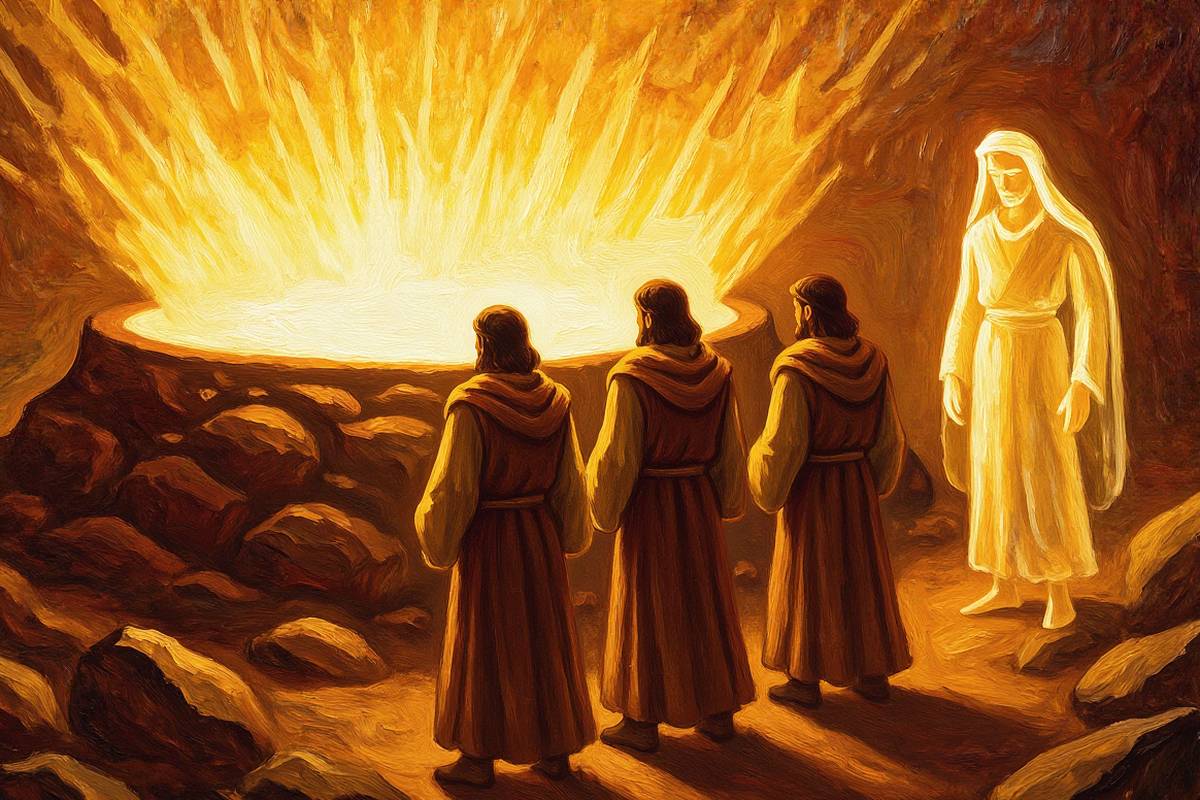
In a covenant each partner has a role, and Abraham shows ours. In Genesis 22:2 God told him to take his only son Isaac, whom he loved, and offer him on a mountain in the land of Moriah. Abraham had asked God for that son and waited 25 years; he was 99 years old and his wife was 90. Now God asked for the very gift He had given.
The question behind the test, the pastor says, was this: Abraham, do you still love Me more than the promise I gave you? God asks us the same about the better job, the husband, the wife or the children He gave us. The lust of the flesh, the lust of the eyes and the pride of life keep us from surrendering.
In Genesis 22:9–14 Abraham bound Isaac on the altar and lifted the knife, and the Angel of the Lord stopped him, saying that now He knew Abraham feared God, since he had not withheld his only son. Abraham saw a ram caught in a thicket by its horns and called the place The-Lord-Will-Provide. Wherever you are willing to surrender, the pastor says, God provides beyond your desire.
Then comes Genesis 22:15–18: because you have done this thing, blessing I will bless you and multiply your descendants as the stars of heaven and the sand on the seashore. Your descendants will possess the gate of their enemies, and in your seed all the nations of the earth will be blessed, because you obeyed My voice. When Abraham gave his best, God gave him His best blessing. If we hold on to what God gave us, that is all we get; if we offer it, He only adds to it.

Wealth With Joy and Good Success
Is Abraham an isolated case or a pattern? The pastor answers with Proverbs 3:9–10: honor the Lord with your possessions and the firstfruits of all your increase, and your barns will be filled with plenty and your vats will overflow with new wine. New wine, he says, typifies joy. Your storehouse is the bank, the wallet or the tin can in the backyard, and God promises to fill it in a way that is never a problem to you.
He contrasts this with wealth that destroys, such as lottery winners whose lives fall apart and singers who started in church and died addicted. God wants you wealthy with honor: you honor Him, and He brings honor to you, with blessing that flows from inner joy.
Money itself is neutral, he explains; it is corrupted only by the hand that holds it, and it can build hospitals, schools and churches. Scripture never says money is the root of all evil. It says the love of money is (1 Timothy 6:10).
He has the church read Proverbs 10:22 aloud: “The blessing of the Lord makes one rich, and He adds no sorrow with it.” God wants His children blessed, but in a way that builds relationship with Him and leads to more surrender.
That is why Joshua 1:8 ties prosperity to meditating on the Word, which he defines as rolling a truth over in your mind again and again. Then “you will make your way prosperous, and then you will have good success.” If there is good success, he notes, there is also bad success.
Jesus put it plainly in Matthew 6:31–33: do not worry about food or clothing, but seek first the kingdom of God and His righteousness, and all these things will be added. The kingdom’s purpose is to build and expand, and seeking His righteousness means wanting His character.
In Luke 6:36–38, he notes, Jesus lists mercy, judgment and forgiveness without explanation but expounds on giving: good measure, pressed down, shaken together and running over. Giving does not make us righteous; it draws us closer so our character changes and He can trust us with more. The table gathers the cause-and-effect pairs he names.
| Cause (what we surrender) | Effect (what God gives) | Where he finds it |
|---|---|---|
| Daniel and his friends refuse the king’s food | Greater wisdom than the king’s advisers | Daniel 1 |
| Abraham does not withhold Isaac | Blessing, multiplied descendants, the gate of enemies | Genesis 22 |
| Honoring God with the firstfruits | Barns filled with plenty, overflowing joy | Proverbs 3 |
| Meditating on the Word day and night | A prosperous way and good success | Joshua 1 |
| Seeking first the kingdom | All these things added | Matthew 6 |
| Giving | Good measure, running over | Luke 6 |
| Leaving your first love | The lampstand removed unless you repent | Revelation 2 |
Do Not Leave Your First Love
God wanted to see whether He was still Abraham’s treasure, or whether the son had become his treasure. The same question comes to us about our job, spouse, children and possessions, for “where your treasure is, there your heart will be also” (Matthew 6:21). Abraham told Isaac that God would provide, because he knew God turns around anything we give up for Him.
Then he shares his own story. He and his wife Pam have given away everything they owned twice. The first time was before they moved to Merrill, where at first they stayed in a broken-down motor home behind a barn with no running water. As they drove in, Pam told him the Lord had shown her a large house with a huge lawn and a deck where they would live.
He is not telling anyone to give everything away, he says, though the early church did share its possessions (Acts 4:32–35). Follow the Holy Spirit and give what He asks. They would never have survived in Merrill, he says, without learning to surrender first.
In Revelation 2:2–5 Jesus praises a church’s works and patience, then says, “Nevertheless I have this against you, that you have left your first love.” The Greek word for first, he teaches, is protos: supreme, paramount, the best. We love Him because He first loved us (1 John 4:19), and without repentance the lampstand is removed.
He pictures a hostage whose beloved never comes to pay the ransom, while a stranger who loves them pays it with his life. Would you go back to the one who never came? Yet believers do that when the world wins their attention. If God does not have your first love, something else does, leaving a form of godliness without power (2 Timothy 3:5).
Surrender is not a one-time thing, he says, but a lifelong thing. We have not yet resisted to bloodshed (Hebrews 12:4), but Jesus did, and Romans 8:32 asks how He who did not spare His own Son will not freely give us all things. If He did not withhold Jesus, why would we withhold the tithe or an offering?
In a hard season, he offered the church elders his resignation. They returned with grape juice and bread, shared communion with him and Pam, and pledged to support the vision. That year, he says, the church went from a small pole building to launching a worldwide organization. Unless the Lord builds the house, they labor in vain who build it (Psalm 127:1).
Living It Out This Week
The message ends in communion from 1 Corinthians 11:23–26. Jesus surrendered fully to the Father, and God gave Him the name above every name (Philippians 2:9–11). Here are practical steps drawn from this blood covenant message:
- Pray for expression, not performance. Ask Jesus each morning to express His wisdom and righteousness through you, as 1 Corinthians 1:30 promises.
- Answer God’s call when you hear your name. You were chosen; stop sitting in your seat and step into what He has prepared.
- Name your Isaac. Identify the gift you are tempted to love more than God, whether a job, a relationship or a possession, and offer it back to Him.
- Honor God first with your increase. Bring the firstfruits before anything else and expect blessing that comes with joy.
- Meditate on one promise. Roll a single verse over in your mind all week, the way Joshua 1:8 describes.
- Return to your first love. If something else has taken His place, repent today and give Him your attention again.
There is no desire God cannot meet, the pastor says. You can chase it on your own and be left with a mess, or say “yes, sir” to Him and watch Him do exceedingly abundantly above all you ask or think (Ephesians 3:20).
Timestamped Outline
- 0:00 God wants to express Himself in you
- 4:20 Colossians 1:13–14: redeemed from and to
- 6:30 Meekness and the surrender of Moses
- 9:54 Chosen, like a name called on a game show
- 12:12 1 Corinthians 1:30–31: Christ made unto us wisdom
- 15:45 Daniel and his friends in Babylon
- 18:50 The fiery furnace and cause and effect
- 21:01 Psalm 35:27: pleasure in His servant’s prosperity
- 22:15 Galatians 3:13–14: the blessing of Abraham
- 24:20 Mount Ebal and Mount Gerizim
- 28:29 Prosperity is more than money
- 32:39 Genesis 22: Abraham asked to offer Isaac
- 40:09 Proverbs 3:9–10: honor the Lord with your increase
- 46:13 Proverbs 10:22: no sorrow added
- 49:32 Joshua 1:8: meditation and good success
- 53:09 Luke 6:38: give and it will be given
- 56:33 Giving everything away twice
- 59:10 Revelation 2: leaving your first love
- 1:14:58 Communion and closing
Blood Covenant Series
This message is part of a long teaching series at NTC Ministries. Start from the beginning or continue where this one leaves off:
- First message: The Blood Covenant
- Previous: The Blood Covenant #20: Redeemed From Poverty Into the Blessings of Deuteronomy 28
- You are here: The Blood Covenant #21: Surrender, Abraham’s Test and the Blessing of Abraham
- Next: The Blood Covenant #22: Good News to the Poor and the Blessing of Abraham
Frequently Asked Questions
Does surrender mean I have to give away everything I own?
No. The pastor says plainly that he is not asking anyone to give away all their possessions, even though he and his wife did so twice when the Lord asked them. Follow the Holy Spirit and give what He tells you to give. God does not mind you having things; the problem is loving them and giving them more time and attention than Him.
Why does a Christian school come up in this sermon?
He uses it as an example of discipleship, which he links to discipline: learning to surrender even when you do not want to, like a child cleaning a room. He describes the church’s Christian school as a discipleship core that teaches students to surrender to Jesus, be filled with the Spirit and keep saying yes to God.
How should a believer approach work, according to this message?
Give your best on the job, because whatever you do for your employer you do for the Lord. Nobody hired you to make you a millionaire, the pastor says; they hired you to help the business succeed. He tells new church staff to get ready to be blessed, because those who surrender often find they have more while earning less.
Scripture References
All passages open in the New King James Version on Bible Gateway:
- 1 Corinthians 1:30–31 — Christ made unto us wisdom and redemption
- Colossians 1:13–14 — redemption through His blood
- Galatians 3:13–14 — the blessing of Abraham
- Genesis 22:9–14 and Genesis 22:15–18 — Abraham on Mount Moriah
- Proverbs 3:9–10 and Proverbs 10:22 — blessing with joy and no sorrow
- Joshua 1:8 — good success
- Matthew 6:31–33 — seek first the kingdom
- Revelation 2:2–5 — leaving your first love
- Romans 8:32 — He did not spare His own Son
How this summary was made: written with AI assistance from the sermon’s own transcript and checked against the Scriptures listed above.
Watch More Messages
If this message encouraged you to surrender more fully to Jesus, there are hundreds more teachings from NTC Ministries waiting for you. Browse the full sermon archive and keep growing in the blood covenant God has made with you.