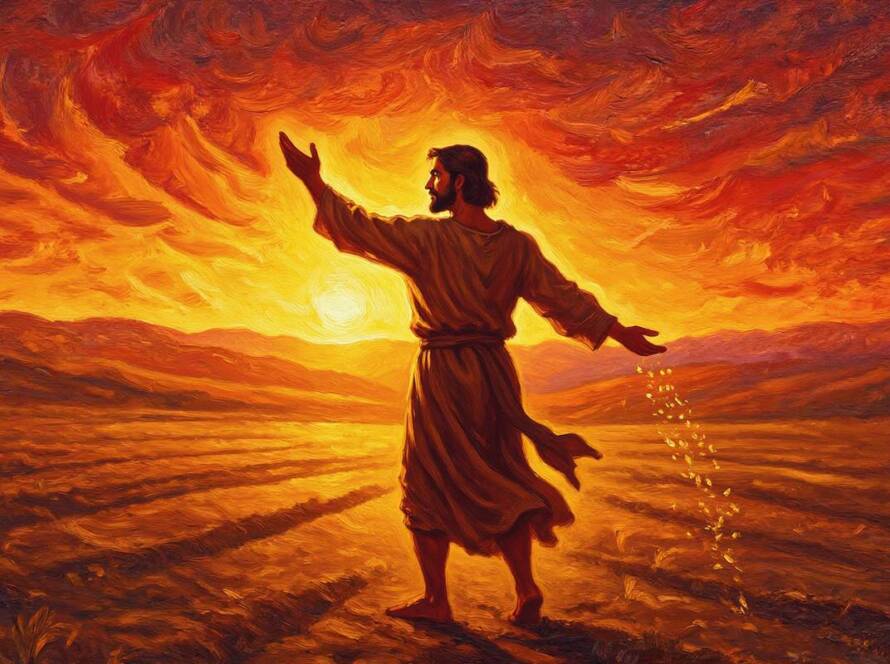
Drawing near to God means learning to hear His voice above every other voice and letting Him pull down the strongholds that keep echoing in our minds. In this sixth message of the series, Pastor Hohman teaches from James 4, Psalm 46 and 2 Corinthians 10 that everything was created by a voice, that faith comes by hearing, and that God is still separating light from darkness in the hearts of His people. It continues from Drawing Near to God #5: The Still Small Voice Above Fear.
Below you will find the full video, a structured summary of the sermon, the Scripture behind each point (linked to the New King James Version on Bible Gateway), a timestamped outline, and practical steps for drawing near this week.
Sermon at a Glance
This message was posted on January 13, 2026, as part six of the Drawing Near to God series at NTC Ministries. It runs about 66 minutes and ends with communion, worship and prayer for healing. Pastor Hohman notes that he has taught this material a few times over 40 years and that preparing it again has blessed him personally.
Review, he says, is good for everyone. Biblical meditation is not Eastern meditation that tries to empty the mind; it means going over God’s word again and again, speaking it out of your mouth, and bathing yourself in it. That repeated hearing is the thread running through the whole message.
| Detail | Information |
|---|---|
| Speaker | Dr. William P. Hohman |
| Series | Drawing Near to God, #6 |
| Main texts | James 4:7–10; Psalm 46:10; 2 Corinthians 10:3–6; John 6 |
| Key theme | Hearing God’s voice above every other voice and letting Him pull down strongholds |
| Length | About 66 minutes, ending in communion |
Preparing for the Battle Before It Comes
Pastor Hohman begins with the times we live in. Corruption is coming to a head, and Jesus said that unless those days were shortened, even the elect would not survive (Matthew 24:22). God understands us. When problems get severe enough, people break down. Everyone has a breaking point, he says, and there is no shame in that, but it is something to prepare for.
He draws on his time in the service during the Vietnam War. Soldiers were rushed from boot camp into the jungle with no time to prepare, and at one point their life expectancy was counted in seconds. Many came home in shell shock. Militaries train soldiers to be strong in their minds, not only their bodies, and believers need the same preparation.
Jesus said there would be wars and rumors of wars in the last days (Matthew 24:6), and war comes in many forms. That, he believes, is why God is calling His people to draw near. Colossians 3:1–3 tells us to set our minds on things above, but many Christians find it does not seem to work because their attention is pulled toward too many other things.
Drawing Near to God Among Many Voices
James wrote to believers scattered by persecution. James 4:7–10 says to submit to God, resist the devil, and draw near to God, and He will draw near to you. Reading from the New Living Translation, Pastor Hohman highlights the line that their loyalty was divided between God and the world. When we humble ourselves, God lifts us up.
He then explains why voices matter so much. God created with words, and Jesus is called the Word of God. All things were made through Him (John 1:1–3), so everything is made from a voice. Our own words go on as well, which is why we are justified or condemned by them (Matthew 12:37).
There are many voices in the world, and God wants us to tell His apart from all of them, including our own, because we will believe ourselves faster than anyone. Even things have a voice. A rattling car tells you that you need a new one. Lust has a voice. The latest computer tells a techie he must have it, and then we justify the purchase. That justification, he says, keeps us from hearing right.
Jesus told His followers to take heed what they hear and how they hear. Romans 10:17 says faith comes by hearing, and hearing by the word of God. Drawing near is more than worship, church attendance, Bible reading, fasting and prayer, though all of those are part of it. It means dealing with the voice of the stranger.
He gives an example: if someone receives a frightening diagnosis, they hear it with their ears, but they must not take it to heart. What they hold in their heart is that they have been healed by the stripes of Jesus. That takes diligence. Any old dead fish can float downstream, he says; it takes a live one to swim upstream.
Be Still and Know That I Am God
Psalm 46:10 says, “Be still, and know that I am God; I will be exalted among the nations, I will be exalted in the earth.” Pastor Hohman reads the nations as the voices of people and the earth as the circumstances we fall into. God’s voice must be exalted above both.
He quotes the Message paraphrase: step out of the traffic and take a long, loving look at Him. Life can feel like a game of Frogger, dodging one thing after another. The way out is to make time with God and ask Him to tell you again how much He loves you, then remember all the good things He has done. As you bathe in that, His voice becomes clear and powerful.
His voice is like thunder upon many waters, he says, and once you finally take it to heart it shakes you to the core. Change comes: healing, deliverance, strength. The Passion Translation renders the verse as surrendering your anxiety, and he encourages the church to open the doors of their hearts quietly before God until His voice becomes greater than any other.

Pulling Down Strongholds
2 Corinthians 10:3–6 says the weapons of our warfare are not carnal but mighty in God for pulling down strongholds, casting down arguments and bringing every thought into captivity to the obedience of Christ. Pastor Hohman describes these strongholds as voices that become barriers against God’s voice.
He teaches that the Greek word behind stronghold pictures a military fort, not a child’s play fort, with guard posts calling to one another about who is coming from which direction. He connects it to the idea of an echo: something said once that you hear again and again. Anyone who has lain awake replaying what someone said or did has felt a stronghold at work.
The answer is not human effort. In creation, God said “Let there be light,” saw that it was good, and divided the light from the darkness (Genesis 1:3–4). He is still separating light from darkness in us, preparing a pure bride for His Son. In John 10:1–5, any voice that does not come through the door is a thief and a robber, and the sheep do not follow a stranger.
Pastor Hohman also describes cognitive dissonance: when a strongly held belief is confronted with something that contradicts it, the discomfort pushes people to rationalize, ignore or deny. He tells of a Bible college student who confessed to causing another family great grief years earlier. When counseled to go and ask their forgiveness, the student and his wife left and never returned.
He compares it to a toothache: a little more pain at the dentist removes the pain you are living with. You crush grapes to get wine, olives to get oil, and flowers to get perfume. Proverbs 4:20–22 says to incline your ear to God’s sayings, and he teaches that incline means going uphill, like pushing a heavy wheelbarrow up a slope. Keep hearing, and do not blame anyone else.
A Hard Teaching: Who Can Hear It?
After feeding the five thousand, Jesus withdrew to the mountain, then walked on the water to His disciples. The crowd tracked Him down, but He told them not to labor for food that perishes (John 6:27). In John 6:43–45, He says no one can come to Him unless the Father draws him, and that they shall all be taught by God.
That teaching comes through the fivefold ministry given to mature the saints (Ephesians 4:11–13), but the voice we must finally hear is God’s. A preacher’s voice reaches your ear and mind; you keep hearing until the Father speaks it into your heart. That, Pastor Hohman says, is the meat of God, just as Peter’s confession came from the Father and not from flesh and blood.
When Jesus said that unless you eat His flesh and drink His blood you have no life (John 6:53–58), many disciples said it was a hard saying: who can hear it? Every believer, he warns, will be offended by something God says. The choice is to make excuses, change churches and blame God, or to keep hearing until it becomes life.
Jesus did not come to deliver Israel from Rome; He came to deliver people from what is in their hearts. What profit is it to gain the whole world and lose your soul (Matthew 16:24–26)? Taking up your cross, he says, means putting your shoulder into hearing God, even when it hurts. It is not a difficult relative you put up with.
From that time many disciples went back and walked with Him no more (John 6:66). At the Last Supper, every disciple whose heart had been dealt with asked, “Is it me, Lord?” The one who did not ask was Judas. Pastor Hohman also notes that Hebrews 4:16 speaks of the throne of grace, not a throne room, because grace is enthroned in the heart.
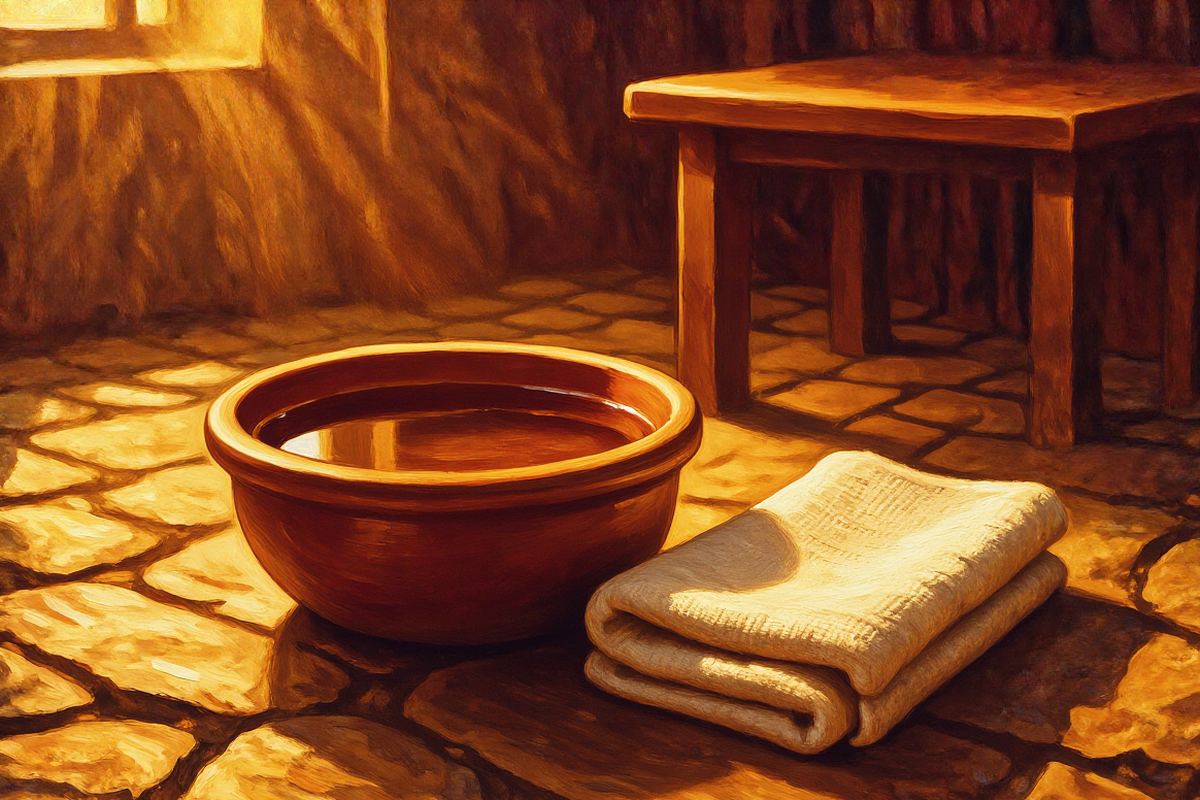
Letting Jesus Wash Our Feet
In John 13:1–8, Jesus, knowing He had come from God and was going to God, rose from supper and washed His disciples’ feet. Peter protested, and Jesus answered that unless He washed him, Peter would have no part with Him. Pastor Hohman agrees that foot washing teaches humility and service, but warns that taking one truth and making it the only truth leads to error.
Our feet, he explains, represent where we have walked in life. Something may have clung to us that seems small, but it keeps us from being pure before God. Comparing ourselves with someone worse is another smoke screen. The right response is to humble ourselves and say, “Lord, is it me? Wash me.”
Ephesians 5:25–27 says Christ gave Himself for the church to sanctify and cleanse her with the washing of water by the word, presenting her without spot or wrinkle. The Greek word for without blemish, as he teaches it, means anything that would make a sacrifice unworthy, and here it speaks of a blemish inside, not outside.
The table below follows how he contrasts the responses to a hard word from God throughout the message.
| When God’s word is hard | Smoke screen response | Drawing-near response |
|---|---|---|
| It offends you | Find another church and say God told you to | Keep hearing it; His words are spirit and life |
| It exposes a wrong | Blame someone else or point a finger | Take responsibility: it’s me, Lord |
| You do not understand it | Assume it must be wrong | Trust Jesus: you will understand later |
| It hurts | Run, hide or rationalize | Accept the pain that ends the pain |
| Someone else seems worse | Compare and excuse yourself | Ask, “Is it me, Lord?” |
Communion follows naturally. Jesus took the bread and the cup in remembrance of Him (1 Corinthians 11:23–26), and Pastor Hohman calls the cup a foot washing too: all of the remission and cleansing, drink it all. He is coming for a pure church, so let us keep drawing near, and He will wash us with the word.
Drawing Near to God This Week
Pastor Hohman’s closing encouragement is to stop wishing someone else had heard the message and to let it speak to you. Here are practical steps drawn from his teaching:
- Meditate on the Word. Go over a passage again and again, speaking it aloud until it is in your heart.
- Step out of the traffic. Set aside time to be still, ask God to remind you of His love, and recall what He has done.
- Name the echo. When a thought keeps repeating, recognize it as a stronghold and bring it captive to Christ.
- Take responsibility. If you have wronged someone, go to them and ask forgiveness rather than living with the torment.
- Keep hearing hard words. When a message offends you, stay and keep hearing instead of leaving.
- Go where you are built up. Do not feed on voices that tear down your faith.
Timestamped Outline
- 0:00 Review and biblical meditation
- 1:12 Corruption coming to a head; everyone has a breaking point
- 2:19 Vietnam and preparing the mind for battle
- 3:35 Colossians 3: set your mind on things above
- 4:41 James 4: draw near to God
- 5:46 Everything is created by a voice
- 7:55 Faith comes by hearing
- 10:01 Psalm 46:10: be still and know
- 11:22 Step out of the traffic
- 12:23 2 Corinthians 10: pulling down strongholds
- 13:39 Strongholds as forts and echoes
- 17:14 God divides the light from the darkness
- 18:21 John 10: the voice of a stranger
- 22:00 Cognitive dissonance
- 24:54 The student who would not seek forgiveness
- 26:56 Proverbs 4: incline your ear
- 29:14 John 6: the bread from heaven
- 32:47 They shall all be taught by God
- 37:12 A hard saying: who can hear it?
- 40:30 Deny yourself and take up your cross
- 46:34 Many turned back; is it me, Lord?
- 47:45 John 13: Jesus washes the disciples’ feet
- 51:07 Ephesians 5: washing of water by the word
- 56:56 Communion and closing prayer
Drawing Near to God Series
This message is part of the Drawing Near to God series at NTC Ministries. Start from the beginning or continue where this one leaves off:
- First message: Drawing Near to God #1 — A Vision of Rising Mountains
- Previous: Drawing Near to God #5: The Still Small Voice Above Fear
- You are here: Drawing Near to God #6: Hearing His Voice and Pulling Down Strongholds
- Next: Drawing Near to God #7: Hearing Until His Voice Is the Loudest
Frequently Asked Questions
Why does Pastor Hohman say communion has nothing to do with debates about the elements?
He mentions groups that argue over when the bread and juice become the body and blood of Jesus. He sets that debate aside. In his teaching, eating His flesh and drinking His blood points to hearing from the Father until revelation enters the heart, the way Peter’s confession came from the Father. Communion is done in remembrance of that, and of the cleansing the blood provides.
Should a believer listen to critics or enemies?
He recalls a proverb from the Living Bible about paying attention to your enemy’s point of view, but explains that the point is not to feed on those who are against you. Listen to those who are for you and are preparing you, and above all listen to Jesus until the Father speaks into your heart. Elsewhere he advises going where you are celebrated rather than criticized.
What does he say about praying to the throne room of grace?
He admits the phrase “throne room of grace” still slips out of his mouth, but notes that Hebrews 4:16 says only the throne of grace. There is no room, he says, because grace is enthroned in the heart. When you take grace into your heart, that is where you come to find grace and mercy to help in time of need.
Scripture References
All passages open in the New King James Version on Bible Gateway:
- James 4:7–10 — draw near to God and He will draw near to you
- Psalm 46:10 — be still and know
- 2 Corinthians 10:3–6 — pulling down strongholds
- Romans 10:17 — faith comes by hearing
- John 10:1–5 — the voice of a stranger
- John 6:53–58 — the hard saying
- John 13:1–8 — Jesus washes the disciples’ feet
- Ephesians 5:25–27 — washing of water by the word
How this summary was made: written with AI assistance from the sermon’s own transcript and checked against the Scriptures listed above.
Watch More Messages
If this message helped you hear God more clearly, there are hundreds more teachings from NTC Ministries waiting for you. Browse the full sermon archive and keep drawing near to the One who draws near to you.