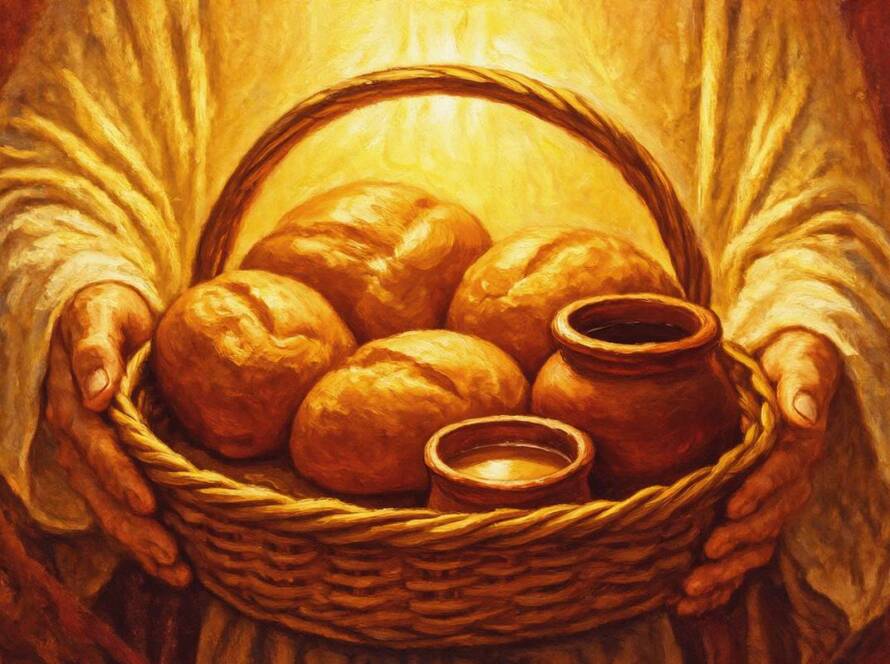
Optimism is vital to your success because believers live in two economies at once: the earth-curse system of this world and the kingdom economy of heaven. In this message, the speaker teaches that Christians spend most of their time learning how the world works, yet God promises to teach His people to profit, and an optimistic, grateful heart is what keeps the economy of heaven flowing into their homes, jobs and churches. It continues last week’s message, Kingdom Economy #1: The Two Economies — Learning How Heaven Works.
Below you will find the full video, a summary of this kingdom economy message, the Scriptures behind each point (New King James Version on Bible Gateway), a timestamped outline, and practical steps for this week.
Sermon at a Glance
This is the second message in the Kingdom Economy series at NTC Ministries, posted in March 2022. The first week covered the two kingdoms; this week the speaker focuses on attitude. When people are not optimistic about their nation, community or household, he says, it puts stress and strain on everything, and attitudes change for the worse.
His answer is not denial of hard times but a second economy. Jesus spoke of rendering to Caesar what is Caesar’s and to God what is God’s, which shows two parallel systems. Believers have to function in both, and the kingdom economy always gives the greater return, whether or not it is the end times. The message closes with communion.
| Detail | Information |
|---|---|
| Speaker | The speaker is not named in the recording |
| Series | Kingdom Economy, Part 2 |
| Main text | Colossians 1:12–13 and Exodus 7–8 |
| Key theme | Optimism and gratitude keep the economy of heaven flowing |
| Length | About 69 minutes, ending in communion |
Two Kingdoms, Two Economies
The speaker starts where the series began, in Colossians 1:12–13. The Father has qualified us to be partakers of the inheritance of the saints in the light, delivered us from the power of darkness, and conveyed us into the kingdom of the Son of His love. Because of Adam’s sin, corruption came into the whole world, and corruption always brings division: between nations, governments and even family members.
Believers are in the world but not of it. They still have to learn to function here, and Jesus said as much when He told them to render to Caesar what belongs to Caesar and to God what belongs to God (Matthew 22:21). The problem, he says, is that many Christians are never taught how the kingdom economy works and treat the faith as a religion: a short sermon, a couple of Bible stories, and off they go.
He points to the parable of the talents (Matthew 25:14–30). The servants with five and with two talents multiplied what they were given. The servant with one buried it, and the master called him wicked, saying he should at least have put the money in the bank to earn interest. There has to be some mentality of profit, the speaker says, and it is a detriment that many in the church treat profit as taboo.
His picture is a pine tree meant to grow 150 feet that stays two feet tall and benefits no one. Growth to maturity is what blesses the most people. Isaiah 48:17 says, “I am the LORD your God, who teaches you to profit, who leads you by the way you should go.” He defines profit as getting more and doing better, and says God needs His people to work with Him to advance the kingdom.
The Earth-Curse System and the Economy of Heaven
Drawing on Webster’s dictionary, the speaker defines an economy as including the efficient use of material and non-material resources such as effort, skills and abilities. Someone highly skilled who refuses to work adds no profit to anyone, so everyone has to do their part.
He then contrasts the two systems. In Genesis 3:17–19, after Adam’s sin, the ground was cursed, and man would eat bread in the sweat of his face. That is the economy of this world, and the sweat can be physical or mental. A business owner behind a desk sweats too; that is what “don’t sweat the small stuff” means. The economy of heaven, by contrast, runs on grace, blessing, giving and receiving.
| The earth-curse system | The kingdom economy of heaven |
|---|---|
| Runs on the sweat of your brow | Runs on grace and blessing |
| A buy and sell system | A give and it will be given system |
| Your labor connects you to a company’s supply | Your giving connects you to heaven’s supply |
| Wealth can come with much sorrow | The blessing of the Lord adds no sorrow |
| Thorns and thistles | Seed to sow, bread to eat, and multiplied harvest |
| You earn a salary | You receive a reward from heaven |
In Ephesians 3:1–2, Paul speaks of the dispensation of the grace of God given to him. The speaker teaches that the Greek word behind dispensation is the root of our word economy, and that one of its meanings is to flow down. A true economy flows down like the Nile, which runs thousands of miles through country after country and feeds people all along the way. When resources are held at the top, it becomes a dead sea, and that is not an economy at all.
A spot of rust on a fender, he says, is never all the rust there is, and only Jesus will renew the whole world. Until then, believers live from the economy of heaven and let God intervene in their homes, jobs and church, and the kingdom economy makes them an advantage wherever they work.

Why Optimism Is Vital: Spiritual Gravity and the Hand of God
Every part of life has a natural side and a spiritual side, and believers must function in both. James 2:19–20 says even the demons believe and tremble, but faith without works is dead. The speaker says that loving God is not enough by itself. He can love a corporation and its owners, but they do not send him a paycheck, because he does not work in their system. To benefit from heaven’s economy, you work in it. God’s eyes run to and fro looking for those whose heart is loyal to Him so He can show Himself strong (2 Chronicles 16:9).
In the world, labor connects you to a company’s supply. In the kingdom, giving connects you to heaven’s supply, and that means giving your time and attention, not only finances. He tells of Jennifer, a staff member who dog-sits for a family. When a planned getaway fell through, that family offered her group their beach condo in Gulf Shores, Alabama, for free. He calls it the economy of heaven at work.
2 Corinthians 9:10–11 promises seed to the sower, bread for food, multiplied seed and increased fruits of righteousness. Those who receive abundance of grace and the gift of righteousness reign in life (Romans 5:17). He pairs Proverbs 10:4, where the hand of the diligent makes rich, with Proverbs 10:22, where the blessing of the Lord makes one rich and He adds no sorrow with it.
Knowledge and belief matter in the kingdom economy. You could have a hundred thousand dollars in the bank, he says, but if you did not know it was there you could not use it. So he has the congregation declare: “optimism is vital and essential to my success.” Optimism is vital because it means knowing what is yours in covenant and refusing to let it go.
Then he introduces spiritual gravity. He teaches two Hebrew words for hand. Kaph, as he explains it, means to slap, hold back and keep down, and he says it is used for the enemy. Yad is a helping hand that holds, like a strengthening hug or a welcoming handshake. He connects it to Jesus reaching out His hand to lift Peter when he was sinking (Matthew 14:28–31). God’s hand in covenant is always to profit, bless, protect and guide us.
An airplane, he explains, needs fuel and thrust greater than drag, plus wings that create lift, both to get up and to stay up. Life works the same way. Commit to an exercise routine or to paying down a bill and you feel the pull. He names the forces of spiritual gravity: laziness, immediate pleasures, cowardice, self-gratification and self-consciousness. Push past them and you find long-term benefits and see farther. Give in, and you stay pessimistic like Eeyore, saying “I can’t.”
Moses, Aaron and an Attitude of Gratitude
Moses is the speaker’s example of pessimism. After his first failed attempt to deliver Israel, he fled to the back side of the desert, and forty years later he argued with God at the burning bush, answering every call with a reason he could not do it. God said, who made your mouth, and sent Aaron with him.
Then the speaker points out something in the plagues. In Exodus 7:14–20, God told Moses to tell Aaron to stretch out his rod over the waters, and the river turned to blood. In Exodus 8:1–6, Aaron brought frogs up from the river. In Exodus 8:16–17, Aaron struck the dust and it became lice. He says these were the only three of the ten plagues Aaron did; Moses did the other seven.
Why? The river had carried baby Moses in his basket and preserved his life, and the desert had sheltered him when he fled Pharaoh. God would not have Moses curse what had blessed him. Proverbs 17:13 says that whoever rewards evil for good, evil will not depart from his house. As the head of Israel’s house, Moses had to keep a right attitude toward what had kept him.
The speaker applies this to work. People ask the church to pray for a job, start eager, and soon, listening to coworkers who say don’t work so hard, they are cursing the very job they thanked God for. You cannot grow your personal economy that way. Isaac sowed in a time of famine and reaped a hundredfold until the Philistines envied him (Genesis 26:12–14), because another economy was at work.
His practical tool is simple: every evening, write down three things you are grateful for, such as a sunset or someone who helped you. Each morning, write down three things you thank God for; if God woke you up, he says, He has faith in you. This is why optimism is vital: that attitude of gratitude is the key to success in the kingdom economy.
He warns that divorce, from a marriage, job, friendship or church, comes through seduction, the voice in the garden saying you deserve better. Kingdom giving is different: God so loved the world that He gave His Son (John 3:16), and Christ died for the ungodly (Romans 5:6). Keep that attitude, he says, and one day someone may call with a better job you enjoy far more.

Creativity Takes More Than One
All human creativity requires two or more people, the speaker teaches. Even an artist who paints alone did not grow the wheat, mill the grain or bake the bread that fed him. He calls the Bible an instruction manual and a blueprint for successful living, and says successful living includes making money.
The greatest picture, he says, is Adam and Eve, whose ultimate act of creativity was bringing children into the world. An inventor like Thomas Edison created jobs for many others, and the work flowed down to managers, workers and distributors. That is what the word economy means.
Cain shows the opposite. He killed his brother because he wanted to be the only one receiving, and so cut off the building of an economy. The speaker notes that Cain later built the first city (Genesis 4:14–17), as if he came to his senses about not being alone. Psalm 133:1–3 says it is good and pleasant for brethren to dwell together in unity, for there the Lord commands the blessing.
He lists three things the Bible gives for creativity: it takes at least two people, they must be different from one another, and creating something is deeply exciting and pleasurable. Each person needs real input; just do what I tell you is no economy. Believers who open their lives to bless where they are will see the economy of heaven profit them outside the sweat and toil.
Communion and the Kingdom Economy
The speaker then reveals that the whole message on the kingdom economy was about communion. The bread represents a natural economy, because someone planted, harvested, milled and baked it. It also carries a spiritual economy, because Jesus’ body was broken for the remission of our sins, and He said that unless we eat His flesh and drink His blood we have no life in us (John 6:53).
The wine is the same. Someone planted the vines and crushed the grapes, and spiritually Jesus was crushed for us. He was wounded for our transgressions and bruised for our iniquities, and by His stripes we are healed (Isaiah 53:5). Taking communion is saying, Lord, we want to enter a creative production with You. It echoes the prayer Jesus taught: Your kingdom come, Your will be done on earth as it is in heaven (Matthew 6:9–10).
Leviticus 2:13 required every grain offering to be seasoned with the salt of the covenant. The speaker links salt to thanksgiving, since Jesus gave thanks before He broke the bread, and to Colossians 4:6: let your speech always be with grace, seasoned with salt. Bread, he adds, is even slang for money, and we are to be thankful for it.
Even when there is darkness and deep darkness on the people, God’s people are told to arise and shine (Isaiah 60:1–2). We are not saved by works, but we are created for good works (Ephesians 2:8–10). The kingdom is like a business where everyone works together, so you cannot isolate yourself and say it is just me and Jesus. Those who serve at the altar partake of the altar (1 Corinthians 9:13), and every nursery worker, usher and deacon serves heartily as to the Lord (Colossians 3:23).
When giving seems to bring nothing back, he reminds the church that we receive a salary from earth but a reward from heaven: give, and it will be given to you (Luke 6:38). Jesus said His Father was always at work and so was He (John 5:16–17). Faith is the fuel that overcomes the world (1 John 5:4), lifting us above the pull of spiritual gravity.
Living It Out This Week
The speaker’s challenge is that you only have one life, and communion is a commitment to work the kingdom economy with the Lord. Here are the steps drawn from this message:
- Write down your gratitude. Each evening list three things you are grateful for, and each morning three things you thank God for.
- Never curse what blessed you. Keep thanking God for the job, church and relationships that have carried you, as Moses honored the river and the desert.
- Name your gravity. Identify whether laziness, immediate pleasure, fear or self-consciousness is holding you down, and commit past it.
- Give more than money. Offer your time, attention and skills, because giving connects you to heaven’s supply.
- Think like a profitable servant. Ask how to multiply what God has put in your hands instead of burying it.
- Work together. Serve in your church and community, and let others have real input in what you build.
Timestamped Outline
- 0:02 Optimism is vital to your success
- 2:37 Colossians 1:12–13: delivered from darkness
- 4:35 The parable of the talents
- 6:26 Isaiah 48:17: God teaches you to profit
- 7:27 What the word economy means
- 9:44 Genesis 3: the earth-curse system
- 11:43 Ephesians 3: the dispensation of grace
- 12:57 An economy flows down like the Nile
- 18:41 Faith without works is dead
- 20:43 Giving connects you to heaven’s supply
- 22:01 A free beach condo
- 22:57 2 Corinthians 9: seed to the sower
- 25:00 Proverbs 10: diligence and the blessing
- 28:12 Spiritual gravity and two words for hand
- 31:37 How an airplane overcomes gravity
- 33:39 What spiritual gravity looks like
- 34:56 Moses the pessimist
- 37:02 Exodus 7–8: Aaron’s three plagues
- 40:37 Why Moses could not curse the river
- 45:20 Write down three things you are grateful for
- 48:57 Creativity requires two or more people
- 54:00 Cain and the first city
- 57:21 Communion: the bread
- 1:00:49 The wine and Leviticus 2:13
- 1:05:36 Give and it will be given
Kingdom Economy Series
This message is part of the Kingdom Economy teaching series at NTC Ministries:
- Previous: Kingdom Economy #1: The Two Economies — Learning How Heaven Works
- You are here: Kingdom Economy Part 2: Optimism Is Vital to Your Success
- Next: Kingdom Economy #3: God Teaches You to Profit — Abiding in the Vine and the Widow of Zarephath
Frequently Asked Questions
Is it wrong for a Christian to want profit?
The speaker says no. He calls the idea that profit is taboo a detriment in the church today. In the parable of the talents the master rebuked the servant who buried his money, and Isaiah 48:17 says God teaches His people to profit. In his definition, profit simply means to get more and do better, so that, like a full-grown tree, you can benefit more people and help advance God’s kingdom.
Does optimism mean ignoring problems?
No. The speaker openly acknowledges stress, corruption and hard seasons. Optimism, as he teaches it, is a settled confidence that God is taking care of things while you keep doing what you are supposed to do. He contrasts it with saying “I can’t” like Eeyore, and with complaining about a job you once thanked God for. It rests on knowing what is yours in covenant.
How is giving different in the kingdom economy?
In the world, the speaker explains, you give to those who give to you, which is really a payment. In heaven’s economy you give the way God gave His Son, including to those who cannot repay. Your giving of time, attention and finances is what connects you with heaven’s supply, and you look for your reward from heaven rather than from people.
Scripture References
All passages open in the New King James Version on Bible Gateway:
- Colossians 1:12–13 — delivered into the kingdom of His Son
- Isaiah 48:17 — the Lord teaches you to profit
- Genesis 3:17–19 — the sweat of your face
- Ephesians 3:1–2 — the dispensation of grace
- 2 Corinthians 9:10–11 — seed to the sower
- Proverbs 10:22 — the blessing adds no sorrow
- Exodus 7:14–20 — Aaron strikes the river
- Proverbs 17:13 — rewarding evil for good
- Psalm 133:1–3 — the blessing of unity
- Leviticus 2:13 — the salt of the covenant
How this summary was made: written with AI assistance from the sermon’s own transcript and checked against the Scriptures listed above.
Watch More Messages
If this message encouraged you, there are hundreds more teachings from NTC Ministries waiting for you. Browse the full sermon archive and keep learning how the kingdom economy works in your life.