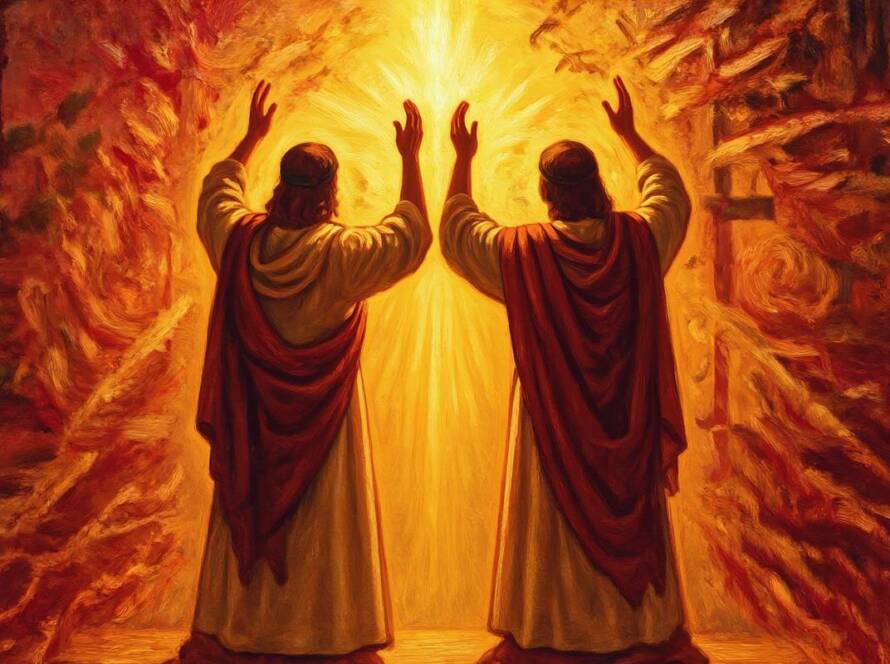
The blood covenant gives every believer a covenant head, Jesus Christ, who chose us first and takes responsibility to provide, protect, sustain and support us. In this message, Dr. William P. Hohman shows how that truth turns fearful Christians into people who know their God, stand strong and do exploits, from Joshua at Jericho to David facing Goliath. It continues from The Blood Covenant #11: Christ Our Covenant Head, and David’s Covenant Confidence.
Below you will find the full video, a structured summary of the sermon, every Scripture behind each point (linked to the New King James Version on Bible Gateway), a comparison of Goliath and David as he describes them, a timestamped outline and practical steps for the week ahead.
Sermon at a Glance
This message was preached at NTC Ministries in Merrill, Wisconsin, and posted on March 23, 2021. Like the other teachings in this series, it opens and closes with communion so that the church does not simply hear a word and walk away, but applies it. Pastor Hohman names his subject in the first minute: our covenant head, the initiating party in the covenant.
From there the sermon moves through Paul’s teaching on headship, the Commander of the Lord’s army meeting Joshua outside Jericho, David’s confidence against Goliath, and a story from the early years of the church in Merrill. It ends with a declaration from Psalm 91, a prayer of salvation and a prayer over finances, health and relationships before communion.
| Detail | Information |
|---|---|
| Speaker | Dr. William P. Hohman |
| Series | The Blood Covenant (#12) |
| Main text | 1 Corinthians 11:3; Joshua 5:13–15; 1 Samuel 17 |
| Key theme | Christ our covenant head, and the confidence that comes from knowing Him |
| Length | About 70 minutes, ending in communion |
The Blood Covenant Begins With God’s Choice
Pastor Hohman starts with who made the first move. Jesus said we did not choose Him, but He chose us so that we would go and bring forth fruit (John 15:16). In a covenant, everything the other party is, has and can do becomes yours with nothing held back, and everything you are, have and can do becomes theirs.
We come to Christ with nothing to add, and He throws all that away and gives us His. That is why anyone in Christ is a new creation; old things have passed away and all things have become new (2 Corinthians 5:17).
Groups that never teach the blood of Jesus, he observes, also lack the power of God. They have a form of godliness but deny its power (2 Timothy 3:5), yet they are first to cry out when sickness comes and first to blame God. A person is born again not by infant sprinkling or even water baptism, but by giving his life wholly to Jesus, with a heart circumcised by the Word and the Spirit.
The underlying problem is corrupted blood. When Adam believed the devil’s lie he died spiritually at once, and because the life of the flesh is in the blood (Leviticus 17:11), the death process began, and 930 years later he died physically. Receiving Jesus, he says, is like a blood transfusion: the life of God comes in.
Head Means Responsibility, Not Control: Christ Our Covenant Head
The first text is 1 Corinthians 11:3: the head of every man is Christ, the head of woman is man, and the head of Christ is God. Pastor Hohman warns that religious people, especially men, have twisted this verse into a license to dominate. That is not how Christ treats us, so it cannot be what the verse means.
Head, he teaches, is a covenant term. It means to take hold of, to seize, and to be the responsible one in the relationship. A man who fathers children and then abandons them is not a head at all but an impostor imposing his own will. Imposing your will on others is what the devil does, and it is illegitimate in a family or anywhere else.
Instead, the word head means to provide, to protect, to sustain and to support. Christ provides all our need according to His riches in glory (Philippians 4:19). His name is a strong tower the righteous run into (Proverbs 18:10). He satisfies us with long life (Psalm 91:16). And He supports us the way He reached down and lifted Peter when he began to sink.
In Ephesians 1:22–23, the Father put all things under Christ’s feet and gave Him to be head over all things to the church. Jesus came in a body the Father prepared and cut an unbreakable covenant with His own blood, which is why there is one mediator between God and man. The Father then made Him the covenant head of everyone who enters the kingdom.
Because He is responsible, Paul could be confident that He who began a good work will complete it (Philippians 1:6). But Pastor Hohman calls the idea that grace means we never have to do anything again a lie from the pit. Grace teaches us how to live godly in covenant. We speak the truth in love and grow up into Him who is the head (Ephesians 4:15).
Jesus said He is the vine and we are the branches, and without Him we can do nothing (John 15:5–6). People achieve much without Him, but nothing of value for the kingdom. What would it profit to gain the whole world and lose your soul (Mark 8:36)? We are not saved by works, but we are saved to do good works (Ephesians 2:10), longing for people dying in their blood to come in, since God is not willing that any should perish (2 Peter 3:9).
The Covenant Head Shows Up at Jericho
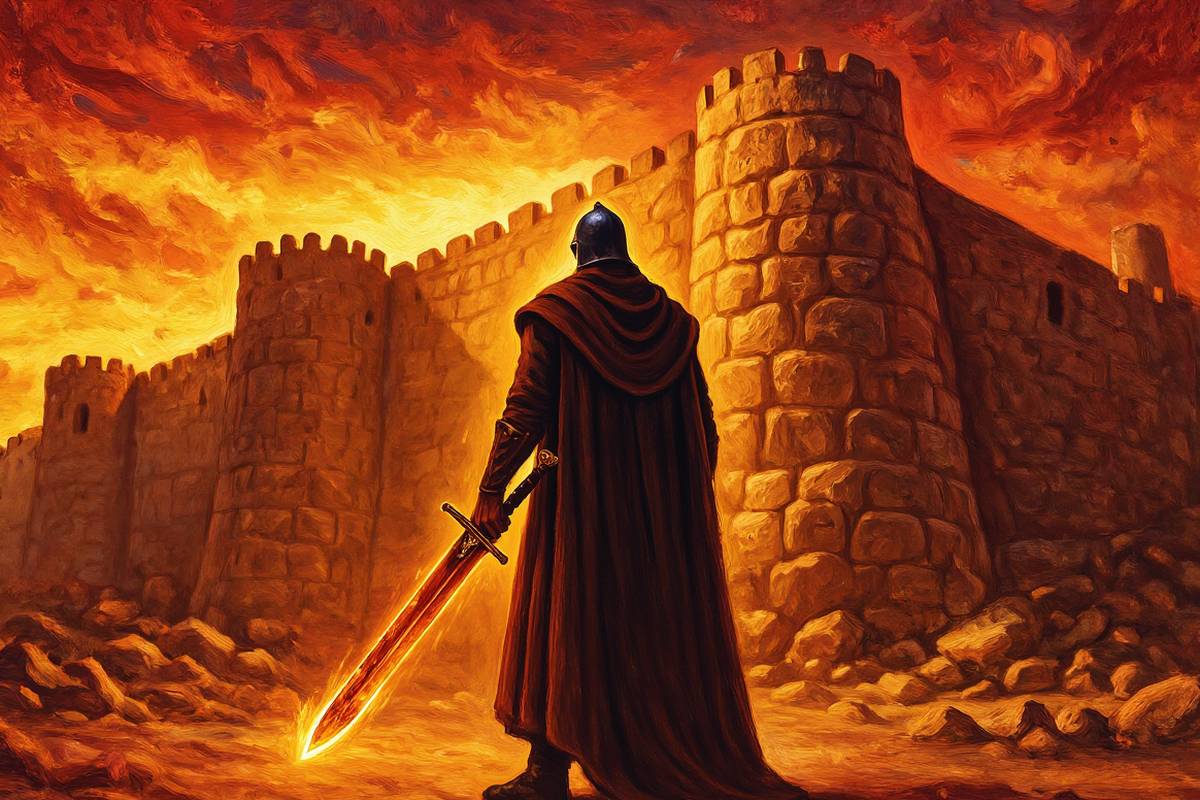
In the Old Testament, man’s part of the covenant God initiated with Abram was circumcision, a way of saying, my flesh is cut off, not my will but Yours. When Israel came to possess Canaan, the men were circumcised before their first battle. The first city was Jericho, which Pastor Hohman describes as about nine acres with walls wide enough for chariot races, and he notes that he has stood on those walls.
Before these former slaves could build in the promised land, they needed confidence that they were in covenant with God. Then, in Joshua 5:13–15, a man with a drawn sword stood before Joshua near Jericho. Asked whose side he was on, he answered that he came as Commander of the Lord’s army, and Joshua fell on his face and worshiped.
Pastor Hohman points out that this was no angel, because angels in Scripture always refuse worship. This was the pre-incarnate Christ, the covenant head, appearing as soon as Israel said they wanted their covenant with God. He showed up to provide, protect, sustain and support, and Israel took the land. Our eternal covenant, he says, is greater still.
The lesson is that we must work with Him: do what He says, say what He says, and stop what He tells you to stop even if everyone else does it. You cannot shun the voice of God and expect blessings to radiate from your life. He quotes an old song to make the point: “nothing from nothing leaves nothing,” but Jesus gives you something if you are with Him.
In Ephesians 1:7–12, we have redemption through His blood, and God has made known to us the mystery of His will. In covenant, Pastor Hohman says, God tells us about our lives directly, and a prophetic word becomes confirmation. God’s thoughts toward us are of peace and a future (Jeremiah 29:11), but compromise dulls His voice.
He tells of answering a store clerk who asked why he was well with one word: Jesus. Colossians 1:12–14 seals it: we have been delivered from the power of darkness and brought into the kingdom of the Son. Today, he urges, is the day of salvation.
People Who Know Their God: David and Goliath
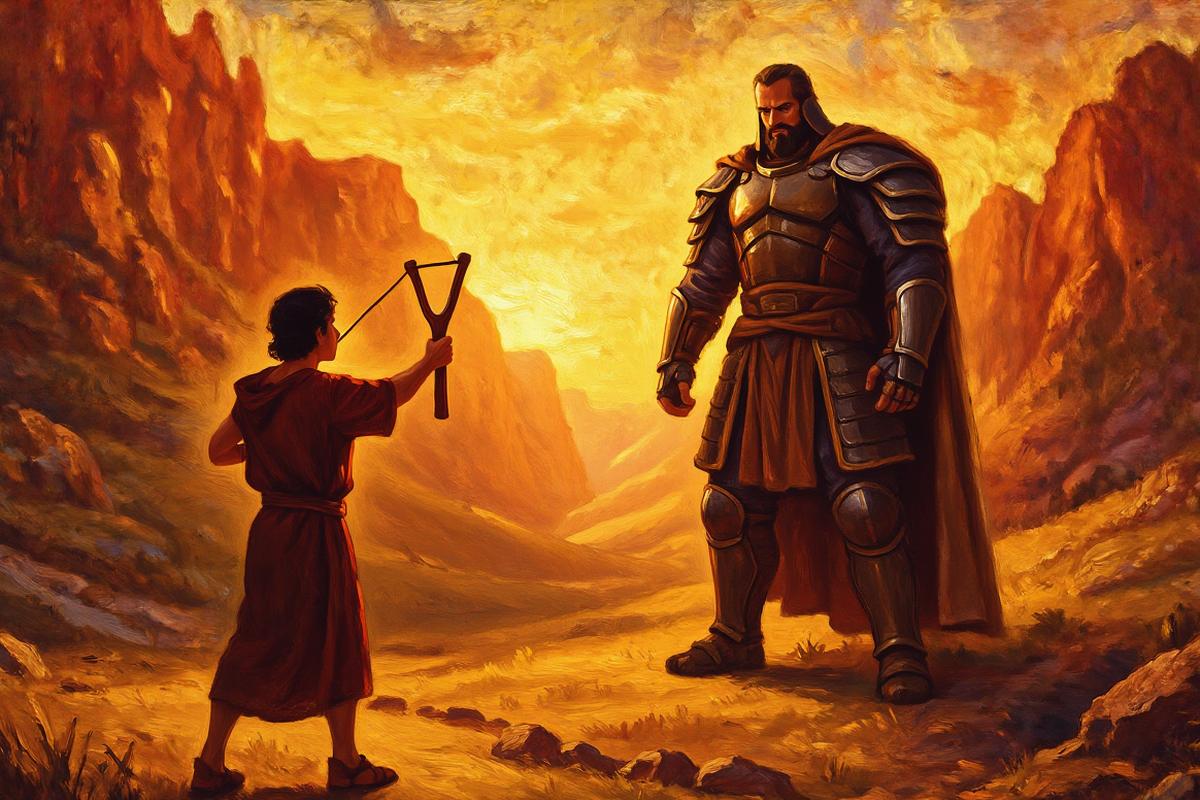
Pastor Hohman calls David and Goliath one of the greatest examples of anyone putting the blood covenant to work. For a month Goliath challenged Israel each morning and the army scattered. He teaches that Goliath was really after Saul, who stood head and shoulders above the people.
David, sent by Jesse with food for his brothers, heard the taunt and asked who this uncircumcised Philistine was, to defy the armies of the living God (1 Samuel 17:26). The word uncircumcised was the key. David knew the Philistines were not in covenant with God and Israel was. Pastor Hohman applies this to every believer: perfect love casts out fear (1 John 4:18), so ask God for a revelation of His love.
When Saul heard, he told David he was only a youth against a man of war (1 Samuel 17:31–33). Saul meant well, but he saw only carnal knowledge and circumstances. That, Pastor Hohman says, is a church with a form of godliness: fighting for the Lord on paper, yet sure it cannot win.
The contrast he draws between the two men is worth setting side by side:
| As described | Goliath | David |
|---|---|---|
| Size | About 11 feet tall, citing Josephus | About 5 foot 9 or 10, a 17-year-old |
| Equipment | Shield over 150 pounds, spear about 90, heavy coat of mail | A staff, a sling and a stone |
| What he said | He would give David’s flesh to the birds | He came in the name of the Lord of hosts |
| Where his faith was | In his weapons | In the covenant of a living God |
The bridge between David’s faith and ours is Daniel 11:32: those who act wickedly against the covenant are corrupted by flattery, but the people who know their God shall be strong and carry out great exploits. Pastor Hohman teaches that exploits means to display strength, to take action, to prevail and prosper.
The army said Goliath was too big to fight; David saw him as too big to miss. When well-meaning friends or family speak doubt in a moment of carnality, believers must speak out the covenant and what the Lord has done, and declare that the blood of Jesus is against the enemy.
Faith for Ten and a Half Acres
Pastor Hohman then tells how the blood covenant played out in his own ministry. About 35 years earlier, when he arrived in Merrill, the church had roughly 35 people, met in a small donated building and ran its office from his trailer. He built a board of five experienced pastors.
At an early board meeting he shared the vision God had given him and drove the board around to available properties. One board member, seeing a quarter-million-dollar site on three and a half acres, told him he would never need that much land and that an acre would do. Pastor Hohman says it felt like a punch in the stomach. Because they had to step out in faith rather than be limited by carnal thinking, he released the man from the board, though they remained friends.
About a month later, the Lord showed him the present property, nine and a half acres, and said He was giving it to him. He walked and prayed over it every Saturday.
When the owner, a Chicago plumbing contractor, began a pole building there, Pastor Hohman told him the Lord had given him the land and kept sharing Jesus with him. With nearby land selling for hundreds of thousands, the owner agreed to sell the land and the new building for 54,000 dollars on a land contract. The owner’s son soon came to the church and led his father to Christ, who passed away two weeks later. The church later added another acre, for ten and a half in all.
God works all things together for good; had he not said what God told him to say, that man might never have heard the gospel. He also warns against the phrase Christians use so often, I hope the Lord is with me. David did not hope; he knew.
The Blood Covenant and the Word of Your Testimony
David’s confidence came from history with God. In 1 Samuel 17:36–37 he says he has killed both lion and bear, and the Lord who delivered him from the paw of both will deliver him from this Philistine. Pastor Hohman sees humor here: Goliath wanted Saul, and God sent a shepherd boy, because He knows how to embarrass the arrogant.
Goliath asked if he was a dog, that David came with sticks, and promised his flesh to the birds (1 Samuel 17:43–44). The devil always brings words of doubt like this. Pastor Hohman’s answer is the declaration David knew: I shall not die, but live, and declare the works of the Lord (Psalm 118:17).
He then leads a simple exercise: count silently to ten and, partway through, say your full name aloud. The counting stops, which is why the word of our testimony matters.
David did not build himself up in his own skill with a sling. He said that he came in the name of the Lord of hosts (1 Samuel 17:45), and that the battle is the Lord’s, so all the earth would know there is a God in Israel (1 Samuel 17:46–47). As Pastor Hohman puts it, Goliath trusted his weapons, but “David’s faith was in the covenant of a living God.”
He invites listeners to name a problem and speak to it in the name of Jesus their covenant partner. 1 John 5:8 says the Spirit, the water and the blood agree as one, and Revelation 12:11 says believers overcome by the blood of the Lamb and the word of their testimony.
So we say so. Let the redeemed of the Lord say so (Psalm 107:2). No weapon formed against you will prosper (Isaiah 54:17). He closes by having the church read Psalm 91:2–4 and Psalm 91:9–11 aloud, first as written and then in the first person: He is my refuge, He will cover me, His promises are my protection.
Living Under Your Covenant Head
Pastor Hohman ends by calling the church to be strong and do great exploits, confident in the blood covenant. These steps come straight from the message:
- Let Him be responsible. Bring your needs to Christ as the One who provides, protects, sustains and supports, instead of carrying them alone.
- Work with Him. Do what He says, say what He says, and stop what He tells you to stop, even if no one else does.
- Ask for revelation. Do not be shy about asking God to reveal His love and the mystery of His will to you.
- Replace “I hope” with “I know.” Like David, remember what God has already done and speak from confidence in the covenant.
- Speak your testimony aloud. When doubt comes, say Psalm 118:17 and Psalm 91 out loud in the first person.
- Share Jesus where you are. Your workplace and your circles are places no one else can reach, so be ready to say why you are well.
Before communion he leads a prayer of salvation, then prays over finances, health and strained relationships, reminding the church that communion is how we remember that Christ is our covenant head.
Timestamped Outline
- 0:00 Communion and our covenant head
- 1:03 He chose us; everything He has is ours
- 2:13 A form of godliness without the blood
- 3:14 Adam’s corrupted blood
- 7:50 1 Corinthians 11:3 and what head means
- 10:04 Provide, protect, sustain, support
- 11:08 Ephesians 1:22–23: head over all things
- 12:19 Philippians 1:6 and the purpose of grace
- 15:32 The vine and the branches
- 19:04 Circumcision and the walls of Jericho
- 21:16 Joshua 5: the Commander of the Lord’s army
- 24:32 Working with Jesus
- 27:03 Ephesians 1:7–12: the mystery of His will
- 31:16 Colossians 1:12–14: delivered from darkness
- 33:33 David and Goliath
- 39:02 Saul’s carnal knowledge
- 40:15 Daniel 11:32: strong and doing exploits
- 42:54 The early years in Merrill
- 48:10 The Lord shows him the land
- 52:36 1 Samuel 17:36–37: lion and bear
- 54:54 Psalm 118:17 and the counting exercise
- 59:58 The Spirit, the water and the blood
- 1:02:14 Psalm 91 declared aloud
- 1:05:21 Prayer of salvation and communion
Blood Covenant Series
This message is part of a long teaching series at NTC Ministries. Start from the beginning or continue where this one leaves off:
- First message: The Blood Covenant
- Previous: The Blood Covenant #11: Christ Our Covenant Head, and David’s Covenant Confidence
- You are here: The Blood Covenant #12: Our Covenant Head and the People Who Know Their God
- Next: The Blood Covenant #13 — Redemption Through His Blood and Freedom From Spiritual Death (Palm Sunday)
Frequently Asked Questions
Does Christ being our head mean we can be passive?
No. Pastor Hohman is firm that Christ takes responsibility for the covenant, but he calls the idea that grace means never doing anything again a lie from the pit. Grace is given to teach us how to live godly in this covenant. Like Israel taking the promised land, we have to work with Him: obey what He says, speak what He says, and live for Him rather than for ourselves.
Was the man Joshua met really Jesus?
Pastor Hohman teaches that he was the pre-incarnate Christ. His reason is that Joshua fell down and worshiped, and the visitor did not stop him. Throughout Scripture, he notes, when people bow before an angel, the angel immediately refuses, saying he is not worthy. Here the Commander instead told Joshua to remove his sandals because the ground was holy, which points to the covenant head Himself.
Why does he ask people to speak while counting?
It is a small demonstration of why spoken testimony matters. When you count silently and then say your full name aloud, the counting stops. Pastor Hohman uses it to show that speaking God’s Word drowns out the thoughts of doubt the enemy brings. That is why David declared his victory before the fight, and why he has the church declare Psalm 91 in the first person.
Scripture References
All passages open in the New King James Version on Bible Gateway:
- 1 Corinthians 11:3 — the head of every man is Christ
- Ephesians 1:22–23 — head over all things to the church
- Philippians 1:6 — He will complete the good work
- John 15:5–6 — without Me you can do nothing
- Joshua 5:13–15 — the Commander of the Lord’s army
- Colossians 1:12–14 — delivered from the power of darkness
- Daniel 11:32 — the people who know their God
- 1 Samuel 17:45 — in the name of the Lord of hosts
- Revelation 12:11 — the blood of the Lamb and the word of testimony
- Psalm 91:2–4 — my refuge and my fortress
How this summary was made: written with AI assistance from the sermon’s own transcript and checked against the Scriptures listed above.
Watch More Messages
If this message strengthened your confidence in God’s covenant, there are hundreds more teachings from NTC Ministries to explore. Browse the full sermon archive and keep growing as one of the people who know their God.