The name of Jesus carries an investment that no other name carries: it means the rescuer and deliverer, and the One who bears it came to bring people back into an intimate relationship with God. In this message, Dr. William P. Hohman launches a new series called Who Is Jesus, starting with His name, His role as Creator and Word, and the reason humanity needed rescuing at all.
Two threads run through the message: the kingdom law of sowing and reaping, and the seeds of intimacy every believer must keep planting. Below are the video, a structured summary, the Scriptures (linked to the New King James Version on Bible Gateway), a timestamped outline and practical steps.
Sermon at a Glance
This message was preached at NTC Ministries in Merrill, Wisconsin, and posted on October 13, 2020. The recording runs about 105 minutes. It opens with worship, an offering and church announcements, and the sermon itself begins just before the 30-minute mark. It ends with an invitation to receive Jesus and a prayer for people troubled by nightmares.
Before the sermon, the service leader reminds the church that God was our first giver. He led by example and never asks us to do something He has not already done, because He gave His only begotten Son (John 3:16). A God who withholds nothing, the church is told, deserves people who do not withhold from Him.
| Detail | Information |
|---|---|
| Speaker | Dr. William P. Hohman |
| Series | Who Is Jesus (message 1: the name of Jesus) |
| Main text | John 1:1–13 and Genesis 1–3 |
| Key theme | Jesus came as deliverer to restore an intimate relationship with God |
| Length | About 105 minutes, with the sermon starting near 29:35 |
A New Series: Who Is Jesus?
Pastor Hohman explains that the church has just finished series on the Holy Spirit and on the anointing, and is now starting one on who Jesus is. He teaches in series on purpose. God says He will teach His people line upon line, here a little and there a little (Isaiah 28:10–11), and building message on message causes both faith and understanding to grow.
The hardest part of any series, he admits, is starting, especially when the subject is the name of Jesus and all it holds. Many treat Revelation as a book about the end times, but it is the revelation of Jesus. Whatever the church studies, the focus stays the same: “It’s all about Jesus.”
He announces two focal points for the message. The first is the seed. The kingdom of God runs on laws, just as nature does, because God is a God of order who sets standards and says that living within them goes well. One of those laws is sowing and reaping: do not be deceived, God is not mocked, and whatever a man sows he will reap (Galatians 6:7–8). The second focal point is intimate relationship with God.
The Power in the Name of Jesus
Every name carries something invested in it, and the name of Jesus most of all. Pastor Hohman points out that some names make us want to run the other way because of what someone sowed into our life, while other names make us smile. Over the course of the series, he promises, what has been invested in the name of Jesus is going to make his listeners smile.
Many people carry wrong seeds about God. He tells of a young woman brought to him by government agents who had been raised by a satanist group that mocked Jesus to her from childhood. Demons were cast out of her that first day, and a month later she gave her life to Jesus. Others absorb a distorted picture when a disaster is called an act of God, a seed that works against any intimate relationship with Him.
He then breaks down the name itself. The common name used for Jesus in His day was Yeshua, an alternative form of Yahushua, the same name as Joshua, which he explains means to rescue and deliver. The Koine Greek, the street language of the time, rendered it Iesous, which passed into Latin and then into English as Jesus. He is the rescuer, the deliverer.
Some have told Pastor Hohman he is not a true follower of God because he does not use the name Yeshua. His answer is his testimony: he has led hundreds of people to the Lord through the name of Jesus, seen blind eyes opened and dozens of deaf people hear, seen dozens delivered from demons, and seen three people raised from the dead. That happened, he says, because Jesus lives in him and he is intimate with Him.
To illustrate, he tells of his uncle Fred, who never called him by his given name, William Paul Hohman, but always by a playful string of other names. Strangers had no idea who Fred meant, yet he always knew, because they were close. His counsel is not to get caught up in semantics. Call Him Yeshua if you like, the same way some call the Father daddy, since we have received the Spirit by whom we cry out, Abba, Father (Romans 8:15).
What matters is intimacy and obedience, not just saying the name of Jesus. Jesus asked people why they called Him Lord, Lord, but did not do what He said (Luke 6:46). The seven sons of Sceva used His name without knowing Him, and the evil spirit overpowered them and sent them running (Acts 19:13–16). Jesus came, he says, to bring intimacy with God back into people’s lives.
Seeds of Intimacy and the Law of Sowing
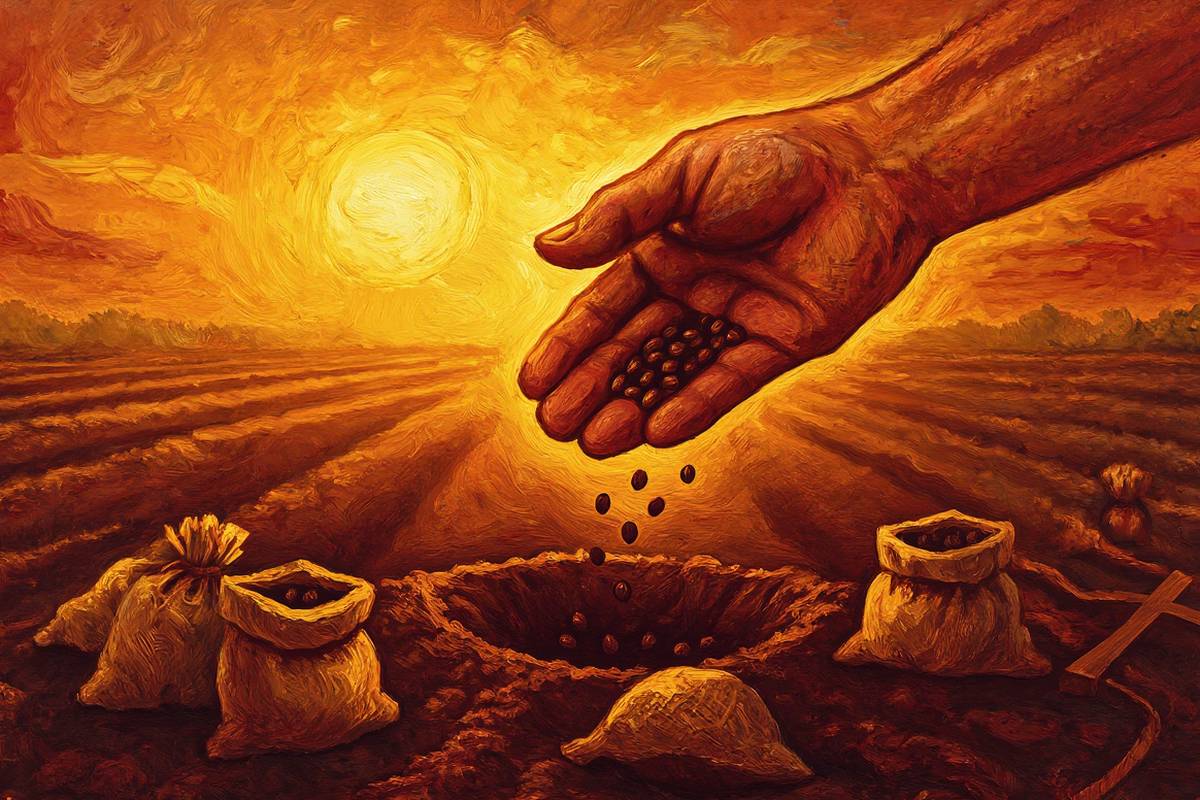
Holding up packets of flower, onion and tomato seeds, Pastor Hohman makes the principle visible. A seed produces what it is. If you plant an onion seed, you cannot believe for tomatoes. If we sow to the flesh we reap corruption, and if we sow to the Spirit we reap everlasting life.
The same law governs relationship with God. Even after giving our lives to Jesus, he says, we must keep sowing seeds of intimacy with Him. That means getting rid of distractions. It is why Jesus told us to go into our room and shut the door when we pray (Matthew 6:6): get away from distractions in order to build closeness with God.
The benefits of this kind of intimate relationship are phenomenal, he teaches, but someone who has never sown seeds of intimacy has not yet seen their harvest. The call is to trust God enough to start sowing.
Later in the message he returns to the picture with Jesus’ parable of the mustard seed (Matthew 13:31–32). It is the smallest of seeds, but once sown it grows into the greatest of trees. What looks like a little thing, a decision to repent and draw near, becomes something great when God plants it.
Jesus, the Word, the Creator and the Light
Instead of starting in Genesis, Pastor Hohman starts in John 1:1–5: “In the beginning was the Word, and the Word was with God, and the Word was God.” He points out that Word is capitalized because it is a proper name. All things were made through Him, in Him was life, and the life was the light of men. The darkness could not grasp it.
Revelation of who Jesus is, he says, does not come from our own understanding; it comes through an intimate process. In John 1:6–13, John the Baptist came to bear witness of the light so that all might believe. He explains that the word for believe is tied to the Greek pistis, meaning faith or trust, and we trust people we are intimate with. Jesus came to His own and they did not receive Him, but to as many as received Him He gave the right to become children of God.
So Jesus is the Creator, the Word and the Light. With that in place, Pastor Hohman reads Genesis 1:1–5 and the days that follow. Each time, God said, and it was so, and He saw that it was good. He describes the Father as the architect in whose heart everything was planned, and the Word as the One speaking it into being.
“Jesus put on the show of shows,” he says. From the mouse to the elephant, from the hummingbird to the condor, all of it was good.
The sixth day was the masterpiece. In Genesis 1:26–28, God made mankind in His own image and likeness, blessed them, and gave them dominion over everything He had just made. Then, in Genesis 1:31, God saw everything He had made, “and indeed it was very good.” Everything else was good; man was very good.
That is why, he says, God deserves a deeper intimate relationship than anything else on earth, whether money, a job, a spouse, children or pets. When people make any of those their closest bond instead of their Creator, life becomes a mess and they end up blaming God.
How Intimacy With God Was Lost
In Genesis 2:8–9, God plants a garden in Eden, a whole region rather than a few rows, and places in its middle the tree of life and the tree of the knowledge of good and evil. Pastor Hohman teaches that this knowledge refers to earthly knowledge or cunning: our own craftiness and ability to scheme our way forward without looking to God.
He connects it to James 3:14–17, where wisdom born of envy and self-seeking is called earthly, sensual and demonic, while the wisdom from above is pure, peaceable and full of mercy. The table below follows his contrast between the two.
| Earthly knowledge (the tree) | Wisdom from above |
|---|---|
| Cunning and our own craftiness | Pure, peaceable, willing to yield, merciful |
| Knowledge gained through hardship and experience | Knowledge received by faith |
| Lives in fear of being hurt or losing out | Rests in the confidence that God has a plan |
| Hides from God’s presence | Draws near in intimate relationship |
| A phone call at 3 a.m. brings “oh no, what happened now?” | The same call brings expectation of what good God is doing |
In Genesis 2:15–17, God warns Adam that eating from that tree means death. Pastor Hohman explains the Hebrew phrase as “in dying you will surely die”: first a spiritual death, cut off from intimate relationship, and then a dying process that ends in physical death. God never intended that for the people made in His image.
In Genesis 3:1–10, the serpent, which he describes as Satan working through the animal, tells Eve that God is holding out on her. He explains the Hebrew word for serpent as pointing to an enchanter who makes people acquire knowledge through hardship and lack. The serpent was pushing her to gain knowledge by experience rather than by faith.
The result was immediate. Adam and Eve saw they were naked, sewed fig leaves together, and hid from the presence of the Lord among the trees. Adam said, “I was afraid.” Pastor Hohman sees the same fallen nature today when people say church makes them uncomfortable, or get up and walk out when the Holy Spirit is moving on them.
In Genesis 3:14–16, God tells the serpent that the woman’s offspring will crush his head. Head speaks of authority in Scripture, he notes, so Satan’s authority would be crushed and given back to mankind. He reads submission as being “under a mission”: the mission of bringing intimate relationship with God into the world.
Then, in Genesis 3:17–19, the ground is cursed because of Adam, and he will eat by the sweat of his brow. Pastor Hohman insists that God never cursed Adam. He simply held up the seed packet and showed Adam what he had sown and what would now grow in his life: struggle, manipulation and striving.

Jesus the Deliverer Restores the Relationship
In Genesis 3:20–24, God clothes Adam and Eve in tunics of skin and sends them out of the garden, placing cherubim and a flaming sword to guard the tree of life. Pastor Hohman teaches that God could not allow man to live forever in a perpetual state of fear of Him. That is why Jesus came: to release those who were all their lifetime in bondage to fear (Hebrews 2:14–15).
Through one man sin entered the world, and death through sin (Romans 5:12). He stresses that sin is a nature, and stealing, adultery or drunkenness are its fruit. Everyone is born with that nature except Adam, who was created, and Jesus, who was born with the nature of God and never sinned. He became sin for us so that we might become the righteousness of God in Him (2 Corinthians 5:21).
Before Christ we walked according to the course of this world and were by nature children of wrath (Ephesians 2:2–3). Without Him, he says, you can own corporations and still be empty and afraid. We are called to cast all our care on Him, because He cares for us (1 Peter 5:7).
He shows the Leaning Tower of Pisa from below, where it looks straight, and then from the side, where the lean is obvious. That is how we see ourselves: fine, while noticing everyone else’s flaws. He tells of a man who stood up during a call to repentance and shouted at the preacher, “What about you?” Such people, he says, are running from the Holy Spirit inviting them into intimacy.
Without Christ we were without hope and without God in the world (Ephesians 2:12). Jesus came to change that: “The thief does not come except to steal, and to kill, and to destroy. I have come that they may have life, and that they may have it more abundantly” (John 10:10). Whoever calls on the name of the Lord, the name of Jesus, shall be saved (Romans 10:13).
The congregation reads John 3:16–21 together. God sent His Son not to condemn the world but to save it. Pastor Hohman shares that his first words every morning are “Jesus, tell me again how much you love me,” because without that confidence he would have a tough day.
When we call on Him, He sows a seed of eternal life, for we are born again not of corruptible seed but incorruptible, through the word of God (1 Peter 1:23). Like tilled soil that hardens if left unplanted, a heart stirred by the Holy Spirit must respond while it is soft, and respond openly, just as Jesus called His disciples publicly. Many people know about Jesus without knowing Him; the difference is a seed of intimacy planted in the heart.
Living It Out This Week
Pastor Hohman closes by inviting anyone who wants a relationship with God to receive Jesus as deliverer, rescuer and Savior, then prays for people suffering from nightmares, declaring that God gives His beloved sweet sleep (Psalm 127:2). Here are practical steps drawn from the message:
- Sow seeds of intimacy daily. Set aside a place without distractions where you shut the door and talk with God.
- Start the morning with His love. Before anything else, ask Jesus to remind you how much He loves you.
- Use the name with obedience. Do not settle for calling Him Lord, Lord; ask what He has told you to do and do it.
- Check which knowledge you live by. When fear rises, trade cunning and worry for trust that God has a plan.
- Look at the tower from the side. Let the Holy Spirit show you where you lean instead of asking, “What about you?”
- Respond while the soil is soft. If God is stirring your heart, act on it now rather than letting the ground harden.
Timestamped Outline
- 0:04 Opening worship
- 6:48 God was our first giver: John 3:16
- 15:18 Worship: there is power in His name
- 29:35 A new series: who is Jesus?
- 31:46 The law of sowing and what a name carries
- 32:45 A young woman set free
- 37:49 Yeshua, Joshua and the meaning of the name
- 40:17 Miracles in the name of Jesus
- 41:39 Uncle Fred and not getting caught up in semantics
- 43:57 Lord, Lord, and the sons of Sceva
- 44:56 Seed packets and seeds of intimacy
- 47:19 John 1: In the beginning was the Word
- 51:32 Genesis 1: Jesus the Creator
- 55:46 The show of shows
- 56:55 Mankind, God’s masterpiece
- 1:02:09 The garden and the two trees
- 1:03:20 Earthly knowledge and James 3
- 1:06:52 The serpent and the fall
- 1:13:46 Submission: under a mission
- 1:16:07 God held up the seed packet
- 1:19:35 Sin is a nature
- 1:22:14 The Leaning Tower of Pisa
- 1:30:47 John 10:10 and Jesus the deliverer
- 1:36:05 The incorruptible seed and tilled soil
Frequently Asked Questions
Is it wrong to call Jesus by His English name instead of Yeshua?
Pastor Hohman’s answer is no. He traces the name from the Hebrew Yeshua through the Koine Greek and Latin into English and says all of them refer to the same Son of God. What matters is not the spelling but whether you know Him. He urges believers not to argue over semantics but to cast out devils, heal the sick and lead people to Jesus, whatever form of the name they use.
Did God curse Adam in Genesis 3?
Pastor Hohman teaches that God did not curse Adam. Scripture says the ground was cursed because of Adam. Using his packets of seed as a picture, he explains that God simply showed Adam the harvest of the seed he had sown by eating from the tree of cunning: a life of struggle and striving. God’s response to that harvest was not condemnation but a plan to send Jesus.
Why does the sermon spend so much time in Genesis?
Pastor Hohman calls this message foundational. Before the series can show who Jesus is, it has to show what He created, what was lost in the garden and why a deliverer was needed. He compares it to laying a foundation before a skyscraper goes up, and says later messages in the series will build on this groundwork.
Scripture References
All passages open in the New King James Version on Bible Gateway:
- John 1:1–5 — In the beginning was the Word
- Genesis 1:26–28 — mankind made in God’s image
- Genesis 3:1–10 — the fall and hiding from God
- Galatians 6:7–8 — whatever a man sows
- James 3:14–17 — earthly wisdom and wisdom from above
- Acts 19:13–16 — the seven sons of Sceva
- Romans 5:12 — sin entered through one man
- John 10:10 — life more abundantly
- John 3:16–21 — not sent to condemn
- 1 Peter 1:23 — born of incorruptible seed
How this summary was made: written with AI assistance from the sermon’s own transcript and checked against the Scriptures listed above.
Watch More Messages
If this message drew you closer to Jesus, there are hundreds more teachings from NTC Ministries waiting for you. Browse the full sermon archive and keep sowing seeds of intimacy with the One who made you.