The blood covenant is an exchange: you hand God your weakness and corruption, and He hands you His strength, life and protection. In this message, Dr. William P. Hohman shows that praise is one of the main places where that exchange happens, and he traces it to Leah, the unloved wife who named her fourth son Judah, meaning praise. This is part two of his teaching on heaven’s protection and continues from The Blood Covenant: Heaven’s Protection, Part 1 — From Strangers to Kingdom Citizens.
Below you will find the full video, a structured summary of the sermon, the Scripture behind each point (linked to the New King James Version on Bible Gateway), a timestamped outline, and practical steps you can take this week.
Sermon at a Glance
This message was preached at NTC Ministries in Merrill, Wisconsin, during a Father’s Day service and posted on June 22, 2021. It runs about 73 minutes and closes with communion. Pastor Hohman opens by reminding the church that the whole Bible, from start to finish, is about covenant, and that believers who do not understand it leave much of their inheritance untouched.
He compares it to a million dollars sitting in a bank account: telling everyone about the money does you no good until you go and draw on it. God is glorified, he says, when His children take hold of what He purchased for them and use it to build His kingdom and live a blessed life.
| Detail | Information |
|---|---|
| Speaker | Dr. William P. Hohman |
| Series | The Blood Covenant (heaven’s protection, part 2) |
| Main text | Genesis 29:31–35 |
| Key theme | Praise as the place where God’s strength is exchanged for ours |
| Length | About 73 minutes, ending in communion |
The Blood Covenant Exchange: Redeemed From and Redeemed To
Pastor Hohman starts by restating what the series has already established. In the blood covenant we are not only redeemed from something; we are redeemed to something. We are redeemed from spiritual death to eternal life, from sickness to divine health, and from poverty to provision. Salvation is not a ticket to wait out a hard life until heaven, because God has given us all things that pertain to life and godliness (2 Peter 1:3).
He describes two kingdoms. The kingdom of this world is corrupted and endlessly divided, splitting into nations, parties and factions within factions. The kingdom of heaven is not divided and not corrupt. When we give our life to Jesus, we give Him our corruption and He gives us the incorruptible. That is the heart of covenant: He receives everything we have, and we receive everything He has.
Two passages anchor this. Galatians 6:8 says that whoever sows to the flesh reaps corruption, but whoever sows to the Spirit reaps everlasting life. 1 Corinthians 15:50–53 says this corruptible must put on incorruption. The practical question for every believer, then, is simple: what am I sowing to today?
To picture the exchange, he uses a toddler clutching a filthy teddy bear. Pull it away and the child screams. Offer something better and the child lets go and reaches for the new gift. That, he says, is the gospel: God does not just take our old life away; He hands us something far better in its place.
Lift Up Your Heads, O You Gates
The second movement of the sermon comes from Psalm 24:7–10: “Lift up your heads, O you gates!” and the King of glory, the Lord of hosts, will come in. Pastor Hohman reads the gates as the five physical senses, the eye gate, the ear gate, the mouth gate, the nose gate and the gate of touch. They are how we relate to the world.
When Adam sinned, he says, humanity became enslaved to those senses. That is why so many people now live by “I don’t feel like it.” The covenant answer is to lift those gates up to God. You give Him what you see, hear, taste, touch and feel, and the King of glory comes in through the very gates you surrendered.
This is why praise cannot depend on mood. “I’m tired, I don’t feel like it” is the flesh speaking. You praise because God is worthy, and in doing so you exchange your tired, corruptible strength for His. Pastor Hohman applies the same principle to time in the Word and to giving: whatever you lift up to God, He fills.
He points to Paul’s letter to Timothy, who was pastoring the large church at Ephesus and had lost heart. Paul did not tell him to wait until he felt better. He told him to stir up the gift of God that was in him (2 Timothy 1:5–6). Praise works the same way: you stir yourself up, whatever you feel.

Praise That Stills the Enemy and the Avenger
In Matthew 21:15–16, after Jesus healed the blind and the lame in the temple, the children began shouting “Hosanna to the Son of David!” The religious leaders told Jesus to silence them. He answered by quoting Psalm 8:2: out of the mouth of babes and nursing infants God has ordained strength, because of His enemies, to silence the enemy and the avenger.
Pastor Hohman draws out what that means. God has ordained, ordered and established that when we give Him our strength in praise, He answers with strength beyond human ability. He points to Samson catching foxes in Judges 15:4 and to Elijah running ahead of Ahab’s chariot in 1 Kings 18:46. Neither was natural strength.
Because this is covenant, he adds, it does not depend on spiritual maturity. The newest believer has access to the same strength as someone who has studied Hebrew and Greek for twenty years. You simply praise Jesus for who He is.
He links praise to the principle of generosity in Proverbs 11:24–25: there is one who scatters and yet increases more, and the generous soul will be made rich. Whoever waters others is watered himself. Giving God every ounce of strength in worship is the same kind of sowing, and the harvest is His strength flowing back into your life.
He also warns against praise that only soothes our own emotions. Peace, he says, is not the absence of war; it is the presence of God in the middle of the war. King David understood this when he danced before the ark with all his might and told his wife Michal he would become even more undignified for the Lord (2 Samuel 6:14–22).
The Blessing of Judah: How Leah’s Praise Changed History
The center of the sermon is the story of Jacob, Rachel and Leah. Jacob worked seven years for Rachel, was given her older sister Leah instead, and then worked seven more years for Rachel. He loved Rachel and despised Leah. Genesis 29:31–35 records what happened next through the names Leah gave her first four sons.
Pastor Hohman shows that the first three names were all about winning Jacob’s love. Only the fourth turned toward God. The table below follows his reading of each name.
| Son | Meaning as taught | What Leah said | Who it was about |
|---|---|---|---|
| Reuben | “See, a son” | Now my husband will love me | Jacob |
| Simeon | Hearing | The Lord has heard that I am unloved | Jacob |
| Levi | Attached, joined | Now my husband will become attached to me | Jacob |
| Judah | Praise | Now I will praise the Lord | God |
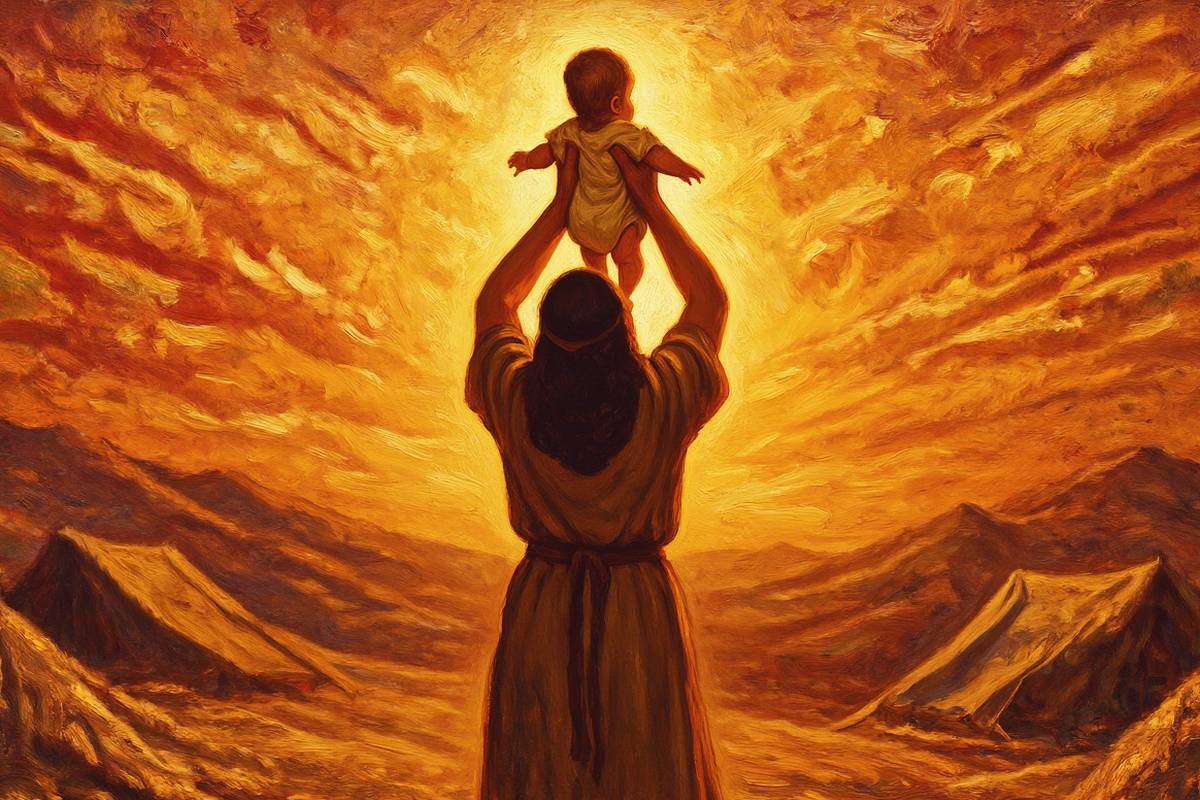
None of the first three changed Jacob. With the fourth, Leah stopped saying “look what I have done for you” and started saying “thank You, Lord, for what You have done for me.” Pastor Hohman teaches that the name Judah is tied to the Hebrew yadah, to praise or give thanks with extended hands, which is why believers lift their hands in worship.
That shift pleased God. Of all of Jacob’s sons, it was Judah who received special favor, and that favor is what he calls the blessing of Judah. Leah held what he describes as a private praise session in the middle of rejection, and God answered with a line that produced kings and, ultimately, the Messiah.
Why God Chose Judah to Lead
Pastor Hohman then walks through the passages that show Judah, praise, at the front. Psalm 78:67–68 says God rejected the tent of Joseph and did not choose Ephraim, but chose the tribe of Judah and Mount Zion, which He loved. In 1 Chronicles 28:4, David says God chose Judah to be the ruler. Read with Judah meaning praise, he says, God chose praise to rule.
Jacob’s blessing in Genesis 49:8–12 promises that the scepter will not depart from Judah until Shiloh comes, a prophecy fulfilled in Jesus. In Judges 20:18, when Israel asked who should go up first into battle, the Lord answered, “Judah first.” In 2 Chronicles 20:21–23, Jehoshaphat sent singers ahead of the army, and the enemy armies turned on one another.
The Psalms keep the theme going. Psalm 108:8 calls Judah God’s lawgiver, the scepter of His authority. Psalm 114:1–2 says that when Israel came out of Egypt, Judah became His sanctuary. Psalm 76:1–2 says that in Judah God is known. Praise, in other words, is where God’s presence and authority are made visible.
The application he draws is direct. If you want doors opened and advancement in life, be a praiser. If you want God’s authority working in you so that problems no longer knock you off balance, make praise your daily practice.
Praise in the Hardest Moments
Pastor Hohman shares two experiences from his own ministry. The first was a prayer conference in the desert outside Alexandria, Egypt, where thousands gathered under tents. On the first night, a van of Somali Christians leaving the site was attacked. The next morning the host pastor prayed that their enemies would see no tears of sorrow, only shouts of praise and joy, and the gathering broke into exuberant worship. Pastor Hohman also reports deaf people receiving their hearing during that conference.
The second was a season of severe financial pressure for the ministry during the housing market collapse, when school enrollment dropped and giving fell. After the Lord gave him Matthew 6:26 in prayer, the bank called in the mortgage. He and his wife Pam went into the backyard and simply praised God for everything He had already done. He describes seeing a cloud shaped like a cross cross the sky, and when he called the bank the next day, the matter was resolved.
His point in both stories is the same as Leah’s: when the darkest moment comes, do not recite your problems to the world. Praise God in the middle of it, and let Him show up.
Living the Blood Covenant This Week
Pastor Hohman closes with a model of what praise sounds like, thanking Jesus as the one who sought us out, the giver of all love, joy, peace and grace, the miracle worker and the great I AM. He encourages the church to praise in the morning, at noon and when the sun goes down, because everything that has breath is to praise the Lord (Psalm 150:6).
Here are the practical steps drawn from this blood covenant message:
- Praise before you feel like it. Treat tiredness as the moment to give God your strength, not the reason to withhold it.
- Lift up your gates. Choose what you watch, listen to and dwell on, following Philippians 4:8.
- Name what God has done. Like Leah, move from pointing to what you have done to thanking the Lord for what He has done.
- Change the atmosphere. When grumbling starts at work or at home, answer it with thanksgiving instead of joining in.
- Keep a place of prayer. A dedicated place where you return to praise builds an atmosphere of His presence.
- Wear the garment of praise. Isaiah 61:1–3 promises beauty for ashes and the garment of praise for the spirit of heaviness.
In this world you will have trouble, Jesus said, but be of good cheer, because He has overcome the world (John 16:33). Praise is how you keep the Overcomer at the center of every situation.
Timestamped Outline
- 0:00 The whole Bible is about the blood covenant
- 0:59 Redeemed from, and redeemed to
- 2:06 Two kingdoms: divided and undivided
- 4:26 Psalm 24: lift up your heads, O you gates
- 7:23 The five senses as gates
- 11:39 Out of the mouth of babes: Matthew 21 and Psalm 8
- 14:00 The generous soul: Proverbs 11
- 22:56 David dances before the ark
- 26:18 What the name Judah means
- 27:39 Jacob, Rachel and Leah
- 31:39 Leah’s four sons: Genesis 29:31–35
- 35:07 God chose the tribe of Judah: Psalm 78
- 38:48 Judah to rule: 1 Chronicles 28:4
- 39:57 The scepter of Judah: Genesis 49
- 40:58 Judah goes first, and Jehoshaphat’s praisers
- 43:07 Judah is my scepter: Psalm 108
- 45:34 The prayer conference in Egypt
- 50:58 Judah became His sanctuary: Psalms 114 and 76
- 54:56 A model prayer of praise
- 55:57 Praising through a financial crisis
- 1:00:54 Isaiah 61: the garment of praise
- 1:04:13 Communion and closing prayer
Blood Covenant Series
This message is part of a long teaching series at NTC Ministries. Start from the beginning or continue where this one leaves off:
- First message: The Blood Covenant
- Previous: The Blood Covenant: Heaven’s Protection, Part 1 — From Strangers to Kingdom Citizens
- You are here: The Blood Covenant: Heaven’s Protection, Part 2 — The Blessing of Judah
- Next: The Blood Covenant #26: How Praise Releases God’s Strength
Frequently Asked Questions
Does God only accept loud praise?
Pastor Hohman’s point is not volume for its own sake. It is giving God whatever strength you have instead of saving it for everything else. He contrasts praise that pours out energy toward God with a quiet calm we produce for ourselves. Scripture shows both David’s dancing and Leah’s simple “now I will praise the Lord,” and in both cases the focus moved off self and onto God.
What if I cannot think of anything to praise God for?
Start with who He is rather than how you feel. Pastor Hohman suggests praising Jesus as the one who sought you out, the giver of love, joy, peace and grace, and the healer. Then remember specific things He has already done. He admits it can feel difficult at first and says to begin anyway, because the atmosphere inside you changes as you go.
Why does this sermon end with communion?
Communion remembers the body broken and the blood shed in covenant for us, so it fits a message on the blood covenant. Pastor Hohman also describes the praise time itself as communion: giving God your full attention so that He can speak, in the same way that real communication starts only once you have someone’s attention.
Scripture References
All passages open in the New King James Version on Bible Gateway:
- Genesis 29:31–35 — Leah names her sons
- Genesis 49:8–12 — the scepter of Judah
- Psalm 24:7–10 — lift up your heads, O you gates
- Psalm 8:2 and Matthew 21:15–16 — strength from the mouths of babes
- Psalm 78:67–68 and 1 Chronicles 28:4 — God chose Judah
- Galatians 6:8 — sowing to the Spirit
- 2 Chronicles 20:21–23 — Jehoshaphat’s praisers
- Isaiah 61:1–3 — the garment of praise
How this summary was made: written with AI assistance from the sermon’s own transcript and checked against the Scriptures listed above.
Watch More Messages
If this message strengthened you, there are hundreds more teachings from NTC Ministries waiting for you. Browse the full sermon archive and keep growing in the covenant God has made with you.