A hands on experience of God’s love is not something you can read about or hear about secondhand; it happens when the Holy Spirit pours God’s love into your heart and changes who you are. In this second message of the series, Dr. William P. Hohman shows that God created people for that kind of intimate encounter, that hope rests on it, and that the story of Joseph and the carts sent to his father Jacob is a picture of the Holy Spirit reviving a heart that had lost all hope.
Below you will find the full video, a structured summary of the sermon, the Scripture behind each point (linked to the New King James Version on Bible Gateway), a timestamped outline, and practical steps for meeting with God every day.
Sermon at a Glance
This message was posted in July 2022 and runs about an hour. Dr. Hohman explains that the previous week’s sermon was a transitional message, the fifth in his teaching on the biblical principle of putting God first, and that this is part two of his new theme on experiencing God’s love.
He moves in three stages. First he recaps creation and shows that God’s first desire was a face-to-face encounter with the people He made. Then he works through Romans 5 to show how hope and love connect. Finally he tells the story of Joseph in Genesis 37 to 45 and draws one picture from it: the carts Joseph sent to bring his father down to Egypt, which he reads as a type of the Holy Spirit. He ends with his own testimony of meeting God at an altar call.
| Detail | Information |
|---|---|
| Speaker | Dr. William P. Hohman |
| Series | Hands On Experience of God’s Love, message #2 |
| Main text | Romans 5:1–8 and Genesis 45:4–28 |
| Key theme | The Holy Spirit pours out God’s love so we experience it, not just know about it |
| Length | About 61 minutes, ending in prayer |
Created for a Hands On Experience With God
Dr. Hohman starts with creation. God spoke light into being and it was so. He spoke the firmament, the seas and the animals, and each time it was so. But with man, the language changes. In Genesis 1:26–27 God says, “Let Us make man in Our image, according to Our likeness.” The “Us,” he teaches, is the Father, the Son and the Holy Spirit.
Genesis 2:7 adds the detail: the Lord God formed man of the dust of the ground and breathed into his nostrils the breath of life. Dr. Hohman pictures the greatest artist in existence shaping a man out of clay, then bending down to breathe into him. The first thing Adam saw when he came to life was the face of his glorious Creator. That, he says, is the experience God wants every person to have with Him all the time.
This is why he calls religion such a tragic thing. People can know all the Bible stories and still never have a personal, intimate encounter with God. He points to Matthew 7:22–23, where some will say they did miracles and cast out devils in Jesus’ name, and He will answer that He never knew them.
When Adam and Eve sinned, they separated themselves from God; He did not separate Himself from them. He still came in the cool of the day and asked, “Where are you?” They answered that they were afraid and hid (Genesis 3:8–10). Fear involves torment, Dr. Hohman says, but perfect love casts out fear (1 John 4:18).
The same pattern appears with Eve in Genesis 2:21–22. God formed her while Adam slept and only then brought her to the man. Her first encounter was with God, not with her husband. Our first intention, he teaches, is always a continual, intimate relationship with God; then God brings the spouse He has for us.
Without those encounters, he warns, fear creeps in and tells us we are lacking. That was the devil’s lie in the garden: God is withholding from you.
Hope That Does Not Disappoint
Dr. Hohman then reads through Romans 5:1–8. Having been justified by faith, we have peace with God through our Lord Jesus Christ, access by faith into this grace, and we rejoice in hope of the glory of God. He has the congregation repeat that line because, he says, the rest of the message shows how God fulfills it.
Paul goes on to say we also glory in tribulations, because tribulation produces perseverance, perseverance character, and character hope.
He defines hope from the Greek elpis: expecting better, desiring good, having a creative imagination of something better than your life is now. That can be hard in a season of suffering, he admits, but hope means always expecting better whether you are suffering or not. He links it to the armor of God. Ephesians 6:17 calls it the helmet of salvation, and 1 Thessalonians 5:8 calls it the hope of salvation. Anyone with a personal encounter with God knows that God has better for them.
Then comes the key line: “Hope does not disappoint, because the love of God has been poured out in our hearts by the Holy Spirit who was given to us.” He also notes the tenses in verse 8. Christ died for us is past tense; it happened two thousand years ago. But God demonstrates His love is present tense; He keeps demonstrating it. That is why Romans 8:32 can say that He who did not spare His own Son will also freely give us all things.
Love Poured Out by the Holy Spirit
This, Dr. Hohman says, is what makes it a hands on experience. It is not intellectualized. “I can’t just read about God’s love and say, well, I know about God’s love. No you don’t until you experience it.” He compares it to marriage: a couple can say they love each other, but they do not experience that love fully until they enter covenant and consummate the marriage.
The love does not come because he preaches it, or because you marry the right person or land the right job. Those things do not change who you are. When the Holy Spirit pours God’s love into your heart, it changes you, and you become a new creation in Christ. He adds that this is meant to be ongoing. You may feel God’s presence strongly in church today and wake up tomorrow without that feeling, so tomorrow you go and get personal with God again on your own.
A new job will disappoint you, he says, but God never will. He stresses the role of the Holy Spirit: Jesus is seated at the right hand of the Father, and the Holy Spirit is the person of the Godhead on the earth, bringing intimacy with God into our hearts. That is why a church cannot deny His moving. Backing away from Him opens a door to fear, but it is only one step back: “Lord, forgive me, tell me again how much You love me.”
He reminds the church that Jesus told Ephesus they had left their first love (Revelation 2:4). Neglecting daily time with God means forfeiting His plans for us. He quotes his school’s motto, “good better best, I’ll never rest until my good is better and my better is best,” and points to Jeremiah 29:11, where God’s thoughts toward us are of peace, a future and a hope.
Finally he ties the three together using Galatians 5:6, faith working through love, and 1 Corinthians 13:13, faith, hope and love, but the greatest is love.
| Virtue | What it does with God’s promise (as taught) |
|---|---|
| Faith | Hears the promise of God |
| Hope | Desires the promise of God |
| Love | Takes hold of the promise and possesses it, so no one can take it away |

Joseph: A Type and Shadow of Christ
To show what that love looks like, Dr. Hohman turns to Jacob, whom God renamed Israel, and his son Joseph. Jacob loved Joseph more than his other sons and gave him a coat of many colors, and his brothers hated him for it. At seventeen Joseph could be, as Dr. Hohman puts it, a bit of a brat, reporting his brothers’ failures to their father.
He explains what a type and shadow is: a shadow shows the outline of a person without showing the person. The Old Testament is a shadow of what was to come, and Joseph is a type of Jesus Christ. Both entered their ministry at thirty, and both became a savior to their brethren. He also shares, as food for thought and not doctrine, that ancient rabbis said Joseph’s coat was the garment God made for Adam.
Joseph’s dreams of bowing sheaves and of the sun, moon and stars bowing down made his brothers hate him more, while Jacob pondered them. Sent to check on his brothers, Joseph walked about fifty miles to find them. Reuben talked the others out of killing him, and then, in Genesis 37:25–35, Judah proposed selling him to a caravan of Ishmaelites for twenty shekels of silver. The brothers dipped his robe in goat’s blood, and Jacob refused to be comforted.
In Egypt, Joseph served Potiphar, refused Potiphar’s wife because he would not sin against God, and was thrown into prison on her false accusation. There he interpreted the dreams of Pharaoh’s butler and baker; both came true in three days, yet the butler forgot him. Two years later, when Pharaoh dreamed of seven fat cows eaten by seven thin ones, Joseph said, in effect, that he could not interpret it but God could. He foretold seven years of plenty and seven of famine, and Pharaoh made him second in command of all Egypt. He went from slave to ruler.
The Carts That Revived Jacob
When famine struck Canaan, Joseph’s brothers came to Egypt for grain. Eventually, in Genesis 45:4–13, Joseph revealed himself: he was the brother they sold, but God had sent him ahead to preserve life. He told them to bring Jacob to Goshen, the best part of Egypt, and to tell his father about all his honor. Dr. Hohman notes that the Hebrew word for honor there is the same word used for the glory of God.
Pharaoh, who loved Joseph, added his own instructions in Genesis 45:16–24: take carts from Egypt for your little ones and your wives, bring your father, and do not worry about your goods, because the best of all Egypt is yours. Joseph sent provisions, new clothes for each brother, and to Benjamin three hundred pieces of silver and five changes of clothes.
Dr. Hohman reads Israel as a type of God’s people before Christ, and Benjamin, born after Joseph, as a type of the church in this time of grace, blessed even more. He warns that a time of famine is coming on the world, but says God will not have His church merely limp through it. He has sent the Comforter, who will lead us in wisdom and provision so we can bless others, not hoard for ourselves.
Then he slows down on Jacob. If neighbors brought you your child’s bloody jacket, he asks, would you not keep a thread of hope that he would walk in one day? Yet after twenty-two years Jacob had none left. When his sons said Joseph was alive and ruling Egypt, he did not believe them. Maybe that is you, Dr. Hohman says: decisions that went wrong, problems that came, year after year without things getting better.
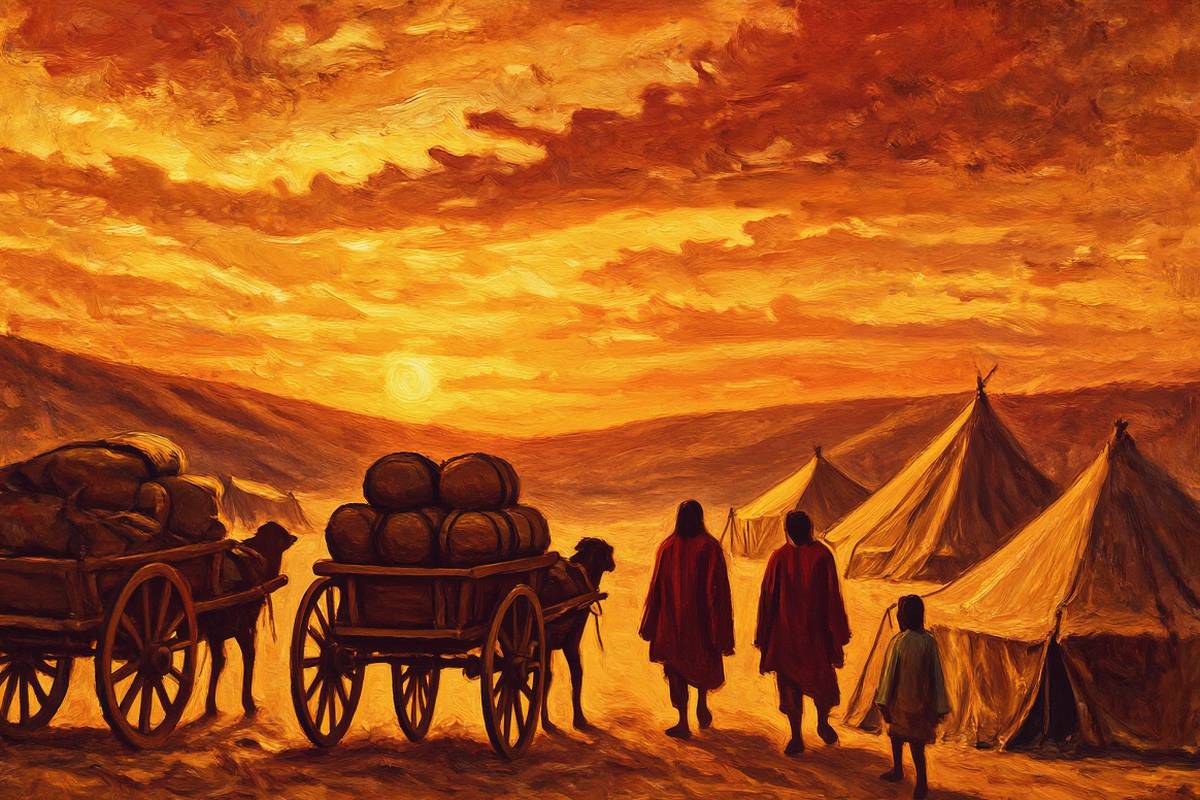
Genesis 45:25–28 turns the story. They kept repeating what Joseph said, which he connects to faith coming by hearing, and “when he saw the carts which Joseph had sent to carry him, the spirit of Jacob their father revived.” Then the text changes his name, and Israel declares that Joseph his son is still alive. Jacob means heel-grabber or schemer; Israel means a prince with God. The carts, Dr. Hohman teaches, represent the Holy Spirit, who comes to bring an intimate experience that revives the heart.
Responding When the Holy Spirit Moves
Like Job, who said he had heard of God but now his eye saw Him and that he would see his Redeemer in his flesh (Job 19:25–26), Jacob moved from hearing to experiencing. Joseph wanted his father to come and see his glory. Dr. Hohman compares this to Jesus’ prayer in John 17:24 that those the Father gave Him would be with Him and behold His glory. God wants you to see His glory now, he says, in turning around your finances, your health and your family.
But love requires a response. We love Him because He first loved us (1 John 4:19). Jesus said whoever confesses Him before men He will confess before the Father (Matthew 10:32). When God prompts you in a service, he says, you cannot just leave saying it was a good message. Now is the accepted time (2 Corinthians 6:2), and not responding means forfeiting what God has for you.
He then tells his own story. He gave his life to Jesus at eleven, but ran from the call to ministry and became, in his words, a drug addict and an alcoholic. At an altar call, sitting in the back, he thought he could get his life right on his own. The minister, David Harms, stopped and said the Lord had a word for a young man: you cannot get your life right by yourself; you have to respond to the Holy Spirit. “It was like something picked me up,” Dr. Hohman recalls, and the minister said, “There you are, William.”
At the altar, he says, the weight of the world lifted off his shoulders. He reports that people saw three demons leave him, and when he got home his wife Pam opened the door and asked what had happened, because he was different. From that day, he says, he understood that we are to desire experiences with God, not just things from God.
He closes with John 16:5–7, where Jesus says it is to our advantage that He goes away so the Helper can come. Just as Joseph’s going ahead into Egypt was for his family’s advantage, Jesus went so He could send the Holy Spirit with all provision. His mercies are new every morning (Lamentations 3:22–23), so anyone can have a fresh start today.
Living It Out This Week
Here are practical steps drawn from this message:
- Meet God before anyone else. Like Adam and Eve, make your first encounter of the day with Him, before work, family or your phone.
- Go back every day. Yesterday’s experience will not carry you; ask the Holy Spirit to pour His love into your heart again each morning.
- Practice hope as expectancy. Use elpis as a habit of imagining the better God has for you, even in a hard season.
- Return quickly when you drift. It is only one step back: ask forgiveness and ask Him to tell you again how much He loves you.
- Respond when He prompts. If God stirs you in a service or in prayer, act on it then: raise a hand, stand, or come forward.
- Share the provision. As God provides in lean times, ask for wisdom to help and feed others rather than hoard.
Timestamped Outline
- 0:01 Recap: God first, from creation
- 2:10 Genesis 1: “Let Us make man”
- 3:08 Genesis 2:7: the breath of life
- 4:18 Religion without encounter
- 5:18 Fear, hiding, and Eve’s first encounter
- 8:38 Romans 5:1–8 read through
- 9:37 Hope as elpis: expecting better
- 11:59 Christ died, God demonstrates
- 13:08 A hands-on encounter, not intellect
- 15:36 The Holy Spirit brings intimacy
- 18:04 Leaving your first love
- 19:10 Faith hears, hope desires, love takes
- 20:23 Jacob, Joseph and the coat
- 27:09 Joseph sold to the Ishmaelites
- 29:57 Potiphar, prison and the dreams
- 33:44 Pharaoh’s dream and Joseph’s rise
- 36:38 Genesis 45: Joseph reveals himself
- 39:21 Pharaoh sends the carts
- 40:16 Benjamin and the church in a time of grace
- 44:43 Jacob after 22 years without hope
- 45:50 The spirit of Jacob revived
- 50:41 John 17:24: behold My glory
- 54:11 Testimony: “There you are, William”
- 57:11 John 16: the Helper is sent
Hands On Experience of God’s Love Series
This message belongs to a short series on experiencing God’s love. Continue with the next part:
- You are here: Hands On Experience of God’s Love #2 — The Carts That Revived Jacob’s Heart
- Next: Hands On Experience of God’s Love, Part 3 — Faith Works by Love and the Comforter
Frequently Asked Questions
What is the difference between knowing about God and experiencing Him?
Dr. Hohman says many people know the Bible stories and facts about Jesus but have never had a personal encounter with Him, and he calls that religion. Experiencing God means the Holy Spirit actually pours God’s love into your heart, and that changes who you are. He uses the comparison of marriage: two people can say they love each other, but the covenant and life together are where that love is truly experienced.
Why does the sermon call the carts a picture of the Holy Spirit?
Jacob heard the report that Joseph was alive and still did not believe it. Only when he saw the carts Joseph sent to carry him did his spirit revive. Dr. Hohman reads the carts as a type of the Holy Spirit, sent by the One who went ahead of us, carrying provision and bringing us into His glory. Hearing the Word builds faith, but the Spirit’s presence turns it into experience.
Does experiencing God’s love mean I will feel His presence all the time?
Not necessarily. Dr. Hohman says you may sense God’s presence strongly in a service and wake up the next morning without that same feeling. That is not failure; it is the reason to go to God again on your own. The new-creation experience is meant to be renewed daily, as His mercies are new every morning, rather than stored up from one meeting.
Scripture References
All passages open in the New King James Version on Bible Gateway:
- Romans 5:1–8 — hope does not disappoint
- Genesis 1:26–27 and Genesis 2:7 — made in His image, given His breath
- 1 John 4:18 — perfect love casts out fear
- Romans 8:32 — He will freely give us all things
- 1 Corinthians 13:13 — faith, hope and love
- Genesis 37:25–35 — Joseph sold into Egypt
- Genesis 45:25–28 — the spirit of Jacob revived
- John 17:24 — that they may behold My glory
- John 16:5–7 — the Helper will come
How this summary was made: written with AI assistance from the sermon’s own transcript and checked against the Scriptures listed above.
Watch More Messages
If this message stirred a hunger for more of God’s presence, there are hundreds more teachings from NTC Ministries waiting for you. Browse the full sermon archive and keep meeting with Him every day.