The Law of the Spirit in Christ Jesus #9 teaches that the law of the Spirit of life sets believers free from the law of sin and death. In this ninth message of the series, the pastor shows what that freedom looks like: no condemnation, a life built on love and gifts rather than works, and a heart filled with God’s love so it can overflow to others. Condemnation, he teaches, is never a God problem. It is a love problem, and the cure is receiving more of the love God has already poured out.
He works through Romans 8:1–8, Mark 12 and 1 John 4 to show that the law of the Spirit in Christ Jesus is the one law of the kingdom, joined to one command. Below you will find the full video, a structured summary, the Scriptures he uses (linked to the New King James Version on Bible Gateway), a timestamped outline, and practical steps for living free from condemnation this week.
Sermon at a Glance
This message was posted on January 7, 2025, as part nine of the series The Law of the Spirit in Christ Jesus at NTC Ministries. The pastor explains why he always teaches in series: Isaiah describes teaching precept upon precept, line upon line, here a little and there a little (Isaiah 28:10). Teaching through a book, he says, lets you see the threads that run through Scripture and how brilliantly God brings our salvation to pass.
This session goes back to the opening verse of Romans 8 and draws out what it means for daily life. His message is warm and direct: God has promised only mercy and love toward His children, so condemnation has no right to stay.
| Detail | Information |
|---|---|
| Speaker | The pastor (not named in the recording) |
| Series | The Law of the Spirit in Christ Jesus (#9) |
| Main text | Romans 8:1–8, Mark 12:28–34 and 1 John 4:7–19 |
| Key theme | No condemnation: receive God’s love and let it flow to others |
| Length | About 63 minutes |
No Condemnation in Christ Jesus
Romans 8:1 opens with the words “There is therefore now no condemnation to those who are in Christ Jesus.” The pastor points out that many translations, including the King James, continue with “who do not walk according to the flesh, but according to the Spirit.” He teaches that this second clause was not in the original text of verse 1 and was added later to help readers, and that the verse itself ends with a period after Christ Jesus.
He recommends getting a Strong’s concordance, which he says costs about twenty dollars. Every word of the Bible is listed with its original Hebrew or Greek and a broad definition, and, he explains, it also marks words that translators supplied. Those additions are not meant to change Scripture, he says, only to help, though sometimes they help and sometimes they do not.
Why does it matter? Because everything in the kingdom of heaven, he teaches, is established on two things: love and gifts. God created Adam in love. When Adam gave everything away, God gave a gift to get it all back, because He so loved the world that He gave His only begotten Son (John 3:16).
On the cross, Jesus took not only our sin but the penalty and every curse that sin would bring. The pastor points to Isaiah’s description that His appearance was so marred He hardly looked like a man (Isaiah 52:14). After He rose, He poured out His love, and hope does not disappoint, because the love of God has been poured out in our hearts by the Holy Spirit (Romans 5:5). We were created, he says, to live in an atmosphere of love.
Love Inspires Greatness
The pastor uses church history to show what happens when love is released. He describes the Dark Ages as a thousand years of disease and wickedness, when, without the movement of the Holy Spirit, the church tried to reassure people with huge buildings and gargoyles meant to draw demons away, and sold indulgences that gave permission for sin. That, he says, was foolishness.
Then Martin Luther received the revelation that salvation is not by our works but by grace through faith, the gift of God (Ephesians 2:8–9). In the pastor’s telling, love was poured out and the Renaissance followed. Instead of hideous images, beautiful paintings appeared, and inventors like Leonardo da Vinci sketched flying machines and submarines. Love, he says, causes what is in you to come out and causes destinies to be envisioned and fulfilled.
So what about a believer who still feels condemned? That is not a you problem and not a God problem, he says; it is a love problem. Any dysfunction that produces fear or division traces back to a lack of love. A Christian’s total responsibility is to receive the love of God, because the more love we receive, the more capacity we have to love and to fulfill love’s desires for us.
Many Christians, he observes, fixate on finding one small thing God wants them to do. Yet God speaks of His plans for us, plans for peace, hope and a future (Jeremiah 29:11), and the Psalms say His thoughts toward us outnumber the sand (Psalm 139:17–18). Not the sand of one beach, he stresses, but of the whole earth.
An acorn falls into the ground and grows into an oak perhaps a hundred feet tall, and it does not stop at ten feet to admire the view. Every living thing is a growing thing. Jesus came so that we may have life more abundantly (John 10:10), and God is able to do exceedingly abundantly above all that we ask or think (Ephesians 3:20). Whatever we imagine still falls short of His desire for us.

The Law of the Spirit in Christ Jesus Makes Us Free
The heart of the passage is Romans 8:1–4: “For the law of the Spirit of life in Christ Jesus has made me free from the law of sin and death.” Jesus is seated in heaven ruling and reigning, the pastor says, and the Holy Spirit is the governor of the kingdom on earth. He leads, guides and teaches us all things, so no believer can afford not to want the fullness of the Holy Spirit.
What the law could not do, because it was weak through the flesh, God did by sending His own Son. The weakness of the law, he says, is me and you. We look at the law as a list of what we have to do, miss it, and then condemn ourselves. But God sent His Son so that the righteous requirement of the law might be fulfilled in us. The pastor had the church read that line twice.
He defines living in the Spirit as trusting God. He grew up in the charismatic movement in a season of heavy legalism, when older believers judged whether everything was “in the Spirit” or “in the flesh.” At one service, young people were dancing before the Lord, and a man next to him said they were just in the flesh. The pastor replied that their hearts were worshiping God, but his was not. A church service, he says, is a rehearsal for the wedding in heaven, and quietness does not mean reverence.
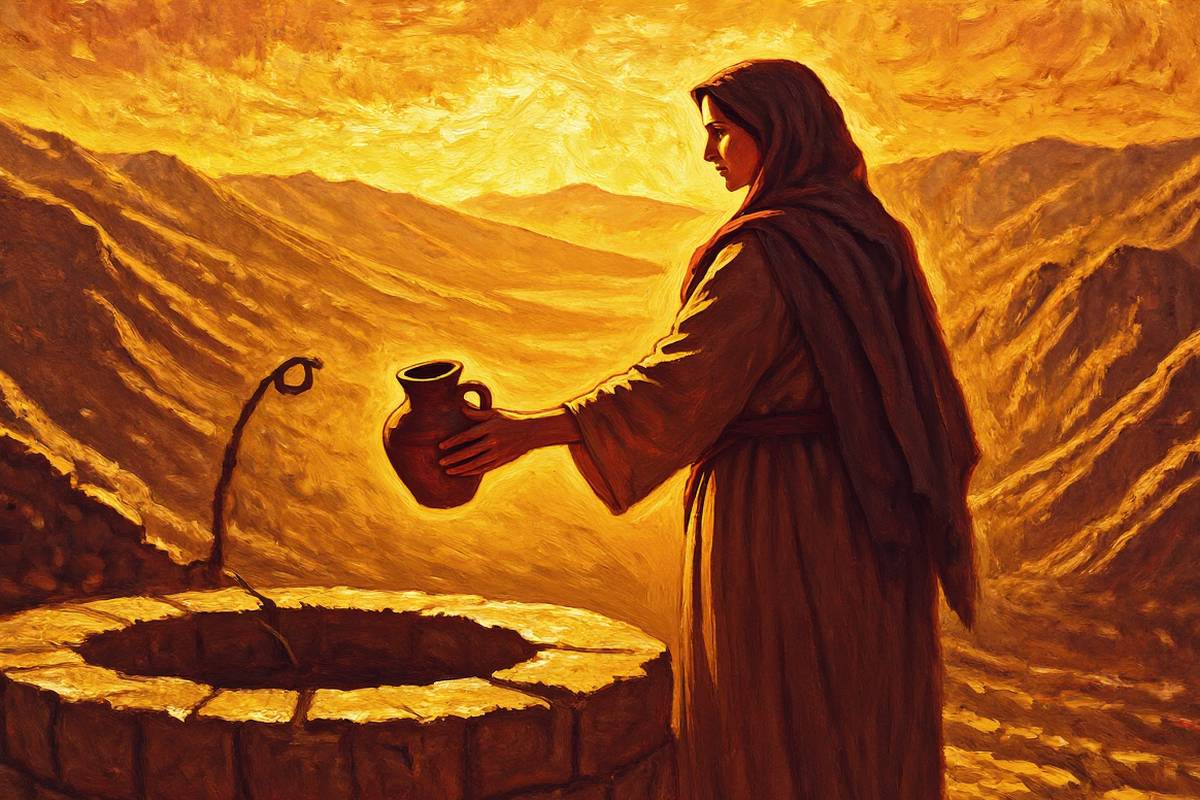
Jesus told the woman at the well that God is Spirit, and those who worship Him must worship in spirit and truth (John 4:23–24). The pastor contrasts the two ways of living like this:
| Living in the flesh | Living in the Spirit |
|---|---|
| Trying to make God act through my strength, intellect or understanding | Thanking God that it is His good pleasure to give, and receiving it |
| Working up a lather to get a prayer answered | Believing you have received it when you pray |
| Manipulating circumstances, people or God | Resting in the finished work of the cross |
| Measuring myself against others | Measuring myself only by Jesus |
| Carnal mind: death and loss of peace | Spiritual mind: life and peace |
Jesus said to believe you receive when you pray (Mark 11:24), and on the cross He declared, “It is finished!” (John 19:30). Our labor now is to enter His rest (Hebrews 4:11), since God has seated us together with Christ in the heavenly places (Ephesians 2:6). Trying to force God’s hand is the law of sin and death all over again, because we are the weakness.
Romans 8:5–8 says to be carnally minded is death, but to be spiritually minded is life and peace, and those in the flesh cannot please God. What pleases God is faith (Hebrews 11:6), and faith is a gift. You have the same faith Peter had when people were healed by his shadow; Peter wrote to those who obtained like precious faith (2 Peter 1:1). The only difference between believers, he says, is how well we understand God’s love.
One Law and One Command
Before this series, the pastor taught from Isaiah 52 through 54, where God compares His promise to the waters of Noah: just as He swore the flood would never return, He has sworn not to be angry with His people (Isaiah 54:9–10). So there is one law, the law of the Spirit of life in Christ Jesus, and one command, given in John 13:34–35: love one another as I have loved you.
What keeps us from loving people? Allowing condemnation in our own lives. If God does not condemn you, he asks, why let that lie stay? Tell it to go. This does not license a life of debauchery, he adds, because love does not seek its own (1 Corinthians 13:5). Love goes beyond the law: rather than coveting a neighbor’s wife or goods, it wants to see that marriage restored and that neighbor blessed and increased.
Everyone wants to know how they are doing, he notes, but 2 Corinthians 10:12 warns that comparing ourselves among ourselves is not wise. It is an arena where condemnation has a heyday. “I have one measuring rod,” he says, “his name is Jesus Christ.”
He then walks through Mark 12. After the parable of the vineyard owner whose son was killed by the tenants, the religious leaders tried to discredit Jesus. The Pharisees and Herodians asked about paying taxes, and He answered, render to Caesar what is Caesar’s and to God what is God’s. The Sadducees, who accepted only the five books of Moses, asked about a woman married to seven brothers, and He told them they did not know the Scriptures or the power of God.
Then a scribe, one of those who copied the law by hand, sincerely asked which commandment is first of all. Jesus answered from Deuteronomy 6:4–5, love the Lord your God with all your heart, soul, mind and strength, and added the second: love your neighbor as yourself (Mark 12:28–34). Matthew records that all the Law and the Prophets hang on these two commandments (Matthew 22:40).
This is why condemnation is so destructive, he explains. If you condemn yourself, you will condemn your neighbor, strangers across the street and people whose struggles you know nothing about. God chooses not the wise and noble but ordinary people (1 Corinthians 1:26–27), so that His love is seen in what He does through them. Wars and fights come from lust for what we do not have (James 4:1–2), but those who love simply let God do it.
The pastor shares his testimony that God healed him of cancer twice without treatment. The first time took about a month. The second took five years, during which he often preached in severe pain and felt the anointing lift it while he stood at the pulpit. After five years, he reports, his doctors told him they did not know where it went, but it was gone. He has one God, not many, who supplies all our need (Philippians 4:19).
Perfect Love Casts Out Fear
Loving God can feel abstract, the pastor admits, because few people see Him. That is why we love Him by loving people made in His image. As a man thinks in his heart, so is he (Proverbs 23:7), so if you think you are condemned, condemnation will come out of you. If God promises only mercy, it would be insane, he says, for him to tell anyone they should feel condemned.
1 John 4:7–8 says love is of God, and God is love. He heals and He provides, but He is love, which is why the greatest of faith, hope and love is love (1 Corinthians 13:13). 1 John 4:9–12 adds that God sent His Son that we might live through Him, and if we love one another, His love is perfected in us.
God did not send His Son to condemn the world but to save it, and whoever believes in Him is not condemned (John 3:17–18). The way out of condemnation, he says, is simply to believe Him, not your strength, education, skill or cunning. And 1 John 4:17–19 declares that as He is, so are we in this world, not someday in heaven but now. There is no fear in love; perfect love casts out fear. We love Him because He first loved us.
Finally, 1 John 3:18–23 calls us to love in deed and in truth. If our heart condemns us, God is greater than our heart, and if it does not, we have confidence toward Him and receive whatever we ask. His commandment is to believe on the name of His Son and love one another: one law, one command. Freely you have received, freely give (Matthew 10:8).
He closes with his father-in-law, a generous backwoodsman who once came over unannounced and cut a hole through the living room floor with a chainsaw to let heat rise from a wood stove below. At the time, the pastor saw only the mess, not the giving heart behind it. He and Pam repaired it with a grate, and the stove ended up heating the house. Accepting God’s love, he says, changes how we see people.
Living Free From Condemnation This Week
The pastor says he does not have his most intimate times with God in church any more than he has them with his wife at the mall. Here are practical steps from this message on the law of the Spirit in Christ Jesus:
- Start the day being loved. Sit down with your coffee, turn nothing on, and say, “Okay Lord, tell me how much you love me again.”
- Refuse condemnation. When it comes, ask forgiveness for anything you did wrong, then tell condemnation to go, because there is no condemnation in Christ Jesus.
- Stop comparing. Measure yourself only by Jesus, not by other believers or even by your own past.
- Pray from rest. Instead of working up a lather, thank God for His good pleasure and believe you receive when you pray.
- Pray to be filled, not for others to change. In marriage and friendship, ask God to fill you with His love so you can love the other person well.
- Love in deed. Look for one concrete way to bless a neighbor, the way love goes beyond what the law requires.
He ends with a prayer for anyone who has known Jesus only as a religious figure: God, forgive me for living without You; Jesus, come into my heart; Holy Spirit, fill me with the love of God and let me mature in Your love.
Timestamped Outline
- 0:00 Line upon line: why teach in series
- 1:09 Romans 8:1 and the added phrase
- 2:17 Using a Strong’s concordance
- 3:25 The kingdom runs on love and gifts
- 5:43 God’s love poured out: Romans 5:5
- 6:51 Martin Luther and the revelation of grace
- 10:30 Condemnation is a love problem
- 11:50 Plans as many as the sand
- 14:10 The oak tree does not stop at ten feet
- 15:13 The law of the Spirit of life: Romans 8:1–4
- 17:28 Judging others “in the flesh”
- 19:40 Worship in spirit and truth
- 22:15 The finished work and entering His rest
- 23:24 Carnally minded or spiritually minded: Romans 8:5–8
- 25:33 Like precious faith
- 26:47 One law and one command: John 13:34–35
- 31:14 Comparing ourselves is not wise
- 32:24 Mark 12: the vineyard and the trick questions
- 39:11 The greatest commandment
- 43:51 Healed of cancer twice
- 47:04 Let God love you
- 50:53 1 John 4: God is love
- 53:11 As He is, so are we; perfect love casts out fear
- 57:55 The father-in-law and the chainsaw
- 1:01:29 Prayer to receive God’s love
Frequently Asked Questions
Does “no condemnation” mean sin no longer matters?
No. The pastor says freedom from condemnation does not mean you can live a life of debauchery and say you do not care about anyone else. Love does not seek its own. When people truly accept God’s love, they want others blessed, promoted and prospering. If you do something wrong, he says, ask God for forgiveness, then refuse to carry condemnation afterward.
Why does condemnation affect how I treat other people?
Because we are called to love our neighbor as ourselves. The pastor notes that if you condemn yourself, you will condemn your neighbor too, including strangers whose situations you do not understand. False judgment and comparison start to come out of you, and that atmosphere blocks the love through which God fulfills His promises in a life.
If I go to church, why do I need time alone with God?
The pastor values the corporate anointing and urges people to come to church, but he says the most intimate times with God happen one on one, just as a husband’s most intimate times with his wife do not happen at the mall. Sitting quietly and letting God tell you He loves you, he says, makes life lighter, like filling a balloon with helium instead of air.
Scripture References
All passages open in the New King James Version on Bible Gateway:
- Romans 8:1–4 — the law of the Spirit of life in Christ Jesus
- Romans 8:5–8 — spiritually minded is life and peace
- Romans 5:5 — the love of God poured out
- Ephesians 2:8–9 — saved by grace through faith
- John 13:34–35 — a new commandment
- Mark 12:28–34 — the greatest commandment
- John 3:17–18 — not sent to condemn
- 1 John 4:17–19 — perfect love casts out fear
- 1 John 3:18–23 — God is greater than our heart
How this summary was made: written with AI assistance from the sermon’s own transcript and checked against the Scriptures listed above.
Watch More Messages
If this message set you free from condemnation, there are hundreds more teachings from NTC Ministries waiting for you. Browse the full sermon archive and keep growing in the love of God.