The biblical principle of first says that the first portion is always the redemptive portion: what is given to God first redeems everything that follows. In this second message of the series, Dr. William P. Hohman traces that principle from the firstborn in Exodus to Jesus, God’s firstborn given to redeem the world, and then to the widow of Zarephath, who baked Elijah’s cake first and never ran out. It continues from The Biblical Principle of First #1: God’s Love Language and the Firstborn.
Below you will find the full video, a structured summary, the Scripture behind each point (linked to the NKJV on Bible Gateway), a timestamped outline, and practical ways to put God first this week.
Sermon at a Glance
This message was preached at NTC Ministries and posted on June 14, 2022. It runs about 70 minutes and closes with the church standing in prayer, repenting for not keeping God first and committing to build a God-first mentality. It builds on his teaching about two economies, the kingdom of heaven and the corruption of this world.
His central claim: the miracle is not about the prophecy; it is about priority. Whether a firstborn lamb, a widow’s last meal, a doctor’s career or the first hour of the day, what goes to God first redeems the rest.
| Detail | Information |
|---|---|
| Speaker | Dr. William P. Hohman |
| Series | The Biblical Principle of First (part 2) |
| Main texts | Exodus 13, 1 Kings 17:8–16, Revelation 2:1–5 |
| Key theme | What is given to God first redeems everything that follows |
| Length | About 70 minutes, ending in prayer |
The First Is the Redemptive Portion
Pastor Hohman begins with the foundation of the whole series. The first is always the redemptive portion. God so loved the world that He gave His only begotten Son (John 3:16), and Jesus was given first to redeem everyone else. The pure is always given to redeem what is impure, unclean or corrupted.
The pattern is already in the law. In Exodus 13:1–2 the Lord tells Moses, “Consecrate to Me all the firstborn.” In Exodus 13:12–13 the firstborn of a donkey had to be redeemed with a lamb, and if it was not redeemed, its neck was broken. In other words, he says, if you do not redeem it, you lose it.
1 Peter 1:18–19 shows the fulfillment. We were not redeemed with corruptible things like silver or gold, but with the precious blood of Christ, as of a lamb without blemish and without spot. The incorruptible Jesus, who knew no sin, became sin for us so that we might become the righteousness of God in Him (2 Corinthians 5:21).
That redemption is meant to flow into every area of life. Whatever we do, we do it as unto the Lord first: we think of Him first and do for Him first. That is how believers can live above what the King James Version calls the beggarly elements of this world (Galatians 4:9).
He compares the world today to an old car falling apart, not just one spot of rust. Corruption will get worse in the last days, but there is a way out, and it is only through Jesus Christ, the one mediator between God and men (1 Timothy 2:5). There is only one Redeemer, and His name is Jesus.
Redeemed by Love, Not Fear
God did not create man because He was lonely. Pastor Hohman points to Malachi 3:6, “I am the Lord, I do not change.” If God were lonely, creating something would not change Him. He created because He is love, and love needs an object to be expressed to so that it can be seen and known.
Adam fell for a lie. Satan told him God was holding something back, that if he ate he would be like God. The problem, Pastor Hohman says, is that Adam was already made in God’s image and likeness (Genesis 1:26). After the fall came fear: fear of not having, fear of losing, fear of not being able. That same fear is still used to push people around, and he calls it a form of slavery.
God works the opposite way. He draws us with an everlasting love (Jeremiah 31:3). He has delivered us from the power of darkness and conveyed us into the kingdom of the Son of His love, in whom we have redemption through His blood (Colossians 1:13–14). When you are born again, the love of God is poured out in your heart by the Holy Spirit, and hope does not disappoint (Romans 5:5).
That love is the deciding factor. If God did not withhold His own Son, how will He not freely give us all things (Romans 8:32)? Faith works by love (Galatians 5:6); it is not something we conjure up. It grows as we keep hearing His word, confident of His love.
He also stresses the Holy Spirit. In the parable of the ten virgins, only those with oil in their lamps went in to the wedding (Matthew 25:1–13). Oil represents the Holy Spirit, and staying filled is about relationship, not a formula. That is the heart of the biblical principle of first: give your love to God first, and everything else in that relationship is added. As Jesus said, those who love Him keep His commandments (John 14:15).
A Physician Who Put God First
Pastor Hohman tells of a physician and his wife who came to him years ago with serious marriage problems. The doctor was working 110 hours a week, much of it on paperwork rather than patients. He was “rolling in dough,” but his marriage and family were falling apart. His wife came expecting to hear it was time to part ways.
When they prayed, the Lord told Pastor Hohman to tell the doctor to quit his job. It was hard to say. The doctor then prayed himself: this was beyond him, but so was fixing his marriage, so he asked God for the strength to obey. He was a co-owner of a clinic with two other physicians, so quitting meant asking them to buy him out. His family and partners told him he was crazy.
A couple of weeks later the couple came back beaming. His partners had bought out his share, and a nearby hospital offered him a position at no more than 48 hours a week, with no paperwork and more money than he had made at his own clinic. Then his former partners asked him to read certain tests only he was qualified to read, about eight hours a week, for the same money he used to make there.
He almost tripled his income while working less than half the hours. Pastor Hohman ties it to Zechariah 4:6: not by might nor by power, but by My Spirit, says the Lord. Years later, he says, the marriage is still doing phenomenally. Honor God first and you take the limits off God; you can prosper even during a famine.
God wants to redeem our lives from destruction. Psalm 103:1–4 says He forgives all our iniquities, heals all our diseases, redeems our life from destruction and crowns us with lovingkindness and tender mercies. His name is Redeemer, and we give Him permission to redeem our circumstances by doing what He asks.
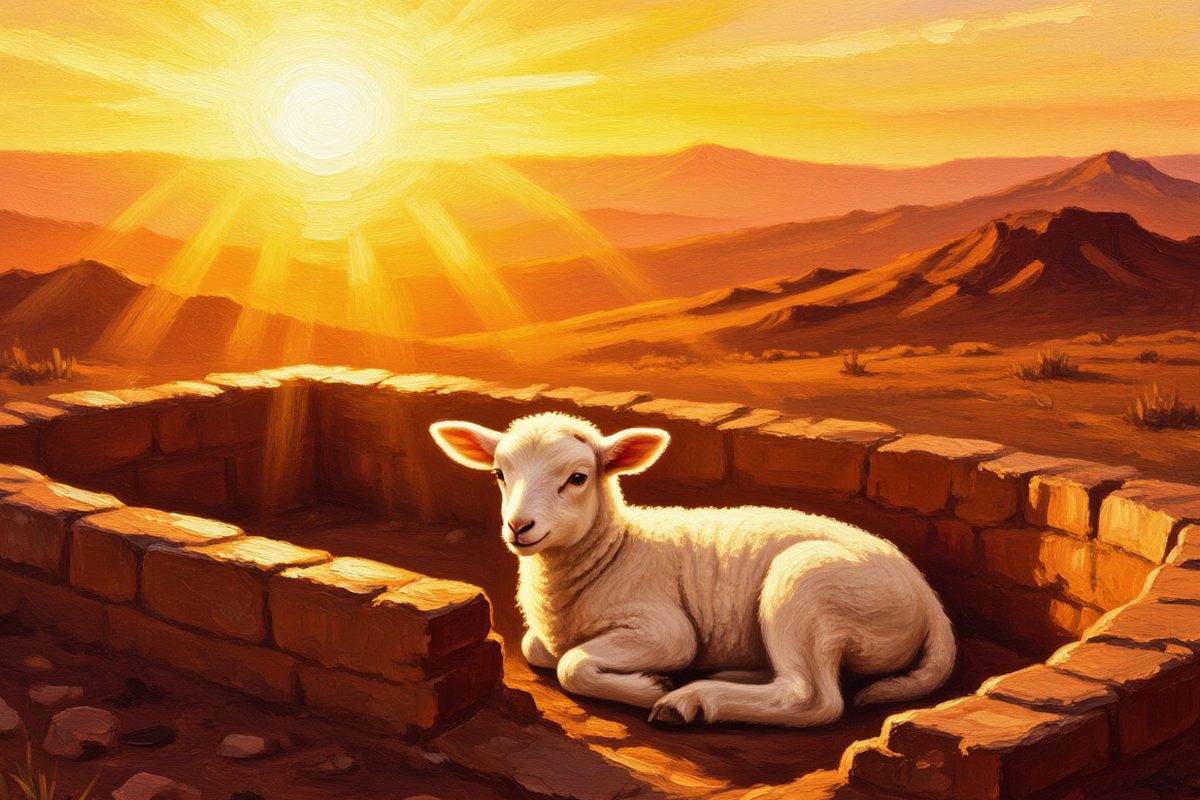
The Widow of Zarephath and the Biblical Principle of First
The heart of the sermon is 1 Kings 17. During a famine, God fed Elijah by the Brook Cherith, where ravens brought him bread and meat morning and evening. Then the brook dried up. Pastor Hohman notes that God could easily have made water appear. He brought rivers out of a rock for Israel in the desert (Exodus 17:6) and made water spring up for Samson (Judges 15:18–19). Instead, He sent Elijah to a widow in Zarephath.
She told Elijah she had only a handful of flour and a little oil, and she was gathering sticks to make a last meal for herself and her son, “that we may eat it, and die.” Elijah did not argue with her. He said, “Do not fear; go and do as you have said, but make me a small cake from it first.” He promised that the bin of flour would not be used up nor the jar of oil run dry until the Lord sent rain.
Elijah was not being selfish; he understood redemption and was bringing her out of a poverty mentality into God’s abundance. What if she had said, “We’ll eat first and give you what’s left”? That is not the principle of redemption, he says, and they all would have died.
She did what Elijah asked, and 1 Kings 17:15–16 records that she, her household and Elijah ate for many days. The famine did not end and none of her conditions changed, yet redemption came because she listened to the word of the Lord and gave first. Here is the power of the text, he says: it is not that she gave to the prophet; it is that she gave to him first.
God chose a widow, not a rich woman, for a greater testimony. If there is no need to challenge you, he says, there will never be a word of God that stirs you. That is why Jesus said it is easier for a camel to go through the eye of a needle than for a rich man to enter the kingdom (Matthew 19:24). Ask God to stir your faith, and He will often let a need arise.
The table below follows how Pastor Hohman applies the same principle across the message, from Scripture to his own life.
| Example | What was given first | What it redeemed |
|---|---|---|
| Firstborn in Exodus 13 | The firstborn, or a lamb in its place | The rest of the flock and family |
| Jesus Christ | God’s only begotten Son | A corrupted humanity |
| Widow of Zarephath | A small cake for Elijah | Her household through the famine |
| The physician | Obedience: quitting his job | His marriage and his income |
| Jesus in Mark 1 | Early prayer before daylight | Strength to give to the people who needed Him |
| The building project | Work, without first time with God | Nothing; it left him exhausted until he repented |
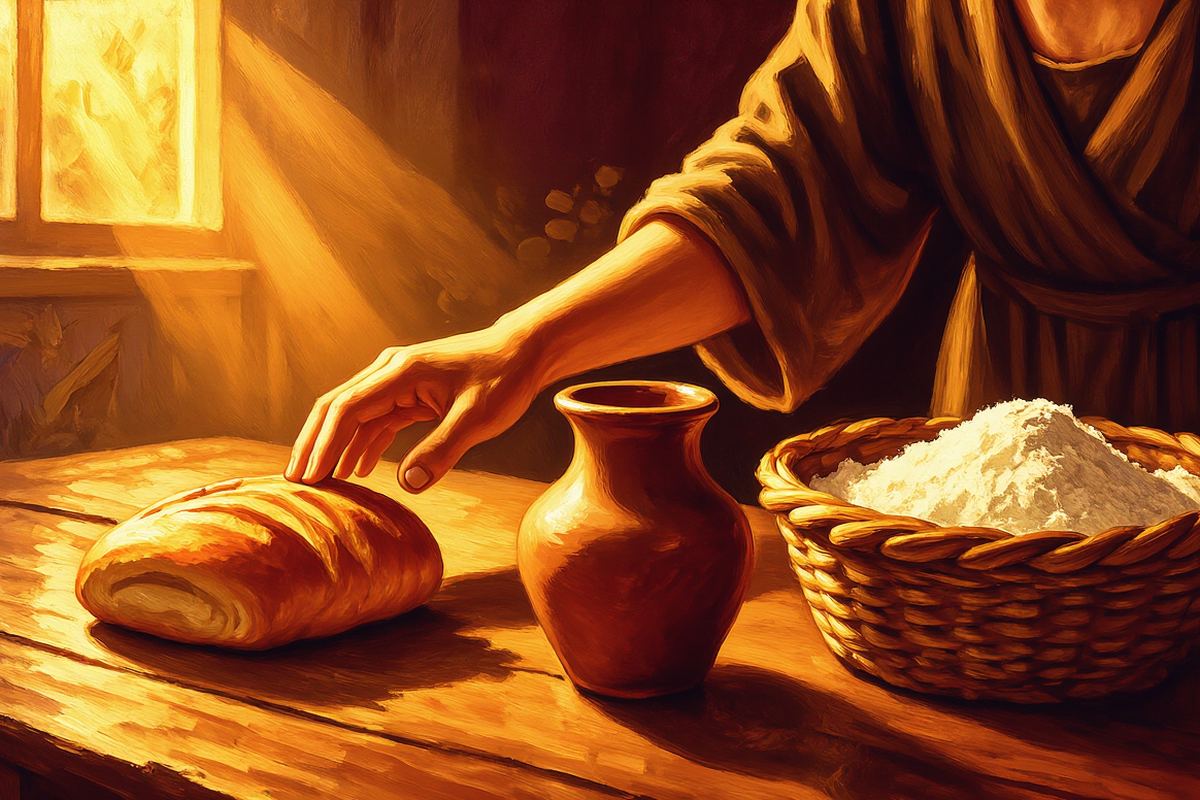
Breaking a Poverty Mentality
Pastor Hohman finds it striking that the widow had a meal, which represents living, yet expected to eat it and die. Over time, he says, a mentality of “I don’t have enough” had been built into her. People can make a great deal of money and still think that way. She had enough to do what God wanted, and when she used it as God asked, God supplied her until the economy turned around, and her poverty mentality changed too.
Poverty and prosperity, he teaches, each have a culture and a language, and both tend to pass down through generations. The widow was pulling her son into her mentality. To live differently we must speak God’s language, and the greatest of faith, hope and love is love (1 Corinthians 13:13). Hope, elpis in the Greek, means always expecting better. Many are the afflictions of the righteous, but the Lord delivers him out of them all (Psalm 34:19).
A poverty mind, he says, will rob you of the opportunities your time, talents, gifts and money are giving you. It is the spirit of mammon: what I have is for me. He says he will keep teaching on this until that spirit is broken over the church.
So God first with your money, your time, your life and your children. Train up a child in the way he should go, and when he is old he will not depart from it (Proverbs 22:6). The miracle is not about the prophecy; it is about priority. Some Christians chase one prophecy after another and never do what God says, so their lives never change.
He insists we have free will; it is God’s will that all be saved (1 Timothy 2:4), yet not all will be. Building a God-first mentality is our part. Jesus said, “Seek first the kingdom of God and His righteousness, and all these things shall be added to you” (Matthew 6:33).
First in the Morning, First Love
When should we seek Him? Psalm 5:3 says, “My voice You shall hear in the morning, O Lord.” Jesus told His disciples to greet no one along the road (Luke 10:4): keep your attention on Him first. That is how we redeem the time, because the days are evil (Ephesians 5:16). When his children were young, the family never answered the phone during meals.
He calls it tithing your day: give the first part to God, not to the TV, social media, the neighbors or the newspaper. In Mark 1:35–37, Jesus rose a long while before daylight to pray, and when the disciples found Him they said, “Everyone is looking for You.” He was not forsaking the needy; He was getting first with the Father. Time with God first fills us like a basket with the gifts we will need for the day.
He tells of Martin Luther, whose assistant once urged him to stop praying after an hour, then two, because he had so much to do. Luther answered that because he had so much to do, he could not stop.
Pastor Hohman then admits his own failure. During a church building project he served as general contractor to save the congregation at least $120,000, but almost no one stepped in to help with the spiritual work. Someone lent him a condo to rest, and he slept for 24 hours, then 14, then 12 more. He was doing what God wanted done, but he was not giving to God first, and he had to repent.
Revelation 2:1–5 describes his condition. The church at Ephesus had works, labor and patience, yet the Lord said, “You have left your first love. Remember therefore from where you have fallen; repent and do the first works.” The first love did not leave them; they left it. When God is no longer first, he says, we have fallen, even if our work is for Him.
He compares it to marriage: when he fell in love with Pam, they could talk on the phone for hours, but couples drift and must press in again. The same is true with the Lord. Come back to your first love, and your marriage, children and work will look different.
Living It Out This Week
Here are practical steps drawn from this message on the biblical principle of first:
- Tithe your day. Give the first part of your morning to God before the phone, the news or social media.
- Give first, not from what is left. Like the widow, put God first with your money before you calculate what remains.
- Obey before you can see the plan. The physician quit first and saw the provision afterward.
- Name your poverty thinking. Write down your excuses for why God cannot be first, and replace each with a promise of His love.
- Protect family time. Let calls wait during meals and conversations, and redeem the time with the people God gave you.
- Return to your first love. If you are busy for God but no longer with God, repent and do the first works again.
Timestamped Outline
- 0:00 The first is always the redemptive portion
- 1:18 Exodus 13: consecrate the firstborn
- 2:22 1 Peter 1: redeemed by precious blood
- 3:35 The beggarly elements of a corrupt world
- 6:43 God created from love, not loneliness
- 9:58 Colossians 1 and Romans 5: redeemed by love
- 12:30 The Holy Spirit and a physician’s marriage
- 15:20 “Tell him to quit his job”
- 17:33 More pay, fewer hours, a restored marriage
- 19:45 Psalm 103: He redeems your life
- 20:53 Elijah, the brook and the ravens
- 23:26 The widow of Zarephath’s last meal
- 25:35 “Bring it to me first”
- 28:09 1 Kings 17:15–16: the flour did not run out
- 34:05 Why God chose a poor widow
- 36:19 A mentality of poverty
- 40:14 Breaking the spirit of mammon
- 44:12 Not prophecy but priority
- 45:26 Matthew 6:33 and Psalm 5:3
- 48:58 Tithing your day and Mark 1:35
- 51:28 Martin Luther’s morning prayer
- 52:25 The building project that drained him
- 58:05 Revelation 2: you have left your first love
- 1:07:21 Closing prayer for a God-first mentality
Biblical Principle of First Series
This message is part of a five-part teaching series at NTC Ministries. Go back to the previous message or continue to the next:
- Previous: The Biblical Principle of First #1: God’s Love Language and the Firstborn
- You are here: The Biblical Principle of First #2: The Widow’s First Cake and the Redeeming Portion
- Next: The Biblical Principle of First #3: God’s Love Language, Morning Prayer and First Love
Frequently Asked Questions
Was Elijah being selfish when he asked the widow to feed him first?
Pastor Hohman says it may look selfish, and admits that a modern preacher asking widows for their last dollar would draw outrage. But Elijah was not looking at circumstances or acting carnally. He understood redemption, and by the love of God he was leading her out of a poverty mentality into God’s abundance. Had she eaten first and offered what was left, the principle of redemption would not have been at work.
Is God in control of everything that happens?
Pastor Hohman says he does not believe God controls everything, because Scripture shows we have free will. If God controlled everything, everyone would be saved, since it is His will that all be saved, yet not all will be. That is why our choices matter: Jesus Himself could speak over your life, but if you will not do what He asks, redemption cannot take place.
Does serving in ministry count as putting God first?
Not automatically. Pastor Hohman shares that during a building project he was doing what God wanted done, yet he was not giving God the first of his time, and it drained him almost to collapse. The church at Ephesus in Revelation 2 had labor and patience but had left its first love. Working for God is not the same as spending time with God first.
Scripture References
All passages open in the New King James Version on Bible Gateway:
- Exodus 13:1–2 and Exodus 13:12–13 — the firstborn belong to God
- 1 Peter 1:18–19 — redeemed by the precious blood of Christ
- Colossians 1:13–14 — the kingdom of the Son of His love
- Romans 5:5 — the love of God poured out in our hearts
- 1 Kings 17:1–16 — Elijah and the widow of Zarephath
- Psalm 103:1–4 — He redeems your life from destruction
- Matthew 6:33 — seek first the kingdom of God
- Mark 1:35–37 — Jesus prays before daylight
- Revelation 2:1–5 — you have left your first love
How this summary was made: written with AI assistance from the sermon’s own transcript and checked against the Scriptures listed above.
Watch More Messages
If this message challenged you to put God first, hundreds more NTC Ministries teachings are waiting. Browse the full sermon archive and keep building a God-first life.