Our Heavenly Father is the greatest term in the Bible, and knowing God as your Father changes how you live. In this second message of the series at NTC Ministries, the speaker teaches from Ephesians 3:13–15 that every fatherhood in heaven and earth is named after God, and that Jesus came as the one mediator to correct our picture of the Father and bring us home to Him.
This continues from Our Heavenly Father #1: An Introduction to the Fatherhood of God. Below you will find the full video, a structured summary, the Scripture behind each point (linked to the New King James Version on Bible Gateway), a comparison of distorted and true pictures of God, a timestamped outline, and practical steps for this week.
Sermon at a Glance
This message was posted on September 30, 2025, and runs about 62 minutes, closing with an invitation to receive Christ and a prayer declaring, “My Father is God.” The speaker describes it as part of an introduction to teaching on the Father, an introduction he expects may take several sessions on its own.
His aim is to replace religious, fearful images of God with the reality Jesus revealed: a good, kind, generous Father whose hand covers all people, and whose goodness is seen most fully by those who come into relationship with Him.
| Detail | Information |
|---|---|
| Speaker | The speaker is not named in the video |
| Series | Our Heavenly Father (#2) |
| Main text | Ephesians 3:13–15 |
| Key theme | Jesus mediates to change our image of the Father |
| Length | About 62 minutes, ending in a prayer of salvation |
Our Heavenly Father: The Greatest Term in the Bible
The speaker begins with the model prayer in Matthew 6:9–10: “Our Father in heaven.” Those words, he says, angered the religious leaders of Jesus’ day so much that they wanted to kill Him for heresy, because He called God His Father (John 5:18). They could not grasp it, because they wanted to understand everything through their own knowledge and wisdom rather than a pure heart.
When you give your life to the Lord, God is your Father. The speaker has the congregation say it aloud: God is my Father. That, he says, gives a believer a different demeanor and a different outlook on life. It causes people to act differently. You do not need to be lonely or insecure when you know God is your Father, because everything is in the Father’s hand.
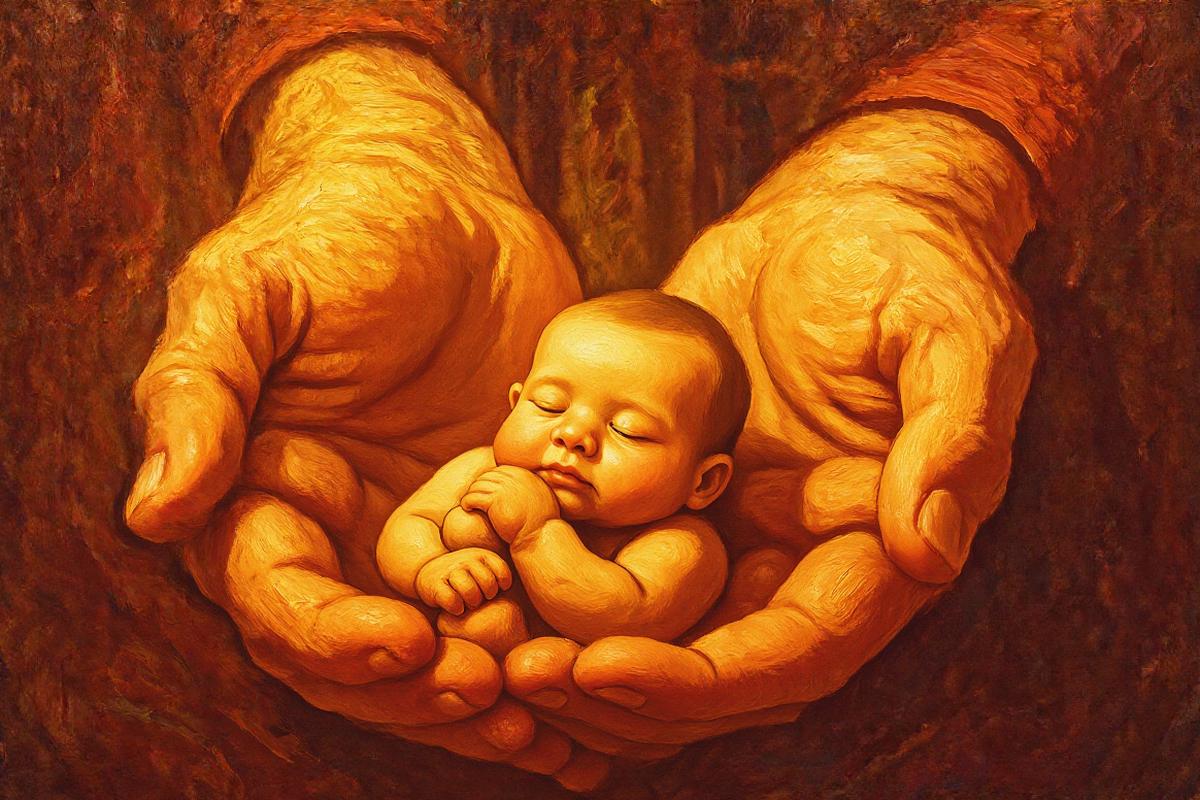
Jesus said no one can snatch us out of His hand, and that the Father, who is greater than all, holds us too (John 10:28–29). The speaker describes this as a hand within a hand, a double protection from God Almighty. The Father is the one who master-planned everything before anything existed, so your life is taken care of.
Tribulation for Your Glory
The main text is Ephesians 3:13–15. Paul asks the church not to lose heart at his tribulations for them, which are their glory. The speaker says that verse alone could fill a seminar. Paul had been caught up to the third heaven and heard things unlawful to speak (2 Corinthians 12:2–4), and he was given the mystery of the kingdom and the church age, with the responsibility to take it to the world.
That responsibility was the source of his trouble, and it was for our benefit. The same was true of Jesus: He came to share the goodness of the Father, and that brought Him trouble, for our sake. In the same way, the trouble believers face for declaring the goodness and grace of God benefits others. The speaker is clear that this is not a call to masochism. It simply means what we go through has purpose.
Nobody asked to be born into this corrupted, earth-cursed world. God placed us here and then offered us His kingdom while we live in it. We are in the world but not of it (John 17:14–16). That does not make believers greater than anyone else, because everyone is of the Father in heaven. But not everyone knows Him, and that is where the problems come from.
Paul goes on: “For this reason I bow my knees to the Father of our Lord Jesus Christ.” The speaker reads it as surrender: yes, Lord, whatever You want, I will do, because now I understand the purpose. You did not get saved just for you, he says. You got saved for the world. Everyone is meant to see the glory of the Father in your life, just as Jesus said, “He who has seen Me has seen the Father.”
Every Fatherhood in Heaven and Earth
The word family in Ephesians 3:15 is the Greek patria, built on pater, father. The speaker explains it as fatherhood: the Father’s covering, His hand of goodness over all people. He notes that the J. B. Phillips translation speaks of the Father “of whom every fatherhood in heaven and earth is named.” Every person is here because of the Father’s plan. There are no mistakes, and no one is lesser or greater.
So why does not everyone see that goodness? Because it takes a relationship. Like Paul, you have to bow your knee, submit your life and yield. The speaker uses the image of a police officer saying, “Stick them up,” the universal sign of surrender. That, he says, is why Scripture calls believers everywhere to lift holy hands (1 Timothy 2:8). Prayer is our hands lifted up to God.
Those who refuse the relationship are forsaking the fatherhood; Christians are to mature in it. The motto at NTC Christian Academy, he says, is “good, better, best”: never rest until your good is better and your better is best. That growth does not depend on effort alone; we look to Jesus, the author and finisher of our faith (Hebrews 12:2).
2 Corinthians 13:14 joins the grace of the Lord Jesus Christ, the love of God the Father, and the communion of the Holy Spirit. Communion means fellowship, a common union. The speaker says he firmly believes in the Trinity, and that Father, Son and Spirit work within us for one purpose. In the beginning was the Word, and all things were made through Him (John 1:1–3). Then God made man in His image and gave him dominion (Genesis 1:26).
The whole Bible, he says, is about a king, a kingdom and a royal family: a simple love story. God did not create Adam because He was lonely, but because God is love, and love needs an object of affection. The speaker did not know the love in his own heart until he first saw his wife.
The Father created everything and gave it all to Adam. Jesus said it is the Father’s good pleasure to give you the kingdom (Luke 12:32). If He did not spare His own Son, how much more will He freely give us all things (Romans 8:32)? He is holding nothing back. It is our wrong thinking that keeps us from His blessing.
That is why all people need to repent, which means changing the way you think. If he stands facing away from the camera, he says, viewers cannot see him; he has to turn toward it. To know the Father, people everywhere have to turn toward Him, because no one has a plan or a desire for their life greater than God’s.
Jesus, the One Mediator
In John 15:26 Jesus says the Comforter, the Spirit of truth who proceeds from the Father, will testify of Him. Father, Son and Spirit work together to reveal the fullness of the Father’s love, the peace that surpasses all understanding (Philippians 4:7). It is not our skill, stamina or academic ability that changes us. God wants faith first, then He gives understanding. Demanding to understand before believing is the way of this corrupted world.
1 Timothy 2:3–5 says God desires all men to be saved and to come to the knowledge of the truth, and that there is one Mediator between God and men, the Man Christ Jesus. The longer we stay with Him, the more precious He becomes. The speaker compares it to his marriage of more than fifty years, which is worth far more now than on the day they said “I do.”
He tells of driving down a highway one evening and seeing a woman walking in her wedding dress, angry and leaving her new husband on their wedding day. He drove her toward her motel, shared Jesus with her, and she gave her life to Christ. Then he told her to fix her makeup, go back to the reception and enjoy her marriage. That, he says, is what a mediator does.
The speaker once took a course on mediation. The Greek word for mediator, mesites, means a go-between who helps people at odds understand each other. A good mediator listens and repeats back what each side is saying until they find common ground. That is why Jesus came. He did not tell the world it was foolish for not loving God; He came to bridge the gap.
That mediation is not a one-time job. We are born again of incorruptible seed through the Word of God (1 Peter 1:23), and even after salvation we carry preconceived ideas about God that need changing. Faith comes by hearing the Word of God (Romans 10:17), and Jesus keeps finishing what He authored as we keep listening.
At a tent crusade, a man on drugs stumbled in, gave his life to Jesus and was instantly sober. Every night after that he brought carloads of families in his station wagon to hear. Paul planted, Apollos watered, but God gave the increase (1 Corinthians 3:6). If anyone is in Christ, he is a new creation (2 Corinthians 5:17), and the change keeps unfolding.
Jesus is the way, the truth and the life, and no one comes to the Father except through Him (John 14:6). Job’s friends comforted him until they started explaining God, insisting God had done it all to him. God rebuked them and had Job pray for them. Job knew his Redeemer lives (Job 19:25–26), and God did not do those things to Job.
That is why Jesus kept contrasting what people had heard with what He was telling them. He was correcting the religious leaders’ image of God. When He shared the goodness of the Father, they became so angry they killed Him. By faith the elders obtained a good report (Hebrews 11:2), and the speaker notes the Greek word is related to martyr. Believers who have been martyred, he says, died for bringing a good report.
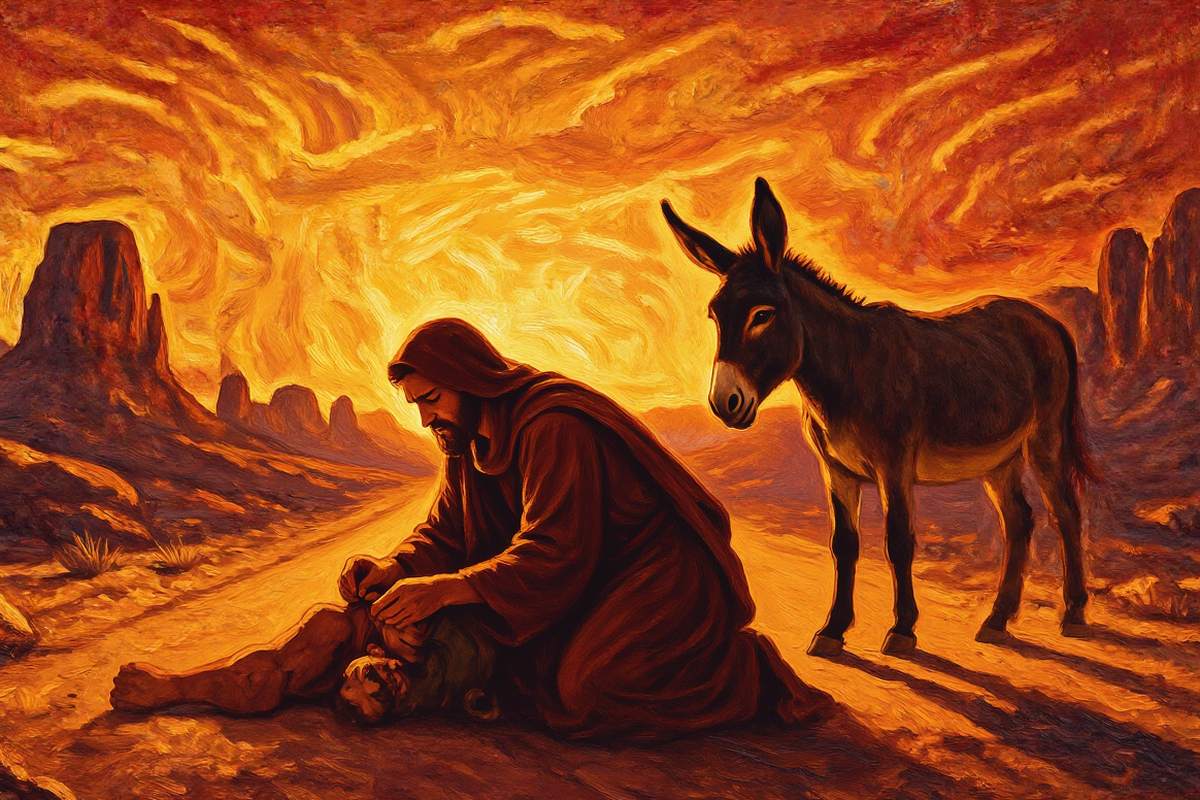
The parable of the Good Samaritan shows the same distortion. A priest and a religious leader passed by the beaten man, but the Samaritan bound his wounds and paid for his care. In John 14:7–11, when Philip asked to see the Father, Jesus answered that he who has seen Him has seen the Father. Jesus is the mediator, but the Father is our destination.
A Kind and Rewarding Father
Miracles are not hard, the speaker says; you just have to change your thinking and let the goodness of God be revealed. God’s thoughts toward us outnumber the sand (Psalm 139:17–18), and he has stood in the Sahara and could not count a square foot of it. God will do exceedingly abundantly above all we ask or think (Ephesians 3:20). He says he was once a drug addict and an alcoholic, yet has preached before royalty and national leaders because he had a revelation of God’s goodness.
Our heavenly Father is kind. In Matthew 5:43–48, Jesus corrects the teaching to love your neighbor and hate your enemy. The speaker says the religious leaders took commands given for one specific situation in the conquest of Canaan and applied them with a broad brush to all of life. Jesus said to love your enemies, so that you may be sons of your Father, who sends sun and rain on the just and the unjust.
“Therefore you shall be perfect, just as your Father in heaven is perfect.” The Greek word, teleios, means complete: finished in your labor, and mature in your physical, mental, emotional and moral growth. You cannot do that on your own. He who began a good work in you will complete it (Philippians 1:6). And who is your neighbor? Everybody.
The Father also rewards. In Matthew 6:1–4 Jesus says that charitable deeds done to be seen by people have their reward already, but when you give in secret, your Father who sees in secret will reward you openly. The speaker says he would rather have what his Father wants to give him.
God, he says, is humble; He knelt in the dirt and formed man with His own hands. The church is a family where everyone has a part, and the point is not to make a show of it but to seek the Father’s reward.
Psalm 37:25–26 says the righteous are not forsaken nor their descendants begging bread, and their descendants are blessed. The rewards of God pass down to our children. Before the ministry had a Bible college, he says, his family gave generously to three Christian schools, sowing toward the day their own children would attend one. Every one of his children earned a degree from a Christian college.
Without faith it is impossible to please God, for He rewards those who diligently seek Him (Hebrews 11:6). Lawlessness will abound in the last days (Matthew 24:12), but believers live by the law of the Spirit of life in Christ Jesus (Romans 8:2). The speaker adds that he cannot let who someone else is change who he is. God says He is the Lord who does not change (Malachi 3:6).
The table below follows his contrast between the distorted image of God he says Jesus came to correct and the Father Jesus revealed.
| Distorted picture | The Father Jesus revealed |
|---|---|
| Calling God Father is heresy | “Our Father in heaven” is how we pray |
| God did this to you (Job’s friends) | My Redeemer lives |
| Love your neighbor, hate your enemy | Love your enemies, like your Father |
| Pass by the wounded man | The neighbor is the one who shows mercy |
| Give to be seen by people | Give in secret; the Father rewards openly |
| Understand first, then believe | Believe first, then understanding comes |
Living It Out This Week
The speaker closes by inviting anyone who has not given their life to Jesus to do so, reminding them that now is the accepted time. He leads a prayer based on Romans 10:9–10 that ends with the declaration, “My Father is God.” These steps come from his teaching:
- Say it out loud. Begin each day by declaring, “God is my Father,” and let that settle loneliness and insecurity.
- Rest in both hands. When fear comes, remember you are held in Jesus’ hand and in the Father’s hand.
- Turn toward Him. Ask where your thinking about God is facing the wrong way, and change it.
- Be a mediator. In a conflict, listen and repeat back what each person is saying until they understand each other.
- Love an enemy on purpose. Do something good this week for someone who has opposed you.
- Give in secret. Make one generous gift no one else knows about, and trust the Father’s reward.
Timestamped Outline
- 0:00 “Our Father”: the greatest term in the Bible
- 1:18 God is my Father: a hand within a hand
- 2:42 Ephesians 3:13: tribulation for your glory
- 6:26 Patria: every fatherhood is named
- 7:44 Surrender and lifted hands
- 10:12 2 Corinthians 13:14: Father, Son and Spirit
- 12:40 A simple story of love
- 15:07 Repent: turn toward the Father
- 18:01 Faith first, then understanding
- 20:44 The bride on the highway
- 21:51 What a mediator does
- 29:54 Job and his friends
- 34:00 The Good Samaritan
- 37:46 John 14: show us the Father
- 40:18 Plans more than the sand
- 43:05 Our heavenly Father is kind: Matthew 5
- 45:51 Teleios: complete like the Father
- 48:52 Matthew 6: the Father rewards in secret
- 52:31 Psalm 37: blessings passed to children
- 55:11 Hebrews 11:6 and the law of the Spirit
- 1:00:46 Prayer: my Father is God
Our Heavenly Father Series
This message is part of a teaching series at NTC Ministries on knowing God as Father. Go back one message or continue to the next:
- Previous: Our Heavenly Father #1: An Introduction to the Fatherhood of God
- You are here: Our Heavenly Father #2 — Every Fatherhood Named After God
- Next: Our Heavenly Father #3: Grace, the Mediator and the Father’s Generous Heart
Frequently Asked Questions
Why do some people not notice what they are taking in?
The speaker tells of renting a video after a store clerk promised it was clean family viewing. Within two minutes they had to turn it off because of the swearing. The clerk was not a bad person, he says; he simply did not hear it, because that was how he had been programmed. In the same way, many people do not hear the name of Jesus even when they say it. That is why a mediator is needed between God and people.
How should a Christian respond to contrary people?
The speaker says he has learned not to let who someone else is change who he is. Some people speak badly about you or work against you, often because that is all they know, and they are still under the same fatherhood of God. Immaturity, he says, is letting other people’s behavior change yours. Maturity is staying who you are in Christ, growing to be like the Father, who does not change.
What will happen at the marriage supper of the Lamb?
Near the end of the message the speaker says that when believers are taken to heaven, they will go to the marriage supper of the Lamb, and the Father Himself will serve them. He uses this to underline that humility is one of God’s greatest characteristics. The God who knelt in the dirt to form man is the same Father who will serve His children. He is loving, kind and good, and He never changes.
Scripture References
All passages open in the New King James Version on Bible Gateway:
- Matthew 6:9–10 — “Our Father in heaven”
- Ephesians 3:13–15 — every family named after the Father
- John 10:28–29 — held in the Father’s hand
- 2 Corinthians 13:14 — grace, love and communion
- 1 Timothy 2:3–5 — one Mediator between God and men
- John 14:7–11 — he who has seen Me has seen the Father
- Matthew 5:43–48 — love your enemies
- Matthew 6:1–4 — your Father rewards openly
- Hebrews 11:6 — He rewards those who seek Him
How this summary was made: written with AI assistance from the sermon’s own transcript and checked against the Scriptures listed above.
Watch More Messages
If this message helped you see God as your Father, there are hundreds more teachings from NTC Ministries waiting for you. Browse the full sermon archive and keep growing in the love of your heavenly Father.