Faith and believing are related but not the same, and this message shows why the difference matters. Faith, the pastor teaches, is information God gives you, a gift that always points to Jesus rather than to things. Believing is what you do with that information: you act on it. In this part of the Kingdom Faith series he uses a diamond ring, a piano recital, a dog called home from the woods and the stories of Noah, Abraham and Moses’ parents to show how faith and believing work together. It continues from Kingdom Faith #4: God Rewards Faith — Citizens of His Household.
Below you will find the full video, a structured summary of the sermon, the Scripture behind each point (linked to the New King James Version on Bible Gateway), a timestamped outline, and practical steps for putting legs on your faith this week.
Sermon at a Glance
This message belongs to the Kingdom Faith series at NTC Ministries, posted in August 2025. The pastor opens by saying that religious ideas hold many people back from what the kingdom of God offers, and that faith is probably the most misunderstood of them. Many think faith simply means agreeing that Jesus lived and died, or they speak of having faith for healing or finances.
In the kingdom, he says, we do not have faith for anything. We have faith in Someone, and His name is Jesus Christ. From there he builds a simple definition he repeats all through the message: faith is information received from God, and believing is acting on it.
| Detail | Information |
|---|---|
| Speaker | The pastor (not named in the recording) |
| Series | Kingdom Faith (#5, Faith and Believing) |
| Main text | Hebrews 11:7–8 and Hebrews 11:23 |
| Key theme | Faith is God’s information; believing is acting on it |
| Length | About 73 minutes, ending with a prayer of salvation |
Kingdom Faith Is Faith in Someone, Not for Something
The foundation is Hebrews 12:2: “looking unto Jesus, the author and finisher of our faith.” By faith, the pastor says, I am not pursuing things; I am giving my life to Him and desiring Him. In Him we live and move and have our being (Acts 17:28). That is why Paul keeps writing about being in Christ, and why he calls the mystery once hidden “Christ in you, the hope of glory” (Colossians 1:27).
God is not a bystander who helps out once in a while. He has translated us from the kingdom of darkness into the kingdom of the Son of His love (Colossians 1:13), so we look to Jesus as King. The pastor compares it to subjects in the days of kings. When the royal carriage passed, people did not shout insults; they hailed the king who provides for his subjects, and that reminded him to send provisions.
We do not have to make God remember anything, he says, but magnifying the Lord and declaring His worth opens up our lives. Praise silences the enemy and the avenger (Psalm 8:2), the oppressor who wants to keep us in lack and sickness.
He links this to creation. Since Adam sinned, all creation has been subjected to futility and waits for the revealing of the sons of God (Romans 8:19–21). Even a beautiful sunset is a corrupted version. Futility, he explains, means creation cannot reach its destiny until God’s children rise up in their rightful place. The church is not a building but people called out of darkness to make disciples, so we must listen with ears to hear what the Spirit is saying, not what tradition dictates.
Faith in Jesus also settles the question of whether God wants you well. When a man told Jesus he knew He could heal him if He would, Jesus said He was willing (Matthew 8:2–3). He went about doing good and healing all who were oppressed of the devil (Acts 10:38), and on the cross He became a curse for us (Galatians 3:13).
The Diamond and the Setting: Why Faith Holds Jesus Precious
Faith is a gift, the pastor says. You could not even call on the name of Jesus unless God had given you faith to do it. It is the gift that accesses every other grace: pardon, freedom from condemnation, joy and a holier life. And it is Jesus who changes you, not your own effort. Paul asked the Galatians why, having begun in the Spirit, they thought they could be made perfect by the flesh (Galatians 3:1–3). The Lord will perfect that which concerns us (Psalm 138:8).
Then he reviews an illustration from earlier in the series. Christ is the stone that blesses, empowers, prospers and heals. Our faith is the gold setting that holds the stone. If a diamond ring is worth $10,000 and the diamond falls out, it is still a ring, but it has lost what gave it value. So we hold fast. Without faith it is impossible to please God, for whoever comes to Him must believe that He is a rewarder of those who diligently seek Him (Hebrews 11:6).
That reward has nothing to do with spiritual maturity. The pastor compares it to a child’s first piano recital after a year of lessons. A couple of sour notes take nothing away; the parents just say, that’s my boy, that’s my girl. Do not compare yourselves among yourselves (2 Corinthians 10:12). God only asks, “Where’s your faith?” Faith as small as a mustard seed can move a mountain.
To those who believe, Jesus is precious; to those who refuse Him, He is the stone the builders rejected (1 Peter 2:7–8). There is no other name by which we must be saved (Acts 4:12). And the metal has value too: Peter wrote to those who have obtained like precious faith with us (2 Peter 1:1), the same faith that let Peter’s shadow heal the sick.
A ring held long enough becomes an heirloom, worth more because of its history. That is Jesus, the pastor says. He is the God who parted the Red Sea when Moses struck it with a rod, parted the Jordan for Elijah, and brought rivers from a rock in the desert. If He did it for one, He will do it for you. When Jesus is not valued, faith gets thrown in a drawer and never passed on.

Believing Puts Legs on Faith
Some say miracles have passed away and Jesus is only the God of yesterday. The pastor calls that plain unbelief and answers with Jesus’ words in Mark 9:23: “If you can believe, all things are possible to him who believes.” With God all things are possible (Matthew 19:26), and with faith as a mustard seed you can tell a mountain to move (Matthew 17:20). The focal point is Jesus, not a new car or a new job. Those are byproducts.
He calls faith “a Christ prizing grace”: it puts a high value on Jesus and on what He asks of us. Then he tells his own story. When the Lord called him to teach children, he resisted and even suggested the call was for his wife. One day in a Montgomery Ward store he finally said out loud, all right, I accept, but give me the best gift You have. Outside, five children from three different families ran up and hugged his legs. That call led to years of ministering to children, at times seven days a week.
That, he says, is believing faith: knowing what God wants and putting some legs on it. Ephesians 2:19 says we are members of the household of God. The church is a basilica, a hall of kings, he explains, because Jesus is King of kings and has made us kings and priests (Revelation 5:10). We gather to receive marching orders and go out with authority.
Household members act differently from guests. Neighborhood kids happily eat at your table, but when it is time to clean the garage they suddenly need to go home. Your own kids pitch in because they live there. If God seems silent, he asks, what has He been asking that you have put on the back burner?
Faith and Believing: A Noun and a Verb
Here the pastor makes the central distinction. Faith comes by hearing, and hearing by the word of God (Romans 10:17). Faith is information. Believing is action. He pictures a child frozen in a tree while a parent below says, jump, I’ll catch you. When the child finally lets go, he usually wants to do it again. God is not a taskmaster; He asks us to act so He can show us His goodness.
“Faith is an obedient grace,” he says, quoting Romans 16:25–27, where the gospel is made known to all nations for the obedience of faith. He shares a saying he credits to Francis Frangipane: the person of Jesus creates our peace, and the principles of Jesus create our prosperity. Joshua was told to meditate on the Word day and night to have good success (Joshua 1:8).
So faith is a noun; it is something you have. It will not function until you believe, which is the verb. He applies it to confessing Christ. Jesus warned of persecution, then promised to confess before the Father whoever confesses Him before men (Matthew 10:32–33). When our backs are against the wall, that is where we show we believe, and His power comes through.
Romans 4:17 says God “calls those things which do not exist as though they did.” To people who say that would be lying, the pastor points to a dog lost in the woods. You stand on the porch and call, Here, boy, come here, not because he is there, but because you want him there. In the same way we call in what God has promised, because He has given us all things that pertain to life and godliness (2 Peter 1:3) and freely gives us all things (Romans 8:32).
Sometimes things get worse before the answer comes, because God is growing our character. No weapon formed against you shall prosper (Isaiah 54:17), and we are to add to our faith virtue (2 Peter 1:5). God declares the end from the beginning (Isaiah 46:9–10). He showed you that by His stripes you are healed (Isaiah 53:5); if it gets worse, keep declaring and keep acting until it shows up.
Noah, Abraham and Moses’ Parents: Faith and Believing in Action
The pastor then walks through three examples from Hebrews 11. The table below follows his pattern for each: what God gave them in advance, and what they did with it.
| Example | Faith: the advance information | Believing: the action | Result he points to |
|---|---|---|---|
| Noah | Warned of a flood never seen before | Prepared the ark for decades as general contractor | His house saved; made heir of righteousness |
| Abraham | Called to a place he would inherit | Obeyed and went out | Received the inheritance |
| Moses’ parents | Saw he was a beautiful child | Hid him three months, then set him in a basket | Paid to raise their own son |
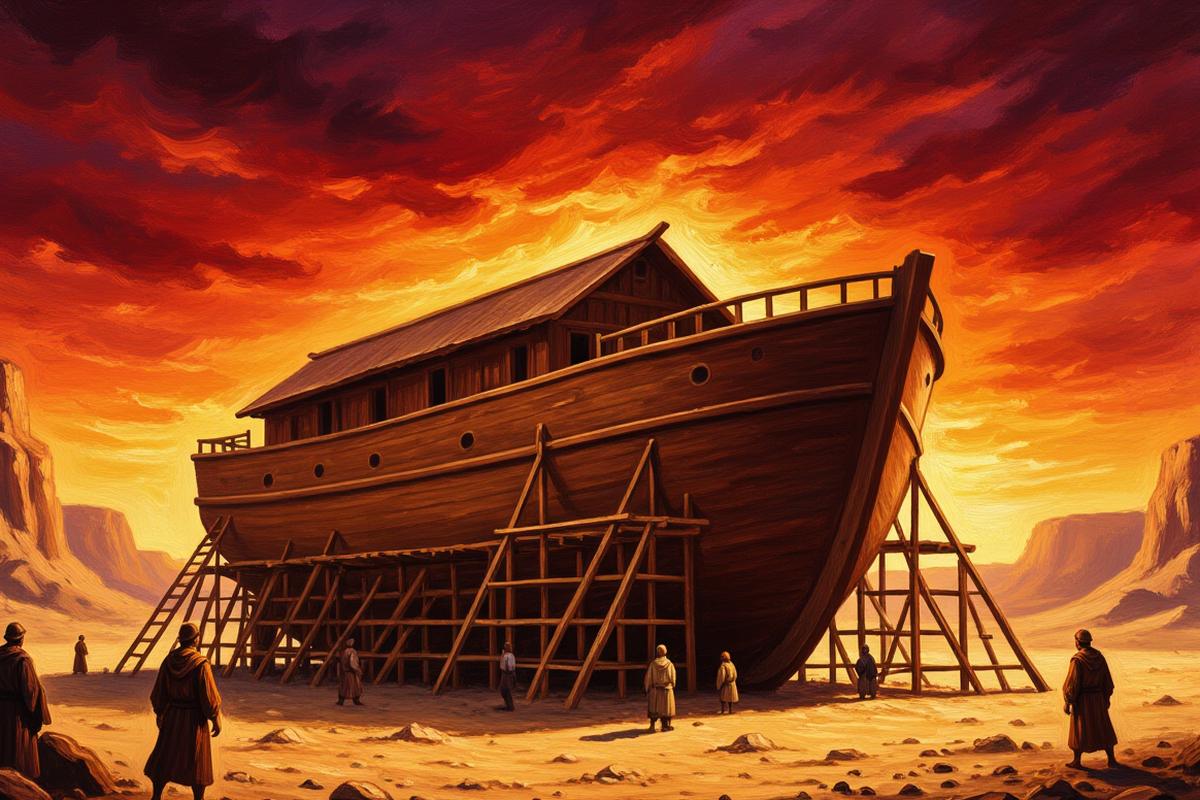
In Hebrews 11:7, Noah, “being divinely warned of things not yet seen, moved with godly fear, prepared an ark for the saving of his household.” He lived where there was no lake, no ocean and no rain, and people ridiculed him. The pastor pictures Noah as a general contractor overseeing the work for decades. Noah had advance information and acted on it, and God rewarded him by making him an heir of righteousness, a gift the pastor connects to 2 Corinthians 5:21.
In Hebrews 11:8, Abraham obeyed and went out to a place he would receive as an inheritance. God does not change things first and then ask us to believe. That, the pastor says, is unbelief. Faith is the substance of things hoped for (Hebrews 11:1): a photo on the fridge of the weight you want to lose is the picture; believing is going to the gym and putting down the snacks.
In Hebrews 11:23, Moses’ parents hid him three months because they saw he was a beautiful child and were not afraid of the king’s command. When they could not hide him any longer, they placed him in a basket of reeds on the Nile while his sister watched (Exodus 2:1–10). Pharaoh’s daughter drew him out, and the pastor notes that the name Moses means drawn out. His own mother was then paid to nurse him. In these stories, he sums up, Noah was warned, Abraham was called, and Moses’ parents saw.
How God Gives Advance Information Today
The pastor says we receive the same kind of information in three ways. First, from the Bible: read it, and God will talk to you. Second, directly into our spirits, a thought we keep turning over until we stop wrestling with it, which is what meditation means. Third, by seeing a need. When you see a woman struggling downtown and think somebody should help her, that means you. Freely you have received, freely give (Matthew 10:8).
John asks how the love of God can abide in someone who sees a brother in need and shuts up his heart (1 John 3:17). Acting on a need activates gifts in us, as the Montgomery Ward moment did for him. For decisions like a new job offer, trust in the Lord and lean not on your own understanding (Proverbs 3:5–6). If peace fills your heart, act on it; if a grief that is more than nerves comes, back out.
He gives a strong warning too: the Holy Spirit will never contradict the written Word. He recalls an extreme news story of a young man who claimed the Lord told him to kill his parents, something the commands to honor your father and mother and not murder rule out at once (Exodus 20:12–13). Know your Bible so you can be led with confidence.
He also shares a recent testimony from a communion service. Someone in the church reported warmth going through their body and said years of daily back pain were gone. Everyone makes mistakes, he adds, and God is not counting them; Christ has redeemed us from the curse of the law.
Living Kingdom Faith This Week
The pastor closed with an invitation: confess with your mouth the Lord Jesus and believe in your heart that God raised Him from the dead (Romans 10:9–10). Steps drawn from the message on faith and believing:
- Aim your faith at Jesus. Pursue Him, not the things you need; they come as byproducts.
- Hail the King. Spend time magnifying the Lord and declaring His goodness before listing your problems.
- Find your advance information. Read your Bible daily and note what God is promising in your situation.
- Put legs on it. Identify one thing God has asked of you that you put on the back burner, and do it.
- Answer the need in front of you. When you think somebody should help, let that somebody be you.
- Check leading against the Word. Act on what brings peace and agrees with Scripture; drop what does not.
Timestamped Outline
- 0:00 Faith in Someone, not faith for things
- 1:08 Hebrews 12:2: looking unto Jesus
- 2:17 Hail to the king
- 4:40 Creation waiting for the sons of God
- 8:11 Does God want me well?
- 9:17 Faith is the gift that accesses every grace
- 11:33 The diamond ring illustration
- 14:05 The piano recital
- 16:17 Precious to those who believe: 1 Peter 2:7–8
- 18:43 Like precious faith and the heirloom ring
- 23:36 All things are possible to him who believes
- 26:13 The call to children’s ministry
- 28:30 Members of the household of God
- 33:29 Faith is information; believing is action
- 34:48 The obedience of faith: Romans 16:25–27
- 40:02 Faith is a noun, believing is a verb
- 42:28 Romans 4:17: calling things that are not
- 47:02 Isaiah 46: the end from the beginning
- 49:30 Noah’s advance information
- 54:24 Abraham obeys and goes out
- 57:25 Moses’ parents hide the child
- 1:01:07 Three ways God gives information today
- 1:05:26 The Spirit never contradicts the Word
- 1:09:46 Invitation and prayer of salvation
Kingdom Faith Series
This message is part of the Kingdom Faith series at NTC Ministries. Start from the beginning or continue where this one leaves off:
- First message: Kingdom Faith #2: The Grace of Faith That Receives Every Other Grace
- Previous: Kingdom Faith #4: God Rewards Faith — Citizens of His Household
- You are here: Kingdom Faith #5: Faith and Believing — Faith in Jesus, Not Faith for Things
- Next: Kingdom Faith #8: Fix Your Eyes on Jesus — Faith, Believing and the Stall
Frequently Asked Questions
Is it wrong to want healing or provision from God?
No. The pastor says God wants to bless you, has given you all things that pertain to life and godliness, and does not want you living without. His point is about focus. Healing, finances and changed lives for your kids are byproducts of Jesus, not the object of faith. When Jesus is the focal point and is precious to you, you can call in what He has promised, and it is used to grow your faith.
Why does my situation sometimes get worse after I start believing?
The pastor teaches that God declares the end from the beginning, which does not mean you wake up the next day with the answer. It is the start of a path. Things may seem to get worse because God is dealing with your heart and growing your character. He compares it to a musician becoming a virtuoso: missed notes are fine, but keep practicing. Keep declaring, keep trusting and keep acting.
Why does the sermon mention water baptism?
Near the end the pastor uses baptism as an example of putting feet on faith. It can feel inconvenient, he says, yet Jesus walked a long way to be baptized in the Jordan to fulfill righteousness. Those in the church who had recently been baptized described it as a life-changing experience with the Lord, which he attributes to acting on what they believed.
Scripture References
All passages open in the New King James Version on Bible Gateway:
- Hebrews 12:2 — looking unto Jesus
- Hebrews 11:6 — God rewards those who seek Him
- 1 Peter 2:7–8 — precious to those who believe
- Mark 9:23 — all things are possible to him who believes
- Romans 10:17 — faith comes by hearing
- Romans 4:17 — calling things that are not as though they were
- Isaiah 46:9–10 — the end from the beginning
- Hebrews 11:7, Hebrews 11:8 and Hebrews 11:23 — Noah, Abraham and Moses’ parents
- Romans 10:9–10 — confess and believe
How this summary was made: written with AI assistance from the sermon’s own transcript and checked against the Scriptures listed above.
Watch More Messages
If this message stirred your faith, there are hundreds more teachings from NTC Ministries waiting for you. Browse the full sermon archive and keep putting legs on what God has spoken to you.