God rewards faith, and this message explains why. The pastor teaches that born-again believers are not strangers or foreigners in God’s household but fellow citizens with every right and privilege, and that faith is the gift that lets us take hold of all the rest. He compares Jesus to a precious stone and faith to the gold setting that holds it, and he shows from Hebrews 11 that God is a rewarder of those who diligently seek Him.
This is the fourth message in the Kingdom Faith series and continues from Kingdom Faith #3: Faith Justifies — Faith in Jesus, Not Faith for Things. Below you will find the full video, a structured summary, every key Scripture (linked to the New King James Version on Bible Gateway), a timestamped outline, and practical steps for this week.
Sermon at a Glance
This message was preached at NTC Ministries and posted on July 29, 2025. It runs about 67 minutes and closes with communion. The pastor calls the Kingdom Faith series a treasure, because understanding faith gives believers confidence in what God is doing and in how they relate to Him.
The sermon moves from identity to action. First comes who we are: citizens and family members in God’s house. Then comes where faith comes from: Jesus, its author and finisher. Last comes what faith does: it hears, obeys and holds on, and God rewards it.
| Detail | Information |
|---|---|
| Speaker | The pastor (not named in the recording) |
| Series | Kingdom Faith (#4) |
| Main text | Ephesians 2:19 and Hebrews 11:1–11 |
| Key theme | God rewards those who walk in the faith He has given |
| Length | About 67 minutes, ending in communion |
No Longer Strangers and Foreigners
The pastor opens with Ephesians 2:19: “you are no longer strangers and foreigners, but fellow citizens with the saints and members of the household of God.” Every household is different, he says, and being a member of one is very different from visiting. At some houses you are barely welcome; you stand around as a bystander and it gets awkward.
That, he says, is what religion does. It makes everyone a bystander. People grow used to church life but feel unfamiliar in the household of God itself. They say they are not comfortable praying, praising or worshiping, and they cannot just go to God. That discomfort shows a missing revelation of faith.
He explains the two words. The Greek word for stranger means a guest. A foreigner is someone who is present but not eligible to partake of the blessings, the inheritance and the rights of the place. So when a Christian says, “I go to church, but you pray for me because I don’t have the rights and privileges you do,” that person is still acting like a stranger and a foreigner.
Believers are fellow citizens. “Stop acting like you’re a foreigner,” he urges. We are to be comfortable coming into God’s presence, because there is now no condemnation to those who are in Christ Jesus, and the law of the Spirit of life has made us free from the law of sin and death (Romans 8:1–2). It does not depend on how sanctified we feel. Legitimately, we have all the rights and privileges of the house.
That is why God rewards faith. In kingdom faith, God does not reward people who know about Him but do not act as if He is living, as if He has risen from the dead, or as if He has given them everything. He rewards those who walk in faith.
The Author and Finisher of Our Faith
The pastor calls Hebrews 12:2 the kingdom faith law: look unto Jesus, “the author and finisher of our faith.” You did not author your faith and you do not finish it. He does. So we look to Jesus, accept Him and stay open to Him, and when we read Scripture we look for Him. Jesus told the religious leaders that they searched the Scriptures for life, yet those Scriptures testified of Him (John 5:39). “I’m not looking for something. I’m looking for someone.”
When we discover that healing, health and provision belong to us, that is our citizenship. But we did not earn it by passing a test. When you are born again, God carves ownership into your heart, and you become a citizen by being born into His family. Looking into the Word, we see who God is and then see ourselves in Him, for “in Him we live and move and have our being” (Acts 17:28).
Opposition to believers is really opposition to Jesus. On the road to Damascus, He asked Saul, “why are you persecuting Me?” (Acts 9:4–5), not “why are you persecuting My followers?” Saul and the religious leaders knew of a Messiah but did not know Him.
Kingdom faith, the pastor teaches, is a gift of God that enables us to take hold of every other gift. You cannot muster it up. You could not even ask Jesus into your life unless He had given you the faith to do it. “The faith you have is the same faith I have.” Some people look as though they have great faith, but they have simply exercised the same muscle more, he jokes.
He pictures a child on a hot day who knows there are popsicles in the freezer but believes he cannot ask. No child thinks that way. Every householder, Jesus said, brings out of his treasure things new and old (Matthew 13:52). The pastor adds the neighbor kid who scoffs at your plan to ask your dad for a pool: he does not live there. Non-Christians may need others to pray for them, but believers must grow up into the understanding that all things pertaining to life and godliness have been given to us (2 Peter 1:3).
Because Jesus is so committed to our faith that He finishes it, faith must matter to us. Without faith it is impossible to please God (Hebrews 11:6). Hoping simply to slip into heaven while running to someone else in every trouble, he says, is religion, not faith.

Christ the Stone, Faith the Setting
Christ is the stone of blessing, the One who blesses, empowers, prospers and heals. He withholds nothing: if God did not spare His own Son, how will He not with Him freely give us all things (Romans 8:32)? Our faith, the pastor says, is the gold setting that holds the stone.
He learned about settings from Fay Markwart, a gemologist who helped him start the church’s school and had the children praying for the building where they now meet. She saw the first service there in May and passed away the next month, and the library bears her name. She taught him that the more valuable the stone, the more prongs a jeweler uses to hold it. No one wants to look down at a wedding reception and find the diamond gone. So we hold fast to Jesus.
1 Peter 2:7–8 says that to those who believe, Christ is precious, but to the disobedient He is the stone the builders rejected. The pastor notes that people can talk endlessly about football, fishing, work and children, but when the conversation turns to Jesus they suddenly have to go. He is not precious to them.
If you lose the diamond from a ring, the value drops by almost all of it, leaving only scrap metal. Even some faith preachers, he warns, emphasize the setting instead of the stone. “Jesus is the one.” Precious faith is precious because it holds Him.
2 Peter 1:1 is addressed to those who have obtained “like precious faith.” Peter’s faith was such that the sick were laid in the streets so his shadow might fall on them (Acts 5:15). You have the same precious faith. If it is not working, the pastor asks, is Jesus a Sunday medallion for you, someone you press into only when things go wrong? That makes Him your servant, not your Lord. God is no respecter of persons (Acts 10:34).
Rings handed down from the 1700s become heirlooms worth more than their materials because they lasted. Kingdom faith gains value the same way. He tells how he gave his wife a fifteen-dollar ring when they were both twelve; she wrapped yarn around it and still has it 58 years later. What makes it valuable is the relationship they have held onto.
Faith That Hears and Obeys
Many people start out on fire and a year or two later have stopped coming to church. Their hearts have grown cold, what the Bible calls hardhearted. Words like “I can’t do that” or “God doesn’t do that anymore” are destructive. Every step toward believing Jesus removes fear, guilt and pressure; stepping back lets fear grip us.
Jesus answers with Mark 9:23: “If you can believe, all things are possible to him who believes.” With God all things are possible (Matthew 19:26), and faith as a mustard seed can move a mountain (Matthew 17:20). The pastor admits there are things he could have had if he had pressed in instead of letting something else seem more important. “I’m not seeking the things. I’m seeking the One that promised all things.”
“Faith comes by hearing, and hearing by the word of God” (Romans 10:17), which he reads as hearing again and again. God does not mind repeating Himself. The danger comes when people make excuses until they no longer hear Him. Then problems come, not caused by God but by what was sown, and they blame Him. The gospel was revealed, he reads, “to bring about the obedience of faith” (Romans 16:25–27). He and his wife once gave away everything they owned in obedience. They lacked for a long time, but God’s plan proved far greater. He is clear that this was God’s request to them, not a rule for others.
Kingdom faith is not self-confidence. The self-confident eventually meet something they cannot handle and fold like a house of cards. Faith says, “I can do all things through Christ who strengthens me” (Philippians 4:13): God does it with me. Faith melts our will into God’s will. By faith Abraham obeyed when called to leave Ur (Hebrews 11:8).
Faith is not idle. James 2:17–20 says faith without works is dead, and even the demons believe and tremble. The difference is obedience. He tells of a family who needed fuel for the winter. A supplier a mile away offered it free to anyone who came in person, but they kept saying they were too busy. They froze, blamed others and then God. Jesus still says, “Come to Me” (Matthew 11:28–30), and He will cast out no one who comes (John 6:37). Abraham’s faith worked together with his works when he offered Isaac (James 2:21–24).
The table gathers the descriptions of faith the pastor gives across the sermon.
| What faith is, as taught | What it means | Scripture |
|---|---|---|
| A gift | Given by God; the same faith in every believer | Hebrews 12:2 |
| The setting for the stone | Holds Jesus, the precious One | 1 Peter 2:7 |
| A Christ-prizing grace | Grows by hearing the Word repeatedly | Romans 10:17 |
| An obedient grace | Runs at God’s call; melts our will into His | Romans 16:26 |
| Not an idle grace | Believes the promise and obeys the command | James 2:17 |
| Substance and evidence | Holds what is hoped for before it is seen | Hebrews 11:1 |
God Rewards Faith: Hebrews 11
Do you see God’s commands as chains around your ankles or as a chain around your neck holding something precious? The first words a human heard were essentially “become more”: be fruitful and multiply (Genesis 1:28). Everything God asks is meant to give us more, and receiving it takes faith. What profit is it to gain the whole world and lose your soul (Mark 8:36)?
Then he reads Hebrews 11:1–11. “Now faith is the substance of things hoped for, the evidence of things not seen.” Hope with no substance is not faith; “you can die in hope. You won’t in faith.” Faith brings evidence into your heart before anyone can see it. The pastor recalls hundreds of moments when he could have quit pastoring because of opposition and scandals, yet God upheld his faith while those who opposed him went nowhere. “I don’t have faith in people. I have faith in the Lord Jesus Christ.”
By faith the elders obtained a good report. He says the Greek word behind that phrase is the one from which we get “martyr”: they died to themselves and did not care what people thought. By faith Abel offered a more excellent sacrifice, and Enoch was taken because he pleased God. Then verse 6, the heart of this kingdom faith message: he who comes to God must believe that He is, and that He is a rewarder of those who diligently seek Him. God rewards faith.
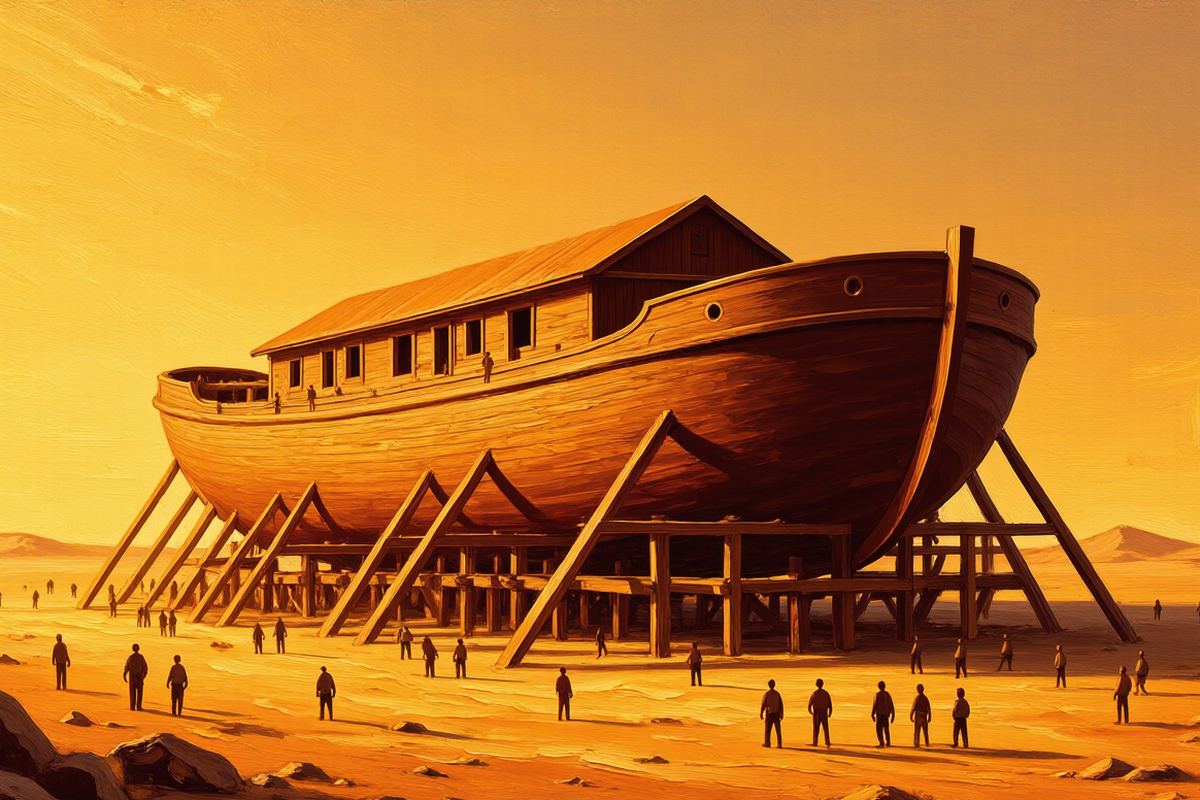
Noah built an ark for many years with no rain in sight and great opposition. By faith he “prepared an ark for the saving of his household” and became heir of the righteousness which is according to faith (Hebrews 11:7). God rewards faith like Noah’s. If we believe He rewards seekers as firmly as we believe He exists, we will trust His promises. “If you’re going to doubt anything, doubt your doubts.”
Abraham went out not knowing where he was going and looked for a city whose builder and maker is God. Sarah received strength to conceive past age because she judged Him faithful who had promised. Again, God rewards faith. The pastor ties this to Hebrews 6:12: imitate those who through faith and patience inherit the promises. He warns against online voices mocking preachers who have prospered, asking whether anyone would learn health from a sick teacher. Greed, he says, exists among rich and poor alike; quit being envious.
Living Kingdom Faith This Week
The message closes with communion. Jesus broke bread and gave the cup on the night He was betrayed (1 Corinthians 11:23–25), and the pastor tells the church they are filled with all the fullness of God (Ephesians 3:19) as heirs of God and joint heirs with Christ (Romans 8:17). Here are practical steps from this message that God rewards faith:
- Come to God as family. Pray this week as a member of the household, not a guest waiting for someone else to pray for you.
- Look for Jesus in the Word. Read a passage daily asking what it shows you about Him and about who you are in Him.
- Exercise your faith. Pick one promise and act on it, remembering you have the same faith Peter and Paul had.
- Obey quickly. When God asks something of you, do it before excuses start to form.
- Keep hearing. Return to the same promise again and again until faith grows strong.
- Doubt your doubts. When fear says “I can’t,” answer with Mark 9:23.
Timestamped Outline
- 0:00 No longer strangers: Ephesians 2:19
- 2:24 What strangers and foreigners mean
- 4:49 No condemnation: God rewards faith
- 6:14 Hebrews 12:2: author and finisher
- 7:34 Born into the family; Acts 17:28
- 10:09 Saul on the road to Damascus
- 11:31 Faith is a gift, the same in all
- 12:54 Popsicles and the household
- 17:50 Christ the stone of blessing
- 18:56 The gemologist and the setting
- 20:06 1 Peter 2:7–8: precious to believers
- 22:30 Like precious faith: 2 Peter 1:1
- 26:22 A ring kept for 58 years
- 28:34 All things are possible: Mark 9:23
- 30:53 Faith comes by hearing
- 33:00 The obedience of faith: Romans 16
- 36:39 I can do all things through Christ
- 39:24 Faith without works is dead
- 41:41 The family that needed fuel
- 46:50 Become more: Genesis 1:28
- 48:31 Faith is the substance: Hebrews 11
- 52:16 A rewarder of those who seek Him
- 56:07 Faith and patience: Hebrews 6:12
- 59:34 Like precious faith and communion
Kingdom Faith Series
This message is part of the Kingdom Faith series at NTC Ministries. Start from the beginning or continue where this one leaves off:
- First message: Kingdom Faith #2: The Grace of Faith That Receives Every Other Grace
- Previous: Kingdom Faith #3: Faith Justifies — Faith in Jesus, Not Faith for Things
- You are here: Kingdom Faith #4: God Rewards Faith — Citizens of His Household
- Next: Kingdom Faith #5: Faith and Believing — Faith in Jesus, Not Faith for Things
Frequently Asked Questions
Is it wrong to ask other Christians to pray for me?
The pastor’s concern is not prayer support but a stranger’s mindset. He understands when non-Christians come asking for prayer. What troubles him is believers who assume someone else has access to God that they lack. Because every born-again believer is a fellow citizen in God’s household, he teaches that each one can approach the Father directly and confidently, the way a child asks a parent for something without hesitation.
Does God reward faith right away?
Not always. Drawing on Hebrews 6:12, the pastor says the promises are inherited through faith and patience together. Noah built for many years before the flood, and Abraham went out not knowing where he was going. Faith is the substance of what is hoped for before it is seen, so holding on is part of faith. The longer you hold on, he says, the more valuable it becomes.
What does communion have to do with faith?
The pastor presents communion as remembrance of the precious stone, Jesus, who gave His body and blood so that believers are forgiven and made the righteousness of God. He invites people to partake by faith, accepting healing, fruitfulness and provision as theirs even before they appear. Asking someone else to obtain the inheritance for you, he says, shows you do not yet believe you have it.
Scripture References
All passages open in the New King James Version on Bible Gateway:
- Ephesians 2:19 — fellow citizens and members of the household of God
- Hebrews 12:2 — Jesus, the author and finisher of our faith
- Romans 8:32 — He will freely give us all things
- 1 Peter 2:7–8 — Christ is precious to those who believe
- 2 Peter 1:1 — like precious faith
- Mark 9:23 — all things are possible to him who believes
- Romans 10:17 — faith comes by hearing
- James 2:17–20 — faith without works is dead
- Hebrews 11:1–11 — God is a rewarder of those who diligently seek Him
How this summary was made: written with AI assistance from the sermon’s own transcript and checked against the Scriptures listed above.
Watch More Messages
If this message built your faith, there are hundreds more teachings from NTC Ministries waiting for you. Browse the full sermon archive and keep growing in the faith God has given you.