Help God I Want to Change, Part 6 teaches that people change according to what is planted in them, and that the people you walk with are some of the most powerful seeds of all. The pastor calls this message “choose your associations wisely.” He shows that God made humanity like a garden, that the Word of God is the incorruptible seed of change, and that entering God’s rest means continuing to hear His voice and do what He says.
This message continues from Help God! I Want to Change #4: Entering God’s Rest With a Soft Heart. Below you will find the full video, a structured summary, every Scripture he uses (linked to the New King James Version on Bible Gateway), a timestamped outline, and practical steps for the week ahead.
Sermon at a Glance
This message was posted by NTC Ministries on September 28, 2021. It opens with a recap of earlier parts of the series and then moves into the new subject. Most people, the pastor observes, either struggle to change all their lives or give up and tell everyone to love them just the way they are.
His answer is that God loves us just as we are, but loves us too much to leave us there. Change brings us into a closer relationship with Him and a greater inheritance, in this life and the one to come. The key question of the message is what, and who, you are allowing to plant seeds in your life.
| Detail | Information |
|---|---|
| Speaker | The pastor of NTC Ministries (not named in the recording) |
| Series | Help God I Want to Change, Part 6 |
| Main text | Proverbs 13:20 and 1 Corinthians 15:33, with Luke 5:1–11 |
| Key theme | Choose your associations wisely, because whatever is planted in you grows |
| Length | About 68 minutes |
Made From the Ground: Why You Can Change
The pastor begins with how God made us. God does not change, but He created humanity in time, and in time there is change. Humanity is called Adam, and the word for earth or ground is adama, from the same base word. We were made from the soil, he teaches, so we work like soil: whatever is sown into us grows.
That is why Scripture tells us to keep our heart with all diligence, for out of it spring the issues of life (Proverbs 4:23). Many people will not guard their lives because their emotions are stronger than their desire to grow. When corruption came, he says, humanity became enslaved to the five physical senses. What we believe has to matter more than what we feel, because we walk by faith and not by sight (2 Corinthians 5:7).
The seed that changes us is the Word of God. 1 Peter 1:23 says we have been born again “not of corruptible seed but incorruptible, through the word of God which lives and abides forever.” Jesus said His words are spirit and life (John 6:63). If we want a better life, the pastor says, we have to receive the right words for that life.
Marriage works the same way. Two people raised in different homes, with different beliefs and habits, become a new garden together. Without good counseling they say “I do” and then head in opposite directions once the honeymoon fades. Counseling, he explains, helps a couple agree on what they will plant, because two cannot walk together unless they are agreed (Amos 3:3). He urges engaged couples to take at least six months of counseling first.
What Steals the Seed of the Word
Every one of us needs to change, the pastor says, and Satan constantly works to stop it. He returns to the parable of the sower. When the disciples asked what it meant, Jesus said that if they did not understand this parable, they would not understand the others (Mark 4:13–20). The seed is the Word of God, and what the devil is really after is getting you to stop listening to it.
The table below follows his explanation of the three kinds of ground where the Word is lost.
| Ground | What happens | What it looks like today |
|---|---|---|
| Hard path | The birds come immediately and take the seed | The wicked one steals the Word before it can take root |
| Rocky ground | Springs up with joy but has no root and withers in the heat | The problems of life burn up the Word in someone not rooted in it |
| Among thorns | Grows but is choked by weeds | People who prosper decide they no longer need to hear God |
The third ground worries him most. Someone gets prayed for, God gives them what they wanted, and they decide they are on their own now. You always were, he says; God simply wanted His Word producing in you, and you are the one who has to keep guarding it and hearing it.
He gives an example with a jar of jelly beans. If everyone keeps taking and nobody replenishes it, one day it is empty. Takers eventually decide other people are no good to them anymore. But Jesus said, “Give, and it will be given to you: good measure, pressed down, shaken together, and running over” (Luke 6:38). Givers who keep hearing and doing the Word see it produce.
He points back to Eden. After Adam sinned, he hid himself, and God called, “Where are you?” (Genesis 3:9–10). The pastor stresses that it was not God who stopped talking. It was Adam who left and quit listening.

Entering God’s Rest by Hearing His Voice
Change takes time. People often say God told them to do something, then quit after a couple of months because nothing happened. Just because nothing happened instantly, he says, does not mean it was not God. He has never planted Jack-and-the-beanstalk beans that reached the sky overnight. A garden takes time and care, ground that is tilled and weeds that are pulled.
He reads Genesis 3:17–19, where the ground is cursed and man must eat of it in toil, among thorns and thistles, by the sweat of his face. Does God want His children to live in toil? No. In the creation account each day had an evening and a morning, but the seventh day was never given one (Genesis 2:2–3). That, he teaches, is because God’s rest is eternal, without beginning or end. The Sabbath is not just a day of the week but a life yielded to God.
The heart of this section is Hebrews 4:9–11: “For he who has entered His rest has himself also ceased from his works as God did from His.” It does not say stop working to enter rest; it says enter His rest and you will cease from toil. The way in is shown in Hebrews 3:7–11: “Today, if you will hear His voice, do not harden your hearts.”
Hearing His voice, however, takes maturity. Some new believers assume every thought they have is God. He tells of a man named Charlie who quit his job and moved to Florida with no plan because he believed the Lord said to, and came back a year later having lost his house. The Bible says wise people surround themselves with counselors, he says, since even Satan can appear as an angel of light (2 Corinthians 11:14). Until your thoughts are renewed to the Scriptures, find someone mature and listen to them.
Nevertheless at Your Word: Peter’s Great Catch
The pastor then reads Luke 5:1–11. The crowds pressed in to hear the word of God, so Jesus sat in Simon’s boat and taught from the water, which carried His voice to the shore. Then He told Simon to launch into the deep and let down the nets.
Peter was the fisherman; Jesus was not. You fished in the shallows, at night, not in the deep in the heat of day. So Simon answered that they had toiled all night and caught nothing, nevertheless at His word he would let down the net. The pastor notices the word toiled: Peter had done everything right under the curse and still came up empty.
The catch was so great that the nets were breaking and both boats began to sink. Yet Peter’s first response was, “Depart from me, for I am a sinful man, O Lord!” The pastor points out that he could have said, forgive me, Lord, for not trusting You. Instead he pushed Jesus away. That, he says, is what the corrupted nature always does: it wants to separate us from the voice of God.
He applies it directly. The Lord tells you to give a certain amount to missions, then a few things happen and you decide you cannot. When you lean on your own understanding, you cut yourself off from God’s rest and are left with the toil of life. He leads the church in saying, “forgive me Lord that I didn’t trust you.”
The story ends well. Jesus told Simon not to be afraid, for from now on he would catch men, and the fishermen forsook all and followed Him. Later, when many disciples left over a hard saying, Peter asked where else they could go, since Jesus had the words of life (John 6:66–68). The pastor says the church would not be in 34 nations today if they had quit after the first hundred battles.
Help God I Want to Change: Choose Your Associations Wisely
Here he names the title of the message: choose your associations wisely. Many people surround themselves only with others who have never accomplished anything, which he calls being weak-souled, or frazzled. He compares it to the afghans his wife made, which she finished by running one string through all the ends so they would not unravel. The Word holds us together so we are strong in the Lord, able, with David, to run against a troop and leap over a wall (Psalm 18:29).
People who only compare problems, he says, are like dogs licking their own wounds. Some people have a form of godliness but deny its power (2 Timothy 3:5), and when people deny the power of change in their own lives, they stop believing in miracles.
In 1 Corinthians 15:31–34, Paul says he dies daily, and asks what advantage his fight at Ephesus would be if the dead do not rise. Then he warns, “Do not be deceived: Evil company corrupts good habits.” The danger, the pastor clarifies, is not having friends who do not know the Lord; it is never speaking into their lives for fear they will not like you. Then their seeds go into your garden.
A fool, Psalm 14:1 says, has said in his heart there is no God, and Romans 3:10 says none is righteous. All of us lived in corruption until the seed of the Word came in. Proverbs 9:6 says to forsake foolishness and live, and he reminds the church that Jesus came to give life more abundantly (John 10:10).
Then the key verse, Proverbs 13:20: “He who walks with wise men will be wise, but the companion of fools will be destroyed.” What he looks for, he says, is people who will make him want to change.
A little leaven leavens the whole lump (1 Corinthians 5:6). Yeast fills dough with air: it looks bigger, but there is no substance. When storms come, that kind of life crumbles. In Matthew 7:24–27, the one who hears Jesus’ sayings and does them builds on the rock. God is not mocked, he adds: whatever we sow we reap (Galatians 6:7).
He asks the church to number their days (Psalm 90:12) and reads Proverbs 2:11–13, where discretion, which he defines as wise choices, preserves you from the way of evil. Are the people around you growing, or are they the same as ten years ago?
He honors Dr. Vivor, a Bible college graduate who had just passed away. Told to leave the ministry or lose his family, he answered that he had to do what God told him to do. Those are the people, the pastor says, he wants around him.
From Distress to Mighty Men of Valor
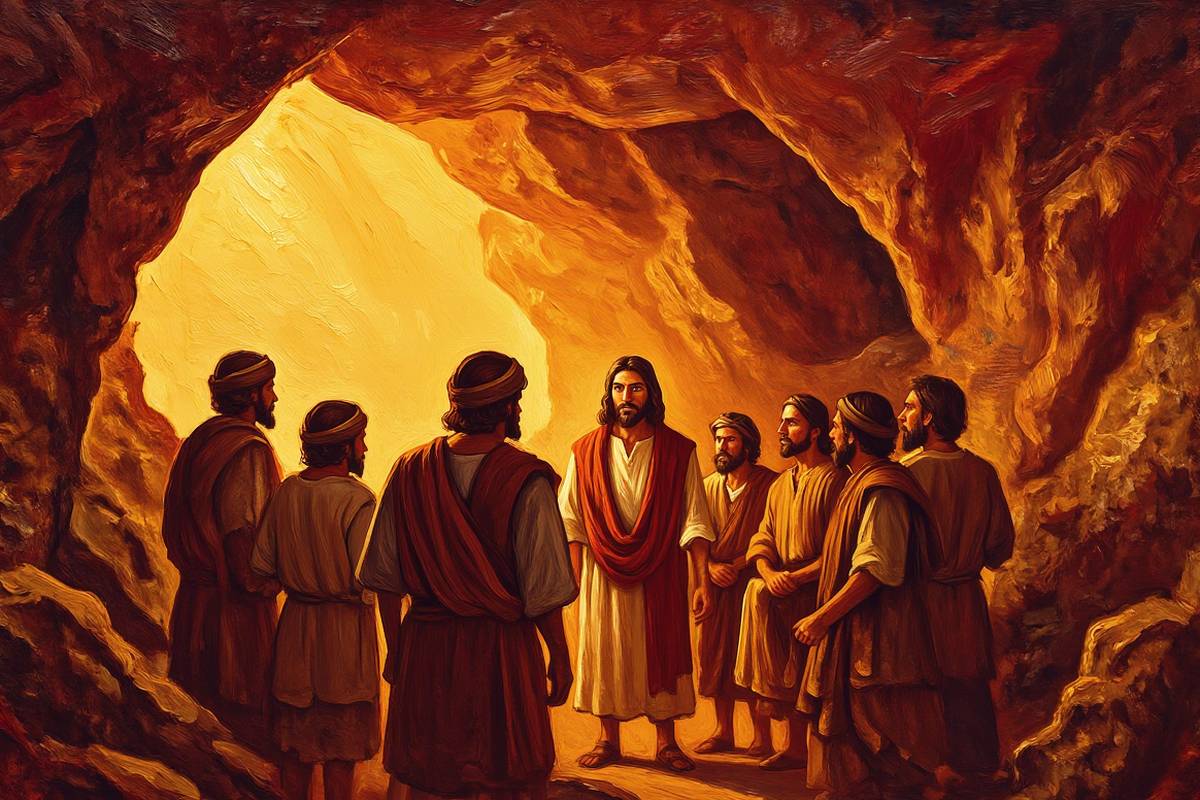
In 1 Samuel 22:1–2, David fled Saul to the cave of Adullam, and everyone who was in distress, in debt and discontented gathered to him, about four hundred men. David did not submit to them; he became captain over them. God brought the men to David, the pastor notes, but He could not make them submit to David. They had to choose to.
David was a man of covenant, and covenant means a total commitment that brings change. These men became David’s mighty men of valor, he says, because they submitted to someone wiser and ended up doing the same exploits David did.
2 Samuel 23:8–12 names a few: one who killed eight hundred men at one time; Eleazar, who fought beside David when Israel retreated until his hand stuck to the sword; and Shammah, who stood in a field of lentils and defended it. He warns against churches that want one hero to win while everyone else collects the plunder.
Nobody will chase you down, he says; you have to reach out to people who have achieved what you need, and then be teachable. On a trip in Egypt he told a passenger who kept recommending books that he had read them but wanted to hear from the man who had lived it.
He cites Tampa Bay coach Bruce Arians, who said Tom Brady taught the team how to win; because they submitted to his understanding, they won the Super Bowl in his first year. Jesus said a blind man cannot lead the blind, and that everyone perfectly trained will be like his teacher (Luke 6:39–40). Paul told the church to imitate him as he imitated Christ (1 Corinthians 11:1).
He quotes David Livingstone, who wrote back to friends offering to send men if there were a good road: he wanted men who would come if there were no road at all. Daniel 11:32 warns that those who do wickedly against the covenant are corrupted with flattery. When you commit yourself to Christ and to being changed by the Word and strong mentors, he says, you enter God’s rest, and there you find provision, healing, inspiration to dream big and an anointing to bless others.
Living It Out This Week
He closes by inviting everyone to trade Peter’s “depart from me” for “Lord, forgive me,” and to make a wholehearted commitment to Jesus. Here are practical steps from this help God I want to change message:
- Audit your seeds. Notice what you watch, read and listen to, and guard your heart with all diligence.
- Read your Bible daily. The Word is the incorruptible seed of change; keep hearing it until it produces.
- Keep doing what God said. Do not quit because nothing happened right away; gardens take time and care.
- Find a wise counselor. Test what you think God is saying with someone mature before making big decisions.
- Review your associations. Ask whether the people closest to you make you want to grow, and seek out at least one who does.
- Be teachable. When you sit with someone further along, listen more than you talk.
Timestamped Outline
- 0:00 Why people struggle to change
- 1:17 Adam and adama: we are a garden
- 2:38 The incorruptible seed: 1 Peter 1:23
- 4:58 Marriage: planting the same garden
- 6:58 The parable of the sower
- 8:58 Takers, givers and Luke 6:38
- 11:14 Adam quit listening
- 13:28 Toil and the curse: Genesis 3
- 14:31 The seventh day and Hebrews 4
- 16:54 Charlie and the move to Florida
- 17:56 Luke 5: launch out into the deep
- 22:27 Depart from me, I am a sinful man
- 27:11 To whom shall we go?
- 30:39 Evil company corrupts: 1 Corinthians 15
- 34:11 Choose your associations wisely
- 37:34 He who walks with wise men: Proverbs 13:20
- 40:07 Leaven and the house on the rock
- 43:44 Discretion means wise choices
- 48:23 David and the cave of Adullam
- 53:07 Be teachable
- 55:02 Tom Brady and a winning mentality
- 59:42 David’s mighty men: 2 Samuel 23
- 1:04:09 What we find in God’s rest
- 1:06:36 Prayer of commitment
Help God I Want to Change Series
This message is part of a series at NTC Ministries. Start from the beginning or continue where this one leaves off:
- First message: Help God! I Want to Change, Part 2 — Eternity in the Hearts of Men
- Previous: Help God! I Want to Change #4: Entering God’s Rest With a Soft Heart
- You are here: Help God! I Want to Change, Part 6: Choose Your Associations Wisely
- Next: Help God! I Want to Change, Part 7: Choosing Right Words
Frequently Asked Questions
Does this mean I should cut off friends who are not Christians?
No. The pastor says believers should have friends who do not know the Lord, and that he has many himself. He loves them, and he speaks into their lives without forcing anything on them. The problem is when you stay silent out of fear of losing them, because then they are influencing you instead. He adds that if a relationship keeps pulling you away from God, parting ways may be necessary.
How long does real change take?
He compares change to a garden. He has never planted beans and had a stalk reaching the sky the next morning. Change takes time, care, tilled ground and weeding. When God has spoken, he says, keep doing what He said until fruit appears, rather than deciding it was not God because nothing happened in a couple of months.
Why does he connect change with mentors?
Because nobody changes alone. The four hundred men in distress had to go to David’s cave and choose to submit to his leadership, and they became mighty men of valor. Jesus said a disciple who is fully trained becomes like his teacher. The pastor says he still submits to people who speak into his own life, and that a teachable heart listens more than it talks.
Scripture References
All passages open in the New King James Version on Bible Gateway:
- Proverbs 13:20 — he who walks with wise men
- 1 Corinthians 15:31–34 — evil company corrupts good habits
- Luke 5:1–11 — nevertheless at Your word
- Hebrews 4:9–11 — entering God’s rest
- 1 Peter 1:23 — the incorruptible seed
- Mark 4:13–20 — the parable of the sower explained
- 1 Samuel 22:1–2 — the cave of Adullam
- Matthew 7:24–27 — the house on the rock
How this summary was made: written with AI assistance from the sermon’s own transcript and checked against the Scriptures listed above.
Watch More Messages
If this message challenged you to grow, there are hundreds more teachings from NTC Ministries waiting for you. Browse the full sermon archive and keep planting the Word in your heart.