Help God I want to change: that prayer is where transformation starts, and in this fourth message of the series Dr. William P. Hohman shows how it continues, by entering God’s rest. He teaches that people were made from the ground and work like soil, growing whatever is sown in them, and that the stress and toil of a cursed world do not have to rule a believer’s heart. The way into God’s rest is a soft, believing, obedient heart that acts on the Word.
This message continues from Help God! I Want to Change, Part 2 — Eternity in the Hearts of Men. Below you will find the full video, a structured summary, every Scripture he uses (linked to the New King James Version on Bible Gateway), a comparison of the soil Jesus described, a timestamped outline and practical steps for this week.
Sermon at a Glance
This message was posted on August 31, 2021. Pastor Hohman explains that he had been away about three weeks, then recaps the series so far: man was created to change, eternity is in the heart of man, and the pathway to change begins with entering into the rest of God. This message continues that theme through Hebrews 3 and 4. It runs about 64 minutes and ends with an invitation to give your life to Jesus.
His case is practical. The seed determines what grows, but the soil determines how it grows, so the condition of the heart decides whether God’s Word produces a harvest or gets choked out.
| Detail | Information |
|---|---|
| Speaker | Dr. William P. Hohman |
| Series | Help God! I Want to Change, #4 |
| Main text | Hebrews 3:5–19 and Hebrews 4:1–13 |
| Key theme | Entering God’s rest through a soft, believing heart |
| Length | About 64 minutes, ending in a salvation prayer |
Created Like Soil: Why You Reap What You Sow
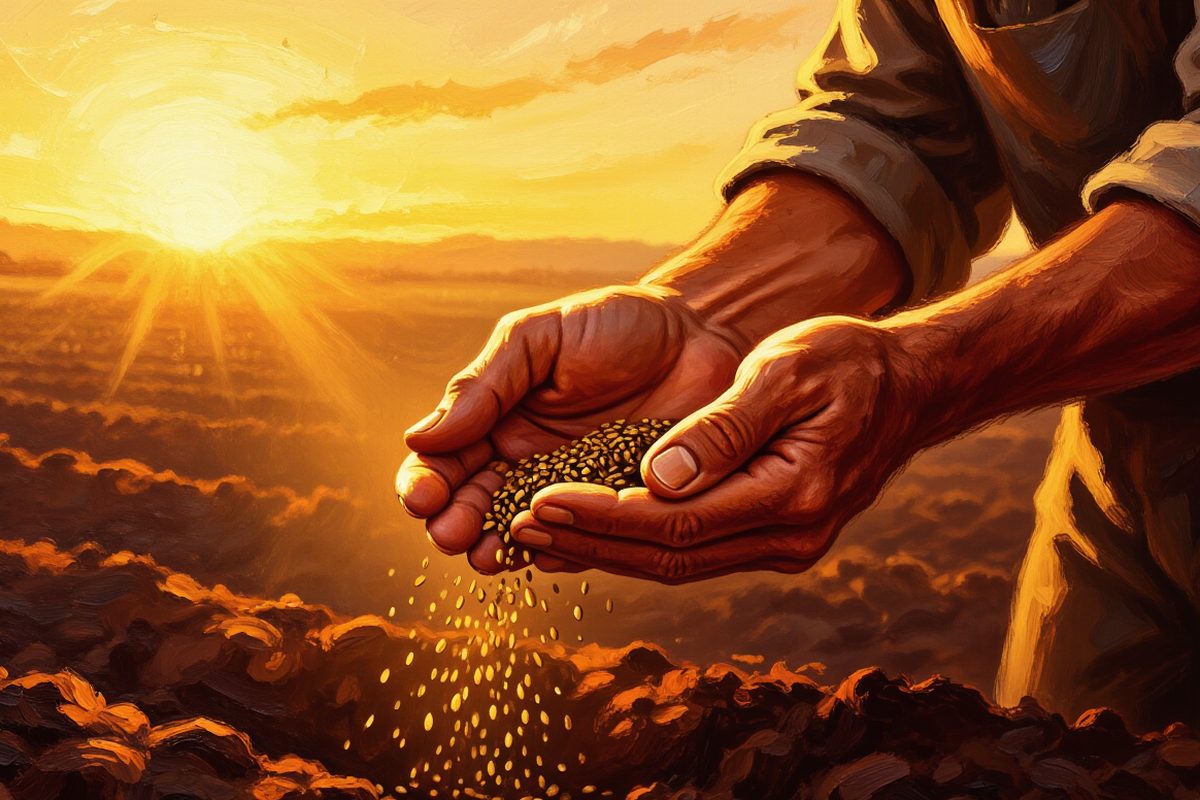
Pastor Hohman starts with the Hebrew words. The word for ground is adamah and the word for man is adam, from the same root. God spoke everything else into being, but He spoke man into being and also formed him with His own hands from the dust (Genesis 2:7). That gives people a unique characteristic: we are like soil. Whatever is planted in us will grow, whether weeds, thistles and thorns, or seeds of life.
God made us with free will. Pastor Hohman says God is in charge but not in control, the way parents are in charge of their children but cannot control them. Not everything that happens is God; much of it is what we have been sowing. That is why Scripture says to keep your heart with all diligence, for out of it spring the issues of life (Proverbs 4:23).
He uses the gardens his listeners were harvesting. No one sowed tomato seeds and got carrots, rutabagas, radishes and corn. You got what you sowed. Yet many people are surprised by what comes up in their lives. Animals cannot change; a rabbit is always a rabbit and a horse is always a horse. But man was created and blessed to change, and if you want your life to change, you start sowing good things, even if the harvest does not come overnight.
A New Creation That Keeps Changing
When we sow the Word into our hearts, we are born again of incorruptible seed that lives and abides forever (1 Peter 1:23). If anyone is in Christ, he is a new creation (2 Corinthians 5:17). Pastor Hohman explains two Greek words for new. One means renewed or refurbished, made to look and feel better. The one used in this verse means something that never existed before.
From that point we are not to be conformed to this world but transformed by the renewing of our minds (Romans 12:2). That renewal is continual: restored, revived, replenished and filled with the Spirit. But if we sow to the flesh from this corruptible world, we reap corruption (Galatians 6:7–8). God wants us to reap eternal life and every privilege of His children more than we want it ourselves.
He describes people who start well after salvation, but a couple of years later know the Lord without really living for Him. They want a miracle without any change. God may intervene in His goodness, but without a willingness to change, the relief is fleeting. God has put eternity in our hearts (Ecclesiastes 3:11), and drawing it out means laying down our own desires. We never lose by it. We trust Him and do not lean on our own understanding, and He directs our paths (Proverbs 3:5–6).
The Cursed Ground and God’s Rest
Each day of creation had an evening and a morning, showing that time has a beginning and an end. God has neither. On the seventh day He rested from all His work. When creation became corrupted, stress came on every life. Nobody enters this world to an easy life; it is the same stress in a different package.
Genesis 3:17–19 describes the cursed ground: toil, thorns and thistles, and bread by the sweat of your brow until you return to the dust. Pastor Hohman says even the beauty of sunrises and sunsets is the corrupted image, not what God first made. God never wanted His children to toil and sweat to eke out a living.
We still have to work; if you do not work, you do not eat. But believers can live above the system from another place, where the life of God flows into their work. Even doing the same job as the people around them, they carry a joy and goodness that comes from eternity. Our duty is to enter God’s rest, and being born again does not mean we have automatically entered it.
The Hebrews passage begins with Moses faithful as a servant and Christ as a Son over His own house, whose house we are if we hold fast our confidence and the rejoicing of hope firm to the end (Hebrews 3:5–19). God gave Adam dominion, and life and death are in the power of the tongue (Proverbs 18:21). Change is not only something God does to us; we have authority and responsibility in it.
Help God I Want to Change My Heart
Pastor Hohman says nobody is anyone’s problem but their own, and tells how he looks in the mirror in the morning and says this is the greatest problem he will have all day: “So you better deal with life, William.” Believers in a hostile day must support and care for one another, not blame one another.
Hebrews quotes Psalm 95: today, if you will hear His voice, do not harden your hearts as in the rebellion (Psalm 95:7–11). Where did that generation go astray? Not in how they were raised or their social standing, but in their heart, and so they did not enter His rest. He says God placed him at the exact time and place he was meant to be, so he will not complain; he will change, and change his surroundings by God’s method.
The real issue is a stiff neck and a hard heart, which every one of us has at some point. The truth never hurts, he says; what hurts is stiffness of heart. When your own understanding becomes your god, you are hard-hearted. The answer is to humble yourself and pray, “God, please forgive me.” Then your marriage, your job and your neighborhood can be the same and yet a better place.
Hebrews 3:12–13 warns believers against an evil heart of unbelief and calls them to exhort one another daily, lest anyone be hardened by the deceitfulness of sin. That is why God wants disciples. He compares discipleship to marching in the military: years later, a veteran still falls into step with whoever walks beside him because the discipline became part of him. Only accepting discipline your own way, or only spending time with people who agree with you, is a sign of a hard heart.
Israel came out of Egypt under Moses, yet their corpses fell in the wilderness. They could not enter because of unbelief. Pastor Hohman says he still has a lot of changing to do, but he is willing to say, “Forgive me,” and “Yes, Lord,” because all have sinned and fall short of the glory of God (Romans 3:23).

Break Up the Fallow Ground
He returns to the first rest in Genesis 2:1–3. The seventh day has no evening and morning because it reflects what is eternal. The one uncorrupted element in this world is God’s rest, and we enter it by obeying Him. Obedience may hurt when your neck is stiff, but every act of obedience softens the heart so that good seed can grow.
Corruption here does not mean becoming a criminal. It means toiling without rest in your soul, manipulating systems to make life work. That is walking in the ways of the kingdom of this earth, not the kingdom of heaven. Jeremiah 4:3 says to break up your fallow ground and do not sow among thorns. Fallow ground has never been tilled. Breaking it is hard and may break a plow on hidden rocks, but once it is worked it becomes easier every season.
In the parable of the sower (Matthew 13:3–23), the same seed lands on four kinds of ground: a beaten path, stones and rocks, thorns and good ground. The seed determines what grows, he says, but the soil determines how it grows. The table gathers what he says about the soil of the heart.
| Ground | What he says about it |
|---|---|
| Fallow ground | Hard ground that has never been tilled; breaking it is the hardest work at first and easier after |
| Among thorns | The thorns’ roots choke it out: the cares of this world, the deceitfulness of riches and other things |
| Good ground | Produces thirty, sixty and even a hundredfold; the soil we want our hearts to become |
| A heart set against doing it | You can hear the Word again and again, but it will not do anything for you |
He tells how rose bushes planted near two flowering bushes spread so fast that they choked one bush to death, and he still cuts them back so the other can bloom. Thorns work the same way. He adds that from his study of church history, when the church looked only to God it grew strong even under persecution. Today many are distracted by entertainment and sports statistics while the things that truly matter go unnoticed. Proverbs 24:30–34 describes the field of the lazy man, overgrown with thorns, its wall broken down.
There Remains a Rest for the People of God
Hebrews 4 speaks to people already born again: since a promise remains of entering His rest, let us fear lest any seem to come short of it. Pastor Hohman says fear here means focus and reverence. The Word did not profit Israel because it was not mixed with faith; they did not act on it. He has seen the same in thirty years of running a Christian school. The same Word and discipline went to every student, and those who applied it have phenomenal lives.
“We who have believed do enter that rest.” Believing means acting, because faith without corresponding action is dead (James 2:17). Many people in counseling say, “I know, I know,” but it has never become life in them. Go to the ant, you sluggard (Proverbs 6:6). When God says to speak healing over your body, you do not keep saying “I’m sick.” You apply the Word until it bears fruit, even if it takes a year. The works were finished from the foundation of the world, and God’s Word will never pass away (Matthew 24:35).
There remains therefore a rest for the people of God, and whoever enters it ceases from his own works. Let us be diligent to enter that rest, for the Word of God is living and powerful, a discerner of the thoughts and intents of the heart. Rest is not a vacation; a vacation rests your body, but turmoil remains inside unless you enter God’s rest.
He illustrates with Peter, who had fished all night and caught nothing (Luke 5:4–7). Peter knew fishing, yet he obeyed Jesus, and the catch filled two boats. Instead of toiling for three jobs, pray and obey. Spend time alone with God, because the Father who sees in secret rewards openly (Matthew 6:6), and remember that the words of Jesus are spirit and life (John 6:63). If you are willing and obedient, you will eat the good of the land (Isaiah 1:19).
Living It Out This Week
Pastor Hohman closes with an invitation to anyone who has never truly given their life to Jesus to do it today. Practical steps from the message:
- Check your seed packet. Look at what you are sowing through your thoughts, words and attention, and start sowing what you want to reap.
- Pray the short prayer. “God, forgive me” softens a stiff neck faster than any argument.
- Pull a few thorns. Name one care, distraction or habit that is choking the Word and cut it back this week.
- Act on one Scripture. Choose a promise and apply it daily until it bears fruit, without giving up after one day.
- Meet God first. Read your Bible each morning before anything else; scrolling memes does not count as time with God.
- Stay in step. Gather with believers often and let mature believers disciple you.
Timestamped Outline
- 0:00 Series recap and the Hebrew words for ground and man
- 1:09 Spoken and formed: we are like soil
- 2:18 In charge but not in control; guard your heart
- 3:13 You reap what you sow in the garden
- 4:20 Born again of incorruptible seed
- 5:22 Two Greek words for new
- 8:52 Lean not on your own understanding
- 9:56 Genesis 3: the cursed ground
- 12:12 Living above the system
- 13:22 Hebrews 3: hold fast your confidence
- 16:49 Psalm 95: do not harden your hearts
- 20:16 Stiff-necked and hard-hearted
- 24:00 Discipleship and marching in step
- 29:08 Genesis 2: the seventh day
- 31:33 Hebrews 4: a promise remains
- 34:05 The Word mixed with faith
- 36:36 We who have believed do enter rest
- 39:58 Jeremiah 4:3: break up the fallow ground
- 42:27 The parable of the sower
- 43:46 Rose bushes and choking thorns
- 48:42 Rest is not a vacation
- 51:37 Proverbs 24: the field of the lazy man
- 54:21 Hebrews 4:9–13: there remains a rest
- 55:37 Peter’s nets and obedience
- 1:01:00 Invitation and salvation prayer
Help God! I Want to Change Series
This message is part of a series at NTC Ministries on how real change happens:
- Previous: Help God! I Want to Change, Part 2 — Eternity in the Hearts of Men
- You are here: Help God! I Want to Change #4: Entering God’s Rest With a Soft Heart
- Next: Help God! I Want to Change, Part 6: Choose Your Associations Wisely
Frequently Asked Questions
If God is sovereign, why does Pastor Hohman say He is not in control?
He draws a line between being in charge and being in control. Parents are in charge of their children, but children still have their own free will. In the same way, God rules, yet He gave people free will, so much of what happens in a life is the harvest of what has been sown. That is why he insists believers take responsibility for what they plant in their hearts.
Does entering God’s rest mean I can stop working?
No. Pastor Hohman says everyone still has to work in this world; if you do not work, you do not eat. Rest is an inner condition, ceasing from striving and trusting God, so that His life flows into your work. You may keep the same job and yet live in a better place than those toiling around you.
Why does change seem slow even when I apply the Word?
He compares it to tilling ground that has never been broken. The first season is the hardest, with hidden rocks and broken plows, but it gets easier each time. He also says to keep applying the Word until it bears fruit, even if that takes a year, instead of giving up after one day.
Scripture References
All passages open in the New King James Version on Bible Gateway:
- Hebrews 3:5–19 — hold fast, do not harden your hearts
- Hebrews 4:1–13 — there remains a rest
- Psalm 95:7–11 — today, if you will hear His voice
- Genesis 3:17–19 — the cursed ground
- Genesis 2:1–3 — God rested on the seventh day
- Proverbs 4:23 — keep your heart
- Jeremiah 4:3 — break up your fallow ground
- Matthew 13:3–23 — the parable of the sower
- 2 Corinthians 5:17 — a new creation
How this summary was made: written with AI assistance from the sermon’s own transcript and checked against the Scriptures listed above.
Watch More Messages
If this message helped you take a step toward change, there are hundreds more teachings from NTC Ministries waiting for you. Browse the full sermon archive and keep growing in God’s rest.