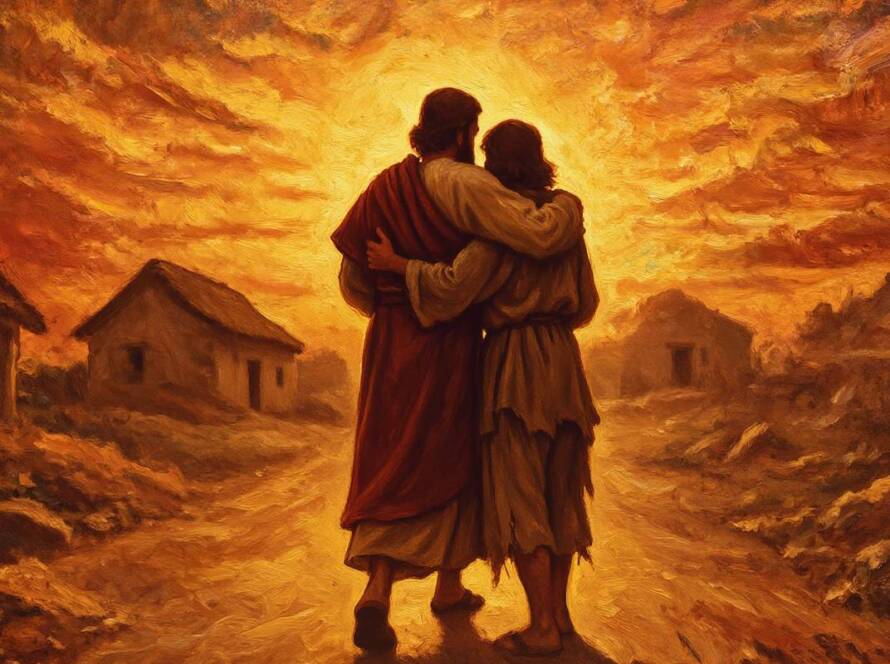
Becoming worshipers means moving past praising God for what He does into knowing who He is. In this third message of the series, the pastor teaches that praise is a response to God’s acts, while worship draws near enough to learn His ways, as Moses did. Using Adam hiding in the garden, he shows that fear is what keeps people at a distance, and that worship, stillness and vulnerability before God are what drive fear out.
This message continues from Becoming Worshipers, Part 2: Emmanuel, the Woman at the Well and the End of Fear. Below you will find the full video, a structured summary, the Scriptures he uses (linked to the New King James Version on Bible Gateway), a timestamped outline, and practical steps you can take this week.
Sermon at a Glance
This message was posted on January 2, 2023, at the start of the new year. The pastor opens by sharing what he believes the Lord spoke to him: that 2023 begins a season of special miracles over the next several years, miracles that will make people stand in awe and cause the world to take notice. He tells the church to be ready.
He also notices that since he began teaching on worship, the congregation has been opening up more and receiving from God in a greater way. The rest of the message explains why so many believers stop at praise, and how to go further.
| Detail | Information |
|---|---|
| Speaker | The pastor (not named in the recording) |
| Series | Becoming Worshipers (part 3 of 6) |
| Main text | Genesis 3:4–11 and 1 John 4:18–19 |
| Key theme | Worship knows who God is, and perfect love casts out fear |
| Length | About 50 minutes |
Be Still and Know That I Am God
People who do not understand worship, the pastor says, get restless the moment God’s presence starts moving and things become intimate with Him. Because they have never been close to God, they do something to distract themselves. He recalls a powerful time of worship when he asked everyone to be completely still before the Lord. After about five seconds, one man began clapping loudly.
The pastor gently asked him to simply be silent, quoting Psalm 46:10: “Be still, and know that I am God.” It does not say do something to know He is God. The man started again, then walked out angry, shouting at the back door. Many people push God away without realizing it, the pastor says, sometimes because His presence brings the conviction of sin we need.
God promises in Jeremiah 33:3, “Call to Me, and I will answer you, and show you great and mighty things, which you do not know.” To hear that answer, we have to be quiet and listen. The pastor says he does not even like music on when he prays. He asks what music Jesus had playing when He went out alone to pray, or whether the apostles carried a boombox around Galilee. Our culture always wants noise, but there should be times every day when we simply rest before the Lord.
He then tells about a woman named Gene. During a time when God’s presence was moving, he invited people to the altar, and thirty or forty came forward. Gene was on a donor list for a heart transplant and could not walk from her car into the building without running out of breath. Before anyone touched her, she went down under the power of God and lay on the floor.
As the pastor walked past her, he says, the Lord spoke to him: “I’m giving her a new heart right now.” Moments later she jumped up and ran around the auditorium, saying Jesus had given her a new heart. The next Sunday she testified that she was carrying fifty-pound sacks of grain on her hobby farm and driving again. Nobody touched her, he stresses. It was simply waiting on God, coming into His presence and letting God be God.
Becoming Worshipers: From God’s Acts to His Ways
Praise, the pastor explains, is a response to what God does, and many people never get beyond it. That is why the series is called becoming worshipers. Jesus told the woman at Jacob’s well that the hour has come when true worshipers will worship the Father in spirit and truth, because God is Spirit (John 4:23–24).
He describes three groups. Religious people do not even praise, because they do not believe God does anything. Others praise Him when He acts, whether their gas lasted longer than expected or a blind man received his sight. The lame man at the Beautiful Gate went walking, leaping and praising God (Acts 3:8). That is praise, and it is good. But worship goes beyond recognizing what He does to seeing who He really is.
Israel shows the difference. In the wilderness they constantly complained. When the water was bitter, God made it sweet. When they claimed they were starving and longed for the food of Egypt, He gave them manna from heaven. God gave them miracle after miracle, even though they did not know who He was.
Moses, meanwhile, kept going up the mountain and into the meeting tent just to sit with the Lord. Psalm 103:7 says God made known His ways to Moses, His acts to the children of Israel. Israel knew what God did. Moses knew why and how He did it, because he became personal with God.
The table below sets out the contrast he draws between praise and worship in this message.
| Praise | Worship |
|---|---|
| A response to what God does | Going beyond to see who God is |
| Israel knew His acts | Moses knew His ways |
| The lame man leaping after his healing | Mary sitting at Jesus’ feet listening |
| Enter His gates with thanksgiving and His courts with praise | Then move in to listen and hear His voice |
| Can be offered while still hiding | Requires being vulnerable and laying pride down |

Adam in the Cool of the Day
To show what worship was meant to be, the pastor goes back to the beginning. God finished everything before He created Adam; He even planted the garden first and placed Adam there to tend it (Genesis 2:8). Adam walked with God in the cool of the day. What did Adam have to tell God? Nothing. What did God have to tell Adam? Everything.
Adam had nothing to ask for either. There were no headaches and no worries about money, because everything was complete. They simply came together, and God talked to Adam, showed him things and explained things. “That’s worship,” the pastor says. Then the fall brought corruption into all of creation. Even a beautiful sunset, he notes, is part of a corrupted creation, which is why the creation eagerly waits for the revealing of the sons of God (Romans 8:19). One day it will be that way again.
He then reads Genesis 3:4–11 in short sections. The serpent told Eve she would not surely die, but would be like God, knowing good and evil. She saw that the tree was good for food, pleasant to the eyes and desirable to make one wise, and she ate and gave to her husband with her. Adam was right there, the pastor observes, and he did not say a word.
Their eyes were opened, they knew they were naked, and they sewed fig leaves together for coverings. Then they heard the Lord God walking in the garden in the cool of the day, and they hid themselves from His presence among the trees. That, the pastor says, is the immediate response of people under corruption: do not get too close to God.
People joke that if they came to church, lightning would strike. Underneath is a real reluctance to get closer to God. Becoming worshipers means the opposite, he says: we can never get close enough.
Who Told You That You Were Naked?
God called to Adam, “Where are you?” Adam answered, “I heard Your voice in the garden, and I was afraid because I was naked; and I hid myself.” Having their eyes opened made them afraid, because they felt vulnerable. Worship, the pastor teaches, means becoming vulnerable before God. You lay down all pride and arrogance. You are not there to tell God anything; you are there to listen, and you keep coming until you hear Him clearly.
He warns that it is possible to praise God from a hiding place. People can thank Him for healing, deliverance and provision while living in sin and refusing to share Jesus with anyone. But they will never know who He is or receive revelation. He explains that the word revelation, apocalypse, means taking away the coverings, the fig leaves we make for ourselves so others will see what we want them to see.
When you come into God’s presence, He wants to remove those coverings. Only then does He cover you with His own righteousness. The pastor connects this to the parable of the guest without a wedding garment, who was cast into outer darkness where there is weeping and gnashing of teeth (Matthew 22:11–13). We need the wedding clothes of God’s righteousness, not our own strength.
Then comes God’s question: “Who told you that you were naked?” Nobody would need to tell you if you were standing naked, the pastor says. So who spoke to Adam? The ever-present attendant, fear. Fear is a voice. Even after a sermon, he admits, fear will whisper that you did not say it right. He calls it the fear of death, which he defines as being doomed, with no way out.
The answer is worship. A worshiper can be confident that God shall supply all your need according to His riches in glory by Christ Jesus (Philippians 4:19), and can say, “I will fear no evil; for You are with me” (Psalm 23:4). He reads the rod and staff as the Word and the Spirit, which comfort us, just as we worship in spirit and in truth.
He corrects a visiting minister who once taught that God supplies only needs, not wants. The verse says all your need, he points out, and 2 Corinthians 9:8 says God is able to make all grace abound toward you, so that you have all sufficiency in all things for every good work.
His own story illustrates the point. Early on, the Lord sent him to hold an evangelistic meeting in Escanaba, Michigan, in a rented restaurant meeting room. On his daily prayer walk, the Lord spoke to him about three people giving their lives to Christ, and he fell to the ground three times in deep travail. Only twelve people came, including his religious mother. The Lord gave him words of knowledge about people he had never met, and three gave their lives to the Lord.
On the drive home his mother asked how he knew all that, and he said the Lord told him. The next day she came to his house angry, insisting she knew the Lord. He told her she knew of Him, and she prayed with him right then and was born again.

God Became One of Us to Take Away Fear
The pastor retells his picture of a shivering rabbit in a snowy yard. You only want to help it, feed it and warm it, but when you reach for it, it runs, because you are so big and it is so small. It could never become you. But what if you could become a rabbit and tell it you want to take care of it? That, he says, is what Jesus did. Immanuel, God with us: we cannot become God, but God became man.
Jesus said that whoever has seen Him has seen the Father (John 14:9). What did we see? He healed people, delivered them, made the lame walk, the blind see and the deaf hear. The world tries to convince even Christians that God sent the cancer or the tornado. The pastor calls that a lie. The thief comes to steal, kill and destroy, but Jesus came that we may have life more abundantly (John 10:10). The law came through Moses, but grace and truth came through Jesus Christ (John 1:17).
The people of Jesus’ day wanted the Messiah only for what He could do, not for who He was. Hebrews 2:14–15 says Jesus shared our flesh and blood so that through death He might destroy the devil and release those who through fear of death were all their lifetime subject to bondage.
The fear of death, he explains, is not only about leaving this earth. It is the fear of saying the wrong thing, looking stupid, not fitting in and being rejected. He admits he was afraid to talk to girls as a young man; every one of us knows that fear.
Worship is the cure. Jesus rose early to spend time with the Father, just like the first Adam in the cool of the day, and He only did what He saw the Father do (John 5:19). Moses wished all the Lord’s people were prophets (Numbers 11:29), and Paul said all may prophesy (1 Corinthians 14:31). But you cannot speak what God says unless you hear Him, and you hear Him in worship.
Martha was busy and fear rose up in her, while Mary sat at Jesus’ feet listening, and Jesus said Mary had chosen the good part (Luke 10:38–42). 1 John 4:18–19 says, “There is no fear in love; but perfect love casts out fear.” Perfect means matured, the pastor explains. The more we press in and listen, the more we mature in who He is.
He shares a story Oral Roberts told: when gas prices jumped, his wife Evelyn came home worried, and he told her the same God who supplied the cheaper gas would supply it at the higher price. Who told you it is a problem? Fear is a voice. The more we worship, the less we hear the voice of fear, lack and sickness, and the more we hear the voice of love, provision and healing.
That is why the church enters His gates with thanksgiving and His courts with praise (Psalm 100:4), and then moves into worship to listen. He closes by inviting anyone who has never given their life to Jesus to respond, reminding them that being raised in a Christian family does not make you saved. If you confess with your mouth the Lord Jesus and believe in your heart that God raised Him from the dead, you will be saved (Romans 10:9–10).
Becoming a Worshiper This Week
Here are practical steps drawn from this message on becoming worshipers:
- Turn off the noise. Set aside time each day to be still before God without music or distraction, and simply listen.
- Start with His love. The pastor suggests beginning each morning by asking, “Father, tell me again how much you love me,” and then listening.
- Stop hiding. Lay down pride and the fig leaves of appearance, and come to God honestly and vulnerably.
- Name the voice of fear. When worry speaks, ask who told you, and answer it with God’s promises of provision and presence.
- Move from praise into worship. Thank Him for what He has done, then stay in His presence to learn who He is.
- Respond for yourself. No one else can respond to God for you; make your own commitment to Jesus.
Timestamped Outline
- 0:00 A season of special miracles
- 1:13 The man who could not be still
- 3:22 Jeremiah 33:3 and praying without noise
- 4:24 Gene and the altar call
- 6:41 “I’m giving her a new heart”
- 7:43 Praise is a response; true worshipers
- 8:54 Israel complaining in the wilderness
- 10:02 Moses on the mountain
- 11:08 Israel knew His acts, Moses His ways
- 12:33 Adam walking with God
- 13:57 The fall and corrupted creation
- 16:32 Genesis 3: they hid themselves
- 19:04 Afraid because I was naked
- 20:25 Revelation: taking away the coverings
- 24:02 Who told you? Fear is a voice
- 28:34 All grace abounding
- 30:03 The Escanaba meeting
- 34:18 His mother is born again
- 35:29 The shivering rabbit
- 39:22 Hebrews 2: freed from the fear of death
- 43:36 Mary and Martha; perfect love casts out fear
- 46:04 The voice of fear versus the voice of love
- 47:17 Invitation to respond to Jesus
Becoming Worshipers Series
This message is part of a six-part teaching series. Start from the beginning or continue where this one leaves off:
- First message: Becoming Worshipers, Part 1: From Praise to True Worship
- Previous: Becoming Worshipers, Part 2: Emmanuel, the Woman at the Well and the End of Fear
- You are here: Becoming Worshipers, Part 3 — Who Told You That You Were Naked?
- Next: Becoming Worshipers, Part 4: Perfect Love Casts Out Fear
Frequently Asked Questions
Does God only supply needs, not wants?
The pastor disagrees with that teaching. He recalls a visiting minister who insisted God supplies only needs, and points out that Philippians 4:19 says all your need, not merely a need. He adds 2 Corinthians 9:8, which promises all sufficiency in all things so we can abound in every good work. In his view, worshipers can be confident in God as their provider rather than living with words of lack.
Does God send sickness or disasters?
No, according to this message. The pastor says the world tries to convince even Christians that God is out to get them, that He sent a cancer or a tornado, and he calls that a lie. Jesus showed us the Father by healing and delivering people. It is the thief who comes to steal, kill and destroy, while Jesus came to give abundant life.
Is being raised in church enough to be saved?
The pastor says it is not. Being born into a Christian family, or having parents who are saved, does not make you saved. Each person must respond to God personally; he calls it your response-ability. He tells how his own religious mother knew about the Lord but was only born again after the Escanaba meeting, and he invites listeners to confess Jesus as Lord for themselves.
Scripture References
All passages open in the New King James Version on Bible Gateway:
- Genesis 3:4–11 — Adam and Eve hide from God
- Psalm 103:7 — His ways to Moses, His acts to Israel
- John 4:23–24 — worship in spirit and truth
- Psalm 46:10 — be still and know
- Jeremiah 33:3 — call to Me and I will answer
- Hebrews 2:14–15 — freed from the fear of death
- 1 John 4:18–19 — perfect love casts out fear
- Luke 10:38–42 — Mary chose the good part
- Romans 8:19 — creation waits for the sons of God
How this summary was made: written with AI assistance from the sermon’s own transcript and checked against the Scriptures listed above.
Watch More Messages
Other NTC Ministries messages build on this one. Browse the full sermon archive and keep growing as a worshiper.