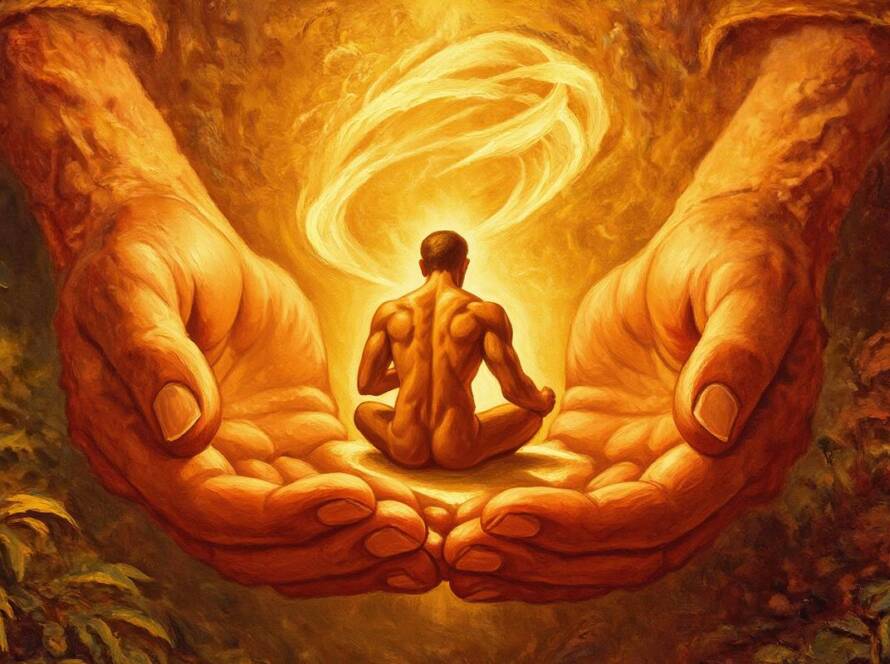
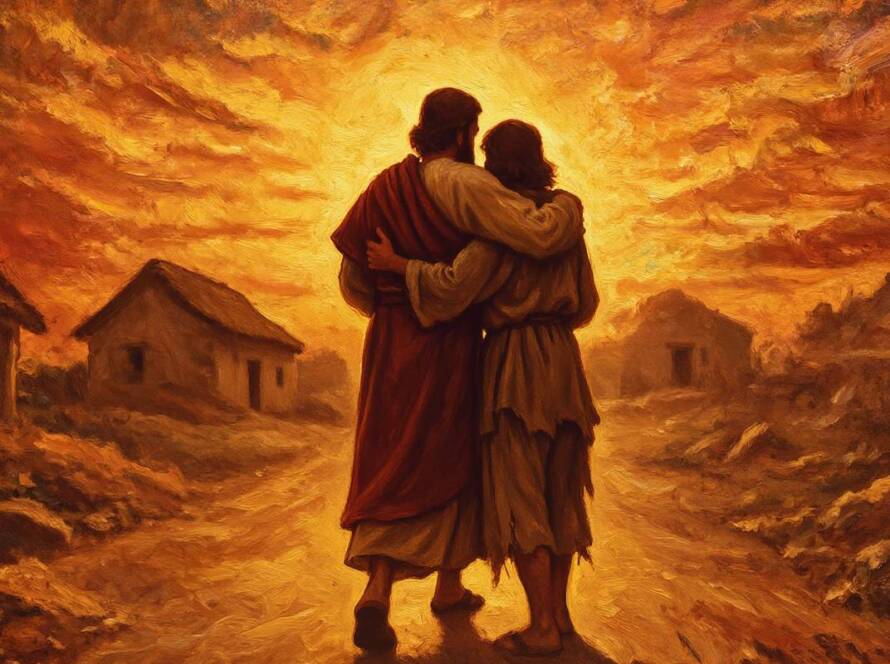
An Introduction to God, part 8, presents Jehovah Nissi, the Lord my banner: the God who guarantees growth and victory to everyone who looks to Him. Preached on Christmas morning, this message by Dr. William P. Hohman connects the banner Moses raised over the battle with Amalek to the Christ child, the rod from the stem of Jesse, whose coming promises increase that never ends. It follows An Introduction to God: The Names of God #7 — Jehovah Mekaddesh, the Lord Who Sanctifies.
Below you will find the full video, a structured summary of the sermon, the Scripture behind each point (linked to the New King James Version on Bible Gateway), a table of the word pictures he gives for the banner, a timestamped outline, and practical steps you can take this week.
Sermon at a Glance
This message was preached at NTC Ministries on Christmas morning and posted on December 28, 2023. It runs about 44 minutes, closes with communion, and ends with the congregation singing “O Come, All Ye Faithful.” Dr. Hohman explains that after the fall of Adam, God kept introducing Himself to separated people in different ways, and that every one of those names is found in Jesus Christ, in whom the fullness of the Godhead dwells bodily (Colossians 2:9).
| Detail | Information |
|---|---|
| Speaker | Dr. William P. Hohman |
| Series | An Introduction to God: The Names of God #8 |
| Main text | Isaiah 9:6–7; Exodus 17:8–16; Isaiah 11:1–10 |
| Key theme | Jehovah Nissi guarantees growth and victory to those who look to Him |
| Length | About 44 minutes, with communion and a Christmas hymn |
The Increase of His Government
Dr. Hohman opens with Isaiah 9:6–7: “For unto us a Child is born, unto us a Son is given,” and “of the increase of His government and peace there will be no end.” The passage ends, “The zeal of the LORD of hosts will perform this.” There is a great plan of God in Christ’s coming, he says, and everyone is included who receives it.
Because of weaknesses and hard circumstances, he observes, many believers back away from expecting increase and settle into a mentality of decline. But Christ brought His kingdom into this world, and in that kingdom our lives are meant to increase. He clarifies that increase is not only finances and health. The Bible says we prosper and are in health as our souls prosper (3 John 2).
He also corrects a shallow view of salvation: a better life is not the end purpose. All have sinned and fall short of the glory of God (Romans 3:23), and Jesus came to bring eternal life. When He was born, heaven and love came into a cursed earth system, and from then on His people are meant to know increase.
Believers still see problems, but darkness does not get the final say. Though darkness covers the earth, the people of God will arise and shine (Isaiah 60:1–2). That, he says, is what Jehovah Nissi is about.
He then explains the word zeal. As he teaches it, the Hebrew word is qinah, meaning jealousy, not in a creepy or stalking sense, but the jealousy of a God who wants to give you a wonderful life and does not want you looking anywhere else for it. That zeal moves believers from faith to faith and glory to glory (2 Corinthians 3:18). Whatever your weakness, even the little foxes that spoil the vines (Song of Solomon 2:15), Jesus can make you a conqueror, for God always leads us in triumph in Christ (2 Corinthians 2:14).
How Israel Lost the Increase
Jehovah Nissi means “the Lord my banner.” Dr. Hohman recalls the song “His banner over me is love” (Song of Solomon 2:4), but warns that English gives a narrow picture of a banner. To see what the name means, he goes back to Israel in Egypt.
Israel did not go into Egypt as captives. Joseph had interpreted Pharaoh’s dream, become second in command, and brought his family to the best land, Goshen (Genesis 47:6). They went there to be blessed. Then a new Pharaoh arose who feared their numbers and set taskmasters over them (Exodus 1:8–11). Why did increase turn to decrease? Dr. Hohman’s answer is that they lost the knowledge of who God really was and began doing things in their own strength.
Galatians 4:8 says that when we did not know God, we served those which by nature are not gods. Israel no longer knew God’s name. So when God spoke to Moses from the burning bush and sent him to Egypt, Moses asked what name to give the people, and God gave His name as I AM WHO I AM (Exodus 3:14).
The miracles that followed centered on a stick. God asked Moses what was in his hand. Moses threw his rod on the ground, it became a serpent, and when he grabbed it by the tail it became a rod again (Exodus 4:2–4). Moses struck the sea with that rod and it parted, then the waters returned over Pharaoh’s army (Exodus 14:16). “The miracle took place because of a stick,” he marvels.
Even so, Israel soon complained. After three days without water they found only bitter water, and God made it sweet through a piece of wood Moses threw in (Exodus 15:23–25). When food ran out, they complained again, and God rained down manna (Exodus 16:4). They kept forgetting what God had done and could only see bondage.

Jehovah Nissi and the Battle With Amalek
At Rephidim, Israel met the Amalekites (Exodus 17:8–13). Amalek descended from Esau, so they were relatives, yet this large, well-trained people attacked from behind, killing the weak, the tired and the elderly.
Finally Moses saw the pattern: with the rod, miracle after miracle; in their own strength, defeat after defeat. So he sent Joshua to fight while he went up the mountain to hold up the rod. Dr. Hohman points out that the name Joshua means Jehovah is our salvation; it is the same Hebrew name, Yeshua, from which we get the name Jesus through the Greek.
“So it was, when Moses held up his hand, that Israel prevailed; and when he let down his hand, Amalek prevailed.” When Moses’ hands grew heavy, Aaron and Hur set a stone under him and held up his hands until the going down of the sun, and Joshua defeated Amalek. Israel was doing its part, Dr. Hohman says, but acknowledging that it could only win with the Lord. That is when increase happens.
Then, in Exodus 17:14–16, God told Moses to write it as a memorial, and Moses built an altar and called it The-LORD-Is-My-Banner. The Lord will have war with Amalek from generation to generation. Whatever comes against us, Dr. Hohman teaches, we can let the Lord come in and defeat it.
He warns that a mentality of defeat produces defeat. If you keep saying “I’m going down,” you will be defeated. Jehovah Nissi brings a mentality of increase: no matter what I am seeing, I am coming out the other side better than ever, increased and blessed. The things impossible with men are possible with God (Luke 18:27).
How will it happen? God came as a baby, and His zeal will accomplish it. The Word who created all things became flesh and dwelt among us (John 1:1–14). When you let Jehovah Nissi into your life, he says, you realize He is going to accomplish goodness, greatness and victory for you.
An Introduction to God: What the Banner Really Means
Dr. Hohman then unpacks the word itself. As he teaches it, banner means to glisten, a pole or an ensign, a standard, and also a miracle. We think of a flag, but the banner is really the pole the flag hangs on. Jehovah Nissi, he says, is the Lord our victory, who always causes us to triumph whatever the circumstance.
The trouble comes when we measure circumstances by our own strength. He recalls the widow whom the prophet asked for food. She had only a little flour and oil and planned to bake a last cake for herself and her son and then die. She made one for the prophet first, and her flour and oil never ran out (1 Kings 17:12–16). She included God in the equation and lived.
He loves Psalm 118:15–17: “The right hand of the LORD does valiantly… I shall not die, but live, and declare the works of the LORD.” How, when you are in a mess? The zeal of the Lord will bring you through. He is jealous for you and does not want His children in bondage. When we forget God, we end up in bondage, just as Israel did.
Growth in Christ is natural, he says, and tells of a boy who badly wanted a beard like his father’s and checked the mirror every day with no result. He went away to college and came home with a full beard. “How’d that happen?” “It just naturally grew.” That is how Christ’s life works in us. Jehovah Nissi guarantees growth and strength.
David knew this. Bringing food to his brothers, he found Israel’s army afraid of Goliath and asked who this uncircumcised Philistine was to defy the armies of the living God (1 Samuel 17:26). God had delivered him from the lion and the bear, and He would deliver him from the Philistine (1 Samuel 17:37). It was Jehovah Nissi, Dr. Hohman says, who grew him into that confidence.
One of the most striking parts of this introduction to God is a teaching he heard from a rabbi at a college. The rabbi said that certain Jewish historical writings, not part of Scripture, understood the word for banner as the mast of a ship. A mast in the desert sounds useless, but they reasoned as the table below shows.
| If God provides… | Then He must also provide… |
|---|---|
| A mast | A ship to put the mast on |
| A ship | Water to float the boat |
| Water | A sail to catch the wind |
| A sail | The wind itself |
| The wind | A rudder to steer and navigate |
| All of these | A captain who knows where you are going and gets you there |
That captain, they said, is Jehovah Nissi. God never gives half of what you need, Dr. Hohman says. Once He lifts the banner, He supplies the rest.

The Rod From the Stem of Jesse
Isaiah 11:1–2 says, “There shall come forth a Rod from the stem of Jesse, and a Branch shall grow out of his roots.” Dr. Hohman identifies the Rod as Jesus Christ, and the branch growing from His roots as all believers. We are guaranteed to grow. The more you worry about the little foxes and try to get rid of them on your own, he says, the tighter the bondage seems to hold. When you know the Lord is Jehovah Nissi, those things become a thing of the past.
Years ago, he says, a man heard this teaching, moved to La Crosse, Wisconsin, and later wrote a book from it that teaches people to be free from smoking, alcohol and drugs. To him it was simple once he saw it. It is God’s zeal that does it, Dr. Hohman explains, but we must look to Him and be confident in Him.
The Spirit of the Lord rests on the Rod: wisdom and understanding, counsel and might, knowledge and the fear of the Lord. That fear, he says, is not terror but respect. I understand who Jehovah Nissi is, so I let Him handle it. I will do my part and live a good life, and He will deal with my enemies as He did with Amalek.
Isaiah 11:10 adds that “in that day there shall be a Root of Jesse, who shall stand as a banner to the people; for the Gentiles shall seek Him, and His resting place shall be glorious.” Who is that? The little Christ child who came into this world. He is the banner lifted over all people.
A Guarantee of Growth
Of the many meanings of Jesus coming as a baby, Dr. Hohman stresses a guarantee of growth. A baby had to grow up to fulfill the hundreds of prophecies about Him and then die on the cross for our sin. Isaiah 53:2 says He would “grow up before Him as a tender plant, and as a root out of dry ground.” It was never in doubt.
Even when Herod sought to kill the children of Bethlehem and the family fled to Egypt (Matthew 2:13–16), God provided. Dr. Hohman teaches that the wise men’s gifts were large enough to sustain the family through those years and beyond. Luke 2:52 says that Jesus increased in wisdom and stature, and in favor with God and men. In the same way, if you are in Him, you will grow, increase and succeed.
He tells of a terrible season when he felt weakness like a cloud over him. Billy Graham came to mind, and he asked the Lord to make him strong like that man. The Lord answered, “William, he grew to that,” and told him he was a prime candidate for strength. Then He pointed him to Isaiah 40:29–31: He gives power to the weak, and those who wait on the Lord shall renew their strength and mount up with wings like eagles.
At a crusade, a man in his sixties wished he had come to the Lord sooner. Dr. Hohman told him everything written about him in heaven will still be accomplished. Jesus was confident: “And I, if I am lifted up from the earth, will draw all peoples to Myself” (John 12:32). We can share that confidence.
In John 3:14–15, Jesus compares Himself to the bronze serpent Moses lifted up on a pole, a banner, so that everyone who looked to it was healed (Numbers 21:8–9). He was lifted up so that whoever believes in Him should have eternal life. And Philippians 1:6 promises that He who has begun a good work in you will complete it.
To close, he reads Colossians 3:10–11: put on the new man, renewed in knowledge, where Christ is all and in all. That is why the angels told the shepherds of good tidings of great joy for all people (Luke 2:10–11). He leads communion as a covenant meal, inviting everyone to examine themselves (1 Corinthians 11:28), and thanks God that Jesus cried, “It is finished.”
Living Under the Lord My Banner
Practical steps drawn from this message:
- Trade a defeat mindset for increase. When you catch yourself saying “I’m going down,” replace it with what God promises in Isaiah 9:7.
- Lift the rod. Like Moses, acknowledge in prayer that you can only win with the Lord, while still doing your part.
- Let others hold up your hands. Aaron and Hur supported Moses; stay close to believers who will pray with you when you grow weary.
- Stop fighting the little foxes alone. Look to Jehovah Nissi to grow you past habits you no longer want.
- Wait on the Lord for strength. Read Isaiah 40:29–31 when weakness feels like a cloud over you.
Timestamped Outline
- 0:00 God keeps introducing Himself after the fall
- 1:03 Isaiah 9:6–7: the increase of His government
- 2:07 A mentality of decline versus increase
- 3:18 The real purpose of salvation
- 4:29 The zeal of the Lord means jealousy
- 6:45 Jehovah Nissi and Israel going into Egypt
- 7:52 Why increase turned to decrease
- 9:02 Galatians 4:8 and the burning bush
- 10:02 The rod in Moses’ hand
- 13:11 Who the Amalekites were
- 14:22 Joshua fights, Moses lifts the rod
- 15:39 Exodus 17:11–13: hands held up
- 16:56 Exodus 17:14–16: the Lord is my banner
- 20:25 What banner means; the widow’s oil
- 21:33 Psalm 118: I shall not die but live
- 22:38 The boy who wanted a beard
- 23:40 David and Goliath
- 24:56 Isaiah 11: the rod from the stem of Jesse
- 27:13 Isaiah 11:10: a banner to the people
- 28:10 The rabbi and the mast of a ship
- 30:18 A guarantee of growth: Isaiah 53:2
- 31:26 Luke 2:52 and “William, he grew to that”
- 33:42 Isaiah 40 and John 12:32
- 34:49 John 3:14–15 and Philippians 1:6
- 38:08 Communion and a prayer of commitment
An Introduction to God Series
This message is part of a teaching series on the names of God at NTC Ministries. Start from the beginning or continue where this one leaves off:
- First message: An Introduction to God: The Names of God, Part 1 — Elohim, the Creator Who Makes Covenant
- Previous: An Introduction to God: The Names of God #7 — Jehovah Mekaddesh, the Lord Who Sanctifies
- You are here: An Introduction to God: The Names of God #8 — Jehovah Nissi, the Lord My Banner
- Next: An Introduction to God: The Names of God #9 — Jehovah Rophe, the Lord Who Heals
Frequently Asked Questions
Does Jehovah Nissi mean believers will never face problems?
No. Believers still see problems, Dr. Hohman says, but those problems are not meant to have the final effect on their lives. Israel still had to fight Amalek. The difference was whether they fought in their own strength or under the Lord’s banner. Darkness may cover the earth, yet God’s people are called to arise and shine.
Why did he preach the names of God on Christmas?
Because, as he teaches, every name of God is found in Jesus. Isaiah 11:10 calls the Root of Jesse a banner to the people, and Dr. Hohman identifies that as the Christ child. A baby also had to grow, so Christ’s birth carries a guarantee of growth for everyone who is in Him. He jokes afterward that preaching this in half an hour was a Christmas miracle.
What part do I play if God gives the victory?
Israel still sent Joshua into battle, and Moses still climbed the mountain. Dr. Hohman says believers do their part, live a good life and keep looking to God, while acknowledging that the win comes from Him. Aaron and Hur show that we also need others to help hold up our hands when we grow tired.
Scripture References
All passages open in the New King James Version on Bible Gateway:
- Isaiah 9:6–7 — the increase of His government
- Galatians 4:8 — slaves when we did not know God
- Exodus 17:8–13 — the battle with Amalek
- Exodus 17:14–16 — The-LORD-Is-My-Banner
- Psalm 118:15–17 — I shall not die, but live
- Isaiah 11:1–2 and Isaiah 11:10 — the Rod and the banner
- Isaiah 40:29–31 — strength for the weak
- John 3:14–15 — the Son of Man lifted up
- Philippians 1:6 — He will complete the good work
How this summary was made: written with AI assistance from the sermon’s own transcript and checked against the Scriptures listed above.
Watch More Messages
If this message lifted your eyes to the Lord your banner, there are hundreds more teachings from NTC Ministries waiting for you. Browse the full sermon archive and keep getting to know God by His names.