The blood covenant means that everything God has is open to those who belong to Him, because the blood of Jesus has already paid for it. In this Palm Sunday message, the pastor traces that covenant from the animal skins in Eden to the cross, explains the language of covenant and redemption, and then shows what it means to be redeemed from spiritual death. The service closes with communion. It continues from The Blood Covenant #12: Our Covenant Head and the People Who Know Their God.
Below you will find the full video, a structured summary of the sermon, the Scripture behind each point (linked to the New King James Version on Bible Gateway), a timestamped outline, and practical steps you can take this week.
Sermon at a Glance
This message was preached on Palm Sunday, the start of Passion Week, and posted on March 30, 2021. The speaker reminds the church that the series has been looking at redemption through the blood of Jesus, and that this week continues what was introduced the week before. His opening claim is simple: God is a covenant God, and He has always dealt with sin through shed blood.
The teaching moves from covenant history into covenant language and the price Jesus paid, then begins a study of what Christ redeemed us from, starting with spiritual death, before communion.
| Detail | Information |
|---|---|
| Speaker | The pastor (not named in the recording) |
| Series | The Blood Covenant (#13, Palm Sunday) |
| Main text | 1 Peter 1:17–19 and Galatians 3:13–14 |
| Key theme | Redemption through the blood and freedom from spiritual death |
| Length | About 68 minutes, ending in communion and prayer |
A Covenant God From Eden to Calvary
When Adam and Eve sinned, they made coverings out of leaves. The pastor says those leaves stand for our own works: they would have had to make new ones every day and toil every day to try to stay in God’s presence. God dealt with it Himself. He slew an animal, blood was shed, and He clothed them with skins (Genesis 3:21), so that an element of fellowship remained.
The pattern repeats. Right after the flood, the first thing Noah did was offer blood sacrifices. Then God made a covenant with Abram, promising descendants like the stars, and Abram believed God and it was accounted to him for righteousness (Genesis 15:6). The pastor explains why that mattered: God is a God of law and order. He had placed authority over creation in Adam’s hands, so He needed a covenant partner to give Him legal access into this world.
Jesus brought the eternal covenant. The pastor says His blood was shed seven different ways during His trial and crucifixion. He took our sin, though He had none, paid the penalty, and because He was found righteous He was raised by the Spirit of God. He connects this to Ezekiel 16:6, where the Lord passes by someone struggling in their own blood and says, “Live!”
After the resurrection, Jesus told Mary Magdalene not to cling to Him, because He had not yet ascended to the Father (John 20:17). Days later He invited His disciples to touch Him, saying a spirit does not have flesh and bones (Luke 24:39). The pastor notes He did not say flesh and blood. His blood had been carried into heaven itself, as Hebrews 9:24 says, to appear in the presence of God for us.
The result is total access both ways. We have access to God, and everything God has can reach us. We are no longer trying to get God to do anything, the pastor says; He is trying to get us to believe what He has already given. That, he adds, is exactly where religion robs many people.
The Language of the Blood Covenant
A will is of no value if people do not know it exists, and it is still of little use if they do not know what is in it. That is why the pastor calls the epistles so important: they describe what happened between the cross and the throne, the inheritance Jesus purchased with His blood. Without understanding covenant language, he says, you can read the whole New Testament and get very little out of it.
He then lays out what a covenant means between two parties. The table below follows his description.
| In a covenant | What each side receives |
|---|---|
| Possessions | Everything one has belongs to the other |
| Name | The right to use the other’s name and the authority it carries |
| Defense | Each stands up and fights for the other, no matter what |
| Marriage | No separate finances; everything belongs to both |
| Betrayal | Judas broke covenant with a kiss instead of standing with Jesus |
That is why Jesus asked Judas whether he was betraying Him with a kiss (Luke 22:48). Judas later admitted he had betrayed innocent blood, and the religious leaders told him it was his problem (Matthew 27:3–5). The pastor contrasts that innocent blood with ours. Everyone born into this world has corrupted blood, and the life of the flesh is in the blood (Leviticus 17:11). In the blood covenant, His blood now becomes ours.
All who call on the name of the Lord shall be saved, and the pastor explains that the Greek word sozo means delivered, healed and prospered, not only a future rescue. Anyone in Christ is a new creation (2 Corinthians 5:17), and Psalm 103:2–5 tells us to forget not all His benefits: forgiveness, healing, redemption from destruction, and youth renewed like the eagle’s.
The problem is the unrenewed mind, which keeps believers from living in the blood covenant. Romans 12:1–2 calls us to present our bodies as living sacrifices and be transformed by the renewing of our minds. Colossians 3:1–3 tells us to seek the things above. Benefits you do not know about cannot be claimed, he says, and God is not a man that He should lie (Numbers 23:19).
Redeemed With Precious Blood
The main text is 1 Peter 1:17–19: we were not redeemed with corruptible things like silver or gold, “but with the precious blood of Christ, as of a lamb without blemish and without spot.” The pastor asks why Peter ties that to God judging each one’s work. His answer is that our conduct should reflect what we know about the price that was paid.
He says all of creation is waiting for the revealing of the sons of God (Romans 8:19), the mature and battle-ready sons, not infants. He stresses that Jesus was fully God and fully man, and it was not easy for Him. In Gethsemane His soul was exceedingly sorrowful, even to death, and His sweat became like great drops of blood (Luke 22:44). He endured it for the joy set before Him.
When we see that value, he says, we serve differently. He calls laziness a terrible habit that robs people and damages their relationships. Whatever your hand finds to do, do it with your might (Ecclesiastes 9:10), at church, at work and at home, because these are the people God gave His life for.
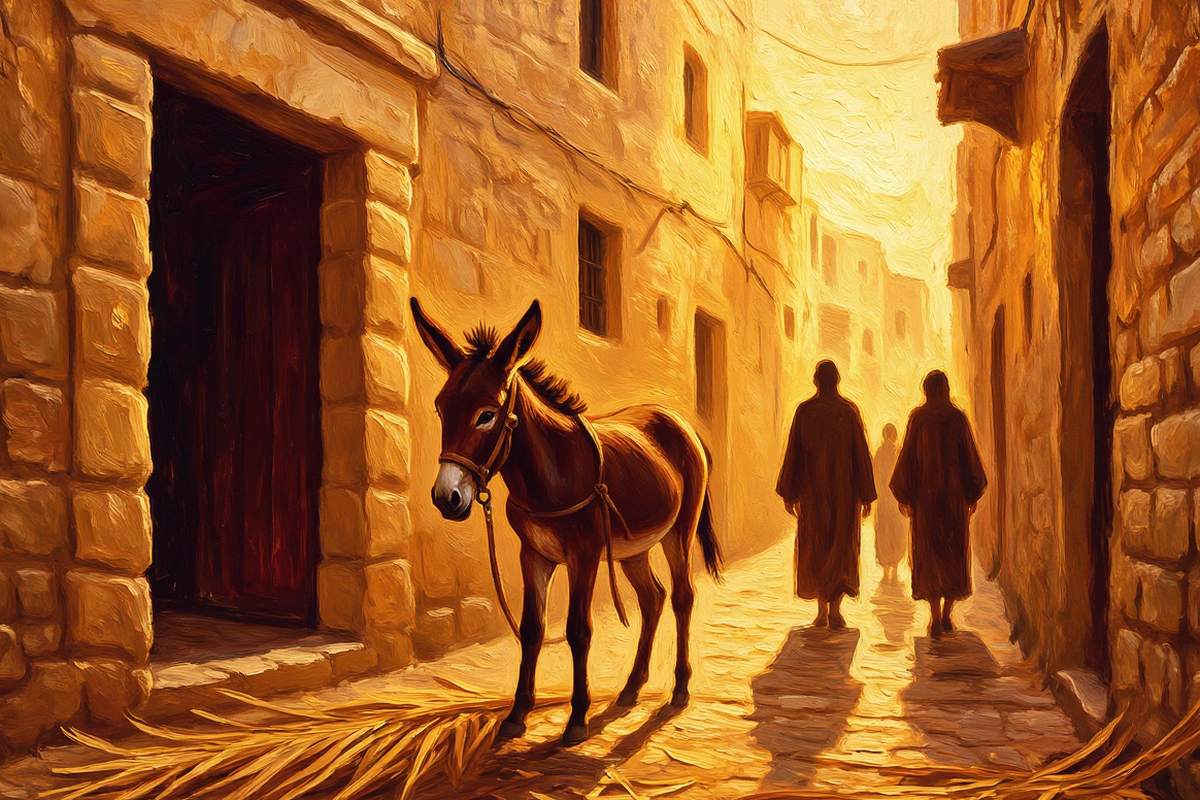
Palm Sunday gives him an illustration. Jesus sent His disciples for a colt that was tied, one no one had ever ridden (Mark 11:2). The pastor notes He did not ask for one running loose; He wanted the one that was disciplined and ready to serve. If you want the triumph of God in your home and relationships, he says, ask for a revelation of His covenant, His blood and the value He placed on you.
The night he asked God to forgive him, he says, he went onto the streets sharing Jesus and never stopped; that fruit is now seen in 37 nations. He had been a drug addict, and when he yielded to God, the addiction was simply done. Blessed are the meek, for they shall inherit the earth (Matthew 5:5), and he teaches that meek means teachable.
Jesus came not to be served but to serve and give His life a ransom for many (Mark 10:45). The word redeemed, the pastor says, means to loose by a ransom, like a Hebrew kinsman buying back a relative’s lost property. David showed that kind of covenant kindness to Mephibosheth for Jonathan’s sake (2 Samuel 9:1–7), and the frightened young man discovered the king wanted to bless him, not harm him.
Redeemed From the Curse of the Law
God redeemed Israel from Egypt with an outstretched arm (Exodus 6:6), and His thoughts toward us are thoughts of peace, to give a future and a hope (Jeremiah 29:11). The pastor explains the word hope as always expecting better. The world, he says, keeps telling people there is not enough, but God promises to supply all your need according to His riches in glory (Philippians 4:19).
On a mission trip in Africa, he reached a village no missionaries had visited, and the children fled into the bush because they had been told a white man would harm them. He came with candy and soccer balls. That, he says, is how the enemy works: through lies and the fear of shortage.
Ephesians 1:3 says God has already blessed us with every spiritual blessing in Christ, and without faith it is impossible to please Him (Hebrews 11:6). The pastor names three areas Christ redeemed us from: poverty, sickness and spiritual death. He reminds the church that many are weak and sick because they have not discerned the Lord’s body (1 Corinthians 11:29–30).
Galatians 3:13–14 is the key: Christ has redeemed us from the curse of the law, having become a curse for us, so that the blessing of Abraham might come upon the Gentiles and we might receive the promise of the Spirit through faith. Christ took on the whole curse; that is why He was so marred He hardly looked human.
So the pastor says his battle is not really with Satan, sin or sickness. His battle is with himself: fighting the good fight of faith and laying hold of the promises. Jude urged believers to contend for the faith (Jude 3), and no weapon formed against us shall prosper (Isaiah 54:17). The same Spirit that raised Jesus gives life to our mortal bodies (Romans 8:11).
If we belong to Christ, we are Abraham’s seed and heirs according to the promise (Galatians 3:29). Imagine a billionaire signing a guarantee to pay for any house you choose. God went further: because He could swear by no one greater, He swore by Himself (Hebrews 6:13). Our minds are too involved in this world, he says, so turn off the news and fight the fight of faith.
Redemption From Spiritual Death
The first curse of breaking God’s law was spiritual death. In Genesis 2:15–17, God told Adam he could eat freely of every tree except the tree of the knowledge of good and evil, “for in the day that you eat of it you shall surely die.” The pastor says the Hebrew literally reads, in dying you will die. Adam died spiritually that day, and 930 years later his body followed (Genesis 5:5).
Before that, God gave Adam a tour of the garden, and like a good realtor He showed the best feature first: the land of Havilah, where the gold is good (Genesis 2:11–12). What we have, the pastor says, does not dictate what is in our heart.
After the fall, man became a slave to death, which is why so many live in fear of it. Physical death is an enemy, and the last enemy to be destroyed is death (1 Corinthians 15:25–26). The pastor names three kinds of death: spiritual death, physical death and eternal death, which Scripture calls the second death.
In John 8:44 Jesus told religious leaders they were of their father the devil. By default, the pastor says, everyone born into this world needs to be born into God’s family. Walking into a garage does not make you a car, and coming to church does not make you a child of God.
He reads a 1993 newspaper story about an elderly woman whose neighbors mowed her lawn and handled her mail for four years, never knowing she had died inside the house. People can look alive outwardly while being spiritually dead within. Everyone is born on the road to hell, he says, and Jesus came to take us off that road.
When life comes in, you know it. Flesh and blood cannot inherit the kingdom of God (1 Corinthians 15:50). He who overcomes shall not be hurt by the second death (Revelation 2:11); over those in the first resurrection it has no power (Revelation 20:6); and the overcomer inherits all things (Revelation 21:7–8).
Jesus took our spiritual death on the cross and gives us His zoe life. Whoever hears His word and believes “has passed from death into life” (John 5:24). We received the Spirit of adoption, not bondage to fear (Romans 8:14–16), and whom the Son sets free is free indeed (John 8:36), with hearts circumcised by the Spirit (Romans 2:29).
The Dash and the Lord’s Table
Before communion, the pastor points to a gravestone: a birth date, a death date and a small dash between them that holds a whole life. Religious people, he says, know stories about Jesus without knowing Him or understanding what He accomplished.
He then tells the story of Joseph Bau, born in Kraków in 1920 to a Jewish family. Forced into the ghetto and then a concentration camp, Joseph used his gift for lettering to forge papers that freed more than 400 Jews. Asked why he never forged documents for himself, he answered, “Then who would have done it for the other Jews?” Jesus heard the same taunt on the cross: He saved others; Himself He cannot save (Matthew 27:42).
Jesus had already said He would not ask to be saved from this hour, because for this purpose He came (John 12:27). That is the blood covenant in one sentence: He gave Himself so that we could live.
He reads 1 Corinthians 11:23–28: “This is My body which is broken for you,” and “This cup is the new covenant in My blood.” Jesus had no sin, yet He drank the cup of wrath for us, freely, because He loves the people He created. It is His will that none perish, though many refuse. Before taking communion, each person examines himself and applies the blood of Jesus to his life, family and home.
Living the Blood Covenant This Week
The message ends with an invitation for anyone who has never given their life to Jesus to pray and be born again. For those already in covenant with Him, these steps come straight from the sermon:
- Read the will. Spend time in the epistles to learn what Jesus purchased between the cross and the throne.
- Count your benefits. Pray through Psalm 103:2–5 and name each benefit out loud.
- Serve like the tied colt. Choose discipline over drifting, and do your work at church, home and your job with all your might.
- Refuse the shortage lie. When fear says there is not enough, answer it with Philippians 4:19 and Ephesians 1:3.
- Fight the right battle. Your fight is the fight of faith; limit the news and set your mind on things above.
- Discern the Lord’s body. Take communion thoughtfully, remembering His broken body and the new covenant in His blood.
Timestamped Outline
- 0:00 Palm Sunday and a covenant God
- 1:08 Noah and Abraham’s covenant
- 3:22 Blood shed seven ways
- 4:27 “Don’t touch Me” and the heavenly holy place
- 6:34 A will no one knows about
- 7:29 Marriage covenant and the kiss of Judas
- 10:49 Sozo and the new creation
- 12:03 Psalm 103 and Romans 12
- 15:18 1 Peter 1:17–19: precious blood
- 17:55 Gethsemane and the habit of laziness
- 19:09 The colt that was tied
- 23:03 Meek means teachable
- 24:09 Redeemed by a ransom; Mephibosheth
- 28:41 A village that had been lied to
- 30:42 Ephesians 1:3 and Hebrews 11:6
- 33:19 Galatians 3:13: redeemed from the curse
- 36:54 Heirs according to the promise
- 38:17 The first curse: spiritual death
- 42:53 Three kinds of death
- 45:13 Alive outside, dead inside
- 51:46 The second death has no power
- 54:22 Passed from death into life
- 58:08 The dash and the story of Joseph Bau
- 1:02:32 Communion and invitation to salvation
Blood Covenant Series
This message is part of a long teaching series at NTC Ministries. Start from the beginning or continue where this one leaves off:
- First message: The Blood Covenant
- Previous: The Blood Covenant #12: Our Covenant Head and the People Who Know Their God
- You are here: The Blood Covenant #13 — Redemption Through His Blood and Freedom From Spiritual Death (Palm Sunday)
- Next: The Blood Covenant, Part 14: From Victim to Victor — The Hidden Triumph of the Cross
Frequently Asked Questions
Why does the sermon stress that Jesus had a real body?
The pastor points out that Jesus told His disciples a spirit does not have flesh and bones, and invited them to touch His wounds. Separately, he calls the idea that Jesus was merely a God-spirit being who did not truly suffer a form of Gnosticism. Jesus was fully God and fully man, really suffered, and really rose in a body. That matters because it shows His sacrifice was not easy and His victory over death was real.
Why does a loving God allow people to go to hell?
The pastor answers that God is not sending anyone there. Everyone is born on the road to hell because of the fall, and Jesus came to save people from it, not to send them. Repentance means getting off that road and onto the high and holy road. Those who never take hold of Him simply remain on the road they were already on.
Can I take communion at home while watching?
Yes. During the message the pastor invites everyone watching or listening by radio, television or internet to get some juice and a little bread or a cracker ready, so they can share communion along with the church. What matters is remembering His body and blood and examining yourself first.
Scripture References
All passages open in the New King James Version on Bible Gateway:
- 1 Peter 1:17–19 — redeemed with the precious blood of Christ
- Hebrews 9:24 — Christ entered heaven itself for us
- Galatians 3:13–14 — redeemed from the curse of the law
- Galatians 3:29 — heirs according to the promise
- Psalm 103:2–5 — forget not all His benefits
- Romans 12:1–2 — transformed by a renewed mind
- Genesis 2:15–17 — the first warning of death
- John 5:24 — passed from death into life
- 1 Corinthians 11:23–28 — the new covenant in His blood
How this summary was made: written with AI assistance from the sermon’s own transcript and checked against the Scriptures listed above.
Watch More Messages
If this message deepened your understanding of the blood of Jesus, there are hundreds more teachings from NTC Ministries waiting for you. Browse the full sermon archive and keep growing in the covenant God has made with you.