Hands On Experience of Gods Love, Part 3, teaches that knowing the promises of God is not enough: faith works by love, and that love comes into our hearts only through the Holy Spirit. Dr. William P. Hohman shows that God spoke creation into being but formed Adam with His own hands, so that the first thing Adam saw was God. Through Jacob, who did not believe that Joseph was alive until he saw the carts sent from Egypt, he explains why the Comforter is the one who revives the heart.
This message continues from Hands On Experience of God’s Love #2 — The Carts That Revived Jacob’s Heart. Below you will find the full video, a structured summary, the Scripture behind each point (linked to the New King James Version on Bible Gateway), a timestamped outline, and practical steps for responding to the Holy Spirit this week.
Sermon at a Glance
This message was preached at NTC Ministries in Merrill, Wisconsin, and posted on July 19, 2022. It runs about 68 minutes and ends with a call to respond to the Holy Spirit. Pastor Hohman, who planted the church 36 years earlier and says he has been preaching for 42 years, continues his series on a hands-on experience of God’s love.
God’s perfect will, he says, can be read in Jesus and in creation before the fall. In both, God’s words and God’s actions agree, and He wants a relationship with people that is felt and lived, not only heard about.
| Detail | Information |
|---|---|
| Speaker | Dr. William P. Hohman |
| Series | Hands On Experience of Gods Love, Part 3 |
| Main text | Genesis 45:25–28, Lamentations 1:1–9 and Romans 5:1–8 |
| Key theme | Faith works by love, and the Holy Spirit brings that love into our hearts |
| Length | About 68 minutes, ending with a call to respond |
Words and Hands: How God Made Mankind
Pastor Hohman begins with Jesus as the first window on God’s will. Jesus said He did only what He saw the Father do (John 5:19), and that whoever had seen Him had seen the Father (John 14:9). The second window is creation. God called everything into existence with words, and that is still His will for us: to use our words to create, build, edify and exhort.
Words, he says, work like a time-release capsule, producing long after we say them, which is why people who keep declaring their problems keep having them. By our words we are justified or condemned (Matthew 12:37), and Jesus told us to speak to the mountain without doubting in our heart (Mark 11:23).
Yet there is one creation God did not simply speak into being. Genesis 1:26–27 says God made man in His own image and likeness, and Genesis 2:7 says the Lord formed man of the dust of the ground and breathed into his nostrils the breath of life. Made, he explains, means God took what was there and handcrafted it. He used both His words and His actions.
A Bible college instructor in Dallas once taught that God created man because He was lonely. Pastor Hohman disagrees. God says He is the Lord and does not change (Malachi 3:6), so if He had been lonely, He would still be lonely. God created man because He is love, and He wanted an object for that love.
He illustrates it with his wife Pam, married nearly 49 years. He was twelve and she was eleven when he first saw her, and something rose up in him he had never experienced, like a magnet. You do not experience love, he says, until the object of love comes into your presence.
God Comes First: What Adam and Eve Saw
When God breathed the breath of life into him, the first thing Adam saw was not a tree, a bird or a field to work. He saw God, the artist who created all artists. That, Pastor Hohman says, is the hands-on experience of God’s love, and God has never stopped wanting it for mankind.
Job came to the same place. After his trials, he said that he had heard of God by the hearing of the ear, but now his eye saw Him (Job 42:5). Pastor Hohman calls this the born-again experience; many people have only heard of God and never experienced Him.
Eve’s creation follows the same order. In Genesis 2:21–22, God put Adam to sleep, took a rib, made the woman and brought her to the man. So the first thing Eve saw was God, and then Adam. God always comes first, which is why He says, “You shall have no other gods before Me” (Exodus 20:3). When people refuse to put Him first, he says, their minds become bent and distorted.
He then recalls the previous message on Joseph, who dreamed that his brothers’ sheaves, and then the sun, moon and stars, bowed to him (Genesis 37:5–11). Sold into slavery at seventeen and later imprisoned, he came out at thirty when he interpreted Pharaoh’s dream of seven fat cows and seven thin ones (Genesis 41:1–36), telling Pharaoh that God, not he, interprets dreams. Pharaoh put him over Egypt’s grain.

Faith, Hope and Love in Jacob’s Story
Two years into the famine, the family was reunited. The brothers knew they had sold Joseph, but they had dipped Joseph’s coat in goat’s blood and let Jacob believe a wild animal had killed him. Jacob said he would go to his grave grieving.
By Pastor Hohman’s count, from age seventeen to thirty-nine, Joseph was gone for twenty-two years. Jacob lost all hope. Many believers live like that, he says. They have a promise from the Word, they seem to stand on it, and it does not seem to happen. Losing hope breaks the spirit, but when the desire comes, it is a tree of life (Proverbs 13:12).
Here he gives the key to the sermon from 1 Corinthians 13:13: faith, hope and love abide, but the greatest of these is love. The table follows his explanation of how the three work together.
| Grace | What it does with God’s promise | In Jacob’s story |
|---|---|---|
| Faith | Hears the promise | The sons tell him Joseph is alive |
| Hope | Desires the promise | The desire to have Joseph back, still in him |
| Love | Takes hold of the promise as a personal possession | He sees the carts and his spirit revives |
That is why Galatians 5:6 says faith works by love. We can know the verses and promises and still find that they elude us. What is missing is the experience of God’s love, the same hands-on love Adam received. Religion, Pastor Hohman warns, deceives millions who know the stories of Jesus but have never had His Spirit come into their lives and make them new creations.
Without a personal, intimate relationship with the Lord Jesus Christ, he says, you have nothing to do with God. Those who are led by the Spirit of God are the sons of God (Romans 8:14).
The Carts From Egypt and the Comforter
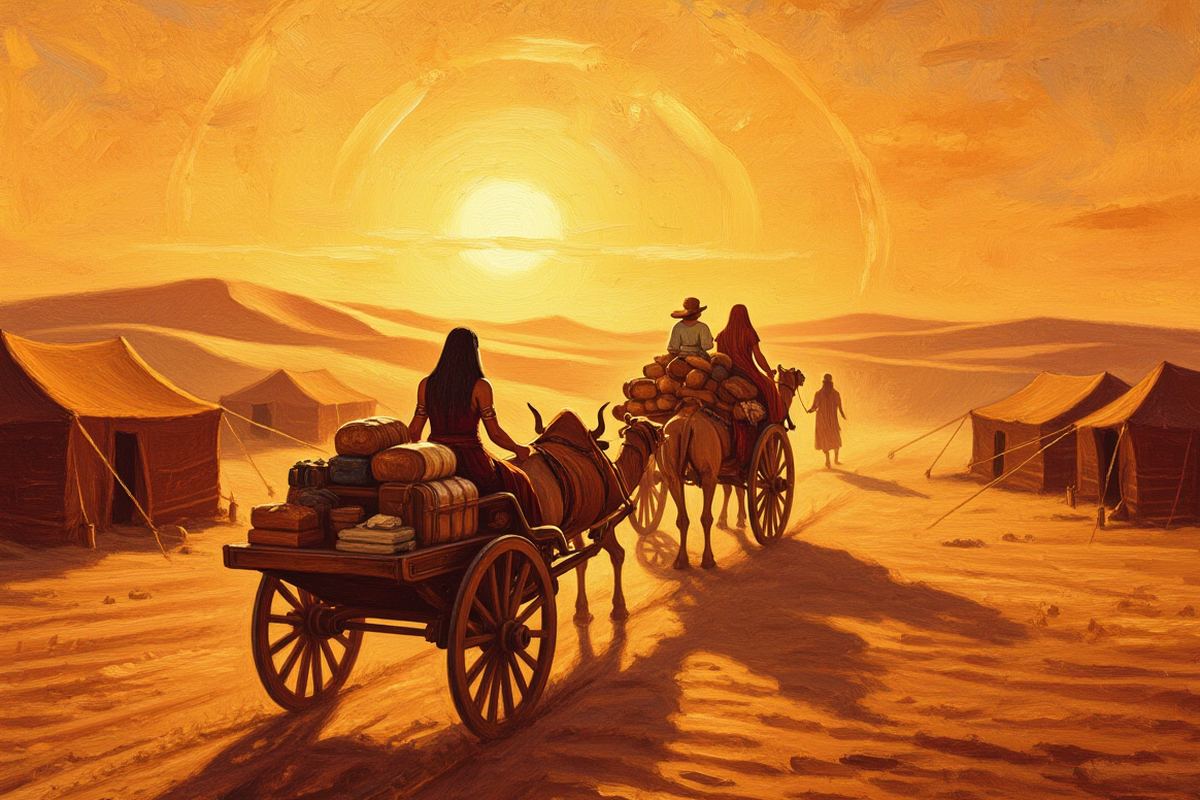
When Pharaoh heard Joseph’s family had come, he told Joseph to give them the best of the land of Egypt and to send carts, so they would not even need to bring their goods (Genesis 45:16–23). Joseph gave each brother a change of clothes, but to Benjamin he gave five changes and three hundred pieces of silver. Pastor Hohman sees Benjamin as a type of the church under grace: the law gives what is owed, but grace gives abundantly above all we ask.
By then the nations had spent their money and sold their land just to eat, yet these carts came from Pharaoh’s royal court. In Genesis 45:25–28, the sons told Jacob that Joseph was alive and ruling all of Egypt. Jacob was stunned and did not believe them.
It was not the words alone that changed Jacob. When he saw the carts Joseph had sent to carry him, the spirit of Jacob revived, and he said he would go and see his son before he died. Knowledge of the truth by itself, Pastor Hohman says, will not bring the life of God. It takes the Word together with an experience of the glory.
That is us with God. When we respond to the Holy Spirit and give our lives to Jesus, we receive a foretaste of His glory. God did not spare His own Son, so how much more will He freely give us all things (Romans 8:32). Jacob could have stayed in Canaan and missed everything.
Jesus prayed that those the Father gave Him would be with Him to behold His glory, “for You loved Me before the foundation of the world” (John 17:24). Love is the key. Every congregation, job and business needs the moving of the Holy Spirit, because while Jesus is seated at the Father’s right hand, the Holy Spirit is the governor of our kingdom here.
When he wants to do something that would not please God, he hears, “William, why do you want to do that?” and whatever argument he had fades. The Spirit yearns jealously over us (James 4:5), wanting to give us more than we could ever work for.
Adam lost that intimacy. When God came to walk with him in the cool of the day, Adam said he was afraid because he was naked, and hid (Genesis 3:8–10). Marriages drift the same way, and the church at Ephesus did good works yet left its first love (Revelation 2:4).
So Pastor Hohman urges the church to meet God first each morning, as Jesus did. The steadfast love of the Lord never ceases and His mercies are new every morning (Lamentations 3:22–23). We redeem the time by giving Him our time first (Ephesians 5:15–16). He suggests simply asking, “Lord, tell me again how much you love me,” and then listening.
In John 16:5–7 Jesus said it was to the disciples’ advantage that He go away, so the Helper would come. Pastor Hohman links this to Joseph telling his brothers not to be grieved that they sold him, because God had sent him ahead to save them (Genesis 45:5). He explains the Greek word behind Helper as one called alongside to guide you to your destiny, just as the carts carried Jacob to his son.
No preacher can put that love into you, he says. Hope does not disappoint, because the love of God has been poured out in our hearts by the Holy Spirit (Romans 5:5). A ruler once told Paul he was almost persuaded (Acts 26:28), and almost is the best any human can do. The Holy Spirit is preparing us to see Jesus face to face, and when we see Him we will be like Him (1 John 3:2).
How Did This Happen? Life Without a Comforter
Pastor Hohman then reads Lamentations 1:1–2: “How lonely sits the city that was full of people!” Jerusalem, once a princess among the provinces, has become a slave, weeping in the night with none to comfort her. He says he could build the entire message on the first word, how. It is an exclamation of grief, the cry of someone beating the breast after a tragedy.
To show what that word sounds like, he recalls January 28, 1986, which he watched live on television. A social studies teacher from Concord, New Hampshire, Christa McAuliffe, had been chosen from over 11,000 applicants to fly and teach from space. Seventy-three seconds after liftoff the shuttle Challenger broke apart as her parents watched. He hears three different voices asking “how.”
| Who asked “how” | What they meant | Rooted in |
|---|---|---|
| Program executives | How will we save the space program now? | Self-interest |
| Scientists and technicians | How did this happen? What failed? | Function and application |
| Her parents, husband and children | How could this happen? We will never see her again. Did we tell her we loved her? | Love |
“The voice of love is always the strongest voice,” he says. That is the how of Lamentations, and it was the how of Jacob. It is also the how of a marriage that began so in love: how did we get here?
Lamentations 1:8–9 gives the answer. Jerusalem sinned gravely; all who honored her despised her; “she did not consider her destiny; therefore her collapse was awesome; she had no comforter.” He explains that the Hebrew word translated awesome or wonderful can also mean terrible: her collapse was a terrible spectacle. Jerusalem did not respond to the Lord when He moved on her in love.
He tells of a young man who rejected a friend’s love, then was ready to propose when she came home from college, only to hear she was engaged. He had rejected the love that was offered. We cannot keep putting off the Holy Spirit’s moving and expect it to wait.
Hands On Experience of Gods Love: Respond to the Holy Spirit Now
In John 14:15–17, Jesus says, “If you love Me, keep My commandments,” and promises another Helper, the Spirit of truth. We keep His words because the Holy Spirit brings God’s love into our hearts. We love Him because He first loved us (1 John 4:19). In John 14:24–26, Jesus adds that the Holy Spirit will teach us all things and bring His words to remembrance.
He tells of D. L. Moody sending a Chicago revival crowd home to consider Jesus the night a cow kicked over a lantern and fire burned through the neighborhood. Moody, he says, resolved never again to let anyone leave without an opportunity to confess Jesus publicly, because they might never get another chance.
The longer we refuse the Holy Spirit, Pastor Hohman warns, the harder it gets to respond. That is why we are to be swift to hear and slow to speak (James 1:19), and why faith without works is dead (James 2:17). Action ignites the power of God, not merely considering it. He believes Adam could simply have asked forgiveness, since God is faithful to forgive when we confess (1 John 1:9). Instead Adam’s heart grew harder.
He closes with Romans 5:1–8, where the series began. Suffering produces perseverance, character and hope. He explains the Greek word for hope as always expecting better: your marriage, your job and your life can get better. And God demonstrates His own love toward us, in that while we were still sinners, Christ died for us. Every stirring of the Holy Spirit is that demonstration. Respond, and the hands-on experience of God’s love softens your heart to take hold of even more.
Living It Out This Week
Here are practical steps drawn from this Hands On Experience of Gods Love message:
- Watch your words. Stop declaring the problem and speak what God says, since words keep producing long after you say them.
- Give God the first moments. Before anything else each morning, ask Him to tell you again how much He loves you, then listen.
- Look for the carts. Do not live on the report alone; ask the Holy Spirit to show you the glory behind the promise.
- Respond right away. When you sense the Spirit stirring, act. Delaying makes the heart harder, not softer.
- Return to your first love. Notice what has crowded God, or your spouse, out of first place and put it back in order.
Timestamped Outline
- 0:00 Two windows on God’s perfect will
- 1:08 Words like a time-release capsule
- 3:15 God handcrafted mankind: Genesis 2:7
- 4:18 God is love, not lonely; meeting Pam
- 6:18 The first thing Adam saw was God
- 8:25 Eve, and the principle of firsts
- 9:39 Joseph’s dreams and the coat
- 12:47 Pharaoh’s dream and the famine
- 15:37 Faith, hope and love: 1 Corinthians 13:13
- 16:44 Faith works by love; religion versus relationship
- 20:42 Twenty-two years without hope
- 23:19 Benjamin’s gifts and Pharaoh’s carts
- 26:46 Jacob sees the carts and revives
- 29:24 The Holy Spirit, governor of the kingdom
- 34:35 Ephesus and the first love
- 37:08 John 16: it is to your advantage
- 40:27 The Helper, one called alongside
- 43:10 Lamentations 1 and the word “how”
- 44:44 The Challenger and three voices
- 53:07 She had no comforter
- 58:32 John 14: if you love Me
- 59:48 D. L. Moody and the Chicago fire
- 1:04:33 Romans 5:1–8
- 1:05:37 God demonstrates His love
Hands On Experience of Gods Love Series
This message is part of a short series at NTC Ministries. Go back to the previous message or continue where this one leaves off:
- Previous: Hands On Experience of God’s Love #2 — The Carts That Revived Jacob’s Heart
- You are here: Hands On Experience of God’s Love, Part 3 — Faith Works by Love and the Comforter
- Next: Hands On Experience of God’s Love, Part 4 — Renewed in His Love and Led by the Comforter
Frequently Asked Questions
Did God create people because He was lonely?
Pastor Hohman says no. He understands why people say it, since God wanted a family, but he points to Malachi 3:6, where God says He does not change. If God had been lonely, nothing He created would have cured it. Instead, God is love, and He created mankind as the object of that love. That is why He formed Adam with His own hands and made sure Adam’s first sight was God Himself.
What does it mean that the Holy Spirit is the governor of our kingdom?
Pastor Hohman teaches that Jesus is now seated at the right hand of the Father, while the Holy Spirit is the one present with us. He governs believers by leading them, guiding them into truth and checking them when they are about to do something that would not please God. He also reveals the glory, honor and power of the kingdom, which is why no congregation or workplace should shut Him out.
Why does it get harder to respond to God the longer we wait?
According to this message, every time we ignore the Holy Spirit’s stirring, the heart grows harder toward God rather than more intimate with Him. Pastor Hohman points to Adam, who hid instead of asking forgiveness, and to D. L. Moody’s resolve after a crowd he sent home was caught in the Chicago fire. A positive response softens the heart; delay hardens it.
Scripture References
All passages open in the New King James Version on Bible Gateway:
- Genesis 2:7 — God forms man and breathes life into him
- Genesis 45:25–28 — Jacob sees the carts and revives
- 1 Corinthians 13:13 — faith, hope and love
- Galatians 5:6 — faith working through love
- John 16:5–7 — the Helper will come
- Lamentations 1:8–9 — she had no comforter
- John 14:15–17 — another Helper, the Spirit of truth
- Romans 5:1–8 — God demonstrates His love
How this summary was made: written with AI assistance from the sermon’s own transcript and checked against the Scriptures listed above.
Watch More Messages
If this message stirred your heart, there are hundreds more teachings from NTC Ministries waiting for you. Browse the full sermon archive and keep responding to the Holy Spirit as He leads you.