The Blood Covenant #11
$1.00
Discover what it means to have Jesus as your Covenant Head and how His blood guarantees provision, protection, and an eternal inheritance for every believer.
Description
Blood Covenant Overview
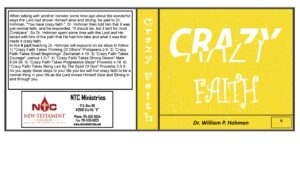
In this eleventh installment of the Blood Covenant series, the Pastor of NTC Ministries delivers a powerful teaching on Jesus Christ as our Covenant Head. Drawing from 1 Corinthians 11:3, Ephesians 1:7-12, Ephesians 4:15, Colossians 1:12-14, Joshua 5:13-15, John 15:5, and Daniel 11:32, the message unfolds the biblical meaning of headship as a covenant term signifying responsibility, provision, protection, sustenance, and support. The Pastor explains how sin corrupted Adam’s bloodline and how Jesus, through His shed blood, established an unbreakable covenant that restores eternal life, healing, and inheritance to all who receive Him. The account of David and Goliath is explored in depth as a vivid example of covenant confidence in action, contrasting David’s bold faith with the fear of Saul’s army. A personal testimony about acquiring the church’s property illustrates how stepping out in covenant faith yields supernatural results. The message closes with a call to speak covenant truths boldly, work alongside Jesus, and partake in the communion that seals this living relationship with the Covenant Head.
Blood Covenant Outline
- 00:00 – Opening and Communion Invitation: The Pastor encourages listeners to prepare communion elements and frames the session as an opportunity to apply covenant truth to daily life.
- 04:30 – Defining the Covenant Head: An examination of 1 Corinthians 11:3 reveals that headship is a covenant term meaning to be responsible, to provide, to protect, to sustain, and to support.
- 13:00 – Sin, Corrupted Blood, and the Need for Christ: The Pastor traces how Adam’s fall polluted the bloodline of humanity and explains how receiving Christ functions as a spiritual blood transfusion that restores eternal life.
- 22:00 – Christ as Head Over the Church: Ephesians 1:22-23 and Ephesians 4:15 establish Jesus as the covenant head over all things given to the Church, calling believers to grow up into Him through truth spoken in love.
- 31:00 – Joshua, Jericho, and the Pre-Incarnate Christ: Joshua 5:13-15 presents the pre-incarnate Christ appearing with a drawn sword before Jericho, showing the covenant head arriving to provide, protect, and deliver His people.
- 40:00 – Our Inheritance Through the Blood Covenant: Ephesians 1:7-12 and Colossians 1:12-14 detail the redemption, forgiveness, and inheritance believers receive through Christ’s blood, translated out of darkness into His kingdom.
- 49:00 – David and Goliath as Covenant Confidence: The story of David in 1 Samuel 17 illustrates that covenant knowledge produces boldness. David’s challenge rested entirely on recognizing Goliath as uncircumcised and therefore outside covenant protection.
- 57:00 – Daniel 11:32 and Doing Exploits: The Pastor applies Daniel 11:32 to the present day, declaring that those who know their God will be strong and display strength, take action, and prevail regardless of opposition.
- 1:03:00 – Personal Testimony of Property and Provision: The Pastor shares how covenant faith led to acquiring the church’s ten-and-a-half-acre property and how the landowner came to salvation just weeks before his passing.
- 1:07:00 – Communion and Closing Declaration: Believers are led in a covenant declaration and communion, affirming that the blood of Jesus brings life, victory, and prosperity in everything they put their hands to do.
Scripture References
1 Corinthians 11:3, Ephesians 1:7-12, Ephesians 1:22-23, Ephesians 4:15, Colossians 1:12-14, Joshua 5:13-15, John 15:5, 1 Samuel 17:26, 1 Samuel 17:31-33, 1 Samuel 17:36-37, Daniel 11:32, Philippians 1:6, Jeremiah 29:11
Key Takeaways
- Jesus Christ is the Covenant Head who is personally responsible to provide, protect, sustain, and support every believer who has entered into relationship with Him through His blood.
- The corruption of Adam’s blood through sin is the root of death and decay in all humanity, and receiving Christ reverses that corruption by imparting eternal life to the spirit.
- Covenant knowledge is the source of supernatural courage, just as David’s confidence against Goliath came entirely from recognizing that the Philistines stood outside the covenant with God.
- The mystery of the Church is only revealed from the inside, meaning that genuine born-again relationship with Christ unlocks revelation, inheritance, and the power of God that religion alone can never access.
- Believers are called to actively work with Jesus, speaking what He says and doing what He instructs, because obedient partnership with the Covenant Head is the path to inheriting every promise.
- The blood of Jesus has already delivered believers from the power of darkness and translated them into the kingdom of God, leaving no grounds for fear of demonic opposition.
- Grace is not a license for passivity but the divine empowerment that teaches believers how to live godly lives within the covenant, producing good works and bearing fruit for the kingdom.
Blood Covenant Notes
The Covenant Head Defined Biblically
The word translated as head in 1 Corinthians 11:3 carries a rich covenant meaning that goes far beyond simple authority. It means to take hold of, to seize, and to be fully responsible. When the Father gave Jesus to be head over all things to the Church, He appointed Him as the one who initiates, provides, protects, sustains, and supports every member of the covenant community. This is not a headship of domination but of self-giving responsibility, which stands in sharp contrast to the imposing will that characterizes corrupt governments, absent fathers, and the agenda of the enemy.
Adam’s Fall and the Blood Solution
The life of the flesh is in the blood, and when Adam sinned, his blood became corrupted instantly. Spiritual death came first, and physical death followed 930 years later as the process worked outward. Every descendant inherited this corrupted bloodline, which is why the Latin root of the word human points toward the reality of mortality. Jesus came in a body prepared by the Father, shed His sinless blood, and cut an unbreakable covenant with God on behalf of all humanity. Receiving Christ is therefore like a divine blood transfusion that introduces eternal life into the believer’s innermost being, changing their nature permanently.
Joshua’s Encounter at Jericho Explained
Before Israel took a single step toward Jericho, the pre-incarnate Christ appeared to Joshua with a drawn sword, identifying Himself as the Prince of the Lord’s host. Joshua worshiped Him without correction, confirming this was not an angel but the Lord Himself. The significance is clear: Israel had just renewed the blood covenant through circumcision, and the Covenant Head showed up immediately to provide, protect, and lead them into their inheritance. This is a type and shadow of the new covenant reality, where Christ’s presence is guaranteed to every believer who walks in covenant faithfulness.
David’s Confidence Rooted in Covenant Knowledge
What distinguished seventeen-year-old David from the entire army of Israel was not physical size or military training but covenant revelation. When David asked who this uncircumcised Philistine was, he was making a theological statement: Goliath had no covenant with God, and Israel did. That single truth dismantled every argument for fear. Daniel 11:32 confirms this principle across centuries, declaring that the people who know their God will be strong and do exploits. Covenant knowledge does not produce arrogance but produces settled, fearless confidence in the faithfulness of the One who stands behind the agreement.
Practical Testimony of Stepping Out in Faith
The Pastor’s account of acquiring the church property illustrates covenant faith in action. With only a fraction of the asking price, he walked the land each week, declared God’s promise over it, and spoke honestly to the landowner when the moment came. The result was not only the provision of ten and a half acres at a price that defied the surrounding market but also the salvation of the landowner himself, who came to Christ through his son just two weeks before he passed away. This testimony demonstrates that obedience to the voice of the Covenant Head releases outcomes that benefit eternity, not just the immediate situation.
The Call to Speak Covenant Truths Boldly
The closing exhortation of this message is a direct challenge to stop using language that suggests uncertainty about God’s commitment. Phrases like I hope the Lord is with me contradict the reality of a sealed blood covenant. Believers are urged instead to declare that the blood of Jesus stands against the enemy, that they shall live and not die, and that everything they put their hands to prospers because their Covenant Head is Jesus Christ. Speaking these truths is not presumption but faithfulness to the terms of an eternal agreement ratified by the death, burial, and resurrection of the Son of God.
Frequently Asked Questions
What does it mean for Jesus to be our Covenant Head?
In biblical covenant language, the head is the initiating and responsible party who is accountable to provide, protect, sustain, and support the other members of the covenant. When the Father appointed Jesus as head over all things to the Church in Ephesians 1:22-23, He was designating Christ as the one personally responsible for the welfare of every believer. This means every promise of provision, healing, and inheritance flows through the covenant relationship established by His blood.
Why is the blood of Jesus central to salvation and covenant relationship?
Leviticus establishes that the life of the flesh is in the blood, which means blood is the vehicle of life itself. When Adam sinned, the human bloodline became corrupted by death, making every person born into it subject to spiritual and physical mortality. Jesus came with sinless blood, shed it to ratify a new and better covenant, and through faith in Him believers receive what functions as a spiritual blood transfusion, exchanging a corrupted nature for eternal life. Without the blood there is no remission of sins and no covenant standing before God.
How does the story of David and Goliath relate to the Blood Covenant?
David’s boldness in 1 Samuel 17 was not personality-driven but covenant-driven. His question about the uncircumcised Philistine reveals that he understood Goliath had no covenant with God while Israel did. This covenant awareness removed every reason for fear and supplied the confidence to act. The same principle applies to New Testament believers: because Christ’s blood has sealed an eternal covenant, no enemy, circumstance, or threat has any covenant standing against those who belong to God.
What is the significance of the pre-incarnate Christ appearing to Joshua in Joshua 5?
The appearance of the Prince of the Lord’s host in Joshua 5:13-15 is understood as a manifestation of the pre-incarnate Christ because Joshua worshiped Him and was not rebuked, whereas angels consistently refused worship in Scripture. The timing is deeply significant: Israel had just renewed the blood covenant through circumcision, and the Covenant Head showed up immediately with His sword drawn to lead them into battle. This confirms that covenant faithfulness on the part of God’s people triggers the direct involvement of the Covenant Head on their behalf.
What does Daniel 11:32 mean when it says the people who know their God will be strong and do exploits?
Daniel 11:32 contrasts those who are corrupted by the enemy with those who maintain their covenant knowledge of God, declaring that the latter will display strength, take action, prevail, and prosper. The word translated as exploits carries the meaning of displaying power and achieving significant results. In the context of the Blood Covenant series, this verse is applied as a promise that genuine covenant relationship with God produces a boldness and effectiveness in life that is completely unavailable to those who stand outside that relationship.
Is being a good person or being baptized as a baby enough to be in covenant with God?
The message draws clearly from Scripture to answer no on both counts. Salvation is not conferred by infant sprinkling, water baptism alone, good works, or religious practice. Being born again requires a genuine heart surrender to Jesus Christ, described in the message as a circumcision of the heart by the power of the Word and Spirit of God. This inner transformation is what establishes actual covenant relationship, which is why 2 Timothy 3:5 warns against having a form of godliness while denying its power.
Does grace mean believers do not have to do anything after being saved?
The Pastor addresses this directly, stating that the idea of total passivity under grace is a serious error. Grace, according to Titus 2:11-12, teaches believers how to live godly lives within the covenant. Ephesians 2:10 confirms that while salvation is not by works, believers are saved in order to do good works. The covenant relationship requires active partnership: obeying God’s voice, speaking His Word, and working with Jesus to accomplish the purposes He has called each person to fulfill in their unique sphere of influence.
How does communion connect to the Blood Covenant teaching?
Communion, or the Lord’s Supper instituted in 1 Corinthians 11, is presented throughout this series as a practical act of covenant renewal and application. Rather than receiving the Word and walking away unchanged, believers are encouraged to take communion immediately after the teaching so that the truths heard are sealed and applied to their lives in a tangible way. The bread and cup represent the body and blood of Jesus Christ, the very substance of the covenant, making each observance an active declaration of covenant participation and dependence on the Covenant Head.