Faith to Faith Strength to Strength and Glory to Glory #5 teaches that spiritual growth is a daily process, and that the next season God has for you starts with a change of heart today. Dr. William P. Hohman explains that redemption has a legal side, finished at the cross, and a practical side that you walk out. The practical key in this message is repentance: breaking up the fallow ground of the heart so that the seed of God’s Word can grow. It continues from From Faith to Faith, Strength to Strength and Glory to Glory, Part 2 — The Two Sides of Redemption.
Below you will find the full video, a structured summary of the sermon, every Scripture he uses (linked to the New King James Version on Bible Gateway), a timestamped outline, and practical steps you can take this week.
Sermon at a Glance
This message was preached at NTC Ministries and posted on April 25, 2023. Dr. Hohman calls it a series within a series: he is teaching on tilling up the fallow ground inside his larger teaching on spiritual progression. He opens with a line from Charles Spurgeon, whom he calls the prince of preachers: being a Christian is more than an instantaneous conversion; it is a daily process of growing to be more like Christ.
His summary of the whole sermon is one sentence: “You’re not going to succeed in your future if you’re not willing to change in your present.” Wanting to be an engineer does not make you one; training comes first. In the same way, God prepares us for the next season before He brings us into it.
| Detail | Information |
|---|---|
| Speaker | Dr. William P. Hohman |
| Series | From Faith to Faith, Strength to Strength and Glory to Glory (#5) |
| Main text | Jeremiah 4:1–4 and Psalm 84:4–7 |
| Key theme | Repentance breaks up the fallow ground so God’s promises can grow |
| Length | About 74 minutes, ending in a prayer of repentance |
The Legal Side and the Practical Side of Redemption
Dr. Hohman begins with something many people would rather not hear. Everyone enjoys the picture of the pastor as Jesus carrying a lamb on His shoulders, but the pastoral gift also carries the authority to teach, to correct and to rebuke. Correction is not fun to give or to receive. Yet Scripture teaches, he says, that whoever receives rebuke will grow and increase, while whoever rejects it sees sorrows piled upon his life. The goal is never to point out wrong; it is to bring people to a better life.
He then reviews the two sides of redemption. Legally, everything is already done. When Jesus finished the work on the cross, it was all yours, and you are seated in the heavens with Him right now. Practically, there are things you must do to see that fulfilled in the here and now. He illustrates with an inheritance Pam received from a relative she had not heard from since childhood: the letter made it theirs legally, but they still had to do what the probate court required before they could receive it.
Most people, he observes, only look at the here and now. They want healing or finances today but intend to keep living the same old way, like someone who eats snack cakes for every meal and then asks God for better health. If you want to get somewhere, you have to leave where you are. Grace gives us everything, he says, but grace is not permission to do whatever we want. God asks whether we are willing to follow Him into the next season.
Faith to Faith Strength to Strength and Glory to Glory: The Three Stages
The first stage comes from Romans 1:16–17, where the righteousness of God is revealed from faith to faith. Faith to faith, Dr. Hohman teaches, is being given totally to God’s Word: getting instruction from God and then doing it. Faith comes by hearing the Word (Romans 10:17). When a verse jumps off the page and you know you must apply it, that is God; Satan will never tell you that, and the flesh resists it. The flesh has to die, like the grain of wheat in John 12:24.
Receiving a word, he insists, is not like watching television. It is not intellectual growth but a spiritual life process. The moment the Word is sown, Satan comes to steal it, because he wants to keep you in bondage to who you are now. That is why the second stage matters so much. The table below follows his description of each step.
| Stage | What it is given to | Key text | What it looks like |
|---|---|---|---|
| Faith to faith | God’s Word | Romans 1:16–17 | Hearing and accepting the promise of God |
| Strength to strength | Assembling together with the saints | Psalm 84:4–7 | Believing the promise in the middle of high water |
| Glory to glory | The power and leading of the Holy Spirit | 2 Corinthians 3:18 | Being changed into His image and walking into the promise |
For the third stage he reads 2 Corinthians 3:18: we all, with unveiled face, beholding as in a mirror the glory of the Lord, are being transformed into the same image from glory to glory. Some people object that God gives His glory to no one. Under the old covenant that was true, he answers, but a new creation in Christ can be changed into His image and carry His glory.
He grounds this in Jesus’ prayer in John 17. In John 17:4–5 Jesus asks the Father for the glory He had before the world was, and in John 17:20–23 He prays for everyone who would believe through the apostles’ word, saying, “the glory which You gave Me I have given them.” Jesus never prayed a prayer that went unanswered, so that glory is ours legally. Practically, we walk a path to it by praising, worshiping and keeping our eyes on Him, unlike Peter, who began to sink when he looked away (Matthew 14:28–31).
Making the Valley of Baca a Well
Psalm 84:4–7 is the heart of the strength to strength stage. Blessed are those who dwell in the Lord’s house; they will still be praising Him. Dr. Hohman explains that being around people who encourage us keeps us praising even on days we do not feel like it. Praise stops being something we do on Sunday and becomes our life.
Verse 6 speaks of passing through the Valley of Baca, the valley of weeping. He describes it as trials, tests, sorrows, hardships and dry seasons. Those whose strength is in God pass through that valley and make it a well, and they go from strength to strength until every one of them appears before God in Zion. The gathered church, he says, carries a corporate anointing that strengthens us to walk through trials and make them a source of water.
That is why Hebrews 10:24–25 warns against forsaking the assembling of ourselves together, as was the habit of some even then. He uses an image from the Northwoods. Balsam trees have shallow roots and grow close together. Clear-cut twenty acres and leave a few standing alone for a hunting tree stand, and within months they are flat on the ground. Believers are like balsams, he says; we need each other. Even pastors need other ministers, and holding your life back from others is a form of pride.
He follows with James 1:2–4 and 1 Peter 1:6–8. The testing of faith produces patience, so that we may be perfect and complete, lacking nothing. One translation, he notes, says thoroughly furnished. A house with no furniture is still yours, but you cannot live comfortably in it; patience furnishes the life God gives. Faith tested by fire is more precious than gold and results in praise, honor and glory.
Jesus showed the pattern in Gethsemane, which Dr. Hohman says means olive press. Olives were crushed for the oil, and the oil gave light. Jesus asked the Father to let the cup of suffering pass, yet yielded His will to the Father’s (Luke 22:42), and an anointing flowed from His life. He links this to Isaiah’s promise that when you pass through the waters, God will be with you (Isaiah 43:2), and to Paul’s desire to know the fellowship of Christ’s sufferings (Philippians 3:10).
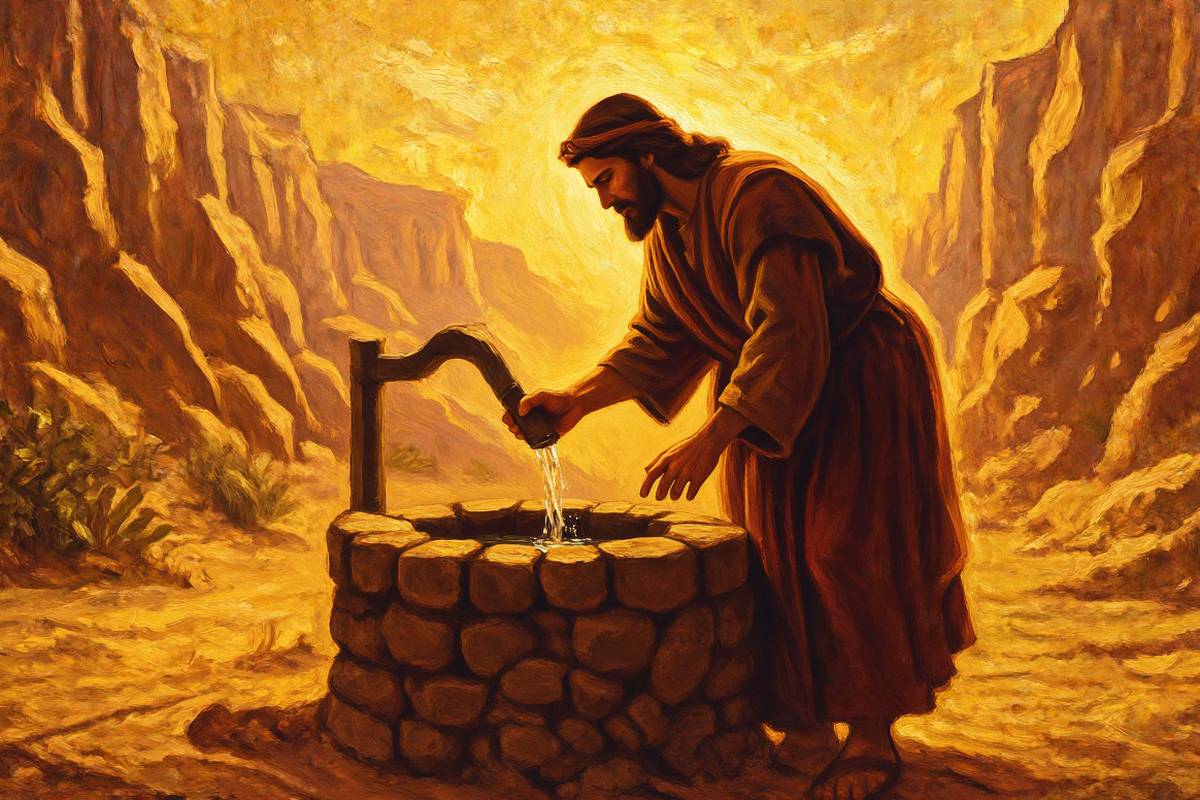
Break Up the Fallow Ground
Before turning to repentance, Dr. Hohman reads 1 Samuel 2:8: God raises the poor from the dust and the beggar from the ash heap to set them among princes and make them inherit the throne of glory. That is where God wants to take His people. Then he opens the main text, Jeremiah 4:1–4, where God tells Israel to return to Him and put away their abominations, and then they shall not be moved.
Verse 3 gives the command: break up your fallow ground, and do not sow among thorns; circumcise yourselves to the Lord. Fallow ground, he explains, is idle, uncultivated and unproductive soil. Seed thrown on untilled ground gets eaten by birds, blocked by rocks or choked by thorns and thistles. The fallow ground has to be tilled up before the seed of righteousness can grow.
That soil is the soul. Your spirit is perfect when you give your life to Jesus; turned inside out, he says, you would blind the world with the glory of God. But your soul, your mind, will and emotions, sits between a perfect spirit and weak flesh. Some say that under grace we never need to ask forgiveness again. That is the legal side. Practically, self-justification destroys you, while a humble “God, forgive me” tills the ground.
He brings it into the New Testament with Galatians 6:7–10, written to believers, not to the world. Whoever sows to the flesh reaps corruption, and whoever sows to the Spirit reaps everlasting life. Do not grow weary in doing good, for in due season we will reap if we do not lose heart. That, he says, is strength to strength: building spiritual muscle and doing good, especially to the household of faith, so that no one falls over like a lone balsam.
Repentance runs through the whole New Testament. Acts 3:19–21 calls people to repent so that times of refreshing may come from the presence of the Lord. John the Baptist, Jesus and the disciples all preached repent, for the kingdom of heaven is at hand, and Acts 17:30 says God now commands all people everywhere to repent.
Purify Yourself: Clearing the Drain
1 John 3:1–3, which Dr. Hohman says he once preached for two years, declares that we are children of God and that when He is revealed we shall be like Him. Then comes the practical side: everyone who has this hope purifies himself, just as He is pure. He teaches that the Greek word carries the sense of a self-cleaning. That takes humility: “Okay, I was wrong. Okay, no problem. Let’s do it better.”
1 Peter 1:22–23 says the same: since you have purified your souls in obeying the truth through the Spirit, love one another fervently with a pure heart. Not the priest, he stresses; you do it. We have been born again of incorruptible seed, but living in a corrupted world, things attach to us simply from being here: the language and jokes at work, the constant noise of problems. Whatever attaches itself from the world is not a conductor of God’s promises but a deterrent.
He defines a deterrent as something meant to discourage you from doing something, and gives two pictures. Heavy traffic is a deterrent when you need to get somewhere. A bathroom sink does not clog from one big clump but from one hair at a time, until nothing goes down. Without repentance and without being spurred on at church, believers get worn down until they feel awkward sharing Jesus at all. Repentance, he says, is how God unclogs the drain.
Evil, as God sees it, is not only murder or theft. It is anything in our mind, will or emotions that keeps His glory from manifesting in our lives. Song of Solomon 2:15 warns that it is the little foxes that spoil the vines, and many believers now laugh at things that should make them weep.
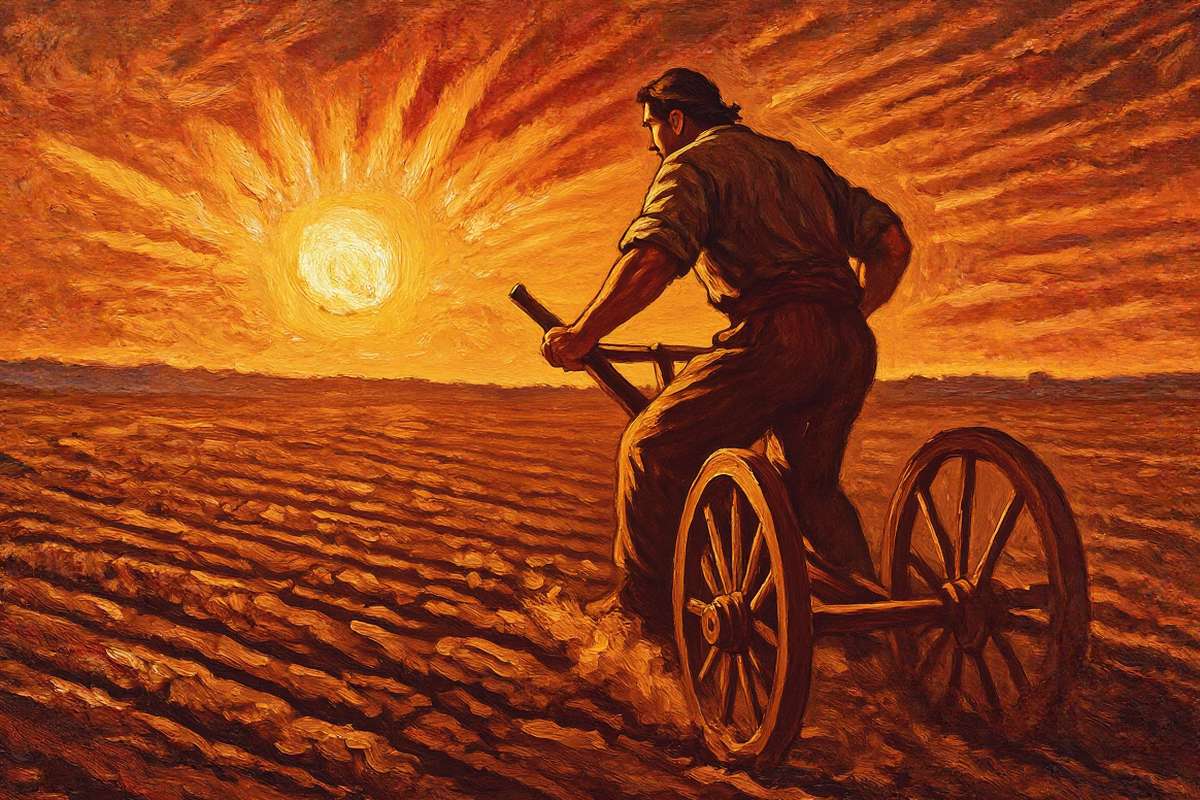
Repentance and the Glory of God
In John 14:30–31, Jesus said the ruler of this world was coming, and he has nothing in Me. Not one hair to plug the drain, Dr. Hohman says, and not one car on the road. The devil thrives on our ignorance, negligence and disobedience, because every unrepented thing delays his end. But God is bigger than our mistakes. Own up, repent, and let His strength lift you; His plan for you never goes away.
He reads 2 Corinthians 6:14–18: do not be unequally yoked with unbelievers; come out from among them and be separate, and God will be a Father to you. Believers must befriend unbelievers to share the Lord, he says. The problem comes when they are influencing you and you are not influencing them.
He distinguishes petition from prayer. Praise thanks God for what He has done, but worship is getting quiet in His presence and letting Him speak. Then he closes the teaching with 2 Corinthians 7:1: having these promises, let us cleanse ourselves from all filthiness of the flesh and spirit, perfecting holiness in the fear of God. Repentance is a spiritual strength and a mature mentality, he says, while pride is childish and weak.
He tells what happened the last time he taught on tilling the fallow ground. People began repenting during worship, asking forgiveness of God and of one another, and the presence of God filled the services. He traces it back to a convention in Dundee, Scotland, where after a powerful first night he was rebuked by a group of ministers for the manifestations. The next night the denomination’s leader publicly repented and asked him to minister.
Back home, Dr. Hohman says, his own message was to ask the church’s forgiveness because he had not been willing to obey God, and he wept while the congregation prayed for him. What followed, he reports, was two years of long services with people coming from all over the world. His invitation is simple: humble yourself under the mighty hand of God and He will lift you up (1 Peter 5:6).
Tilling the Fallow Ground This Week
The sermon ends with the congregation standing to pray a prayer of repentance, asking God to forgive disobedience, haughtiness and self-justification, and to use them in the next season. These steps follow directly from the message:
- Receive correction. When God or a pastor brings correction, treat it as the path to increase rather than an insult.
- Act on the verse that stands out. Faith to faith means doing what God shows you in His Word, not just admiring it.
- Stay planted in church. Like balsams, believers stand by standing together; do not forsake the assembly when the pressure comes.
- Repent quickly and often. Deal with the small things, the little foxes and single hairs, before they clog the drain.
- Check your influences. Love unbelievers and share Jesus, but notice who is shaping whom.
- Make room for worship. Beyond petitions, set aside quiet time to let God speak to you.
Timestamped Outline
- 0:00 A series within a series: Spurgeon on daily growth
- 2:18 Tilling the fallow ground and the pastor’s role
- 5:16 The legal side of redemption
- 6:21 An inheritance and the probate court
- 10:43 Romans 1:16-17: from faith to faith
- 13:43 Strength to strength: assembling together
- 14:51 Psalm 84: those who dwell in His house
- 17:04 The valley of Baca becomes a well
- 19:21 Balsam trees need each other
- 22:40 James 1: thoroughly furnished
- 24:45 Gethsemane and the olive press
- 31:45 Glory to glory: 2 Corinthians 3:18
- 33:02 John 17: the glory He has given us
- 39:20 Jeremiah 4: break up the fallow ground
- 42:49 Galatians 6: sowing and reaping
- 47:35 1 John 3: everyone who has this hope purifies himself
- 52:05 Deterrents, traffic and a plugged sink
- 57:10 The little foxes that spoil the vine
- 59:56 2 Corinthians 6: come out and be separate
- 1:06:17 Revival after repentance in Scotland
- 1:12:31 A prayer of repentance
From Faith to Faith Series
This message belongs to a short series at NTC Ministries on spiritual progression. Start at the beginning or go back one message:
- First message: From Faith to Faith, Strength to Strength, and Glory to Glory — Running for the Eternal Prize
- Previous: From Faith to Faith, Strength to Strength and Glory to Glory, Part 2 — The Two Sides of Redemption
- You are here: From Faith to Faith, Strength to Strength and Glory to Glory #5 — Break Up the Fallow Ground
Frequently Asked Questions
If Jesus forgave everything, why do believers still need to repent?
Dr. Hohman answers with the two sides of redemption. Legally, forgiveness is complete and your spirit is made new. Practically, your soul, your mind, will and emotions, still picks up things from living in a corrupted world. Repentance is how you clear those deterrents away so that what God has already given can flow into daily life. He calls it a self-cleaning that takes humility, not a way of earning forgiveness again.
Does this mean believers should avoid unbelievers?
No. He says plainly that Christians have to be with unbelievers and become their friends in order to share the Lord. The warning in 2 Corinthians 6 is about influence. If friends are shaping your life while you are not shaping theirs, the drain begins to clog and the flow of God’s presence slows. The answer is to stay close to God and His people so you remain the influence.
What does it mean that pride comes before a fall here?
In this message pride shows up as self-justification and as holding your life back from others. Dr. Hohman calls pride childish and weak and repentance a mature mentality. He also links it to fellowship: thinking your life is nobody else’s business keeps people from the encouragement they need, and he warns that this kind of pride leads to a downfall.
Scripture References
All passages open in the New King James Version on Bible Gateway:
- Jeremiah 4:1–4 — break up your fallow ground
- Romans 1:16–17 — from faith to faith
- Psalm 84:4–7 — from strength to strength
- 2 Corinthians 3:18 — from glory to glory
- John 17:20–23 — the glory You gave Me I have given them
- Galatians 6:7–10 — sowing to the Spirit
- 1 John 3:1–3 — purifies himself
- 2 Corinthians 6:14–18 — come out and be separate
- 2 Corinthians 7:1 — perfecting holiness
How this summary was made: written with AI assistance from the sermon’s own transcript and checked against the Scriptures listed above.
Watch More Messages
If this message stirred you to change, there are hundreds more teachings from NTC Ministries to help you keep growing. Browse the full sermon archive and keep going from strength to strength.