Building Gods Kingdom #12 teaches that believers belong to a kingdom that cannot be shaken. Dr. William P. Hohman explains that everyone in this corrupted world faces trouble, that today’s troubles are birth pains before a new administration of God’s kingdom, and that the people who stand firm are those who hear the voice of Jesus, let patience do its work, and obey. He builds the message on Matthew 16, Matthew 24 and Hebrews 12.
This message continues from Building God’s Kingdom #11: Knowing God as Father, Not Living as Orphans. Below you will find the full video, a structured summary, the Scriptures he uses (linked to the New King James Version on Bible Gateway), a timestamped outline, and practical steps for standing firm this week.
Sermon at a Glance
This message was posted on June 26, 2025, as part of the ongoing kingdom series at NTC Ministries. Dr. Hohman recalls that the previous week showed the whole kingdom is built on the fatherhood of God, from whom every family in heaven and earth is named (Ephesians 3:14–15). The whole Bible, he says, is about a King, a kingdom and a royal family, and every part of it, Old Testament and New, is written for us to learn from.
His title for the day is simple: we have a kingdom that cannot be shaken. With wars in the headlines and troubles on every side, he wants the church shored up and confident, able to receive everything God has provided because they belong to a kingdom that cannot be shaken.
| Detail | Information |
|---|---|
| Speaker | Dr. William P. Hohman |
| Series | Building God’s Kingdom (#12) |
| Main text | Matthew 16:18, Matthew 24 and Hebrews 12:18–29 |
| Key theme | A kingdom that cannot be shaken, entered by hearing and obeying Jesus |
| Length | About 71 minutes |
The Gates of Hell Will Not Prevail
The foundation is Jesus’ answer to Peter in Matthew 16:18. Peter confessed that Jesus is the Christ, the Son of the living God, and Jesus said that on this rock He would build His church, and the gates of Hades would not prevail against it. Dr. Hohman reads the rock as the revelation that Jesus is the Christ, the Son of the living God.
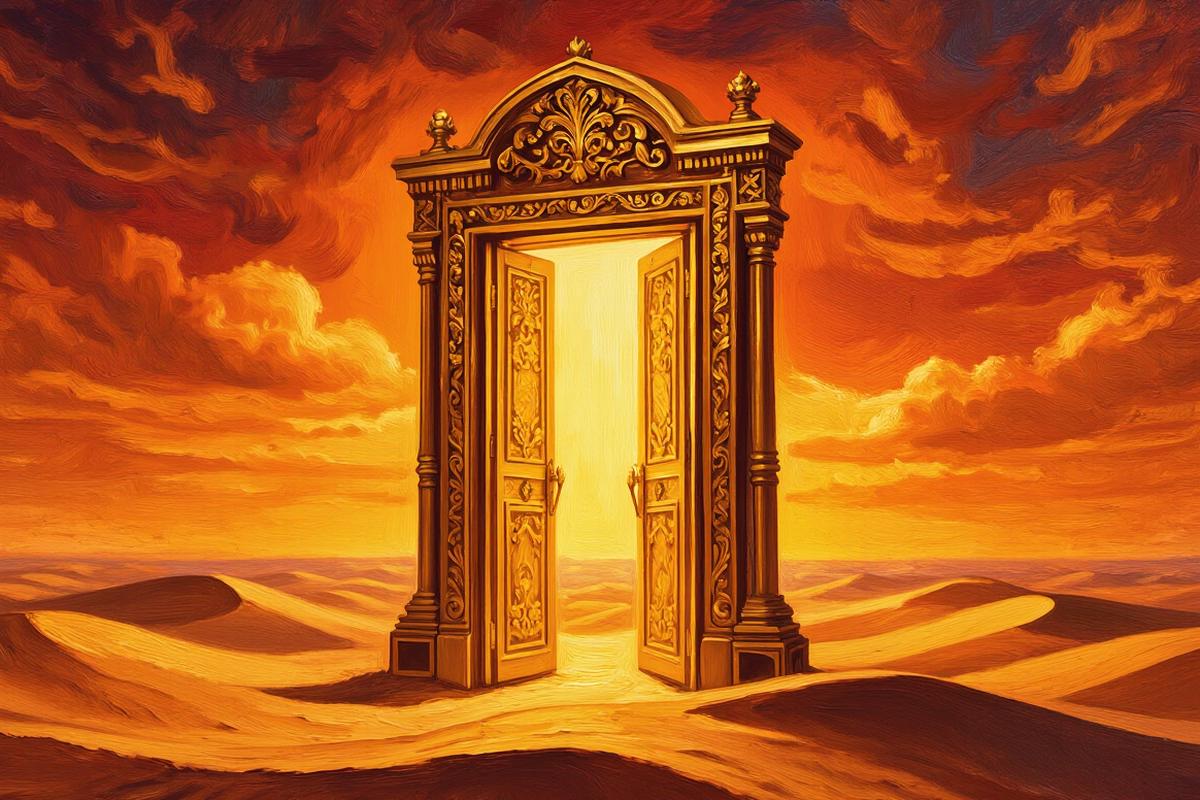
To explain the gates, he tells of driving for hours across the Sahara while ministering in Egypt. Every ten, twenty or fifty miles they passed a massive gate standing alone in the sand, fourteen to sixteen feet high, with no road and no fence. Some were plain, and one was ornate and even gold. When he asked about them, the pastor explained that each gate marked the owner of that stretch of desert.
The gate, he was told, showed who the owner was: his wealth, his resources, his abilities and his power. A plain gate meant a landowner of modest means; the golden gate meant someone extremely wealthy. Dr. Hohman says he was glad he kept asking questions, because the picture unlocked the verse. A gate does not attack anyone. It is stationary. What it represents is the owner.
So the gates of hell are everything Satan is, everything he has and all his power. Jesus promises that none of it will ever prevail against His church, a kingdom that cannot be shaken. Dr. Hohman also mentions that on another trip the church rented desert land to put up a tent seating about 9,000 people for a meeting to pray for the Middle East, where he reports seeing signs, wonders and miracles.
The Church or Religion: Where Do You Look for Help?
Not everyone who calls himself the church is part of it, Dr. Hohman warns. Some have fallen away and gone the way of the world, living by their own feelings, emotions, thinking and strength. He describes that as religion: the self-made attitude that says nobody is going to help me, so I will do it myself. The true church looks wholly and solely to the Lord Jesus Christ. As Psalm 121:1–2 says, our help comes from the Lord.
Through each dispensation, he teaches, God revealed Himself by names that showed who He was for His people, yet they often refused to see it. He told them, “I am the Lord who heals you” (Exodus 15:26), the name Dr. Hohman gives as Jehovah Rapha, but they did not rely on it. He revealed Himself as El Shaddai, all-sufficient (Genesis 17:1), and they would not accept it.
That is what religion does, he says. It refuses to accept who God really is and looks somewhere else for help, to a government, an educational institution or a medical institution. Those places are not bad in themselves, but when we trust them instead of God, we fall into error and grow weaker in faith rather than stronger.
Jesus also said that unless a man is born again he cannot see the kingdom of God (John 3:3). People whose eyes are not opened cannot accept what God has done. Those who are born again are new creations with a new heart and His Spirit inside, the temple and household of God, even while they still live in a corrupted world.
Let Patience Have Its Perfect Work
Living in a corrupted world means trouble. The only ways out, Dr. Hohman jokes, are the rapture or death. In John 16:32–33, Jesus warned the disciples they would scatter and leave Him alone, yet He was not alone because the Father was with Him. In the world you will have tribulation, but be of good cheer, for He has overcome the world.
He shares his own testimony. As a drug addict in San Diego, he overdosed in a strange apartment and knew that if he closed his eyes he would die. He says Jesus came, sat with him and said, “William, you’re going to be all right. I’m going to use you.” Because of that, he never prays “be with me, Lord,” which he calls a prayer of doubt. Jesus is not only with him; He is in him.
The response to trouble comes from James 1:2–4: count it all joy, because the testing of your faith produces patience, and let patience have its perfect work, that you may be perfect and complete, lacking nothing. In patience you possess your souls (Luke 21:19), and through faith and patience we inherit the promises (Hebrews 6:12).
He warns against sales pitches that say you must sign today or lose the deal forever. They target people who live by self-will, he says, and an instant decision is often a fool’s decision. Patience has a job to do: it matures and equips us. When he and Pam first married, they rented a place with no plates, no forks and no bed. The excitement wore off quickly because they were not yet equipped.
Years later, with four children and a car that had only one seat belt, they needed a vehicle with six. A dealer in Marshfield pressured them to buy a new van at once, but the Lord said to have patience. A month later the manager offered them an identical van that had sat on the lot for $6,000 less. Trust God, he says, not the system, and let patience finish its work.
1 Peter 1:6–7 adds that we are grieved by various trials “if need be,” so that the genuineness of our faith, more precious than gold that perishes, is proved. Christians are not masochists who embrace trouble as a friend, but they can say it is okay, because they will come out better. He had the church declare, I’m part of a kingdom that cannot be shaken.
Birth Pains of a New Administration
Every time God changed how His kingdom was administered, Dr. Hohman teaches, there were birth pains. Israel heard nothing from God for 400 years in Egypt. Then Moses turned aside to see a bush that burned but was not consumed (Exodus 3:2–4), and the voice of God came. Even after mighty miracles, the people refused to listen, held back by what he calls a slave mentality or orphan thinking.
Another 400 years passed between Malachi and John the Baptist. John simply did what God told him, and when Jesus came He told the religious leaders that they had ears but did not hear (Matthew 13:13). It was a change of government, the arrival of grace, in which God writes His laws on our hearts and minds (Hebrews 8:10). Grace, he stresses, is not permission to do anything we want; the key is hearing and obeying.
Jesus’ teaching on the Mount of Olives in Matthew 24:3–8 answers three questions: when these things will happen, the sign of His coming, and the end of the age. He warns of false christs, wars and rumors of wars, famines and earthquakes, and calls them the beginning of sorrows. Dr. Hohman notes that some versions translate it as the first pains of a woman giving birth.
In Matthew 24:9–14, believers are hated for His name’s sake, many fall away, lawlessness abounds and love grows cold, but the one who endures to the end will be saved, and the gospel of the kingdom will be preached to all nations. God tells us this not to frighten us, he says, but so that we are in the know and stand unshaken. Dr. Hohman lays out three levels of trouble in the message:
| Kind of trouble | What he teaches | Key text |
|---|---|---|
| Everyday trouble | Everyone in a corrupted world faces trials; count it joy and let patience work | John 16:33; James 1:2–4 |
| Birth pains | Wars, famines and earthquakes as a new administration of the kingdom approaches | Matthew 24:3–14 |
| Great tribulation | Seven years after the church is caught away, worse than anything before or after | Matthew 24:21–24 |
An endurance race, he explains, proves two things: what is in the vehicle and what is in the driver. Endurance, like patience, reveals the heart. Those who fall away show they were never truly part of the church (1 John 2:19). They have a form of godliness but deny its power (2 Timothy 3:5). For him, church is the hall of the King, where believers get their marching orders and are refreshed by the Holy Spirit. He says that hearing and obeying God is how a small congregation now reaches 37 nations.
Building Gods Kingdom on the Rock
Dr. Hohman then outlines what he believes comes next. Believers will be caught up to meet the Lord in the clouds (1 Thessalonians 4:17). The word rapture is not spelled out, he admits, any more than Trinity is, but it comes from the Latin for being caught away. The church goes to the marriage supper of the Lamb, where he says the Father Himself will serve us.
Meanwhile a seven-year tribulation unfolds on earth. A false peace comes first, and anyone who refuses the mark of the beast is killed. Then the temple is defiled by the abomination of desolation, and a great tribulation follows, such as has never been (Matthew 24:21–24). Afterward the sun is darkened, the stars fall, and the Son of Man comes with power and great glory (Matthew 24:29–30), His feet touching the Mount of Olives.
That is why Hebrews 12:18–24 matters. We have not come to Mount Sinai, with fire, darkness and a voice so terrifying that even Moses trembled. We have come to Mount Zion, the heavenly Jerusalem, to innumerable angels, to the church of the firstborn and to Jesus, the Mediator of the new covenant. This, he says, is our kingdom, a kingdom that cannot be shaken. The fear of God here is reverence, a desire to hear His voice.
Hebrews 12:25–29 warns us not to refuse Him who speaks. God will shake not only the earth but heaven, removing what can be shaken so that what cannot be shaken remains. Since we are receiving a kingdom which cannot be shaken, we serve God with reverence and godly fear. If He did not spare His own Son, how will He not freely give us all things (Romans 8:32)?
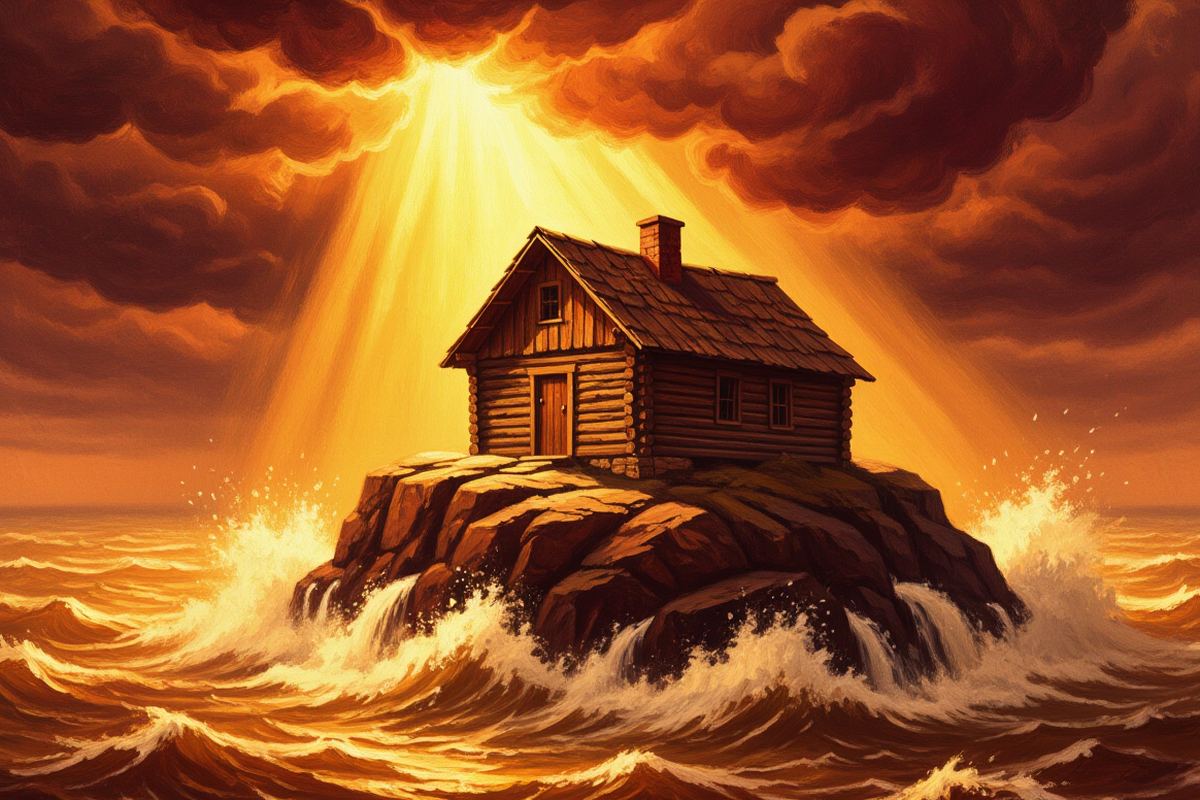
The practical key is Matthew 7:21–27. Not everyone who says “Lord, Lord” enters the kingdom, only those who do the Father’s will. The wise man hears and does, and his house stands on the rock; the foolish man hears and does not, and his house falls. The same storms hit both. Dr. Hohman shows a photo of a plain, beat-up house on a rock: it stands not because it is impressive but because of its foundation.
Feelings cannot be the guide; patience and obedience must be. Giving someone a piece of your mind, he jokes, can leave you with no mind left. Great peace have those who love God’s law, and nothing causes them to stumble (Psalm 119:165). Read your Bible in the morning before you check your phone, he urges, because time with God gives what no email or social site can. Do not live on a diet of news; live on a diet of the Word.
Standing in an Unshakeable Kingdom This Week
Dr. Hohman closes with obedience. Jesus walked about sixty miles to be baptized by John, to fulfill all righteousness (Matthew 3:13–15). We are saved by confessing Jesus as Lord and believing God raised Him from the dead (Romans 10:9–10), but once saved, we hear and obey, because those led by the Spirit of God are His sons (Romans 8:14). Here are practical steps from this Building Gods Kingdom message:
- Give God the first word. Read your Bible in the morning before you open your phone, email or social media.
- Change your diet. Limit the news and feed on the Word, so headlines do not shake what God has established in you.
- Let patience work. Before a big purchase or decision, refuse pressure and wait for the Lord’s direction.
- Count trials as joy. Say aloud, “I’m part of a kingdom that cannot be shaken,” and expect to come out better.
- Look to the right source. Receive God as healer and all-sufficient provider instead of putting your confidence in institutions.
- Obey the little thing. Whether it is water baptism or something to start or stop, do what He has been asking.
He prays that the Word, quick and powerful and sharper than any two-edged sword (Hebrews 4:12), would help the church obey, and ends with Mary’s counsel at Cana: whatever He says to you, do it (John 2:5).
Timestamped Outline
- 0:00 The kingdom is built on the fatherhood of God
- 1:10 We have a kingdom that cannot be shaken
- 12:04 Upon this rock: Matthew 16:18
- 13:10 The gates in the Egyptian desert
- 16:25 What the gates of hell represent
- 17:39 The church versus religion; the names of God
- 20:08 Living in a corrupted world: John 16
- 22:19 “William, you’re going to be all right”
- 23:27 Count it all joy: James 1
- 26:51 Perfect and complete, lacking nothing
- 27:52 The van and the $6,000 lesson in patience
- 30:03 Faith more precious than gold: 1 Peter 1
- 32:14 Birth pains and 400 years of silence
- 35:31 A new government of grace
- 36:50 The temple discourse: Matthew 24
- 42:16 Hated, falling away and enduring to the end
- 44:36 The endurance race
- 48:27 Caught away to the marriage supper of the Lamb
- 51:54 The great tribulation
- 55:47 Not Mount Sinai but Mount Zion: Hebrews 12
- 59:23 A kingdom which cannot be shaken
- 1:02:51 The wise and foolish builders: Matthew 7
- 1:06:16 Water baptism and obedience
- 1:08:53 Closing prayer
Building God’s Kingdom Series
This message is part of a teaching series at NTC Ministries. Start from the beginning or go back to the previous message:
- First message: Building God’s Kingdom #5: House Owners Who Hold the Keys of the Kingdom of Heaven
- Previous: Building God’s Kingdom #11: Knowing God as Father, Not Living as Orphans
- You are here: Building God’s Kingdom #12 — A Kingdom That Cannot Be Shaken
Frequently Asked Questions
Does being in God’s kingdom mean I will avoid all trouble?
No. Dr. Hohman says plainly that everyone in this corrupted world has trouble, and the only ways out are the rapture or death. What changes is how a believer goes through it. The Father is with us, so we can have peace in the middle of problems, count trials as joy, and let patience mature us until we lack nothing. When peace seems flushed away, he says, go back into fellowship with God.
What does “shall be saved” mean in Matthew 24?
Dr. Hohman teaches that the promise to the one who endures to the end is not only about getting to heaven, which is settled when you give your life to Christ. He reads it as being saved from the issues and troubles coming on the world. Those who keep hearing and obeying God, he says, will be kept safe through what is coming.
Why does he connect water baptism to this message?
Because the message is about hearing and obeying. A water baptism was planned for that day, and he encouraged anyone hesitating to take the step. Jesus walked about sixty miles to be baptized by John to fulfill all righteousness. Baptism does not save you, he explains, since salvation comes by confessing Jesus as Lord, but obedience breaks down what holds us back from God’s blessings.
Scripture References
All passages open in the New King James Version on Bible Gateway:
- Matthew 16:18 — the gates of Hades shall not prevail
- James 1:2–4 — let patience have its perfect work
- 1 Peter 1:6–7 — faith more precious than gold
- Matthew 24:3–8 — the beginning of sorrows
- Matthew 24:9–14 — enduring to the end
- Matthew 24:21–24 — the great tribulation
- Hebrews 12:18–24 — Mount Zion, not Mount Sinai
- Hebrews 12:25–29 — a kingdom which cannot be shaken
- Matthew 7:21–27 — the house on the rock
How this summary was made: written with AI assistance from the sermon’s own transcript and checked against the Scriptures listed above.
Watch More Messages
If this message steadied you, there are hundreds more teachings from NTC Ministries waiting for you. Browse the full sermon archive and keep building your life on the rock.