What you say is what you get: your words either link life into you or link death into you. In this fourth message of The Power of Words series at NTC Ministries, Dr. William P. Hohman shows from Jericho, Zacharias and Mary that God’s promises come to pass when our mouths agree with Him, and stall when we grumble, doubt or embellish.
The message continues from The Power of Words #3 Watch Your Words and adds a wartime lesson, “loose lips sink ships,” along with a personal testimony about a radio station God promised. Below you will find the full video, a structured summary, the Scripture behind each point (linked to the New King James Version on Bible Gateway), a timestamped outline, and practical steps for bringing your words into agreement with God.
Sermon at a Glance
Pastor Hohman began this series on the power of words about a month earlier, and here he briefly restates its foundation before announcing his theme: “what you say is what you get.” His aim is to show, through two angel visits in Luke 1, how the same promise of God can be delayed by an unbelieving mouth or welcomed by a believing one.
Along the way he draws on his own years in the navy in the early seventies, the battle of Jericho and a long wait for a radio license. He ends with an invitation to receive Jesus, using Mary’s own words as the model of a prayer that agrees with God.
| Detail | Information |
|---|---|
| Speaker | Dr. William P. Hohman |
| Series | The Power of Words (#4: What You Say Is What You Get) |
| Main text | Luke 1:5–38 and Joshua 6:10 |
| Key theme | God’s promises are released when our words agree with Him |
| Length | About 45 minutes, ending with an invitation to salvation |
Created to Speak Like God
Pastor Hohman starts where the series began. We are created not only in God’s image but in His likeness, and Jesus is called the Word of God. John 1:1–3 says that in the beginning was the Word and all things were made through Him. In Genesis 1:1–3 the earth was without form and void, the Spirit hovered over the deep like a mother hen, and then the Lord said, “Light be,” and there was light.
For six days, he notes, everything God put in place He spoke out first, and then it came to pass. Isaiah says He declares the end from the beginning (Isaiah 46:9–10). When Adam sinned, corruption filled the world, and language is what really went haywire. People have twisted and hijacked the meanings of words, yet words remain deeply important to God and to us.
If we are made in His likeness, he says, we should do the same: choose our words and use them for life. In Deuteronomy 30:11–19 God calls heaven and earth as witnesses, sets life and death, blessing and cursing, before His people, and tells them to choose life. He also warns them not to ask who will come down from heaven or up from the deep to do it for them. Many Christian prayers sound exactly like that, he says. It is in your mouth to choose life.
He links this to Matthew 12:33–37, where Jesus says we are known by our fruit, the mouth speaks from the abundance of the heart, and we will be judged for every idle word. An idle word, like a car idling in the parking lot, goes nowhere and only burns energy. People complain of being tired, he says, when they talk a lot and say nothing.
What You Say Is What You Get: Loose Lips Sink Ships
To illustrate, Pastor Hohman recalls a phrase he heard while serving in the navy in the early seventies: “loose lips might sink ships.” He explains that it was coined in 1941 so that citizens and service members would not hand information to anyone, because the country knew it was infiltrated by an espionage network.
In his account, in the months before Pearl Harbor, radio stations and newspapers broadcast ship movements and schedules, even the baseball games each ship was playing. That harmless-seeming information helped the enemy learn which vessels were docked in Hawaii on December 7. Later, he says, a congressman told the press in 1943 that American submarines were surviving because enemy depth charges were set too shallow. Once that reached Tokyo, the charges were set deeper, and within months ten submarines and over 800 lives were lost.
The phrase then became “loose lips sink ships.” His point is that there is a war in your life too. You live in a corrupted world and always seem to be up against something, and what you say will either fuel the problem or fight it. James 3:5–6 says the tongue is a little member, yet see how great a forest a little fire kindles.
He suggests an assignment: read Proverbs and write down everything it says about your mouth and your words, and you will fill pages. Then read James 3. Jesus said to let your yes be yes and your no be no, because anything more comes from the evil one (Matthew 5:37).
That is why he warns against embellishment. Saying you are so tired you could sleep a hundred years, or so hungry you could eat a horse, adds words beyond the truth to win sympathy. Why not just say, “I’m tired”? You are created in God’s image and likeness, he says, so your words matter.

Silent Around Jericho
Loose lips, he says, also prevent God’s purposes for His people. Israel wandered in the wilderness for forty years because they grumbled, complained and murmured, not only against their leaders but against God. A younger generation rose up who believed they were well able to do what God wanted. Even Moses gave in to anger and could not lead the people in, though Pastor Hohman notes that Moses later met with Jesus on the Mount of Transfiguration (Matthew 17:1–3).
So God gave Joshua unusual orders for Jericho, the first city across the Jordan. In Joshua 6:10–20 Joshua commands the people not to shout, make any noise or let a word proceed out of their mouths until the day he tells them to shout. For six days they marched around the city once in silence. On the seventh day they went around seven times, and on the last circuit they shouted and the walls fell. Pastor Hohman adds that he has visited the excavation.
Why could they not say a word? Because, he says, they would have murmured. Not knowing the whole plan, they would have asked why they were doing something so foolish, and used their words to keep God’s will from coming to pass. Without faith it is impossible to please God (Hebrews 11:6), and He does not move in a life that murmurs, complains and questions all the time.
Proverbs 25:11 says a word fitly spoken is like apples of gold in settings of silver. Some people insist they just have to speak their mind; speak too much, he jokes, and you will not have any mind left. We are to weigh our words. Will they be idle and burn energy, will they be negative and devouring, or will they build up? Ephesians 4:29–30 says to let no corrupt word come out of your mouth and not to grieve the Holy Spirit.
Zacharias: When God Shut a Mouth
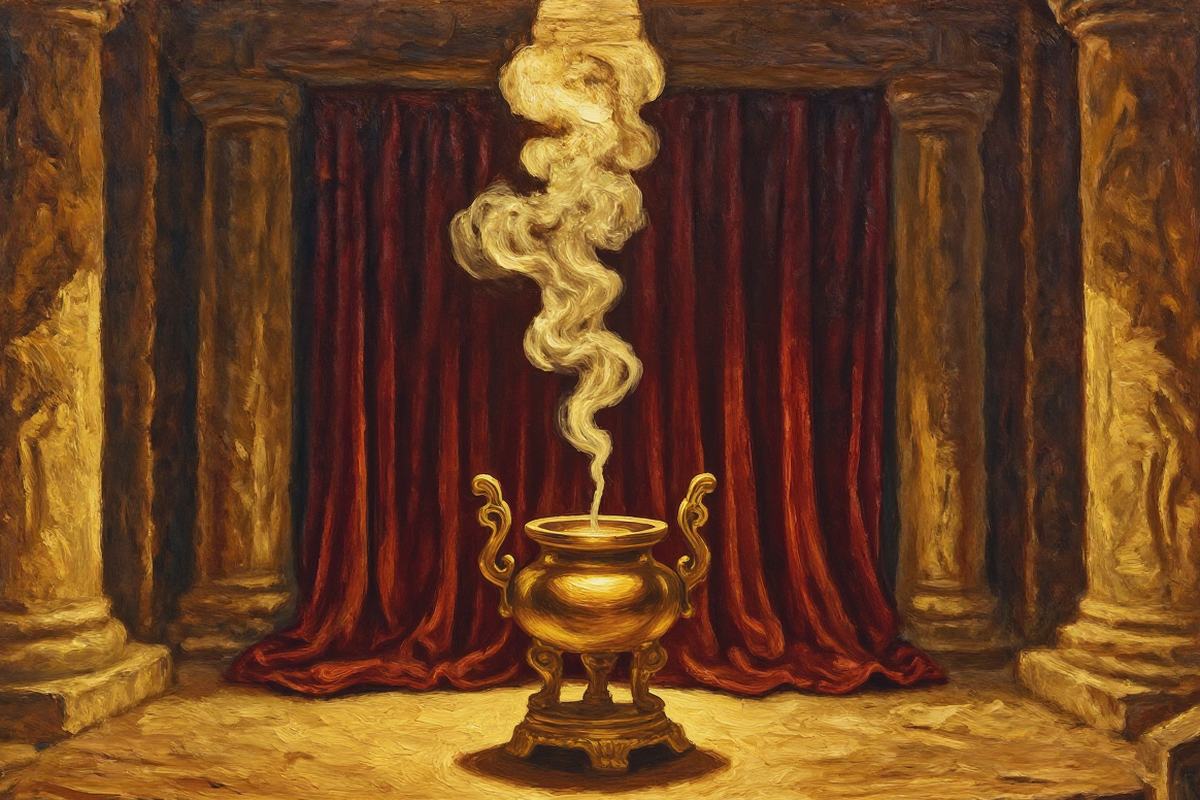
Pastor Hohman then turns to Luke 1:5–22. Zacharias and Elizabeth were both righteous before God, walking blamelessly in all His commandments. Zacharias was serving as priest and was chosen by lot to burn incense in the temple while the people prayed outside. He was, Pastor Hohman stresses, very knowledgeable about God, His Word and His promises.
The angel of the Lord appeared at the altar and told him not to be afraid: his prayer had been heard, Elizabeth would bear a son, and he would call him John. The child would be great before the Lord, filled with the Holy Spirit from birth, and would go in the spirit and power of Elijah to turn the hearts of the fathers to the children. That, Pastor Hohman points out, is the prophecy of Malachi (Malachi 4:5–6), and Zacharias would have known it.
Yet Zacharias asked how he could be sure of this, pointing to his age and his wife’s. Pastor Hohman says it was more than a question; it was doubt and unbelief. Gabriel answered that he stands in the presence of God, and because Zacharias did not believe, he would be mute until the promise came to pass. God had to shut his mouth, even though it was his own prayer being answered, so the promise could still be fulfilled.
Whoever guards his mouth and tongue keeps his soul from troubles (Proverbs 21:23). If God cannot trust you with your mouth, he asks, why would He reveal things to you? People pray for something and then keep saying, “I don’t have it.” Yet if your dog runs off, you do not stand on the porch announcing it is gone for good; you call it by name, even when you cannot see it. Do the same, he says, with your health, life and finances.
In Luke 1:57–64 the relatives wanted to name the baby after his father, but Elizabeth said he would be called John. Zacharias wrote, “His name is John,” and immediately his mouth was opened and he praised God. As soon as he agreed with God, God opened his mouth. The chief priest should have known Psalm 113:9: He grants the barren woman a home, like a joyful mother of children. Pastor Hohman adds that he has prayed for many women who later had babies.
Mary: Agreeing With God’s Word
Next comes the same teaching in a positive light. In Luke 1:26–38, Gabriel goes to Nazareth, to a young virgin named Mary, engaged to Joseph. Pastor Hohman notes that in that culture women were usually kept in the background while men did the talking, yet the angel greets this young girl as highly favored. She is troubled and wonders what kind of greeting this is.
The angel tells her she will bear a son named Jesus, the Son of the Highest, whose kingdom will have no end. Mary asks how this can be, since she is a virgin. Pastor Hohman draws a careful distinction: Mary did not doubt that it could be done, as Zacharias did; she only asked how it would take place. The angel answers that the Holy Spirit will come upon her, that her relative Elizabeth has also conceived, and that with God nothing will be impossible.
Mary’s reply was, “Let it be to me according to your word.” She used her mouth, Pastor Hohman says, to allow the promise of God to come to pass in her life, which is why all generations call her blessed. The comparison below follows his reading of the two visits.
| Question | Zacharias | Mary |
|---|---|---|
| Who they were | The chief priest, expert in God’s promises | A young girl in the background of her culture |
| Their response | How can I be sure of this? | How will this be? |
| What it revealed | Doubt that God’s word would come to pass | A question about the means, not the promise |
| What happened to the mouth | Shut until the promise was fulfilled | Used to say, let it be to me according to your word |
| When the mouth opened | When he agreed with God and wrote, His name is John | It stayed open in agreement from the start |
Nothing is impossible with God, he says, but it depends on whether we use our mouths the way God told us to, or go the way of the world and just let anything come out. Choose life, he urges, because God has promises to fulfill for you.
What You Say About the Promises
Pastor Hohman closes the teaching with a testimony. Years ago, he says, the Lord told him He was giving the church a radio station, and he told the staff, elders and everyone else. Several years passed with nothing. Eventually he called a friend who owns television and radio stations, who explained that the Federal Communications Commission only accepts applications when it opens a window, sometimes years apart.
When the window opened, he applied with help from an engineer and kept declaring, “We got a radio station.” Applicants were not allowed to buy anything in advance, so they waited. About six years later, seven years from the original word, a letter arrived granting a building permit for an FM station. He says almost 750 churches applied in that window and theirs was the only one granted, and the station is on the air.
You can do the same with the Bible, he says. Find what God has said, that by the stripes of Jesus you are healed, that whatever you put your hand to prospers, that your path shines brighter and brighter, and speak it. In 2 Corinthians 1:19–20, all the promises of God in Him are Yes and Amen, to the glory of God through us.
Being born again happens the same way, he says. Jesus chose us and appointed us to bear fruit (John 15:16), and we are born again not of corruptible seed but incorruptible, through the word of God which lives and abides forever (1 Peter 1:23). God gives the desires of your heart when you commit your way to Him (Psalm 37:4–5). The thief comes to steal, kill and destroy, but Jesus came to give abundant life (John 10:10).
Agreeing With God This Week
Pastor Hohman invites anyone who has never given their life to Jesus to do it now, because now is the accepted time (2 Corinthians 6:2). Like Mary, all you have to say is, be it to me according to your word, and God gives a new heart and His Spirit (Ezekiel 36:26). Here are practical steps drawn from this message on what you say:
- Do the Proverbs assignment. Read Proverbs and list everything it says about the mouth, then read James 3.
- Keep quiet instead of murmuring. When you do not understand God’s plan, follow Israel at Jericho and say nothing rather than complain.
- Stop embellishing. Say “I’m tired” or “I’m hungry” without exaggeration meant to win sympathy.
- Weigh your words first. Before you speak your mind, ask whether the words will be idle, devouring or building.
- Agree with the promise. When God’s word seems impossible, answer like Mary, not like Zacharias.
- Keep declaring while you wait. As with the radio station, keep saying what God said, even when years pass.
He ends by leading the congregation in a prayer of salvation, asking God to forgive sin, give a new heart and fill them with the Holy Spirit.
Timestamped Outline
- 0:00 Created in His image and likeness
- 1:06 God spoke first, then it came to pass
- 2:08 Deuteronomy 30: choose life
- 3:11 Matthew 12: idle words burn energy
- 4:18 What you say is what you get
- 5:30 Loose lips and Pearl Harbor
- 7:37 James 3 and let your yes be yes
- 9:50 Israel’s grumbling in the wilderness
- 11:52 Joshua 6: not a word until the shout
- 14:00 Proverbs 25:11: a word fitly spoken
- 15:06 Luke 1: Zacharias in the temple
- 19:22 How can I be sure of this?
- 21:27 Proverbs 21:23: guard your mouth
- 22:38 Calling the dog you cannot see
- 24:47 His name is John: a mouth opened
- 26:54 Psalm 113:9 and the angel’s visit to Mary
- 30:09 Nothing is impossible with God
- 31:10 Let it be to me according to your word
- 32:13 Testimony: the promised radio station
- 36:28 Speaking the promises
- 37:31 All the promises are Yes and Amen
- 38:34 Born again by the incorruptible seed
- 41:38 Invitation to receive Jesus
- 43:44 Prayer of salvation
The Power of Words Series
This message is part of a teaching series at NTC Ministries on the power of words. Start from the beginning or continue where this one leaves off:
- First message: Power of the word #2 Creative
- Previous: The Power of Words #3 Watch Your Words
- You are here: The Power of Words #4 What You Say Is What You Get
- Next: The Power of Words #5 Faith Filled Words
Frequently Asked Questions
Is it wrong to ask God questions about His promises?
Not according to this message. Pastor Hohman contrasts Zacharias and Mary, who both asked a question. Mary asked how the promise would take place, and the angel simply explained it. Zacharias asked how he could be sure, which Pastor Hohman reads as doubt that it would happen at all. The difference was not the question but whether the heart and mouth agreed that God’s word would come true.
Why does God sometimes seem slow to fulfill what He promised?
Pastor Hohman’s own example is the radio station, which took seven years from the time he says the Lord spoke to the day the permit arrived. In the meantime he did what he could, waited for the application window and kept declaring that the station was theirs. He also points to Israel’s forty years in the wilderness, a delay he connects to grumbling and complaining.
How do I receive Jesus the way this message describes?
Pastor Hohman says it is as simple as Mary’s response: be it to me according to your word. He leads a prayer asking God to forgive all sin, declaring Jesus Christ as Lord and Savior, and asking for a new heart and the Holy Spirit. He describes the new birth as God replacing a stony heart with a soft one and making us the temple of the Holy Spirit.
Scripture References
All passages open in the New King James Version on Bible Gateway:
- Luke 1:5–22 — Zacharias is struck mute
- Luke 1:26–38 — Mary agrees with God’s word
- Luke 1:57–64 — His name is John
- Joshua 6:10–20 — silence until the shout
- Deuteronomy 30:11–19 — choose life
- Matthew 12:33–37 — every idle word
- James 3:5–6 — the tongue is a fire
- Proverbs 21:23 — guard your mouth
- 2 Corinthians 1:19–20 — all the promises are Yes and Amen
How this summary was made: written with AI assistance from the sermon’s own transcript and checked against the Scriptures listed above.
Watch More Messages
If this message changed the way you think about your words, there are hundreds more teachings from NTC Ministries waiting for you. Browse the full sermon archive and keep speaking in agreement with God’s promises.