An Introduction to God the Names of God, part 12, is a teaching on Jehovah Rohi, the Lord our Shepherd. Dr. William P. Hohman explains that every name of God reveals part of His character so that believers can know Him in a living, intimate way, not as a distant idea. In this message he defines what a true shepherd is, contrasts the shepherd with the hireling, and then walks line by line through Psalm 23 to show how the Shepherd meets every need.
Below you will find the full video, a structured summary of the sermon, the Scripture behind each point (linked to the New King James Version on Bible Gateway), a timestamped outline, and practical steps you can take this week.
Sermon at a Glance
This message was posted on February 6, 2024, and runs about 67 minutes. Pastor Hohman explains why he titled the series An Introduction to God rather than simply the names of God: the names should draw believers into a closer relationship with Him. After reviewing the redemptive names already covered, he turns to Jehovah Rohi and to Psalm 23, which he says has wrongly become a psalm only for funerals.
The message moves from the Hebrew root of the name, through the Old Testament shepherds Joseph and David, to Jesus as the Good Shepherd in John 10. It closes with a reading of Psalm 23, a word on God’s purpose for prosperity, and a time of prayer for the Holy Spirit to fill the congregation.
| Detail | Information |
|---|---|
| Speaker | Dr. William P. Hohman |
| Series | An Introduction to God (The Names of God), part 12 |
| Main text | Psalm 23 and John 10:10–14 |
| Key theme | Jehovah Rohi, the Lord our Shepherd, who feeds, leads, protects and befriends |
| Length | About 67 minutes, ending in prayer |
An Introduction to God the Names of God: Why It Matters
Pastor Hohman opens with marriage. The more he understands his wife, the better their relationship can be. Without that understanding, a husband lives selfishly, seeing only his own needs. Many people relate to God the same way: they go about their own way and cry out or complain when they need something. But our relationship with God is meant to be the most intimate relationship in our lives.
Simply believing that God exists is not enough, he says, because even the demons believe and tremble (James 2:19). Each name of God reveals an aspect of His character and shows how He wants to be known. Without that revelation, people make up what they think God is, which is why the world has so many so-called gods. There is only one living and true God, the Most High.
God created man as an object for His love, a creation that could know Him and grow in relationship with Him. That is why Christians need a living, working, relational knowledge of God. The series has already covered Elohim, Adonai and Yahweh, then the redemptive names: Jehovah Tsidkenu, our righteousness; Jehovah M’Kaddesh, who sanctifies; Jehovah Shalom, our peace; Jehovah Rapha, our healer; and Jehovah Nissi, our banner of victory.
What Jehovah Rohi Means: The Lord Our Shepherd
Jehovah Rohi means the Lord our Shepherd. Pastor Hohman teaches that the root word means to shepherd a flock, to feed and to tend a domestic animal. In the Western world, he says, most people have no idea what a real shepherd does, because sheep are kept in fences with an attendant. A real shepherd lives with the sheep, and the sheep look to him for everything. The name speaks of God caring for His people in practical, physical ways and in spiritual ways.
The word first appears with Joseph, who at seventeen was feeding the flock with his brothers (Genesis 37:2). Later, when Pharaoh asked Joseph’s brothers their occupation, they answered that they were shepherds, and he gave them Goshen, the most fertile land in Egypt (Genesis 47:3–4).
A second sense of the word describes a leader and his people. The tribes of Israel told David at Hebron that the Lord had said, “You shall shepherd My people Israel” (2 Samuel 5:1–2). A third sense, which Pastor Hohman loves, is companion or friend. He compares it to the family dog that runs to greet you at the door before any of the children do.
At the Last Supper, Jesus expressed that friendship by sharing a meal and a covenant with His disciples (Luke 22:19–20). That is why the church fellowships around food, and why old farmhouse kitchens were large enough for the whole family to talk together. The Spirit bears witness that we are children of God, heirs of God and joint heirs with Christ (Romans 8:16–17). We share in His identity and in everything He has.
Jesus said His disciples knew that everything He had came from the Father (John 17:7), and all things are of Him, through Him and to Him (Romans 11:36). His divine power has given us all things that pertain to life and godliness (2 Peter 1:2–3). Jehovah Rohi is not holding anything back to teach you a lesson. When you receive from Him, it pleases Him and changes your character from the inside.
Shepherds After God’s Heart
Jehovah Rohi also speaks to how God shepherds through people. Rohi can also describe a priest, prophet or minister and God’s people. In Jeremiah 3:15 God promises, “I will give you shepherds according to My heart, who will feed you with knowledge and understanding.” Pastor Hohman warns that in the last days some will want teachers who satisfy itching ears (2 Timothy 4:3), telling them that everything is fine and they never need to change.
True shepherds feed people with the Word even when it is hard to hear. When Jesus taught about eating His flesh and drinking His blood, many left. He asked the twelve if they would go too, and Peter answered that He had the words of eternal life (John 6:66–68). Pastor Hohman admits that he has been in the place of saying, “Lord, you got to help me,” because we are weak and God is strong.
He is honest that the world will get worse, like rust in a car that keeps spreading. Jesus spoke of wars, rumors of wars, famines and earthquakes (Matthew 24:6–7), and of families divided. Yet He also said, “Be of good cheer, I have overcome the world” (John 16:33). God does not warn us to scare us but to prepare us. When Pastor Hohman asked the Lord how to help believers stand strong in this last day, the answer was to teach them who God is, because that builds faith. Even in gross darkness, His people arise and shine (Isaiah 60:1–2).
Knowing Jehovah Rohi as a friend also means hearing His voice. The Lord spoke to Moses face to face, as a man speaks to his friend (Exodus 33:11). Everything in this world has a voice, and habits form when we give ourselves to those voices. The more you read your Bible, the clearer His voice becomes, and He leads to outcomes exceedingly abundantly above all we ask or think (Ephesians 3:20).
The Strength and Tenderness of the Shepherd
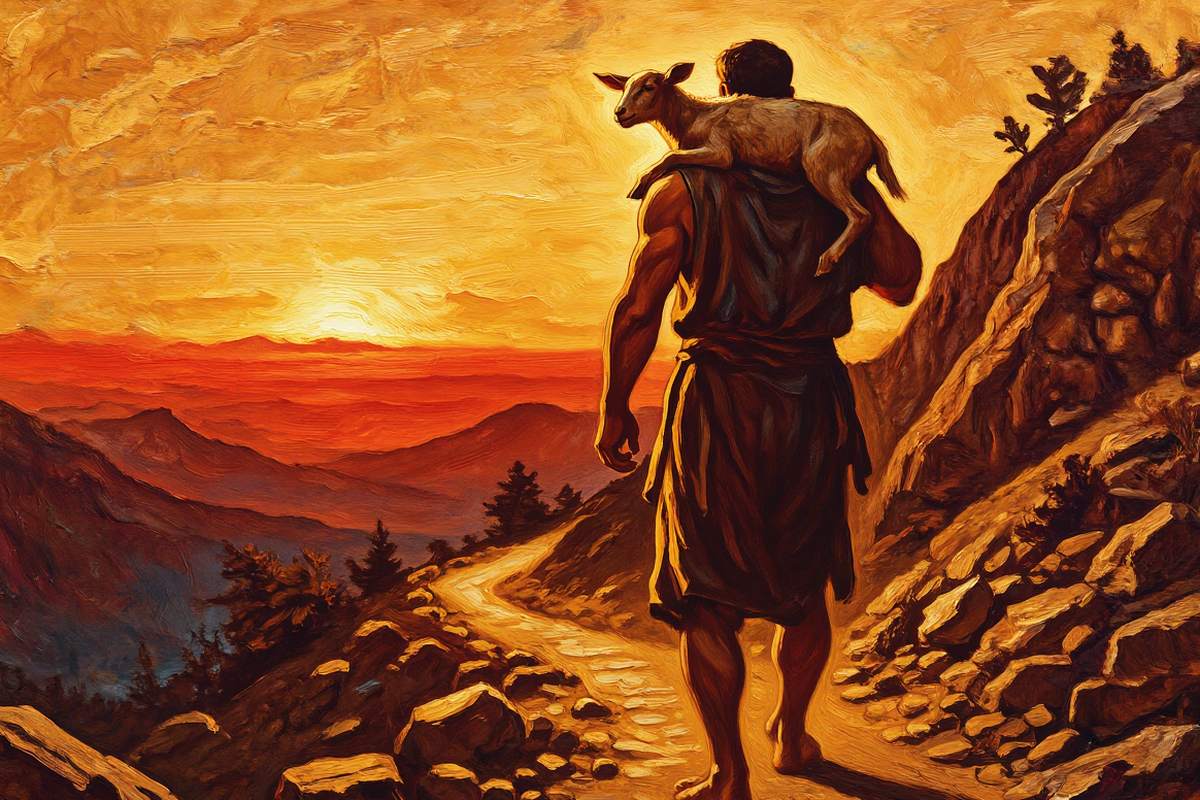
Many people picture Jesus the Shepherd only as a frail figure holding a lamb. Pastor Hohman says that picture is incomplete. A shepherd sometimes has to stop a sheep that keeps running off rather than let a wolf take it. That is why ministers are told to convince, rebuke and exhort (2 Timothy 4:2). Correction is not anger; it comes from knowing there is a better life than the one a person has settled for.
Isaiah 40:10–11 shows both sides: the Lord God comes with a strong hand and His arm rules for Him, yet He feeds His flock like a shepherd, gathers the lambs in His arm and gently leads those with young. Meekness, Pastor Hohman says, is not weakness. Meek means quiet under instruction and teachable; weak means defenseless.
A shepherd had to be strong. Shepherds lived with their flocks for months and had to carry a sick or injured sheep across mountains to the next pasture. David, a shepherd for many years, told Saul that he had killed a lion and a bear to rescue his sheep (1 Samuel 17:34–36). He was no sickly boy; he could face Goliath because he was a shepherd.
The opposite of a strong shepherd is an enabler, like parents who keep giving money to a child with an addiction who will not work. A true parent says, we are going to deal with this so you can be free.
Pastor Hohman applies this to covenant relationships. He and his wife Pam have been married fifty years, and he says they were both immature at the start. What made it work was each of them praying, “Lord, change me,” rather than “change them.” He names other couples in the church married over fifty years who did the same. The Shepherd leads us in paths of righteousness for His name’s sake, so that we bear fruit where we are planted.
The Good Shepherd and the Hireling
A true shepherd lived with the sheep, knew them by name and loved them. He also anointed them with oil, which kept insects away. Pastor Hohman says church works the same way: those who stay away start to get offended easily, but those who come under the anointing are protected, like sheep run through a dip bath, and are not so easily irritated. He ties this to the Good Samaritan pouring in oil and wine (Luke 10:34) and to elders anointing the sick with oil (James 5:14–15). The sheep must say, I need prayer.
The New Testament calls Jesus the Good Shepherd, the Great Shepherd of the sheep, the Shepherd and Overseer of our souls (1 Peter 2:25) and the Chief Shepherd (1 Peter 5:4). In John 10:10–14 Jesus says the thief comes to steal, kill and destroy, but He came that we may have life more abundantly. A shepherd will move a hungry flock past a small patch of grass to reach the green pasture where they can stay for a month.
Then Jesus says the Good Shepherd gives His life for the sheep. Under the old covenant, sheep were sacrificed for people; here the Shepherd becomes the sacrifice. The hireling, who does not own the sheep, sees the wolf coming and flees. Pastor Hohman compares it to the difference between a parent and a babysitter: when danger comes, a parent protects the children whatever it costs.
He applies it to ministry. When people ask to join the staff and their first question is how much they will be paid, he tells them the church does not want hirelings. He says he serves as a volunteer, and the church’s motto is a pioneering spirit and a missionary heart. The church wants leaders who are shepherds for the benefit of the people. Jesus, born in Bethlehem from the line of David, is Jehovah Rohi, the great Shepherd over all of them.

Psalm 23 and the Names of God
With that foundation, Pastor Hohman reads Psalm 23 aloud with the congregation, then again from the Amplified Bible. He notes that this is the only place where Scripture says “The Lord is my shepherd,” a personal claim from a man who knew sheep. David built that relationship by spending time with God, and God does not despise a broken and contrite heart (Psalm 51:17). He then shows how each line reveals one of the names of God already studied in the series.
| Line of Psalm 23 | Name of God he connects | What it shows |
|---|---|---|
| The Lord is my shepherd | Jehovah Rohi | He feeds, guides and shields me |
| I shall not want | Jehovah Jireh | My provider; I shall not lack |
| He restores my soul | Jehovah Rapha | The Lord my healer |
| Paths of righteousness for His name’s sake | Jehovah Tsidkenu | Right standing not earned but given |
| A table in the presence of my enemies | Jehovah M’Kaddesh | He sets me apart and feeds me |
| I will dwell in the house of the Lord | Jehovah Shammah | The Lord is there (next week’s name) |
Pastor Hohman teaches that the rod is the Word of God and the staff is the Spirit of God. Jesus promised not to leave His disciples comfortless (John 14:18) and sent the Holy Spirit to guide them into all truth (John 16:13). The anointing oil, he says, is a fragrant oil, an aroma of sweetness, which is why Jesus is called the rose of Sharon and the lily of the valley.
He also explains still waters, another picture of how Jehovah Rohi cares for His flock. Sheep cannot swim; their wool soaks up water and drags them under, so shepherds kept them away from troubled water and led them to a quiet pool. The Shepherd cares for us more than we care for ourselves and meets every need, physically, emotionally and spiritually. He closes the reading with Hebrews 13:20–21: the God of peace, through that great Shepherd of the sheep, makes us complete in every good work to do His will.
That phrase leads to a word about prosperity. Pastor Hohman says he is not a poverty-gospel preacher. God wants His people to prosper and be in health as their souls prosper (3 John 2), and He gives power to get wealth to establish His covenant (Deuteronomy 8:18). The purpose is not keeping up with the Joneses but doing God’s will: sending missionaries and building schools, clinics and radio stations. It is the love of money, not money, that is a root of evil (1 Timothy 6:10).
Following the Shepherd This Week
Pastor Hohman ends by asking the church to pray, “Lord, change me,” and to let the Holy Spirit fill them. Here are practical steps from the message:
- Get to know Him by name. Read Psalm 23 slowly as a prayer to Jehovah Rohi and thank God for each name it reveals: Shepherd, Provider, Healer, Righteousness, Sanctifier and the Lord who is there.
- Spend time to hear His voice. Read your Bible daily until His voice is clearer than the other voices competing for your attention.
- Pray “change me,” not “change them.” In marriage and every covenant relationship, ask God to mature you first.
- Receive correction as love. When the Word or a pastor corrects you, see it as the Shepherd steering you away from the wolf.
- Stay under the anointing. Keep coming to church and ask for prayer when you are sick or struggling.
- Serve like a shepherd, not a hireling. Wherever you lead, at home or at work, care for people’s good rather than your own gain.
Timestamped Outline
- 0:00 Why the series is called An Introduction to God
- 2:05 Each name reveals God’s character
- 3:13 Review of the redemptive names
- 4:33 Psalm 23 is not just for funerals
- 5:31 The root meaning of Rohi: to shepherd
- 8:02 Joseph feeding the flock: Genesis 37 and 47
- 9:05 David to shepherd Israel: 2 Samuel 5
- 12:30 Shepherds after God’s heart: Jeremiah 3:15
- 15:51 The world gets worse, but be of good cheer
- 17:50 Rohi as companion and friend
- 20:07 Heirs of God: Romans 8:16–17
- 23:38 Face to face, as a friend: Exodus 33:11
- 28:00 The Shepherd’s strength and tenderness
- 29:09 Teach, exhort, correct and rebuke
- 30:18 Isaiah 40:10–11 and meekness
- 32:44 David, the lion and the bear
- 33:52 Enablers and covenant breakers
- 39:40 Anointing the sheep with oil
- 42:49 Jesus the Good Shepherd: John 10
- 46:47 The hireling flees
- 48:59 A pioneering spirit and a missionary heart
- 51:22 Reading Psalm 23 together
- 53:28 The names of God in Psalm 23
- 57:51 Why still waters
- 59:58 Hebrews 13 and God’s purpose for prosperity
- 1:04:47 Prayer for the Holy Spirit to fill the church
Frequently Asked Questions
Why does Pastor Hohman call this series An Introduction to God?
He says the phrase “the names of God” sounds sterile and generic, and the goal is not a list of titles. Each name is meant to introduce believers to a part of God’s character so their relationship with Him grows more intimate. Just as understanding a spouse deepens a marriage, understanding who God says He is moves a person from a distant belief in God to a living, working knowledge of Him.
Is Psalm 23 only meant for funerals?
No. Pastor Hohman says the psalm has nothing to do with funerals, even though that is often the only place people hear it. The valley of the shadow of death is something the living walk through, not the dead. The psalm describes everyday life under the care of the Shepherd: provision, rest, healing, guidance, protection, anointing and His presence.
What is the rod and staff in Psalm 23?
Pastor Hohman teaches that the rod is the Word of God and the staff is the Spirit of God. Together they protect and guide the believer, which is why David says they comfort him. He connects the staff to Jesus’ promise to send the Holy Spirit, who leads and guides into all truth, so that the Spirit shepherds the church today.
Scripture References
All passages open in the New King James Version on Bible Gateway:
- Psalm 23 — the Lord is my shepherd
- John 10:10–14 — the Good Shepherd and the hireling
- Genesis 37:2 — Joseph feeding the flock
- 2 Samuel 5:1–2 — David called to shepherd Israel
- Jeremiah 3:15 — shepherds according to God’s heart
- Isaiah 40:10–11 — strong arm, tender Shepherd
- Exodus 33:11 — face to face, as a friend
- Hebrews 13:20–21 — the great Shepherd of the sheep
How this summary was made: written with AI assistance from the sermon’s own transcript and checked against the Scriptures listed above.
Watch More Messages
If this teaching on the names of God drew you closer to the Shepherd, there are hundreds more messages from NTC Ministries ready to watch. Browse the full sermon archive and keep growing in your knowledge of Him.